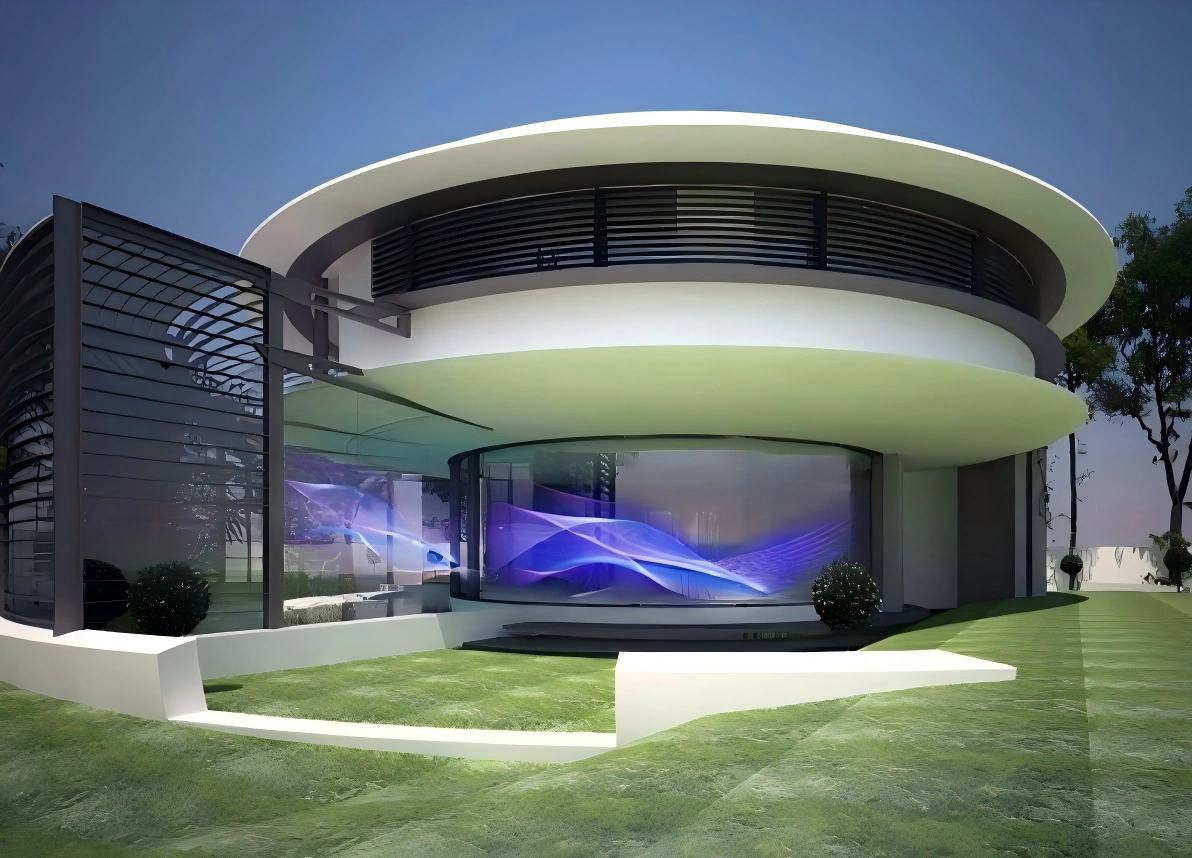
Ver el impacto sin bloquear la vista
A Pantalla LED transparente Te permite reproducir contenido luminoso y en movimiento completo en una escaparate o fachada de cristal, mientras que compradores, inquilinos y transeúntes pueden seguir viendo a través de ella. Esta guía explica cómo funciona realmente la tecnología de pantallas transparentes con LED, dónde encaja — escaparates, fachadas de cristal, escaparates, stands de ferias — y qué diferencia un sistema LED realmente transparente de las alternativas LCD comercializadas bajo el mismo nombre.
Si has estado comparando opciones de pantalla LED transparente para un escaparate, la entrada de un centro comercial o la fachada de un edificio, probablemente hayas notado que la categoría está más concurrida —y resulta más confusa— de lo que parece a primera vista. Algunos productos comercializados como "LED transparente" son en realidad paneles LCD transparentes que llevan la misma etiqueta. Otros son realmente basados en LED, pero diseñados para un caso de uso completamente diferente al que tienes en mente. Esta guía explica qué es realmente la tecnología de pantalla transparente LED, cómo leer los números de transparencia y brillo que importan, y cómo adaptar el tipo de producto adecuado a tu aplicación específica.
¿Qué es una pantalla LED transparente?
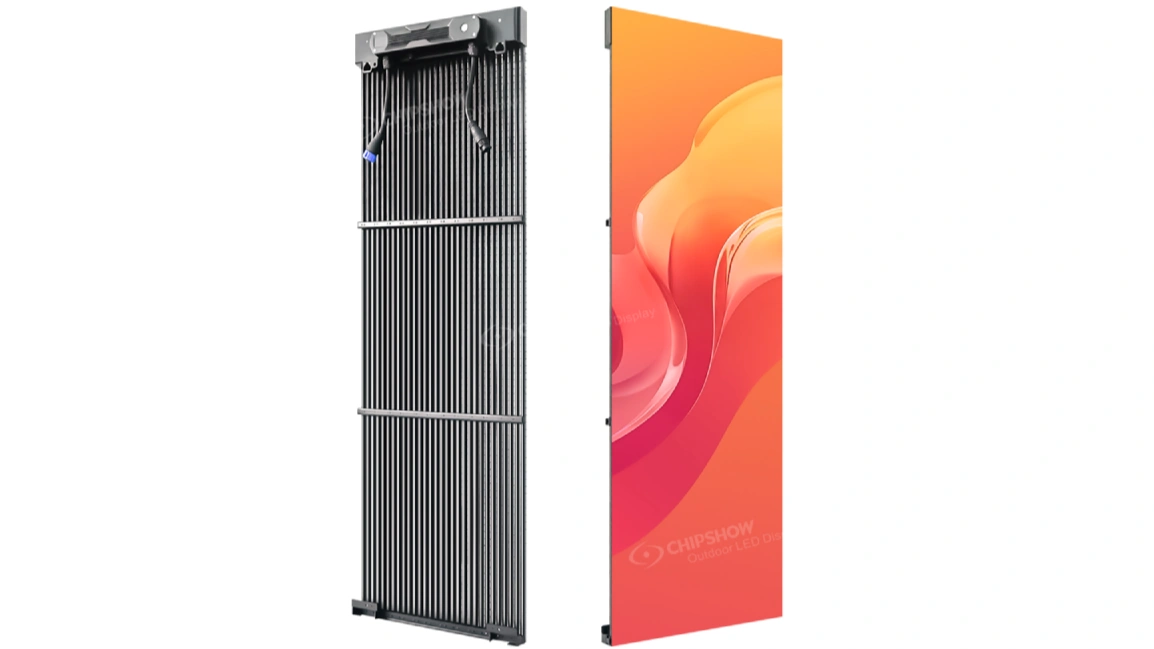
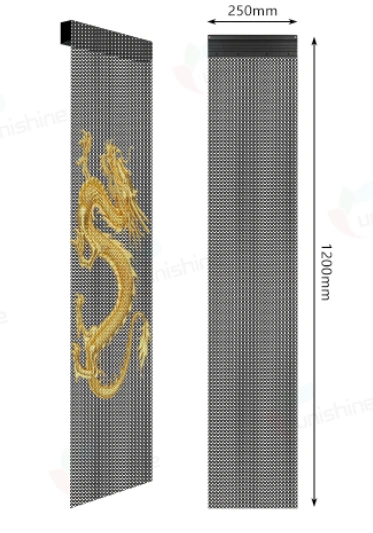
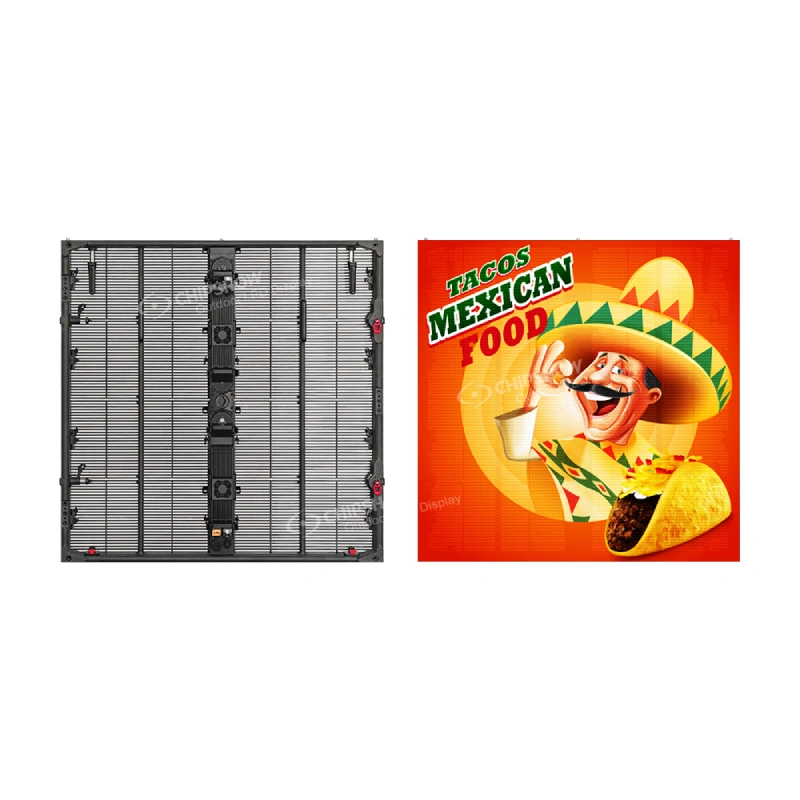
Una pantalla LED transparente funciona montando puntos de luz LED individuales sobre un sustrato transparente — una malla, un patrón de tiras o una fina película conductora — espaciados lo suficiente para que la mayor parte de la superficie detrás de ellos permanezca abierta a la luz y a la vista. La imagen se forma a partir de los propios puntos LED; Todo entre ellos se mantiene genuinamente transparente, por eso puedes estar delante de uno y aun así leer la etiqueta del precio o ver a alguien al otro lado del cristal.
Este es un enfoque significativamente diferente al LCD transparente, que es la otra tecnología comúnmente comercializada como "pantalla transparente". La pantalla LCD transparente se construye a partir de un panel de cristal líquido modificado — esencialmente un panel de pantalla plana especializado con la retroiluminación y las capas reflectantes modificadas para dejar pasar algo de luz. Es una tecnología madura y bien conocida para aplicaciones de pequeño formato como vitrinas y máquinas expendedoras, pero se topa con límites reales en tamaños grandes: los paneles LCD transparentes son más pesados, más caros por metro cuadrado a medida que crece el tamaño, más difíciles de unir en superficies grandes y continuas y, en general, más tenues a la luz directa porque dependen de la retroiluminación en lugar de emitir luz directamente como el LED.
La tecnología de pantallas LED transparentes, en cambio, escala de forma más natural a superficies grandes. Como la pantalla está construida con tiras LED o módulos de malla en lugar de un único panel rígido de cristal, puede fabricarse en longitudes de armario personalizadas para coincidir con el espacio real entre ventanas o montantes del edificio, montarse directamente sobre el cristal existente en lugar de requerir un reemplazo completo del panel, y llevarse a un brillo significativamente mayor para la legibilidad a la luz del día y al sol directo — algo que es enormemente importante para cualquier aplicación de escaparate o fachada orientada hacia el exterior. Por eso también los sistemas de pantalla transparente LED se han convertido en la opción predeterminada para aplicaciones de mayor formato: fachadas de vidrio, muros multimedia a escala de edificio y cualquier instalación donde un panel LCD simplemente no pudiera fabricarse o montarse al tamaño requerido.
Nada de esto significa que el LCD transparente sea una mala tecnología: encaja bien con sus propios usos. Pero si estás evaluando opciones para un escaparate, una fachada de cristal o cualquier aplicación donde la escala y el brillo reales importen, entender esta diferencia es lo primero que merece la pena acertar antes de comparar presupuestos con un proveedor.
Dónde se usan pantallas LED transparentes
Las instalaciones de pantallas LED transparentes suelen agruparse en un puñado de tipos de aplicaciones recurrentes, cada una con un conjunto de prioridades algo diferente.
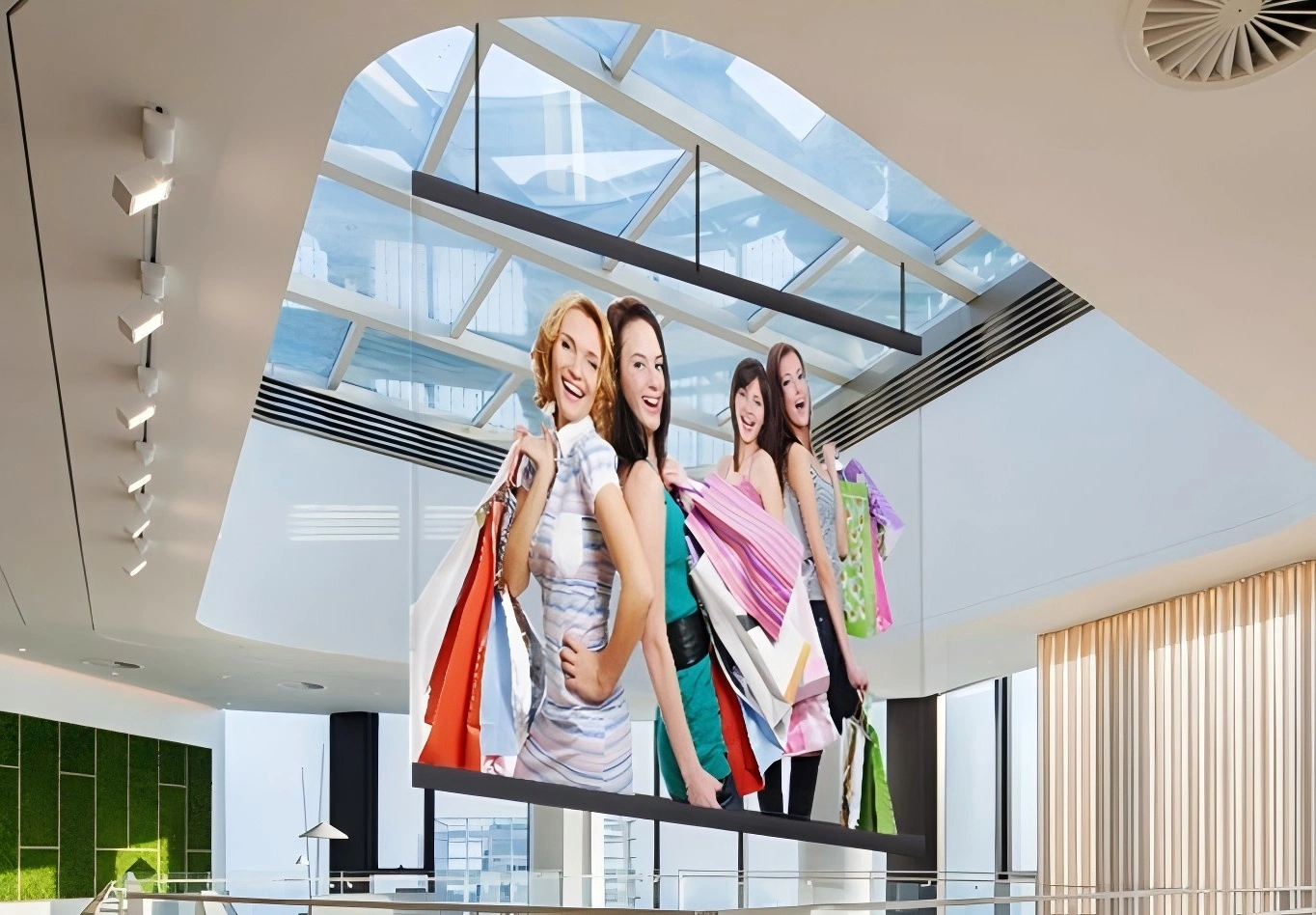
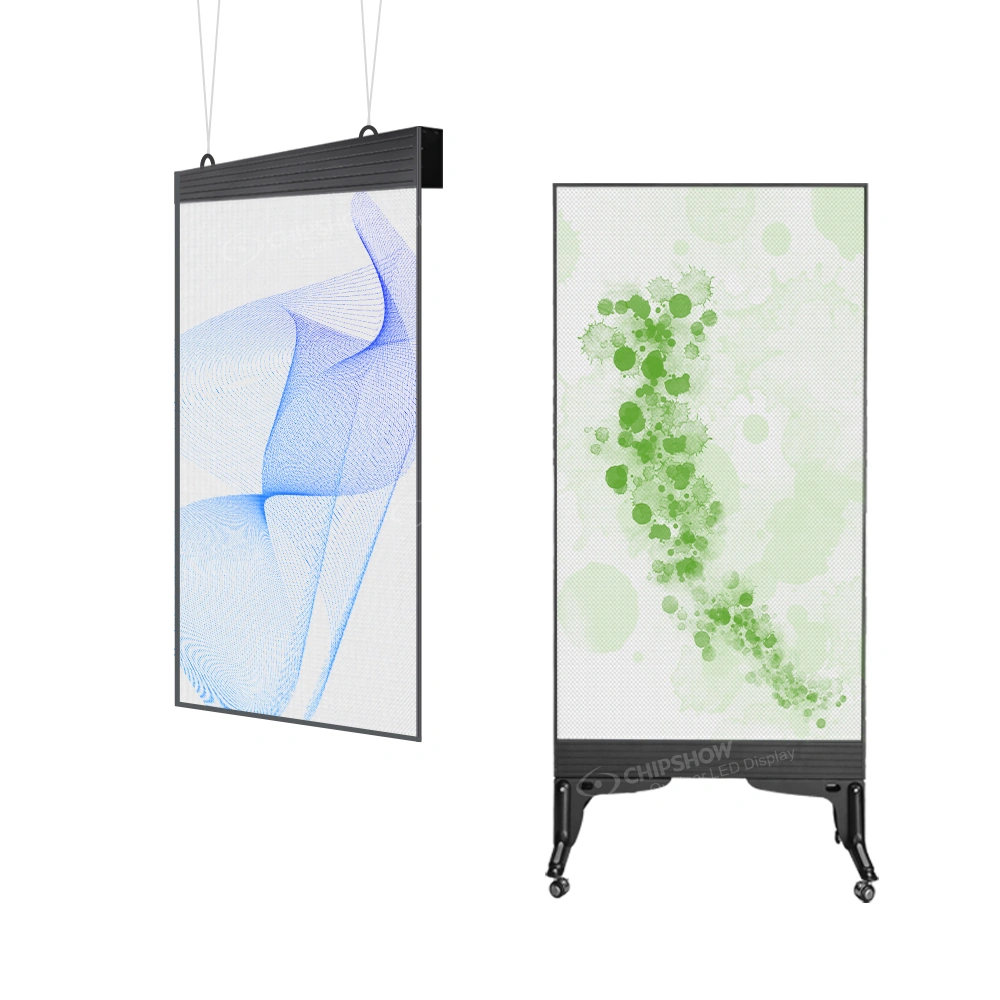
Escaparates y escaparates. Este es el punto de entrada más común para minoristas pequeños y medianos: una pantalla transparente independiente o montada en ventanas que emite contenido promocional, campañas de temporada o vídeos de marca mientras mantiene el merchandising completamente visible. Como estas instalaciones a menudo necesitan instalarse rápidamente, sin equipos de construcción, los sistemas LED transparentes de enchufar y usar, diseñados para enrollarse y conectarse a un enchufe estándar, son especialmente populares aquí.
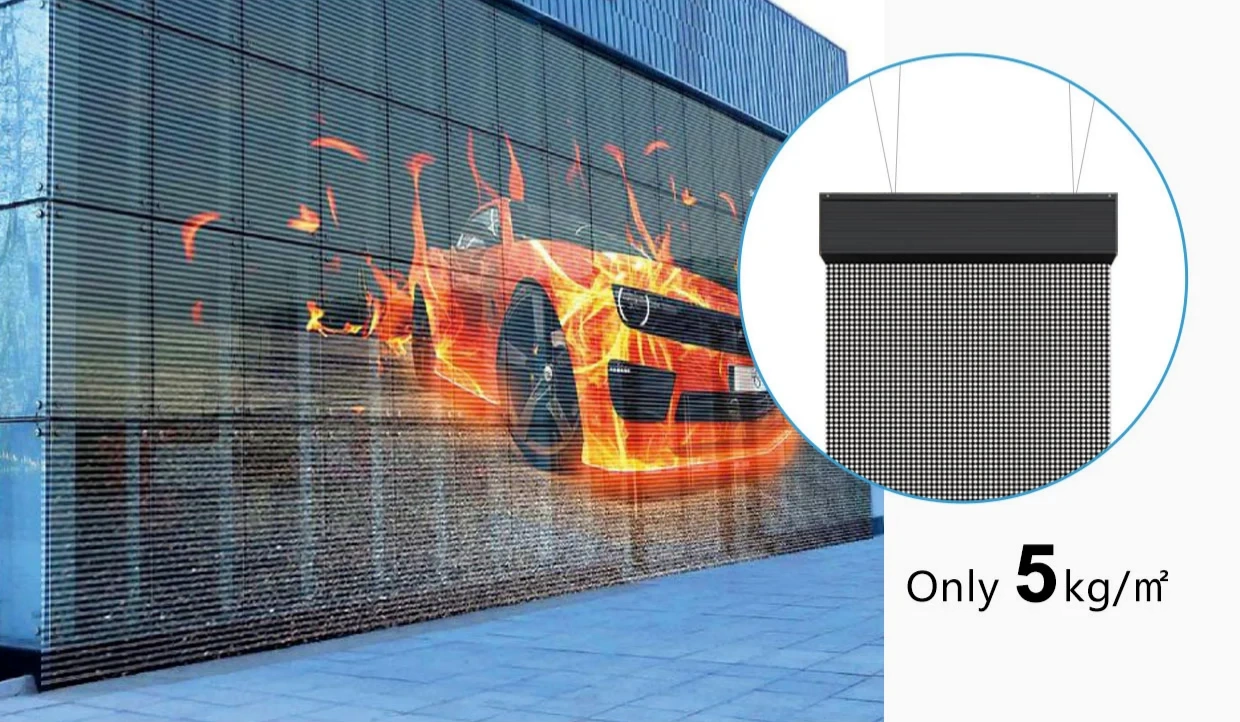
Fachadas de cristal. A escala de edificio, se montan LED transparentes en paredes cortina de cristal existentes, ventanas de atrios o exteriores para crear señalización digital de gran formato o pantallas publicitarias sin reemplazar el cristal ni añadir una estructura secundaria de acero pesada. Aquí es donde el peso del sistema por metro cuadrado se convierte en una especificación realmente importante, ya que un sistema más ligero puede montarse sobre el vidrio arquitectónico existente en lugar de provocar una revisión completa de ingeniería estructural.
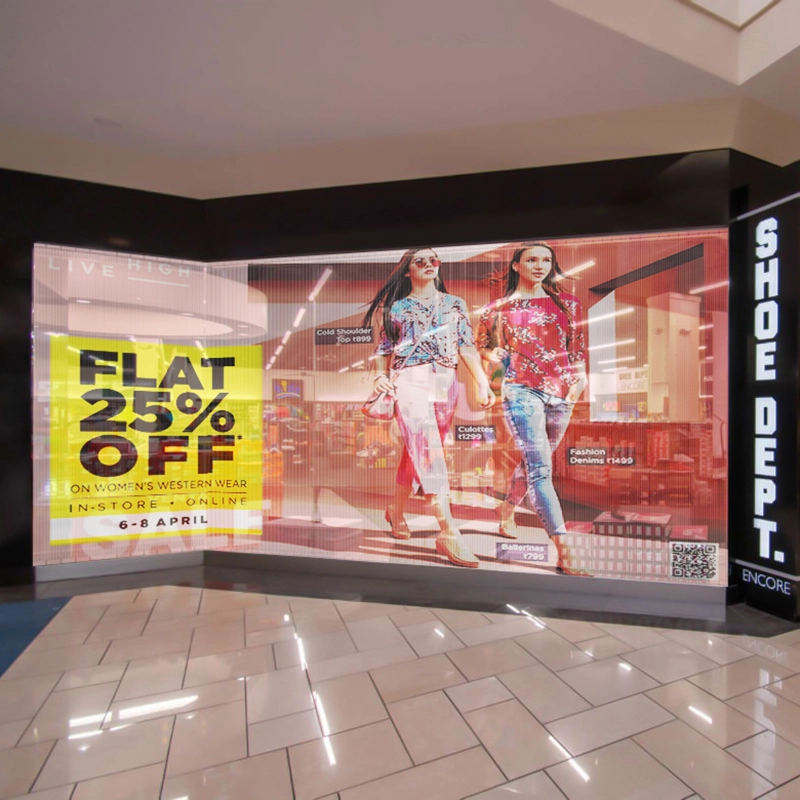
Escaparates y pasillos comerciales de alto tráfico. Similar a las aplicaciones en tiendas, pero a menudo a mayor escala: tiendas insignia, entradas a centros comerciales y pasillos comerciales de alta visibilidad donde varias pantallas transparentes suelen unirse en un único lienzo grande para una inauguración insignia o campaña de temporada.
ferias comerciales e instalaciones temporales. La movilidad de los LED transparentes es una verdadera ventaja en ferias comerciales y eventos pop-up, donde una exposición debe entrar en un stand, conectarse y emitir contenido sin ningún trabajo de construcción o montaje — para luego volver a desplegarse y volver a desplegarse en la siguiente feria.
Cada una de estas aplicaciones tiende a favorecer una configuración de producto ligeramente diferente, por eso hemos creado guías dedicadas para Escaparate y Escaparate instalaciones, Fachada de cristal y proyectos de muro de medios, y Precios transparentes de LED — Esta página está pensada para ayudarte a identificar qué categoría encaja con tu proyecto antes de entrar en los detalles.
Foco de producto Dos enfoques para el LED transparente
Para concretar la tecnología, así es como dos de nuestras propias líneas de productos LED transparentes aplican los principios anteriores a dos casos de uso diferentes.
Para escaparates y ferias comerciales: un cartel transparente independiente con ruedas diseñado para despliegue sin instalación — aproximadamente un 80% transparente, con una capacidad de unos 3.500 nits para visibilidad diurna y diseñado para encajar con unidades adicionales para un lienzo más grande. El contenido se gestiona a través de un panel en la nube, de modo que un minorista multiubicación puede actualizar campañas en cada tienda desde un solo lugar.
Consulta el cartel LED transparente de la fachada →
Para fachadas de cristal y muros multimedia: un sistema de malla a medida construido para montarse directamente sobre montantes de cristal existentes y muros cortina, a unos 11 lbs por metro cuadrado. El bajo peso del panel no elimina por sí solo los soportes secundarios; Las cargas de fijación y la fachada existente requieren una revisión estructural específica del proyecto. La transparencia llega hasta el 90%, las longitudes de los armarios se construyen a medida para coincidir con la rejilla real de las ventanas del edificio, y el acceso frontal de servicio debe planificarse junto con un acceso seguro a altura de trabajo para la instalación real.
Ver la fachada de vidrio del muro de medios transparente →
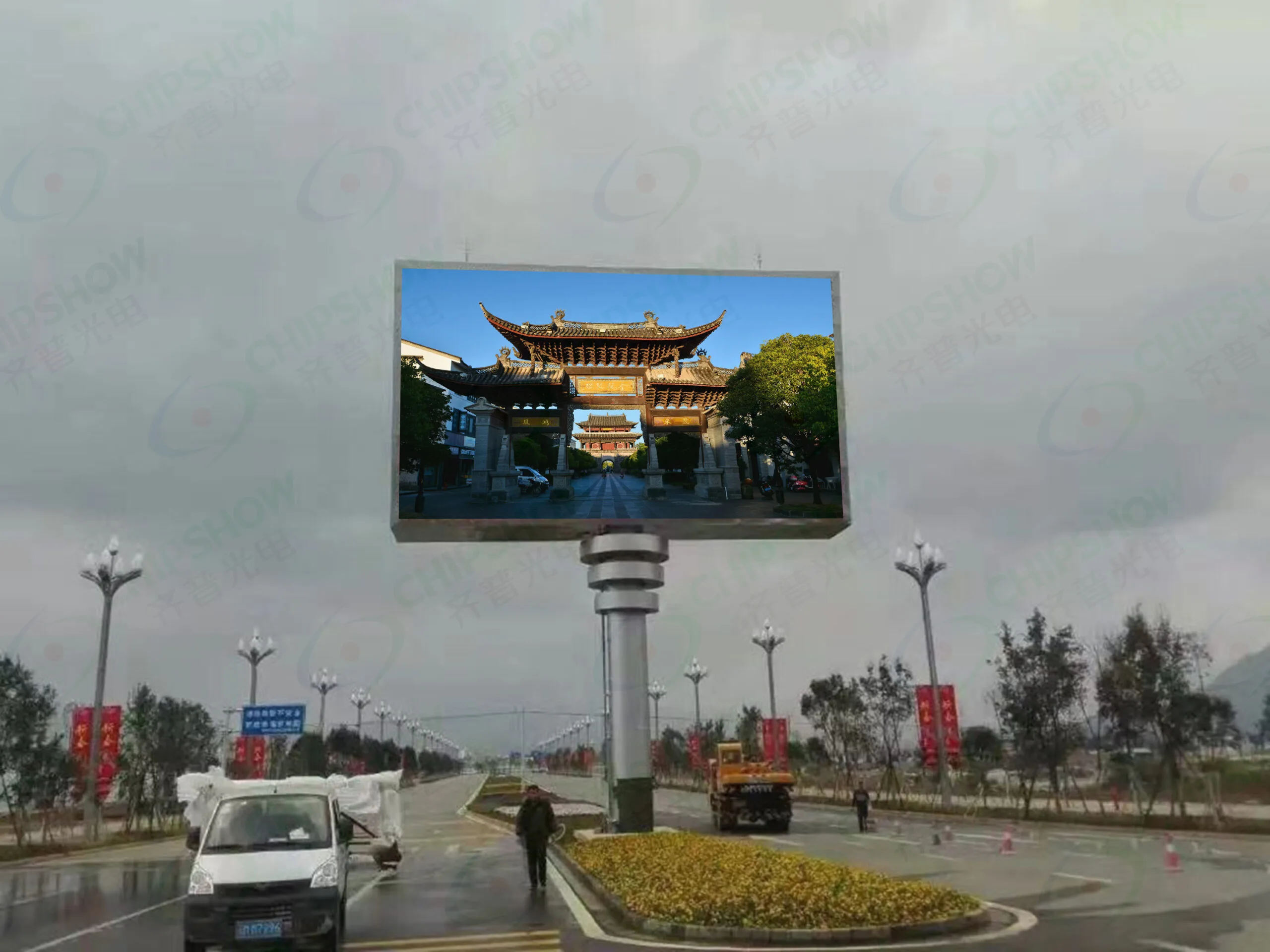
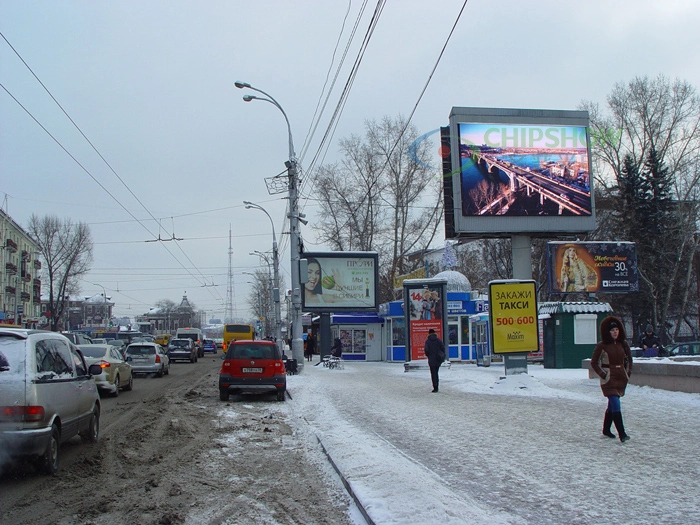
Nota: Para aplicaciones publicitarias montadas en tierra, de doble cara o en carretera, como un Cartel de Monumento, Cartel de Pilar o Centro de Mensajes al Aire Libre, también puedes explorar nuestras soluciones dedicadas para exhibiciones C-Poster.
Transparencia vs brillo: lo que realmente significan los números
Cada ficha técnica de pantalla LED transparente inicia con dos números — porcentaje de transparencia y brillo en lendiduras — y entender cómo se diferencian es lo más útil antes de comparar productos.
| Transparencia | Brillo típico | Mejor ajuste |
|---|---|---|
| 80% (formato ventana/póster) | ~3.500 lendidas | Escaparates, stands de ferias comerciales, carteles de escaparates |
| Hasta el 90% (fachada/montaje de cristal) | ~3.500 lendidas | Fachadas interiores de cristal, paredes del atrio, escaparates del centro comercial |
| Menor transparencia, malla ventilada | 7.000+ nits | Vallas publicitarias exteriores, fachadas exteriores para medios, publicidad DOOH |
El porcentaje de transparencia describe cuánta luz visible y línea de visión pasa por la pantalla cuando está apagada (y en gran parte quieta mientras está encendida, ya que los propios puntos LED ocupan solo una pequeña fracción de la superficie). Una mayor transparencia mantiene los interiores más brillantes y los productos más visibles, pero hay un techo práctico: aumentar la transparencia generalmente significa separar más los puntos LED, un compromiso que merece la pena entender en lugar de simplemente perseguir el número más alto publicado.
El brillo (nits) determina cuán legible se mantiene tu contenido frente a la luz ambiental. Las instalaciones interiores —una escapada en un centro comercial, un atrio de oficina— suelen funcionar bien en el rango de 3.000-4.000 nits, ya que no combaten la luz solar directa. El cristal orientado al exterior o al sur, y cualquier instalación que necesite competir con el deslumbramiento directo del sol, necesita un brillo significativamente mayor —a menudo muy por encima de 5.000 lendiduras— para mantenerse legible al mediodía.
La conclusión práctica: no busques el mayor número de transparencia o brillo aislado. Si ajustas ambas especificaciones a tu instalación real — interior vs. exterior, condiciones de luz ambiental y distancia de visión — la configuración adecuada de pantalla LED transparente será una decisión mucho más sencilla.
Consideraciones del comprador por tipo
La configuración adecuada de LED transparente suele depender tanto de quién compra como de las especificaciones en bruto. Así es como suelen manifestarse las consideraciones anteriores para los compradores de los que más escuchamos a miúdo.
Dueño de tienda minorista
Si eres propietario de una tienda minorista evaluando opciones de pantalla LED transparente para un escaparate, tus prioridades suelen ser la rapidez de instalación, el coste y no interrumpir un espacio comercial activo con obras. Un póster transparente independiente, plug and play — de esos que se enrolla en su sitio, se conecta a una toma estándar y empieza a emitir contenido en cuestión de minutos — suele ser el adecuado aquí, ya que no requiere contratista, permiso ni tiempo de inactividad para tu tienda. Si organizas campañas estacionales o ventas flash, busca un sistema que te permita reposicionar físicamente la exposición y unir varias unidades para un lienzo más grande durante un lanzamiento insignia, sin tener que replanificar todo el diseño de la tienda cada vez.
Promotor inmobiliario comercial
Si eres promotor inmobiliario o propietario de fachada que evalúa LED transparente para una cortina de cristal o exterior de edificio, el peso del sistema por metro cuadrado es una de las especificaciones más relevantes de la lámina: un sistema realmente ligero a menudo puede montarse directamente sobre montantes de vidrio existentes y acristalamientos estructurales sin activar una estructura secundaria de acero completa y el calendario de ingeniería y permisos asociado. Esto merece la pena plantearlo con tu ingeniero estructural y arquitecto al principio del proyecto, idealmente durante el diseño y no después de que se haya finalizado el envolvente del edificio, ya que adaptar un sistema más pesado sobre un vidrio que no se especificó es un problema mucho más costoso de resolver más adelante.
Operador de centro comercial
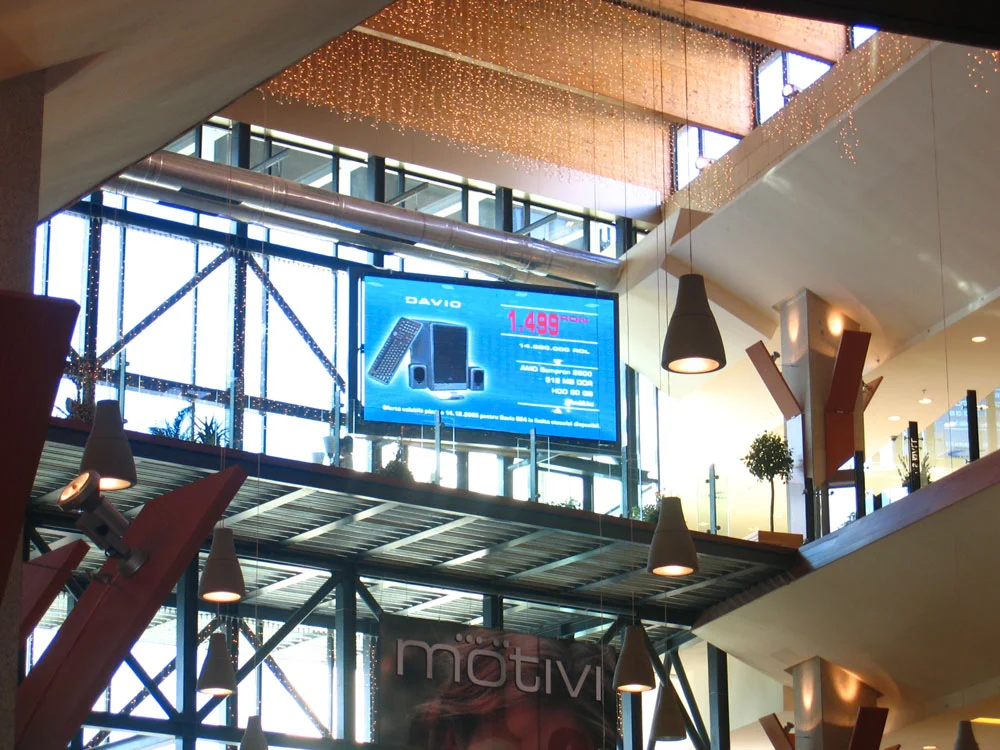
Si gestionas un centro comercial o una propiedad comercial con varios inquilinos, el LED transparente suele cumplir dos objetivos a la vez: mejorar el entorno físico para los compradores y — cada vez más — convertir superficies de vidrio poco utilizadas (paredes del atrio, fachadas de entrada, ventanas de las zonas comunes) en un activo publicitario monetizable que pueda alquilarse a inquilinos o anunciantes externos. Para este caso de uso, un sistema de gestión de contenidos en la nube que te permita programar y actualizar contenido en múltiples pantallas y ubicaciones desde un solo panel de control merece priorizar desde el principio, ya que adaptar la gestión centralizada a una red de toda la propiedad más adelante es una tarea mucho mayor que planificarlo de antemano.
Por qué las empresas estadounidenses eligen el LED transparente en lugar de la señalización tradicional
La adopción de LEDs transparentes en el mercado inmobiliario minorista y comercial de EE. UU. ha estado impulsada por algunos puntos de dolor prácticos que la señalización estática tradicional e incluso las pantallas LED opacas estándar no resuelven bien.
Coste de mano de obra e instalación. Las instalaciones tradicionales de señalización y LEDs estructurales suelen requerir un equipo de instalación dedicado y, en muchos casos, permisos. Un sistema LED transparente realmente plug and play — diseñado para ser independiente o para montarse sin modificaciones estructurales — evita casi por completo tanto esos costes como los plazos, lo cual es enormemente importante para un minorista que no puede permitirse un tiempo de inactividad prolongado durante una renovación de la tienda.
Fricciones estructurales y de permisos en bienes raíces comerciales. Para los propietarios de edificios y proyectos de fachadas en concreto, un sistema de exhibición pesado implica revisión de ingeniería, retrasos en los permisos y, a menudo, una subestructura de acero dedicada — todos costes reales antes incluso de que la exposición esté instalada. Un sistema LED transparente ligero montado en un montante reduce significativamente esta fricción, ya que a menudo puede considerarse una adición al acristalamiento existente en lugar de una modificación estructural que requiera una revisión completa.
Mantener el espacio comercial y de alquiler abierto. Tanto los pequeños minoristas como los operadores de centros comerciales se enfrentan a la misma tensión subyacente: quieren un impacto en la señalización digital, pero no a costa de hacer que una tienda o una zona común se sienta cerrada o oscura. El LED transparente es, en un sentido real, la única categoría de señalización diseñada específicamente para solucionar esto: contenido digital completo sin sacrificar la sensación de apertura y luminosidad de la que dependen los entornos comerciales.
Cómo se compara el LED transparente de un fabricante directo
No todos los proveedores de pantallas LED transparentes son iguales, y las diferencias van mucho más allá de la hoja técnica. Trabajar directamente con un fabricante — en lugar de que un revendedor suba un precio importado — generalmente significa precios de fábrica más transparentes, acceso más rápido a especificaciones técnicas y documentación estructural para tu ingeniero o arquitecto, y soporte que no pase por múltiples intermediarios cuando hay que solucionar problemas.
El peso por metro cuadrado es uno de los diferenciadores más significativos entre las líneas de productos LED transparentes en el mercado. Los sistemas que requieren una estructura secundaria de acero pesada aumentan considerablemente el coste y el calendario de instalación en comparación con sistemas realmente ligeros diseñados para montarse sobre vidrio existente. De manera similar, no todas las pantallas LED transparentes del mercado están diseñadas para un verdadero despliegue plug-and-play — algunas aún requieren un equipo de instalación estructural a pesar de estar dirigidas a compradores minoristas que necesitan evitar uno.
No vamos a nombrar ni desprestigiar a competidores concretos aquí, pero si comparas presupuestos, merece la pena preguntar directamente: ¿este sistema está diseñado para montarse sobre cristales existentes o necesita nueva estructura, cuál es el peso real por metro cuadrado, y si el precio refleja el coste directo de fábrica o un margen de reventa en un producto ya importado? Estas tres preguntas tienden a separar las opciones LED transparentes realmente adecuadas para su propósito de productos que técnicamente califican como "transparentes" pero que no fueron diseñados para tu caso de uso específico.
Errores comunes al comprar una pantalla LED transparente
En las primeras conversaciones con compradores aparecen algunos patrones con suficiente frecuencia como para que valga la pena señalarlos antes de pedir tu propio presupuesto.
Suponiendo que todas las "pantallas LED transparentes" sean la misma tecnología subyacente. Como se ha explicado antes, algunos productos comercializados como pantallas LED transparentes son realmente basados en LED, y otros son paneles LCD transparentes que utilizan un lenguaje de marketing similar. Antes de comparar presupuestos, confirma qué tecnología estás considerando realmente: las diferencias de rendimiento, peso y escalabilidad son considerables.
Persiguiendo el mayor número de transparencia sin comprobar el brillo. Una pantalla LED transparente anunciada con un 90% de transparencia no es automáticamente la mejor opción si tu instalación está orientada a la luz solar directa y necesita un brillo que esa configuración no puede ofrecer. Ajusta ambas especificaciones a las condiciones reales de tu sitio en lugar de optimizar para un solo número de forma aislada.
Sin contar el peso al montar una pantalla LED transparente en la fachada. Para fachadas de vidrio y proyectos a escala de edificio, específicamente, el peso por metro cuadrado del sistema elegido determina si puede montarse sobre acristalamientos existentes o si requiere un nuevo marco estructural, una diferencia que puede afectar significativamente el coste total del proyecto. Esto merece la pena confirmarlo con tu proveedor y el ingeniero estructural antes de finalizar un diseño.
Suponiendo que un presupuesto bajo sea un precio totalmente instalado. Como ocurre con la mayoría de las categorías de pantallas LED, un presupuesto bajo para pantallas LED transparentes a veces es un precio solo de hardware que no incluye hardware de montaje, trabajo estructural ni software de gestión de contenidos. Pregunta directamente qué incluye antes de comparar dos presupuestos que parecen diferentes a simple vista.
Subestimar las necesidades de gestión de contenidos a gran escala. Una sola ventana de escaparate puede funcionar en un controlador básico independiente, pero un despliegue minorista en múltiples ubicaciones o una red de fachada multi-inquilino necesita una gestión centralizada de contenidos basada en la nube desde el primer día. Adaptarlo después de los hechos es una tarea mucho mayor que planificarlo durante el despliegue inicial.
Elegir la pantalla LED transparente adecuada para tu proyecto
A estas alturas, la forma de la decisión debería ser razonablemente clara. Si vas a equipar un solo escaparate, una pantalla LED transparente independiente y plug and play es casi con toda seguridad el punto de partida adecuado: rápida de desplegar, sin necesidad de construcción y fácil de reposicionar a medida que cambian las campañas. Si trabajas en una fachada de cristal o en una instalación a escala de edificio, el peso por metro cuadrado y el tamaño personalizado igualado con montantes pasan a la cima de la lista de prioridades, ya que son esos los que determinan si tu pantalla LED transparente puede montarse en el cristal existente o si requiere nueva estructura. Y si gestionas un despliegue multi-ubicación — una cadena comercial, una propiedad en un centro comercial o una red de fachada multiinquilino — la gestión centralizada de contenidos merece tanta atención como el propio hardware.
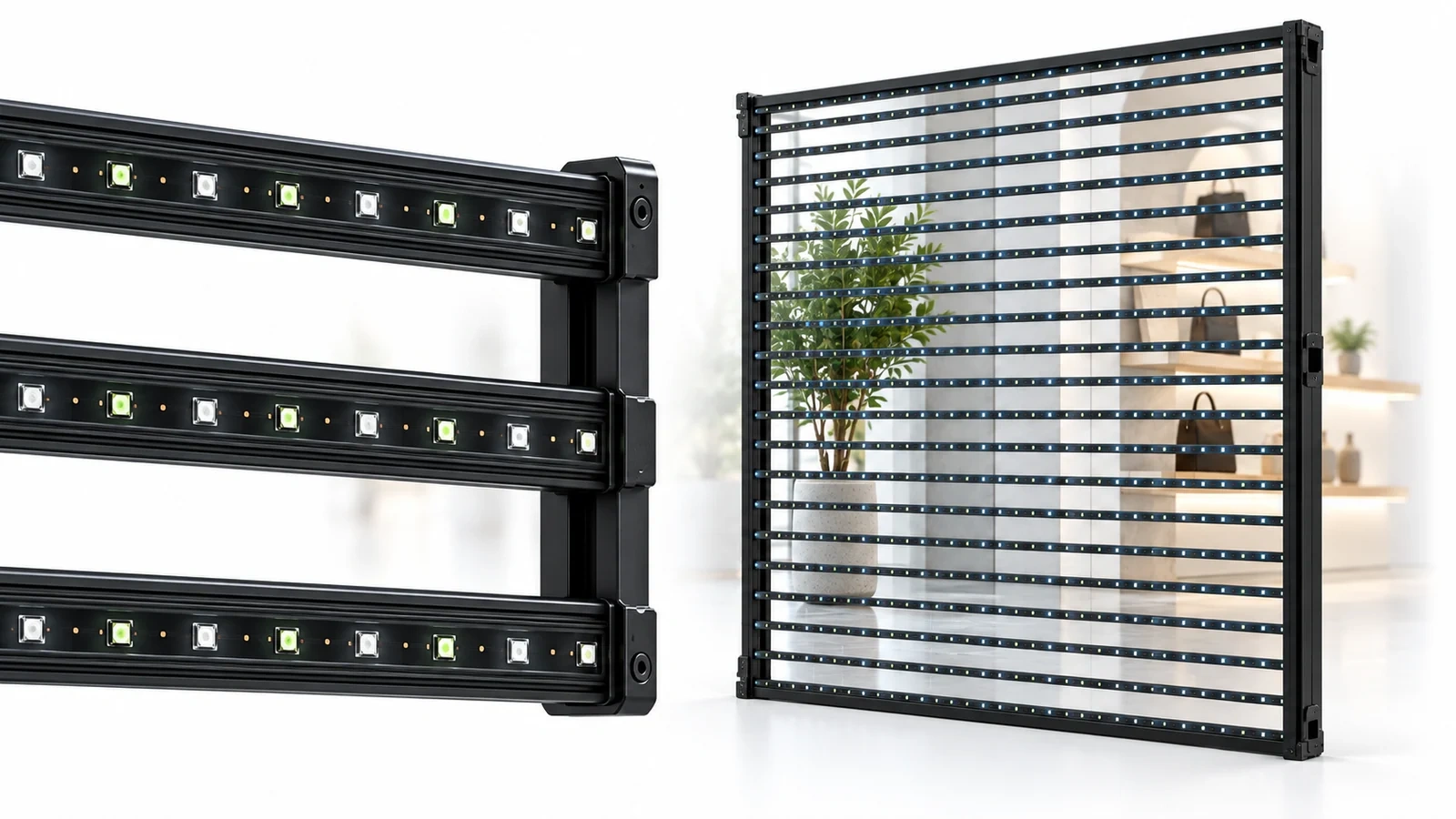
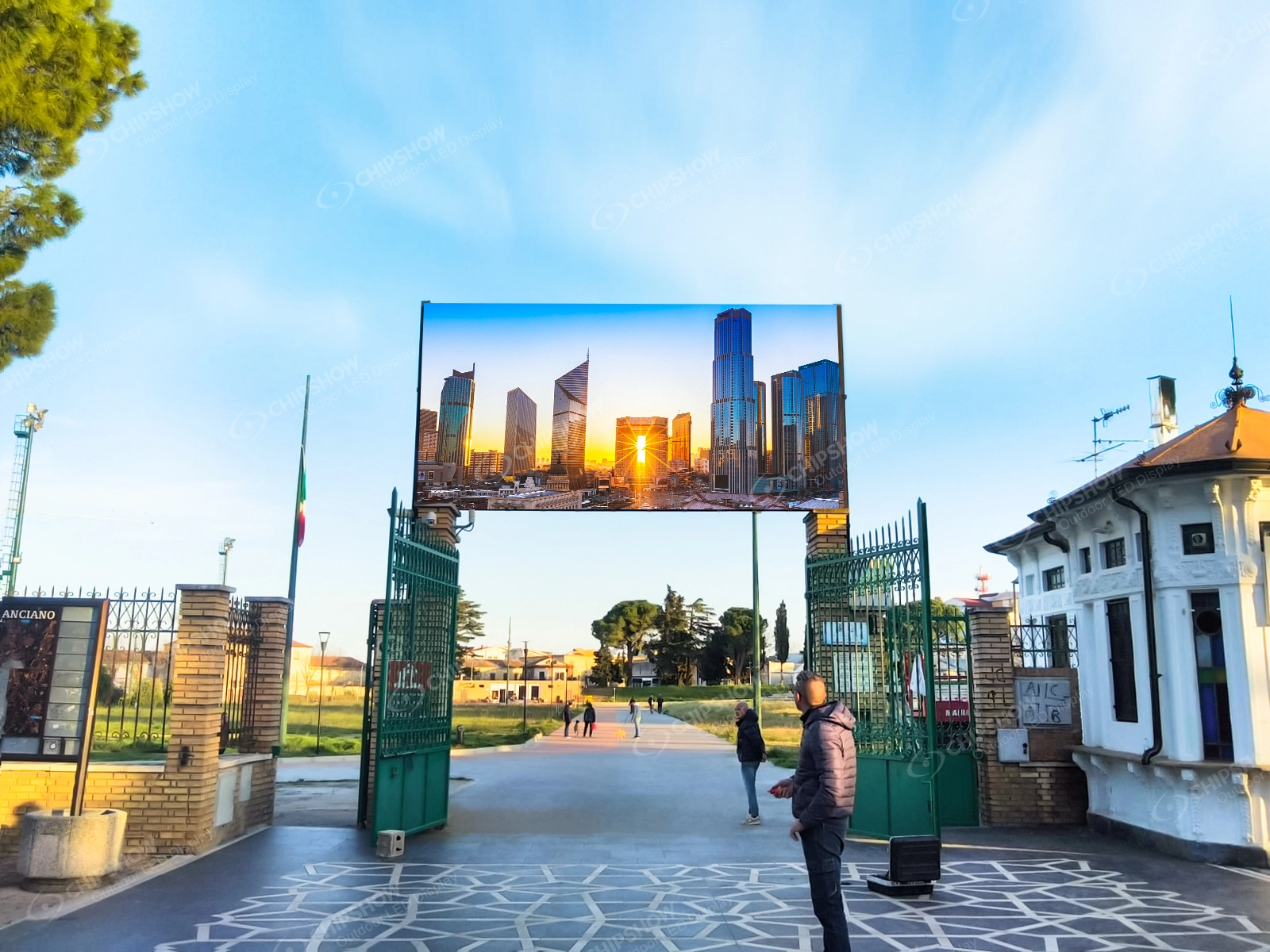
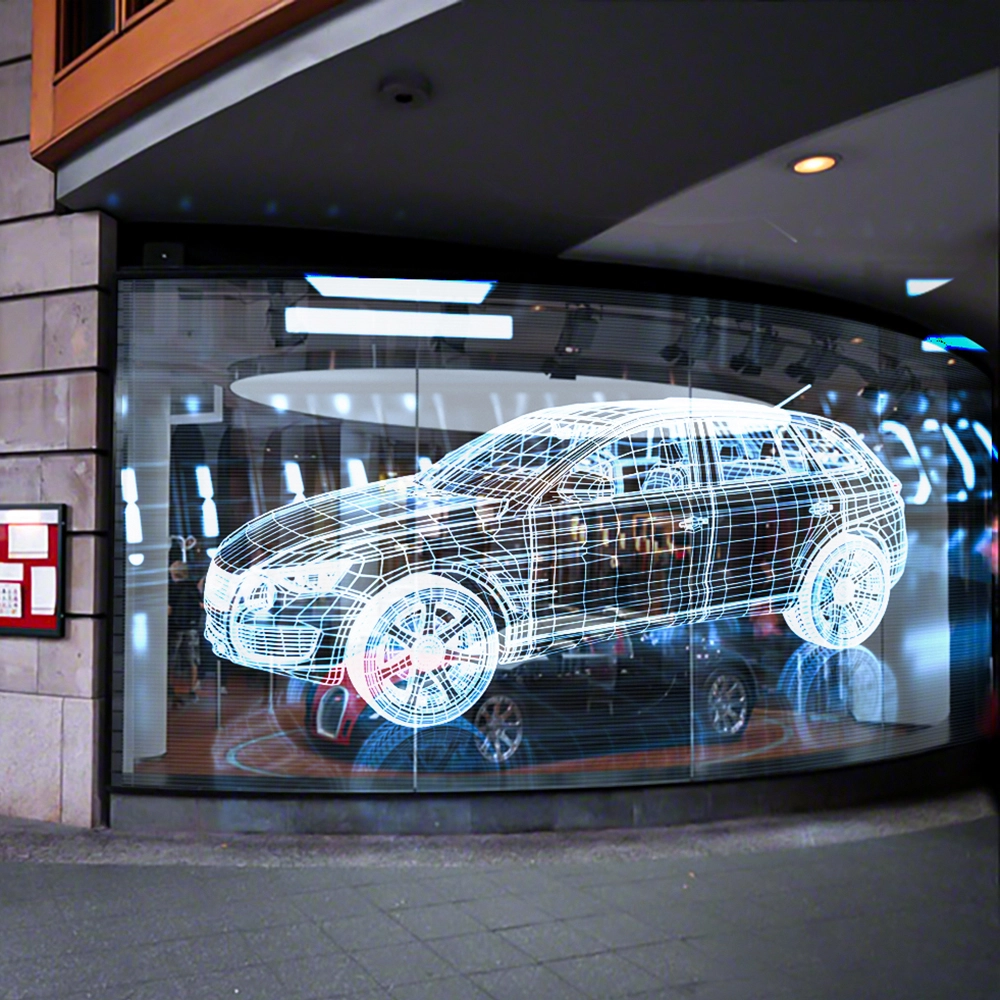
Ilustración conceptual de una pantalla LED transparente. Considera qué debe permanecer visible detrás de la pantalla y pide una muestra antes de comprometerte con la instalación.
Ninguna de estas decisiones requiere conjeturas. Un proveedor de pantallas LED transparentes que pueda guiarte a través de los sacrificios entre transparencia, brillo y peso para tu sitio específico —en lugar de redirigirte a una única hoja genérica de especificaciones— suele ser la opción más fiable, independientemente de la categoría de aplicación en la que te encuentres.
Cómo obtener un presupuesto preciso para LED transparente
La visión general anterior es un buen punto de partida para entender tus opciones, pero un número claro siempre requiere una conversación real sobre tu sitio específico. Para pasar de una investigación general a un presupuesto preciso lo antes posible, normalmente pedimos algunos detalles desde el principio: el tipo de solicitud (escaparate, fachada de cristal, feria comercial o instalación de centro comercial), tamaño aproximado o superficie en metros cuadrados, si la instalación es interior o exterior, y el calendario previsto.
Para proyectos a escala de fachadas y edificios específicamente, también merece la pena tener una idea aproximada de las dimensiones de vidrio o montante existentes si las conoces, ya que el tamaño personalizado de los armarios suele basarse en coincidir con la cuadrícula arquitectónica existente del edificio en lugar de imponer un tamaño estándar en un espacio irregular. Si aún no tienes medidas exactas, también está bien: podemos trabajar primero con las dimensiones generales y perfeccionar a medida que tu proyecto pasa del concepto a un orden final.
Cuanta más información puedas compartir desde el principio, más cerca estará tu primer presupuesto de tu número final, con menos rondas de idas y vueltas antes de tener una cifra alrededor de la cual planificar un proyecto.
FAQ
¿Cuál es la diferencia entre un LED transparente y un LCD transparente?
El LED transparente utiliza puntos LED individuales montados sobre un sustrato de malla o tira transparente, de modo que la propia pantalla emite luz directamente y escala a tamaños grandes y personalizados. La pantalla LCD transparente es una pantalla plana modificada con retroiluminación, que funciona bien a pequeña escala (vitrinas, señalización pequeña), pero se vuelve más pesada, costosa y difícil de fabricar en grandes tamaños en comparación con los sistemas basados en LED.
¿Cuánto cuesta una pantalla LED transparente?
El precio depende en gran medida del porcentaje de transparencia, el brillo y el tipo de instalación: un cartel independiente y una instalación de fachada de vidrio a medida tienen estructuras de precios muy diferentes. Consulta nuestra guía de precios dedicada a LED transparente para un desglose completo por aplicación.
¿Se puede instalar un LED transparente sin construcción ni permisos?
Las pantallas transparentes independientes y enchufables, diseñadas para escaparates y ferias comerciales, normalmente no requieren construcción ni permisos, ya que se conectan a un enchufe estándar y no modifican la estructura del edificio. Los sistemas montados en fachadas varían más según el proyecto y la jurisdicción local, aunque los sistemas ligeros montados en vidrio suelen enfrentarse a menos fricción que las instalaciones estructurales más pesadas.
¿Está disponible el precio en bloques o en varias ubicaciones?
Sí. Los proyectos de varias pantallas y múltiples sedes — una cadena minorista que despliega vitrinas en varias ubicaciones, o una propiedad con varias instalaciones de fachadas — suelen tener mejores precios por unidad que un presupuesto de una sola unidad. Comparte el alcance de tu proyecto y lo valoraremos en consecuencia.
¿Vendes directamente como fabricante o a través de revendedores?
Vendemos pantallas LED transparentes a la venta directamente como fabricante, lo que generalmente significa precios de fábrica más transparentes y acceso más rápido a la documentación técnica en comparación con comprar a través de un revendedor que sube un precio de precio en un producto ya importado.
¿Qué información necesitas para darme un presupuesto preciso?
El camino más rápido para obtener un presupuesto preciso es el tipo de solicitud (escaparate, fachada, feria, etc.), el tamaño aproximado, si la instalación es interior o exterior, y tu calendario. A partir de ahí, podemos recomendar la configuración adecuada de transparencia y brillo y ajustar los precios rápidamente.
¿Se puede mover o reposicionar una pantalla LED transparente tras la instalación?
Depende del tipo de producto. Las exposiciones independientes y plug and play diseñadas para escaparates y ferias están diseñadas específicamente para ser reposicionadas — trasladadas a un nuevo lugar de la tienda o reubicadas en otro evento — sin necesidad de trabajos de reinstalación. Los sistemas montados en fachada integrados en la estructura de cristal o montante de un edificio suelen estar pensados como una instalación permanente, ya que están dimensionados a medida para adaptarse a una cuadrícula arquitectónica específica.
Empieza
¿Listo para ver un LED transparente en persona antes de comprometerte con un proyecto? Ofrecemos varias formas de experimentar la tecnología antes de solicitar un presupuesto completo.