Five Real LED Project Challenges AV Integrators Face Before Installation Begins
AV integrators do not lose margin on LED video wall projects simply because LED technology is complex. They lose margin when the LED display becomes disconnected from the realities of project delivery: site conditions, control systems, installation labor, service access, electrical planning, logistics, and client expectations.
Want a second look at the format options? The USA LED sign selector narrows signs by viewing distance, pixel pitch and cabinet style in one pass.
For an end customer, an LED video wall may look like one seamless digital surface. For an AV integrator, it is a multi-layer system that must work inside a larger environment. It has to fit the architecture, connect with the control system, meet power requirements, display content correctly, remain serviceable, and perform reliably after handover.
That is why integrators need more than an LED screen supplier. They need a partner that understands the full project lifecycle.
Pain Point 1: Too Many Suppliers Create Coordination Risk
A typical LED video wall project can involve multiple parties: the LED cabinet manufacturer, control system provider, mounting structure supplier, electrical contractor, general contractor, AV programmer, local installer, content provider, logistics provider, and sometimes a consultant representing the end user.
When each party only takes responsibility for its own scope, the AV integrator becomes the one holding the entire system together.
If the wall is not aligned, the cabinet supplier may point to the structure. If the content does not display correctly, the control vendor may point to the source. If the screen cannot be serviced, the installer may point to the original design. If the project is delayed, the end customer still calls the integrator.
This creates coordination risk before the first panel is even powered on.
Pain Point 2: Long Lead Times Make Project Schedules Harder to Protect
Many LED projects are still planned around long manufacturing and shipping timelines. Factory production, international freight, customs, inland transportation, and local receiving can all add uncertainty. That may be acceptable for a project with a long construction window. It is much more difficult when the customer has a fixed opening date, a live event, a board meeting, a retail launch, a university semester start, or a public venue deadline.
For AV integrators, hardware delay is not just an inconvenience. It can affect installation labor, list rental, electrical coordination, commissioning, client satisfaction, and final payment.
Pain Point 3: Fragmented After-Sales Support Puts the Integrator in the Middle
After installation, the end customer rarely contacts the LED factory first. They contact the AV integrator. If a module fails, a receiving card needs to be replaced, color calibration shifts, a processor setting is lost, or a power supply needs service, the integrator is expected to respond. But if the LED supplier only provides product-level answers and does not understand the installation context, the integrator must diagnose the issue across multiple layers.
Pain Point 4: LED Specifications Do Not Always Match the AV System
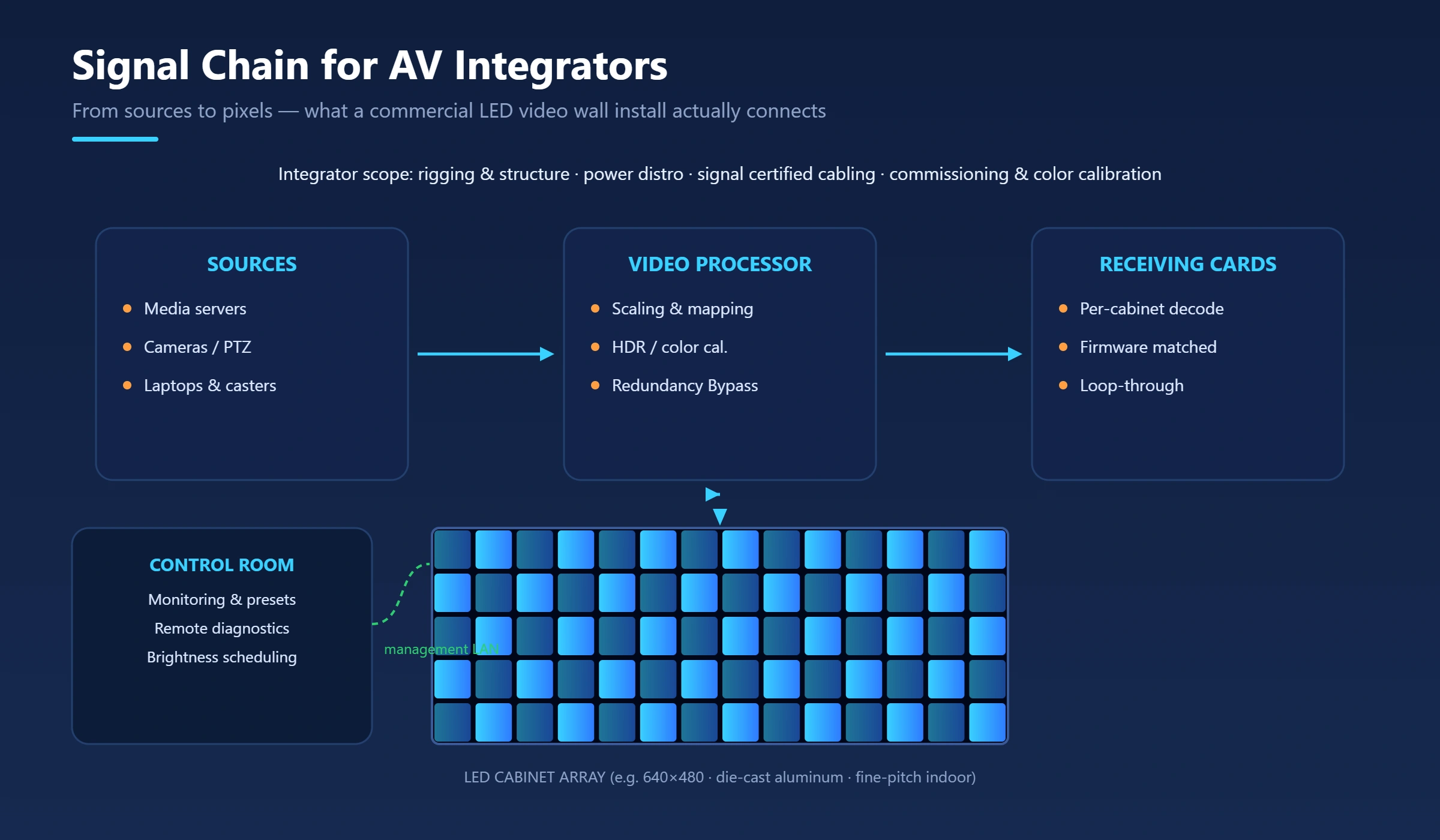
A video wall is not a standalone product. It must work with signal sources, video processors, control systems, media players, network infrastructure, power distribution, and content workflows. Common integration questions include: Will the LED processor support the required resolution? Can the system accept the customer’s 4K source? Will the display work properly with Crestron, Extron, AMX? Is the refresh rate suitable for cameras?
Pain Point 5: Transparent Hardware Pricing Hides Real Project Costs
LED cabinet pricing is easier to compare than ever. End customers can search online, request multiple quotes, and compare pixel pitch, cabinet size, and price per square foot. But experienced integrators know the real cost is not only the cabinet price. Hidden costs may include extra structural work, custom mounting modifications, long installation time, emergency freight, unplanned service calls, incompatible control hardware, lack of spare parts, difficult module replacement, and repeated commissioning visits.
The integrator protects profit by reducing risk, not by choosing the lowest cabinet price. This is where Chipshow America Inc. can become a strategic LED partner for AV integrators.
Chipshow’s Value System for AV Integrators
Chipshow America Inc. supports AV integrators by combining LED product engineering, U.S.-based project coordination, practical installation support, and product lines designed for real commercial environments. For integrators, the value is not only in the screen. The value is in helping projects move from concept to installation with fewer unknowns.
U.S. Local Support and Inventory Planning Help Shorten Project Timelines
Chipshow America Inc. operates from: 640 Irving Avenue, Glendale, CA 91201. For North American AV integrators, a U.S. point of contact is important. It helps with project communication, product coordination, sample planning, spare parts discussions, technical review, and schedule management.
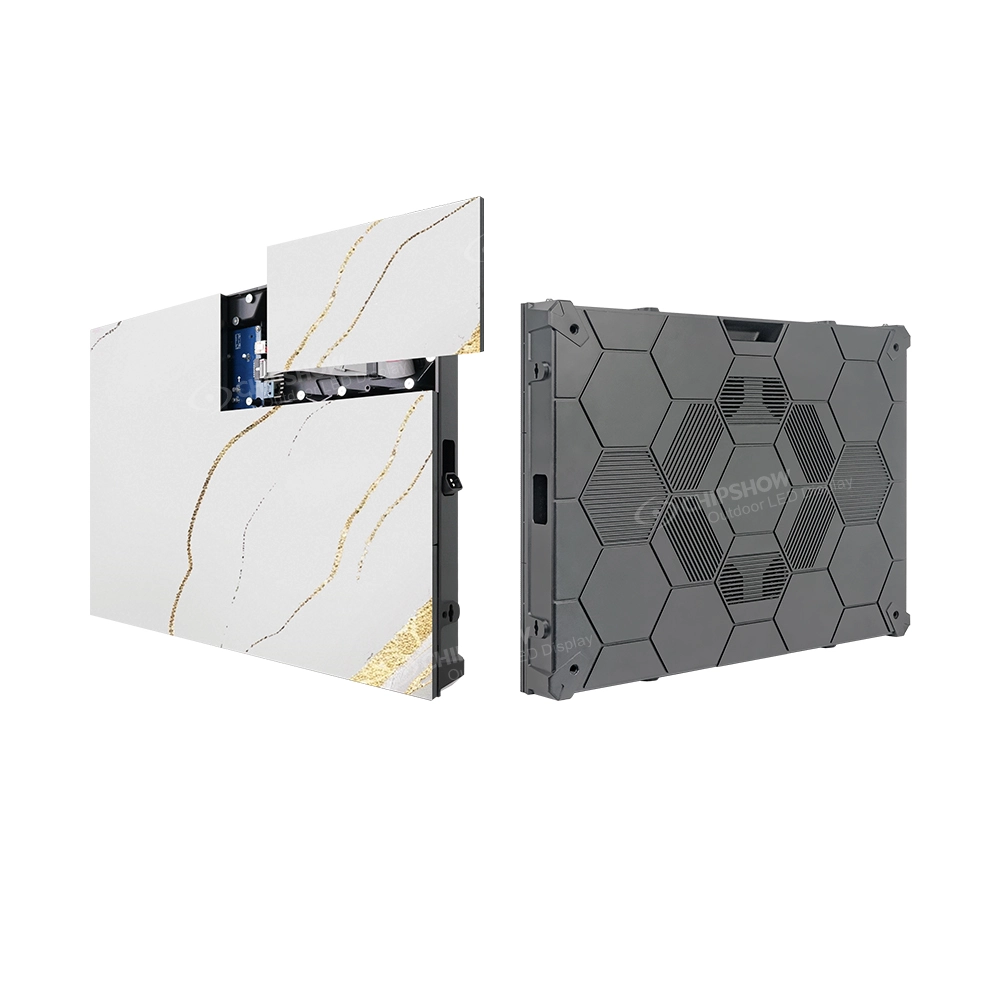
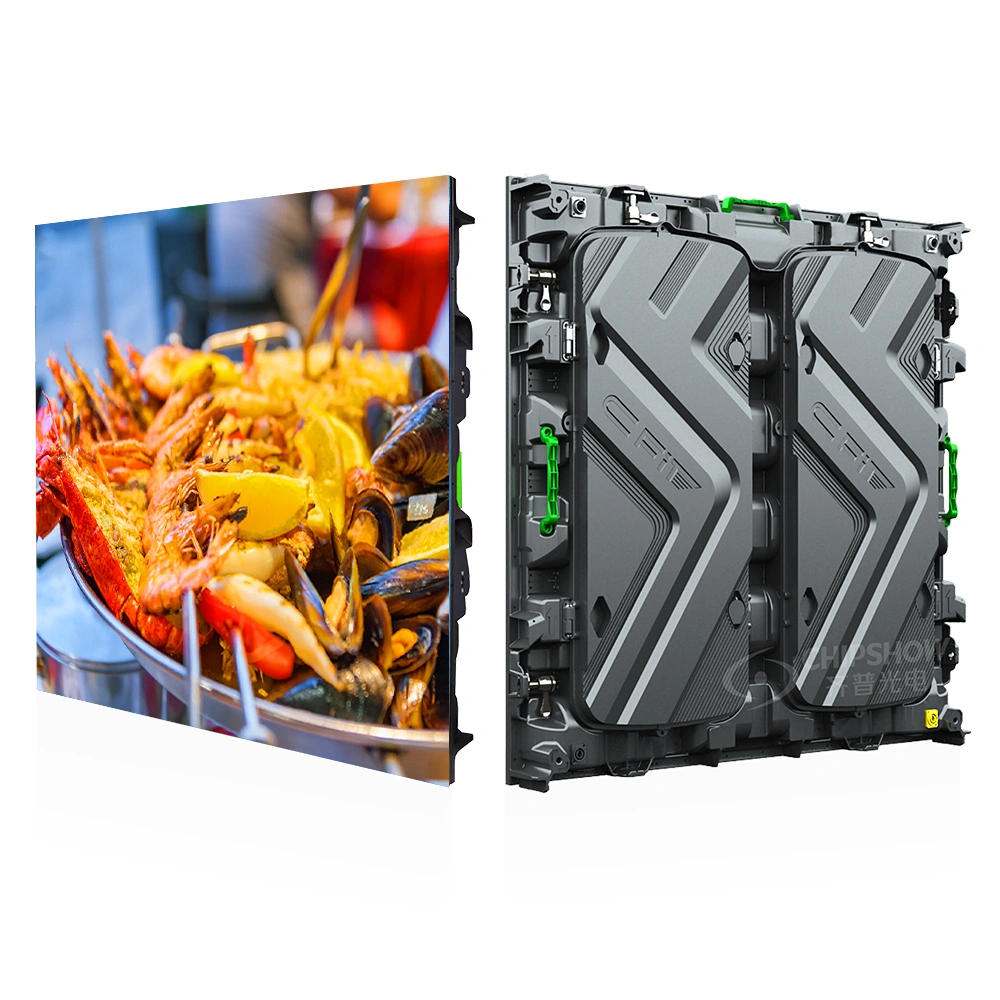
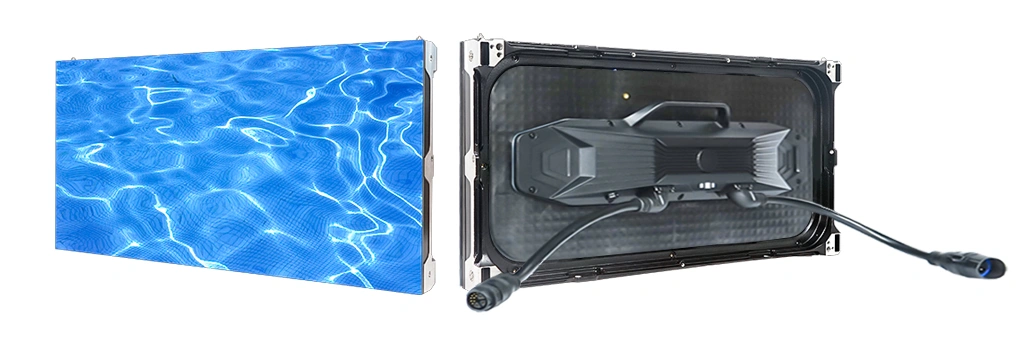
C-Max: Indoor commercial LED video walls — ideal for corporate interiors, retail, conference rooms.
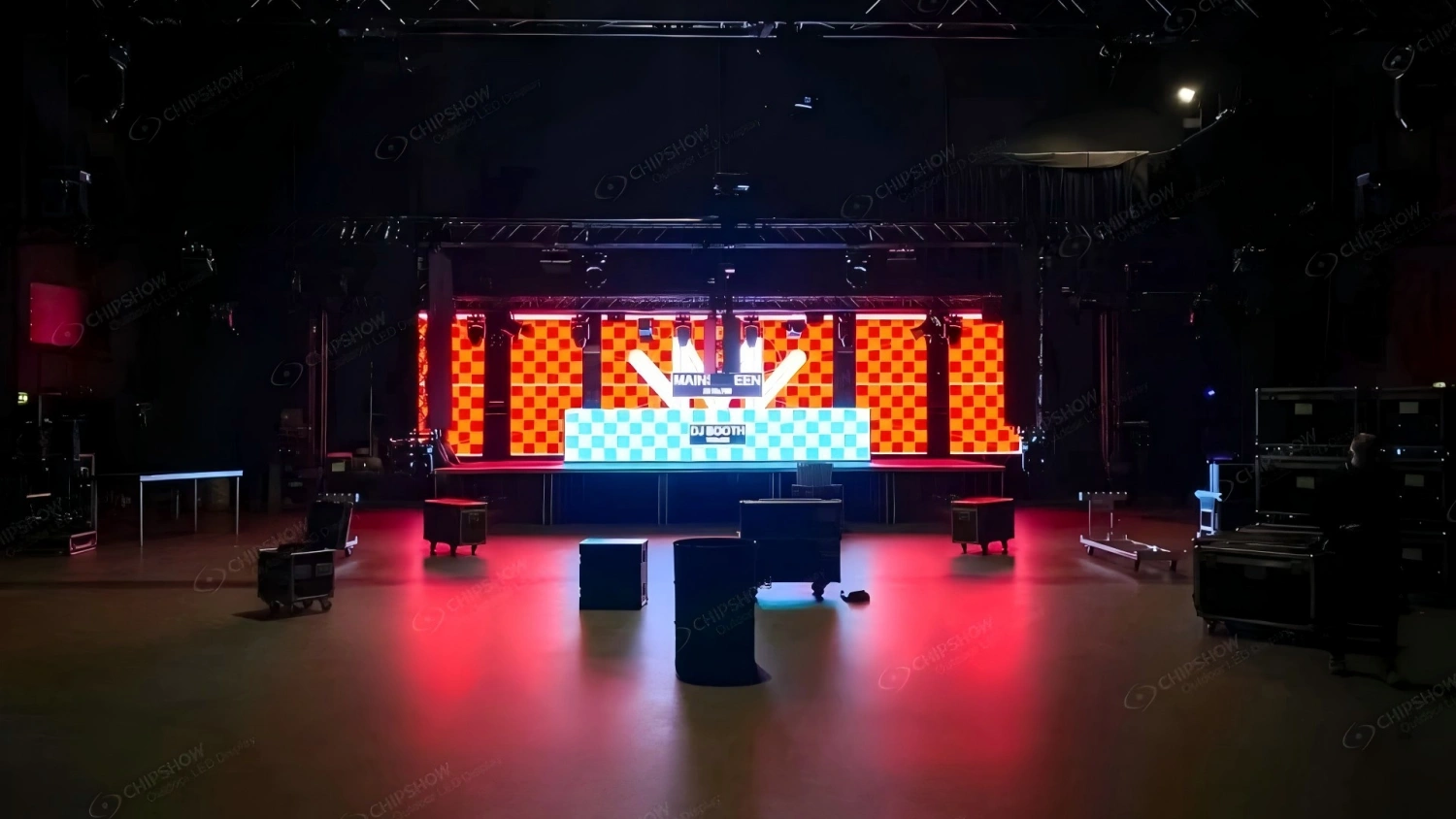
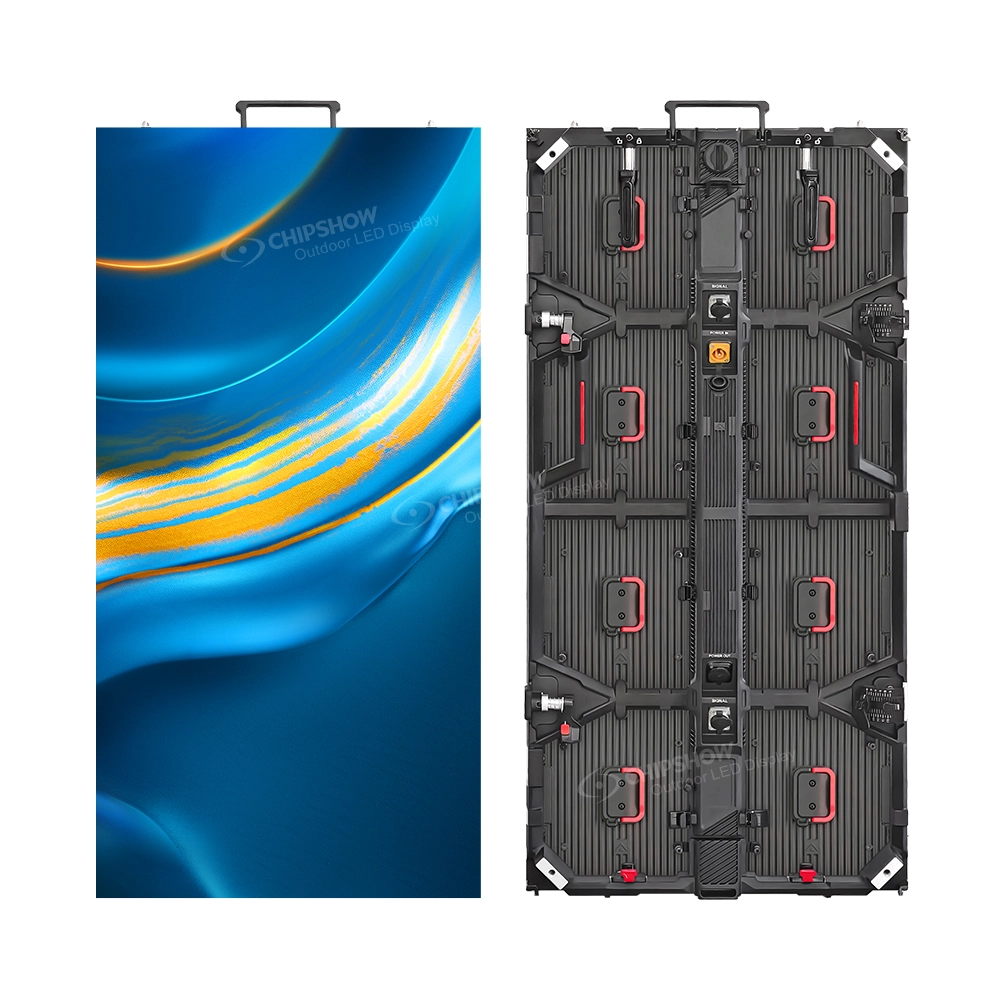
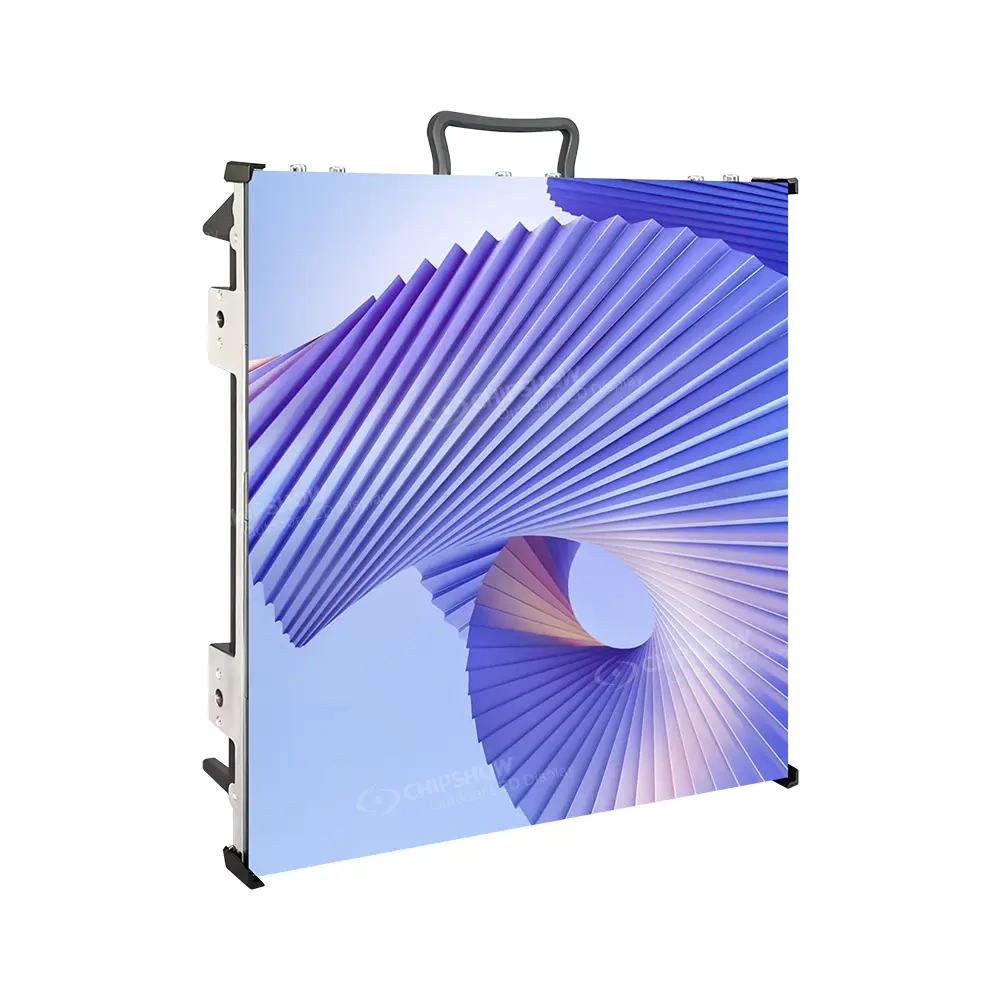
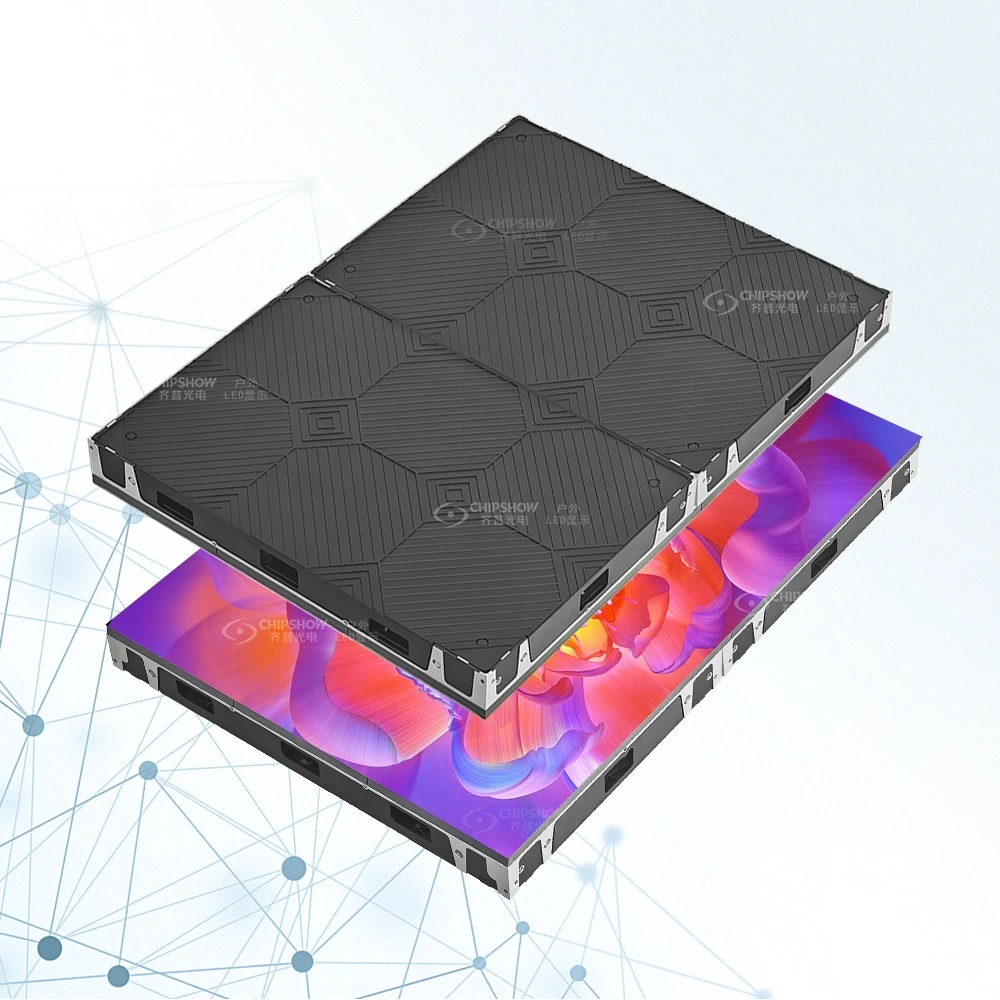
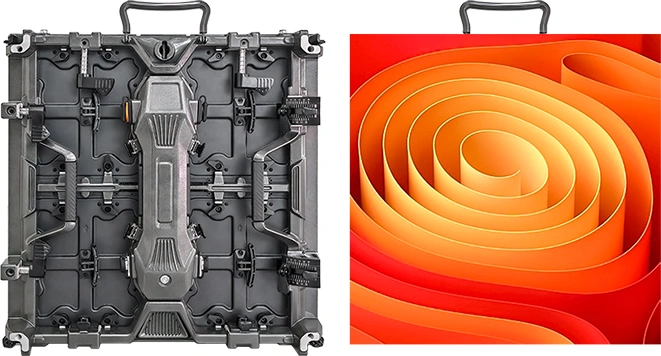
C-Rock: Rental, staging, event, production LED — designed for fast setup, repeated handling.
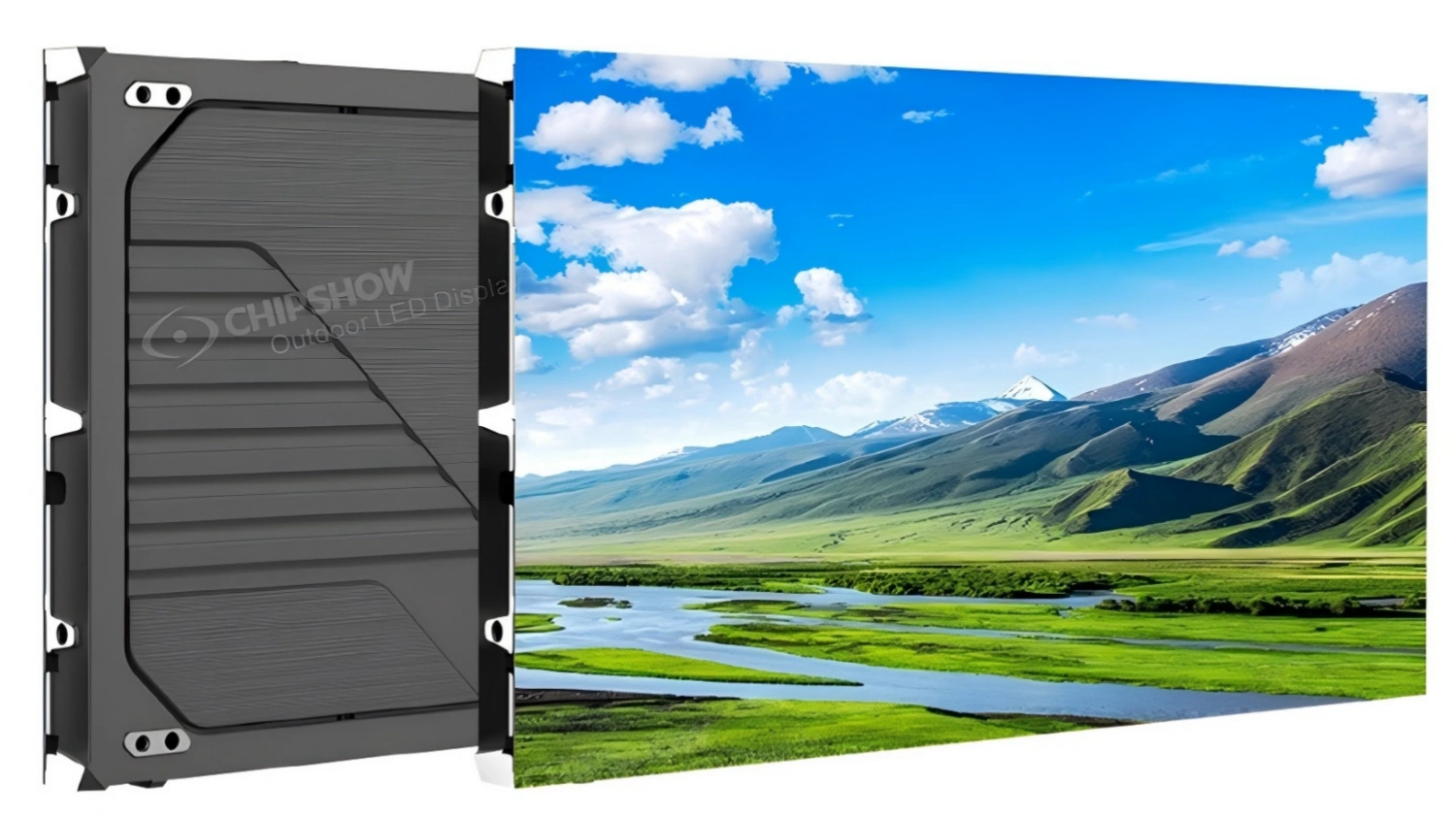
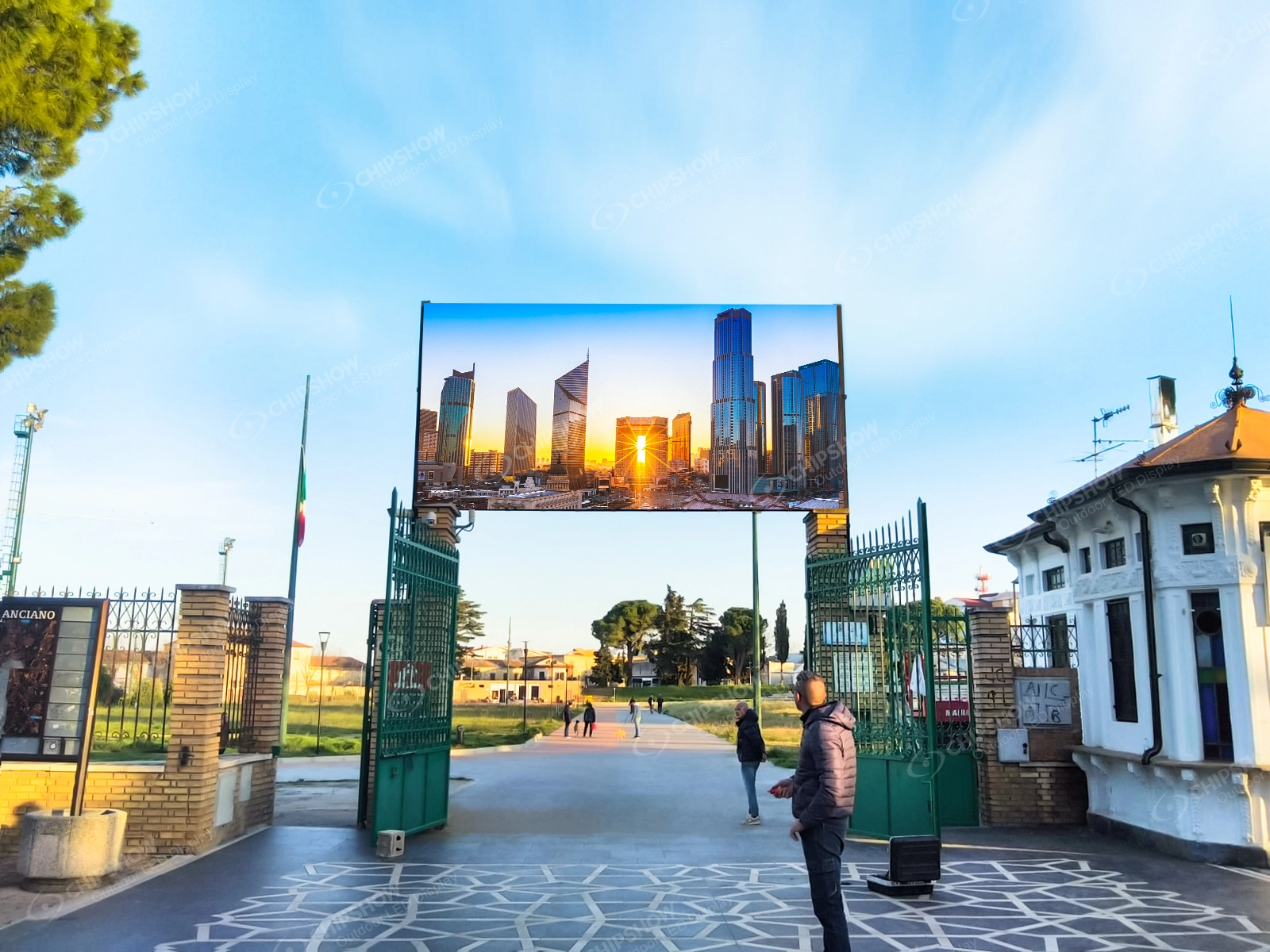
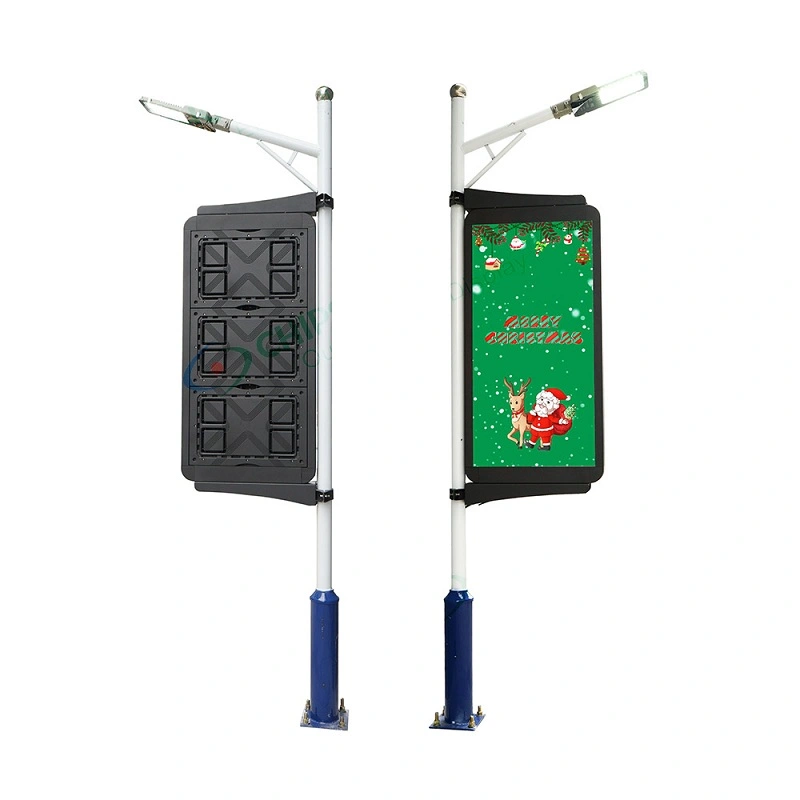
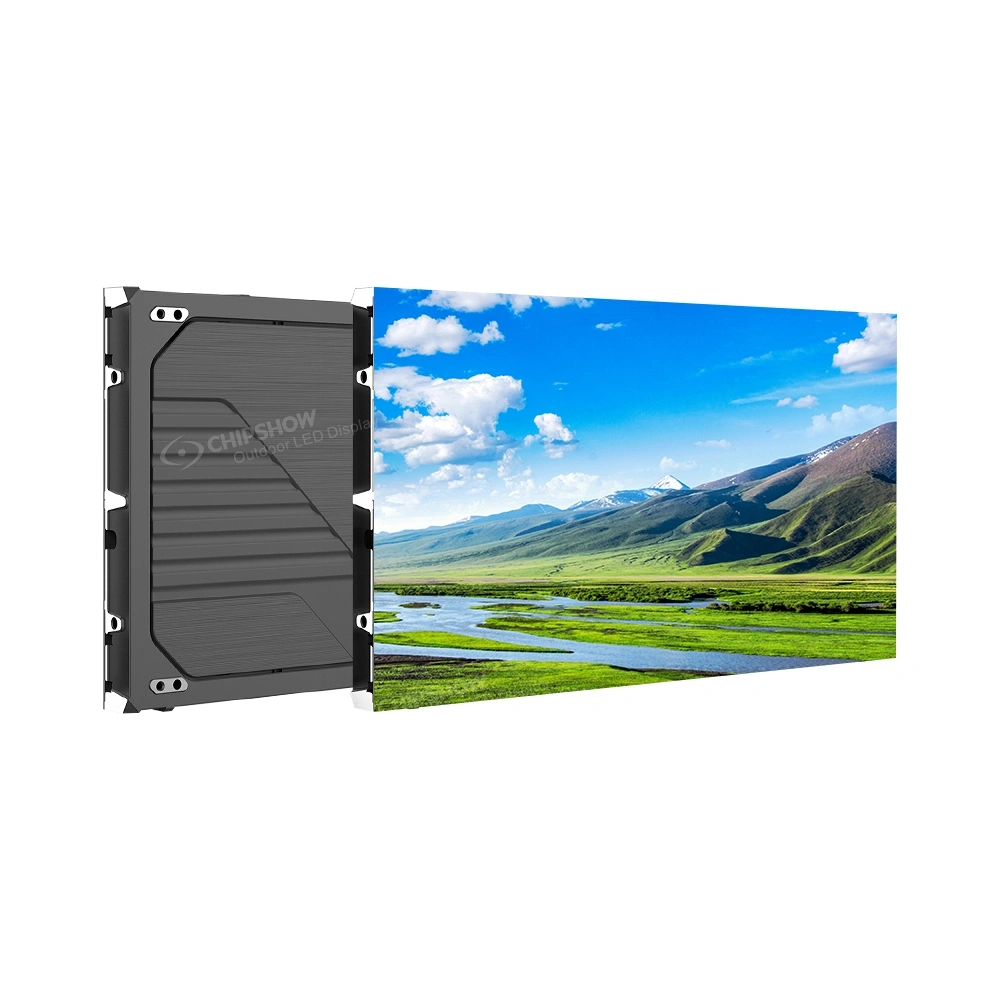
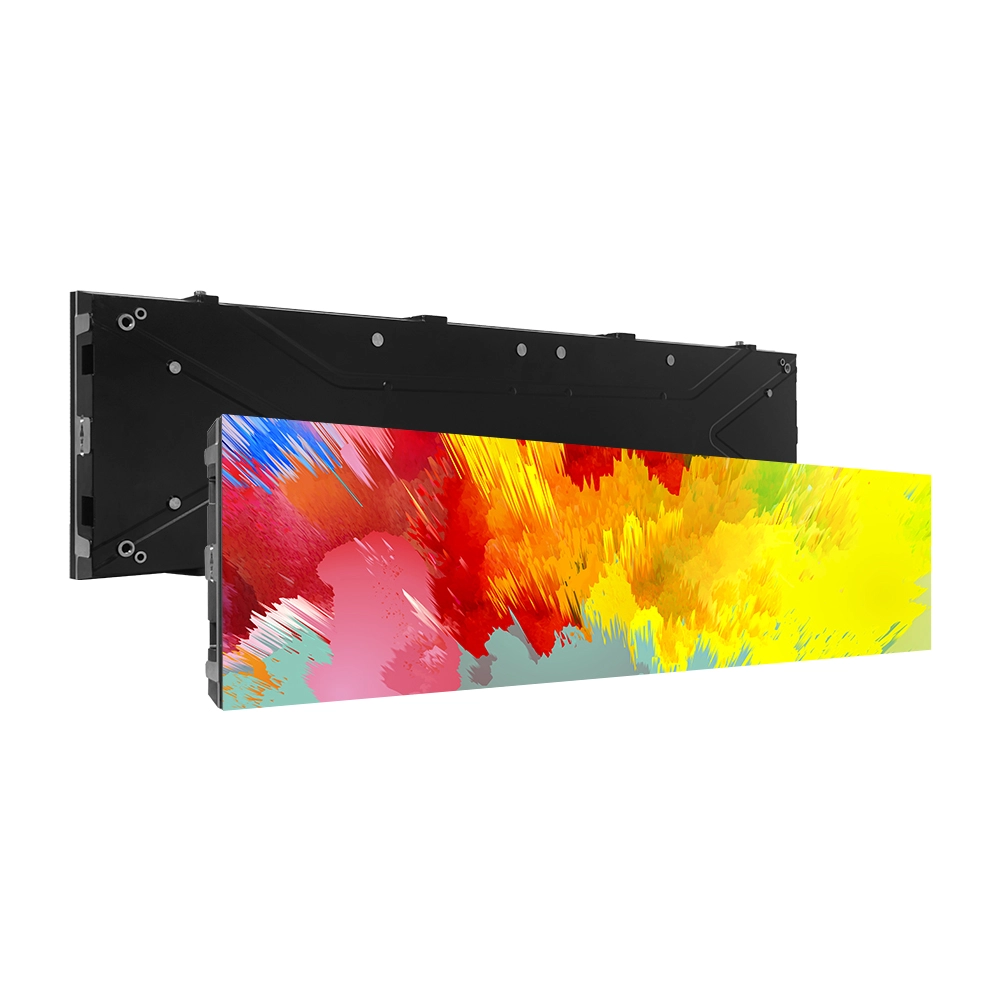
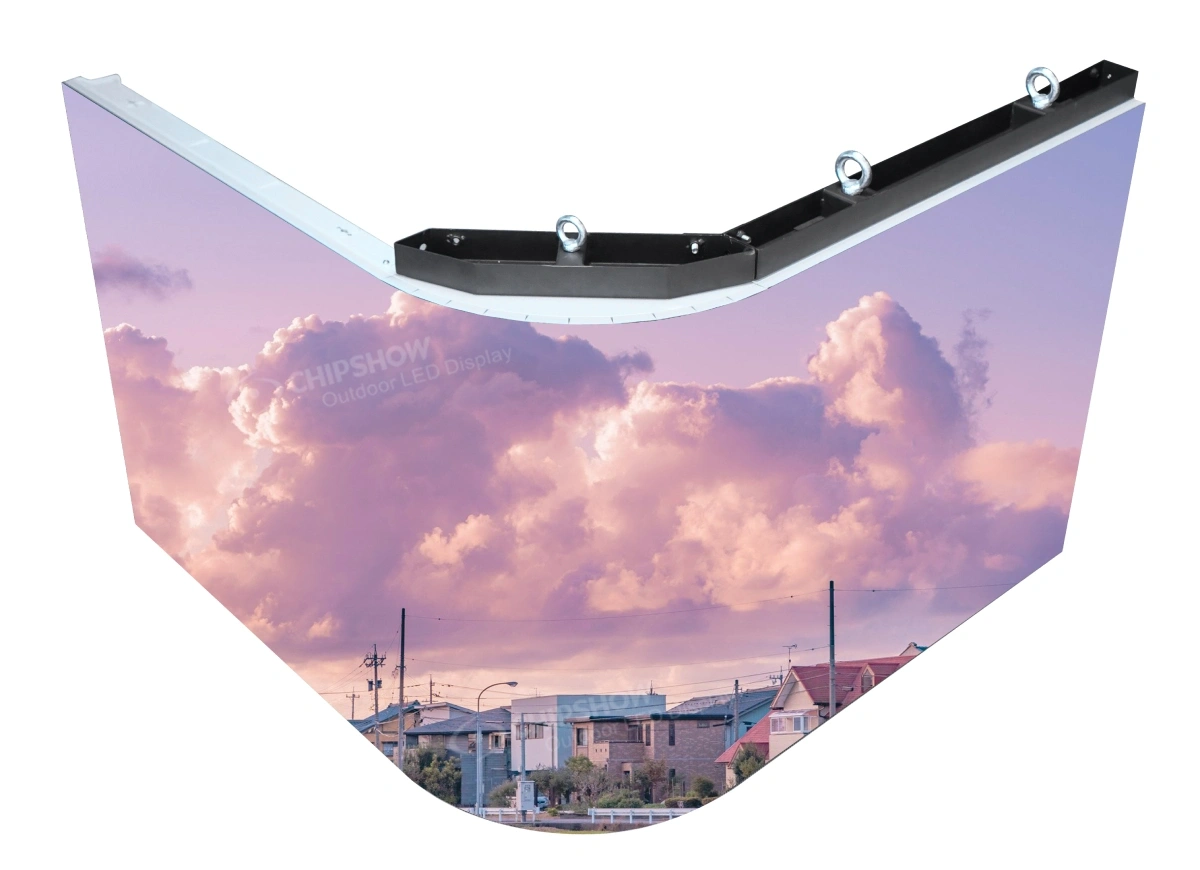
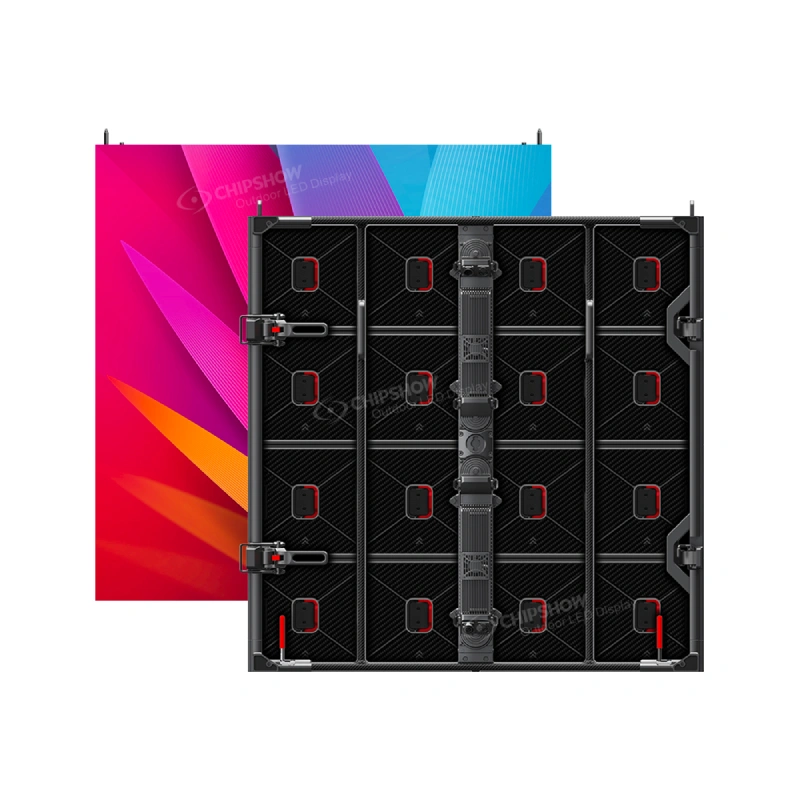
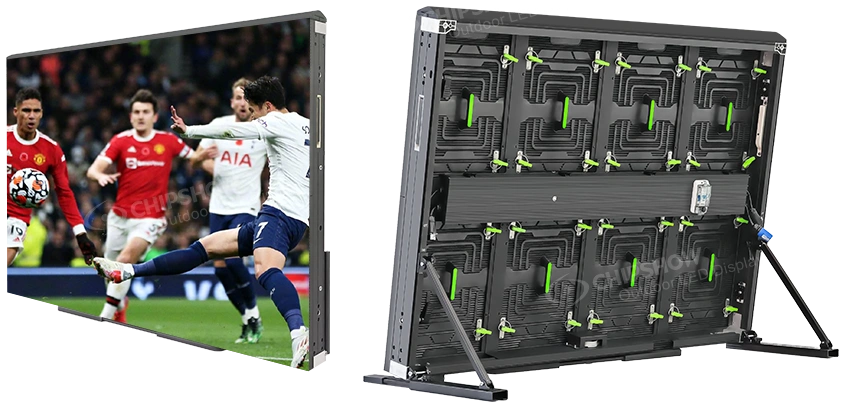
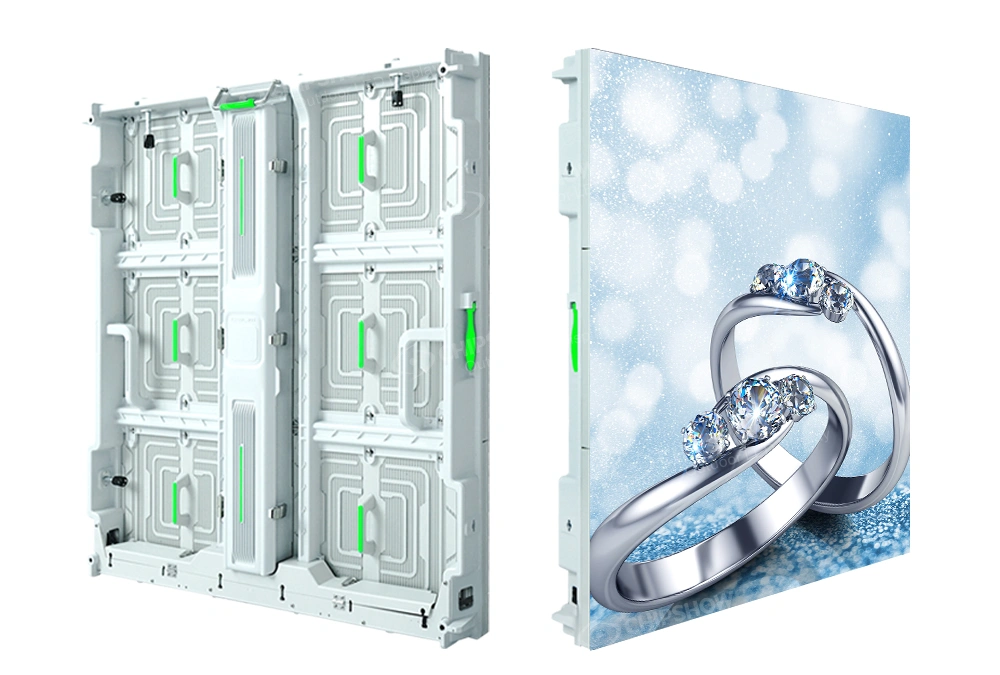
C-Slim: Outdoor LED signage and building-mounted displays — for DOOH, billboard-style projects.
End-to-End Technical Support Reduces Engineering Risk
Solution Design → Structural Review Support → Electrical Planning Support → Installation Guidance → Commissioning and Acceptance Support.
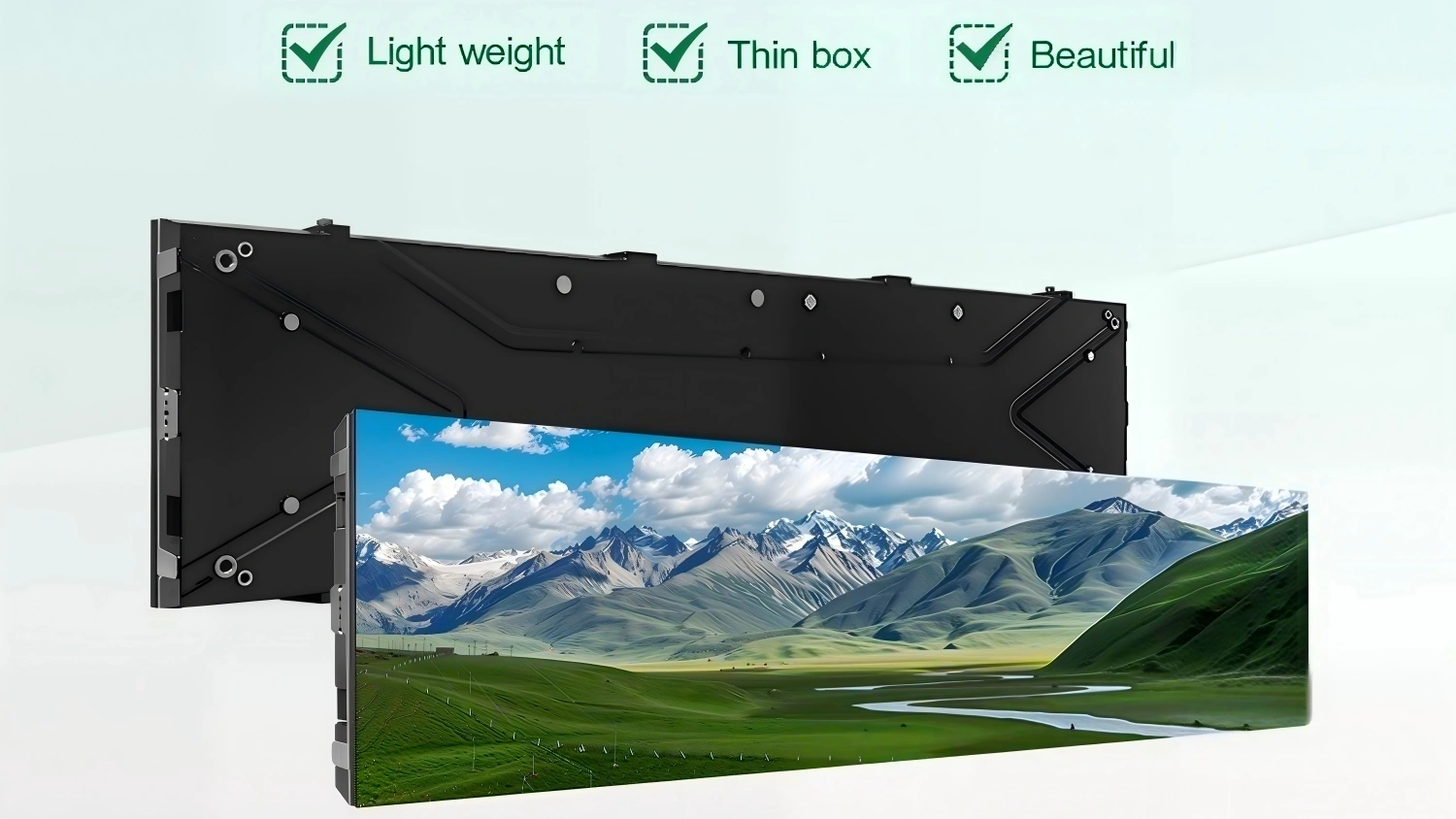
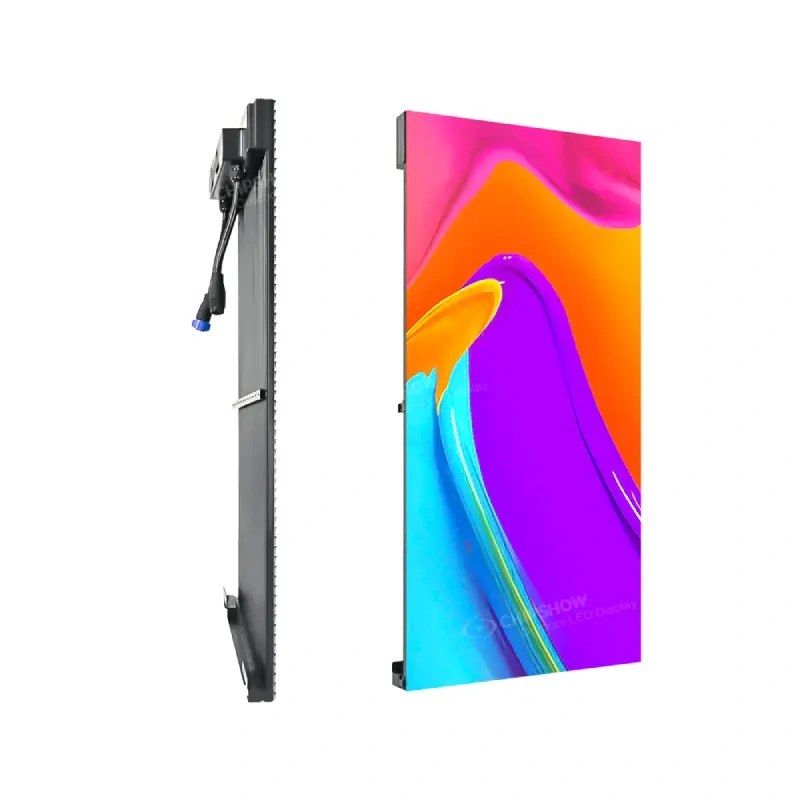
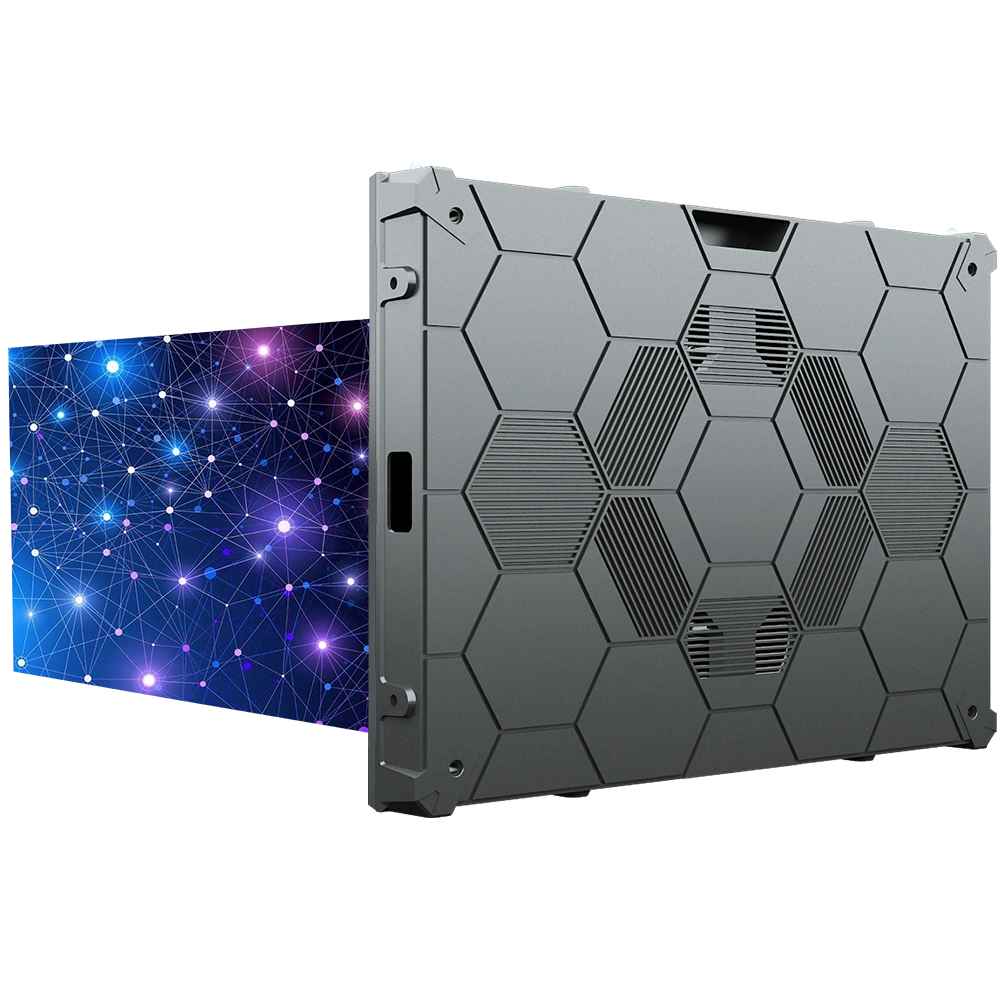
A front-service indoor platform such as C-Max can help integrators design for both aesthetics and serviceability. This matters because a wall that looks beautiful on day one can become expensive to maintain if no one planned access.
Technical Compatibility Helps LED Fit into the AV Ecosystem
Chipshow LED systems can be planned around compatibility with major LED control ecosystems such as NovaStar, Brompton, ColorLight. For AV control integration, the LED wall is usually managed through Crestron, Extron, AMX, Q-SYS, BrightSign-based media systems, AV-over-IP.
Margin Protection Helps Integrators Build Profitable LED Projects
Energy-efficient design, fast-lock and serviceable structures, long-life low-maintenance design, and better project design create recurring revenue opportunities (content updates, preventive maintenance, remote monitoring).
Technical Parameter Deep Dive for AV Integrators
Physical Parameter Comparison: C-Max (Indoor commercial), C-Rock (Rental/Stage), C-Slim (Outdoor signage). Key planning concerns: wall depth, viewing distance, rigging, wind load, brightness, weather exposure.
Optical parameters that matter: Brightness, Refresh Rate (important for cameras), Contrast Ratio, Color Consistency, Viewing Angle, Grayscale Performance.
Reliability and Redundancy: dual signal backup, power redundancy, spare module package, processor configuration backup. Certifications: UL/ETL, FCC, project documentation.
Compliance & Standards Block: North American Approval Readiness
For commercial AV and DOOH projects in North America, compliance is not a paperwork detail. It can determine whether a project receives permit approval, passes inspection, and moves forward to installation. A display that looks technically strong on a quotation can still delay the entire project if the electrical safety documentation, electromagnetic compatibility information, or inspection-ready product records are incomplete.
AV integrators are often responsible for coordinating with general contractors, electrical contractors, consultants, facility managers, local authorities, fire marshals, and building inspectors. That means compliance must be addressed before the LED video wall arrives on site, not after the installation team discovers that an inspector is asking for documentation.
Why Compliance Matters for Integrators
Using Chipshow LED display solutions with project-appropriate compliance documentation helps AV integrators reduce approval risk, support smoother permit review, and prepare for local inspection requirements. Final certification status should always be confirmed according to the selected model, configuration, and project jurisdiction.
| Compliance Area | Integrator Concern | Why It Matters in North American Projects |
|---|---|---|
| ETL / UL Electrical Safety | Electrical safety recognition for commercial installation review | Helps support conversations with the AHJ, electrical inspector, building inspector, facility owner, and fire marshal during permit and acceptance review. |
| FCC Class A / Class B EMC | Electromagnetic interference control | Important for corporate meeting rooms, broadcast spaces, command centers, education facilities, retail environments, and other locations with sensitive AV/IT equipment. |
| Fire Marshal Review | Safety, wiring, installation access, and emergency operation concerns | Helps integrators prepare documentation before inspection and avoid last-minute installation delays. |
| Building Inspector Review | Mounting, electrical coordination, public-space installation, and code-related documentation | Supports smoother handoff between the AV integrator, GC, electrician, architect, and local inspection authority. |
| Project Documentation Package | Submittals, product data, electrical information, installation references, and service access notes | Gives integrators a stronger technical package for consultants, owners, and construction teams before equipment is released for installation. |
ETL / UL: Electrical Safety for Commercial AV Projects
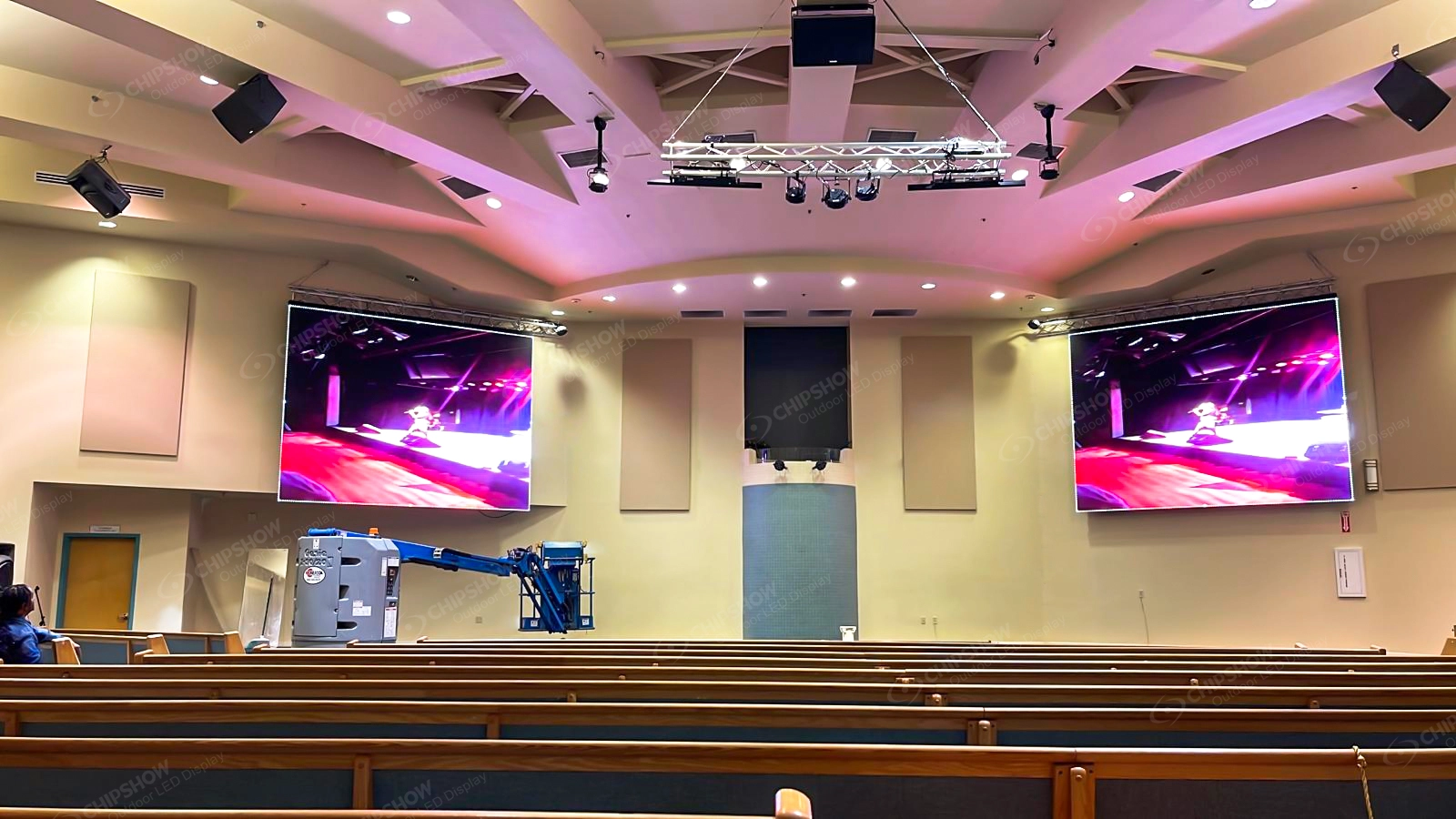
In U.S. commercial environments, electrical safety documentation is often one of the first items reviewed by consultants, facility teams, and inspectors. For LED video walls installed in offices, schools, retail stores, transportation facilities, control rooms, houses of worship, event venues, and public-facing DOOH locations, the integrator should confirm whether the selected display configuration carries the required ETL, UL, or other applicable safety recognition for the project.
Chipshow helps integrators approach this review process with a compliance-first mindset. Instead of treating certification as an afterthought, the project should define the required documentation during the quotation and submittal stage. This helps avoid situations where a display has already been selected but cannot move through local approval smoothly.
FCC Class A / Class B: EMC Considerations for AV and IT Environments
Electromagnetic compatibility is especially important in enterprise AV environments. A corporate boardroom, executive briefing center, university lecture hall, command center, or broadcast-adjacent space may include wireless microphones, cameras, conferencing systems, AV-over-IP equipment, control processors, network switches, DSPs, and sensitive IT infrastructure.
FCC Class A or Class B requirements should be reviewed based on the installation environment. For many commercial and industrial applications, Class A documentation may be relevant. For environments closer to residential, mixed-use, or highly sensitive customer spaces, the integrator should confirm whether Class B or other EMC expectations apply. Chipshow can help integrators review project-level requirements so the LED wall does not become an interference concern during commissioning or inspection.
Permit-Ready Thinking: Reducing Fire Marshal and Building Inspector Risk
For North American projects, the real goal is not only to choose an LED wall that performs well. The goal is to deliver a system that can be approved, installed, inspected, serviced, and handed over with fewer surprises.
When integrators work with Chipshow on standard or in-stock configurations, the project team can review compliance documentation, electrical data, mounting information, and service requirements before the system reaches the job site. This helps integrators prepare more complete submittals and reduces the risk of delays during review by the local fire marshal, building inspector, electrical inspector, or authority having jurisdiction.
Integrator takeaway: with Chipshow, compliance can be built into the project workflow from product selection to submittal, installation, inspection, and long-term support. Final approval always depends on the selected product, installation method, local code requirements, and the decision of the local authority, but early documentation planning gives integrators a much stronger path to successful project delivery.
Six LED Video Wall Applications AV Integrators Can Cover with Chipshow
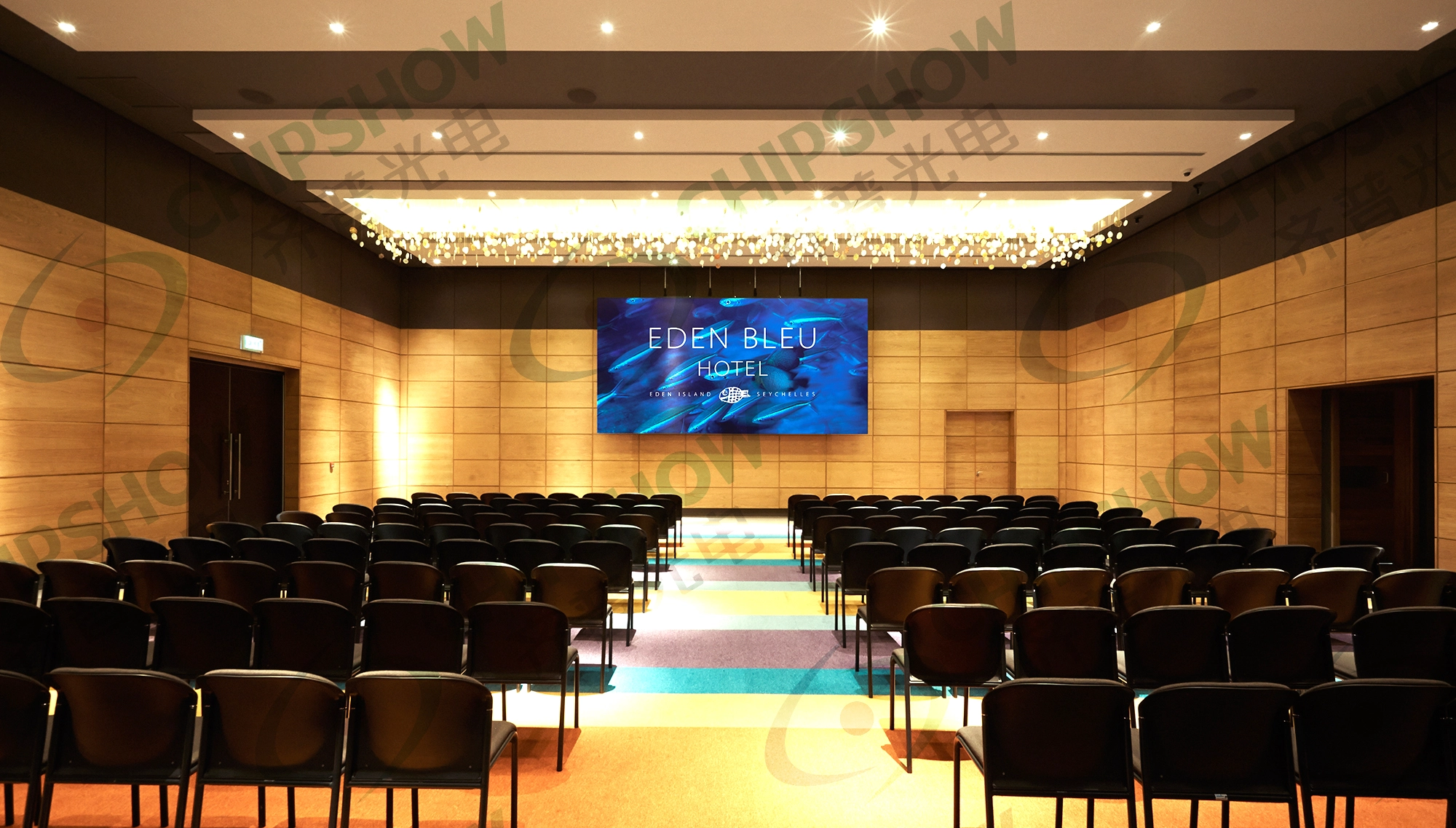
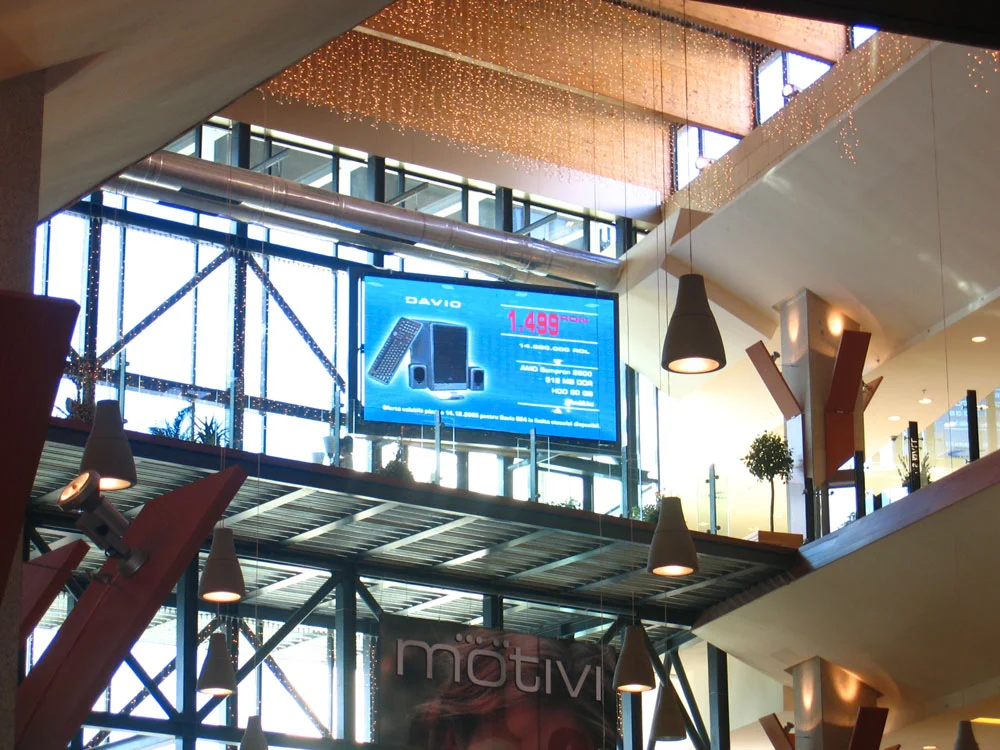
4.1 Indoor LED Display: Offices, retail interiors, lobbies, boardrooms. C-Max series supports fine-pitch and front-service planning.
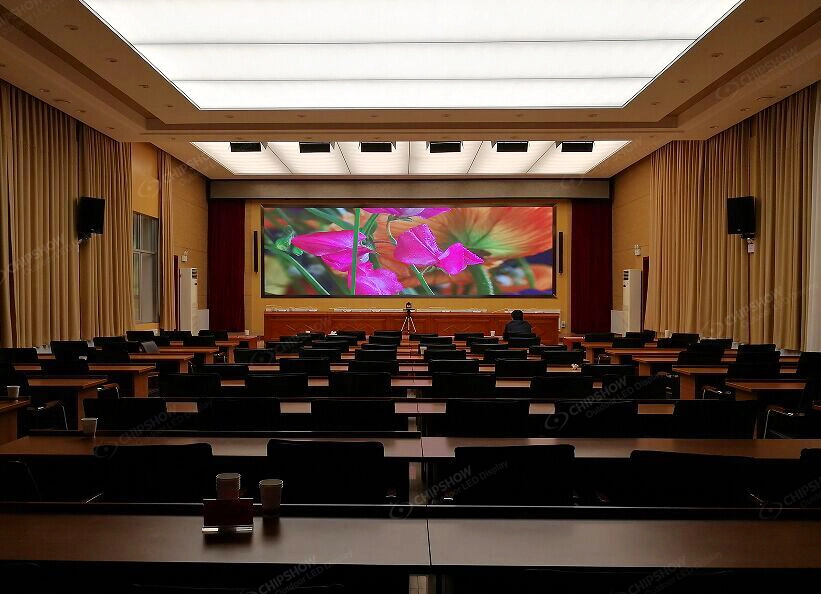
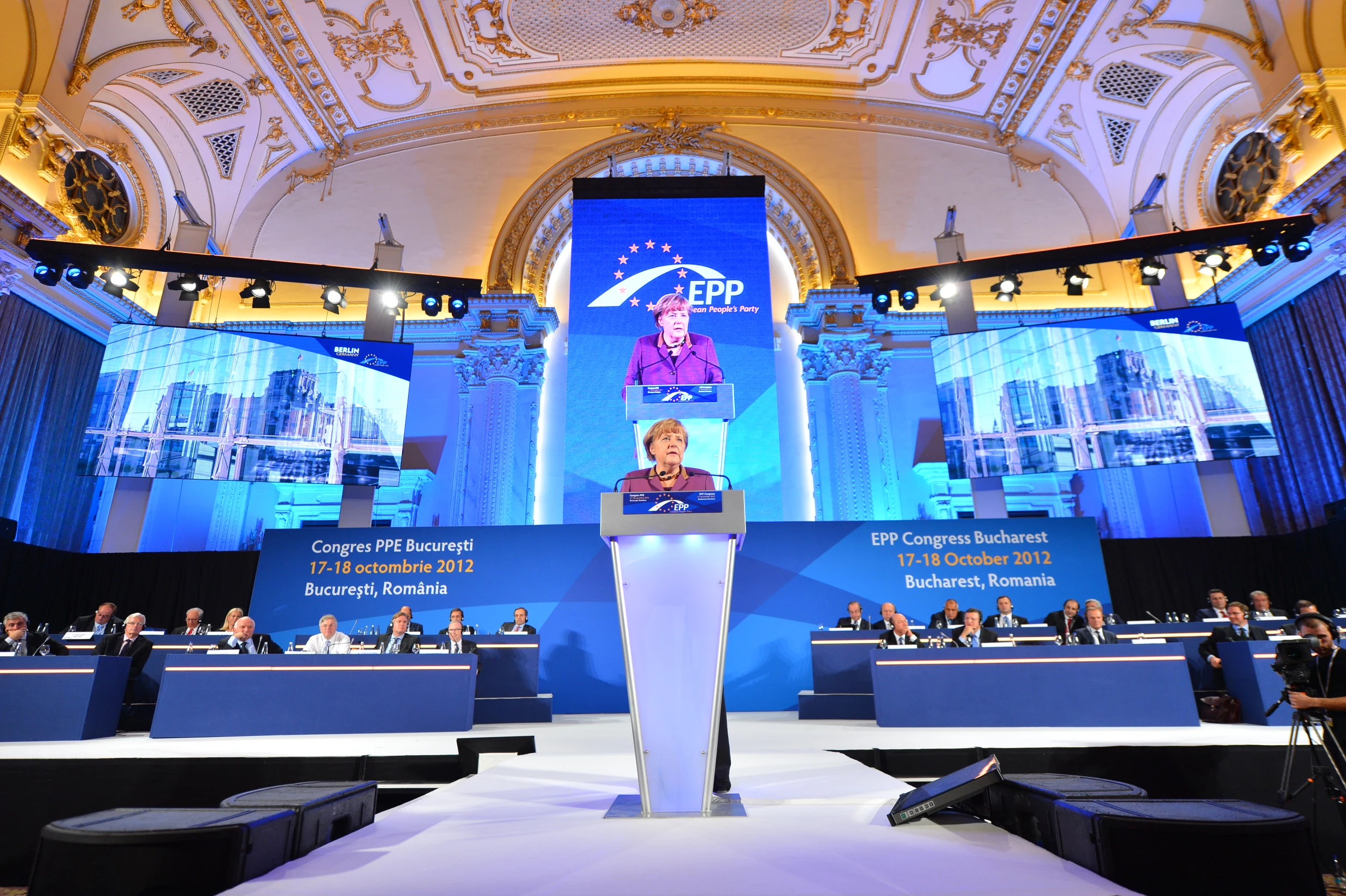
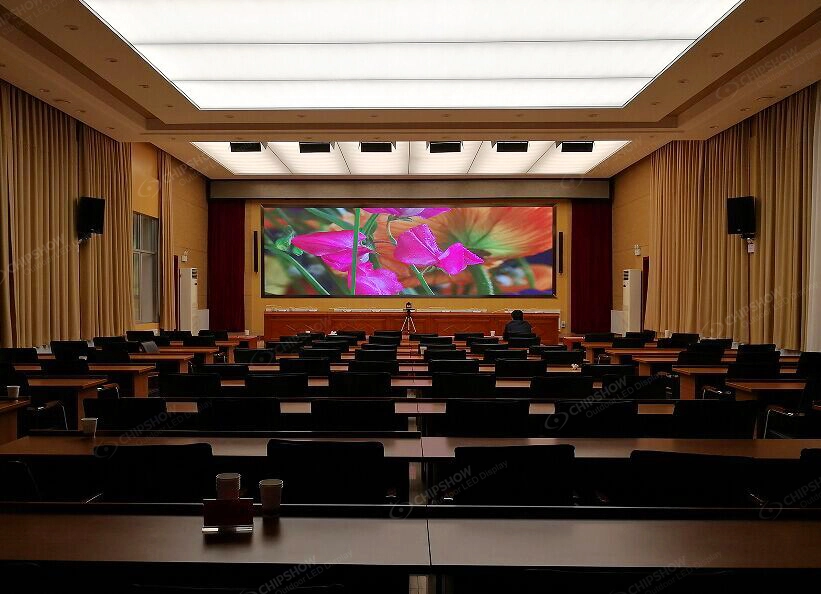
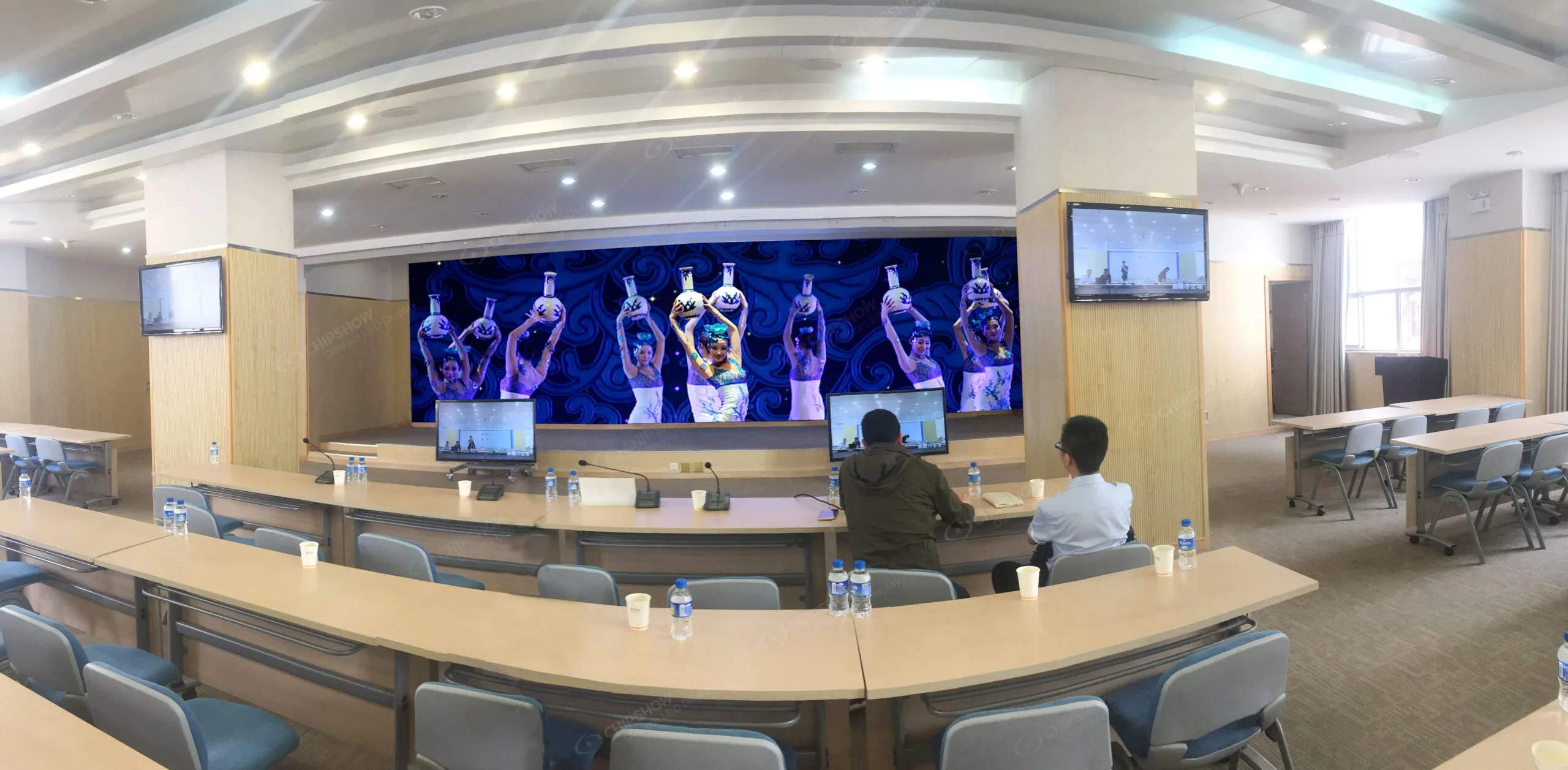
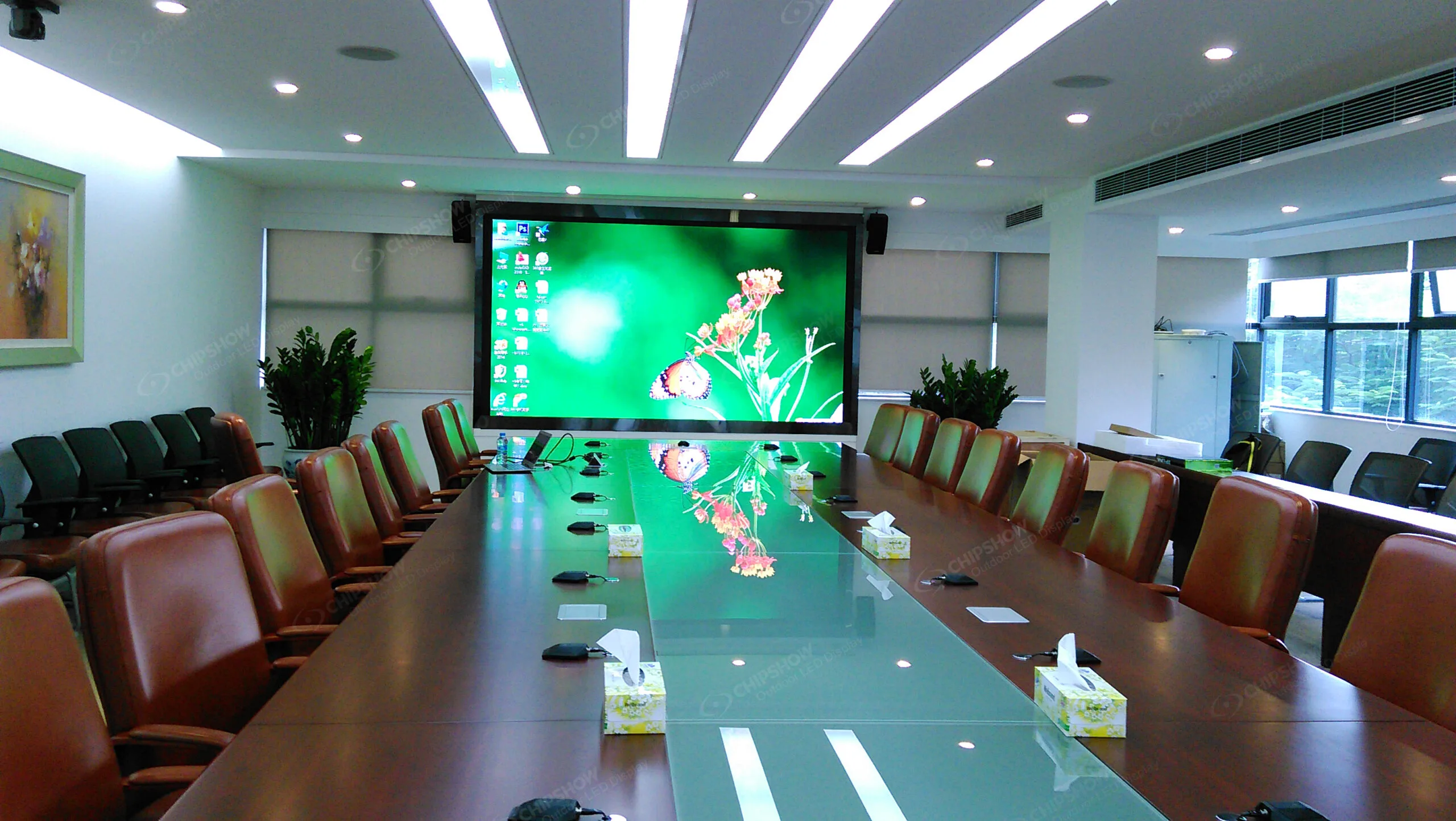
4.2 Conference and Education LED: Boardrooms, lecture halls, hybrid learning. Pixel pitch based on viewing distance, refresh rate suitable for cameras.
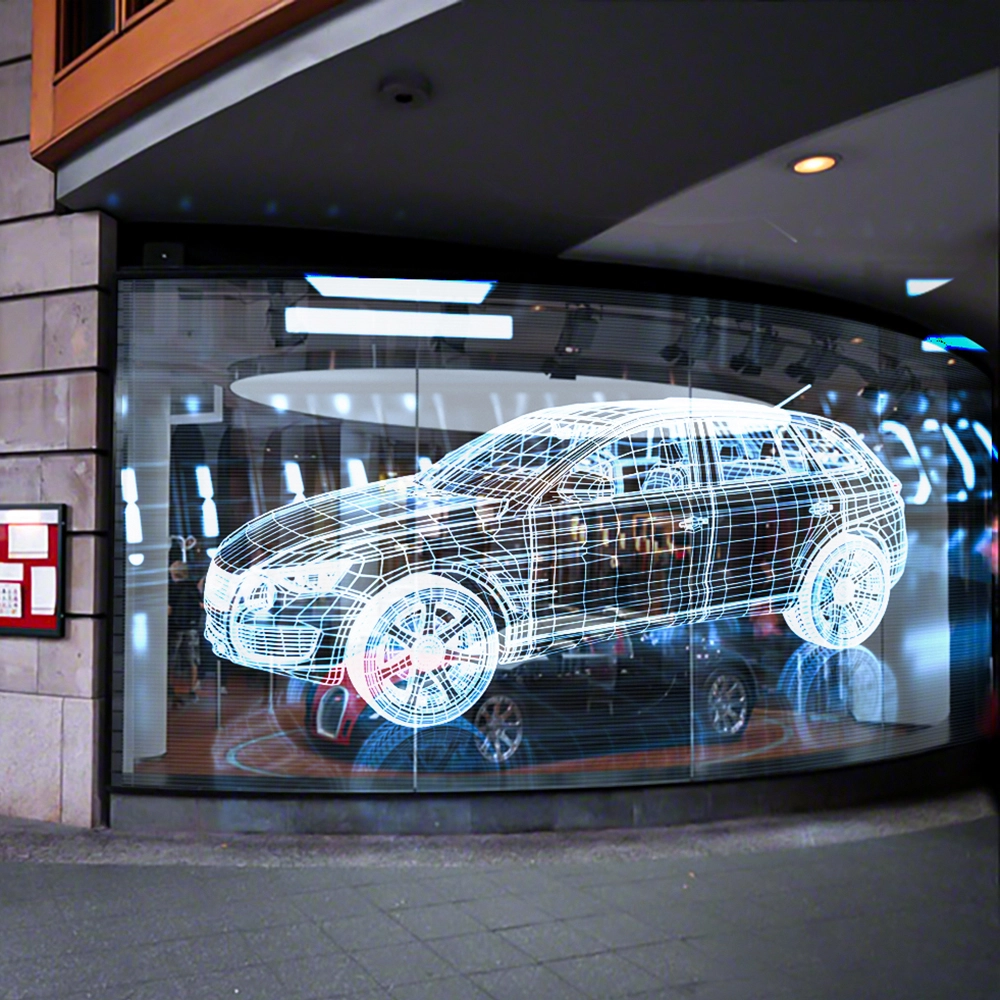
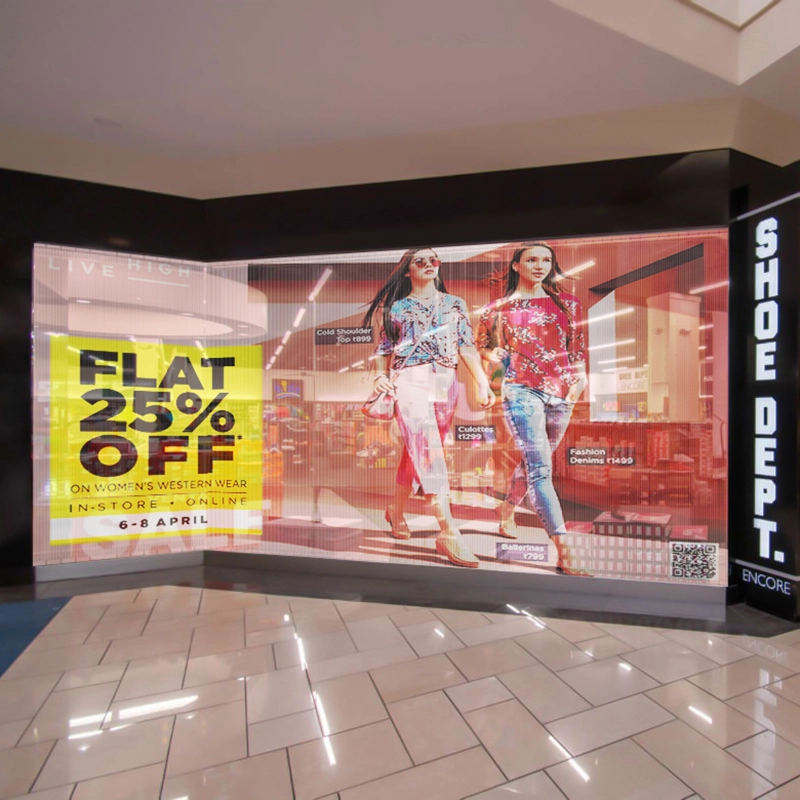
4.3 Retail and Shopping Mall LED: Digital merchandising, brand experience. Front-service indoor platforms preserve design intent.
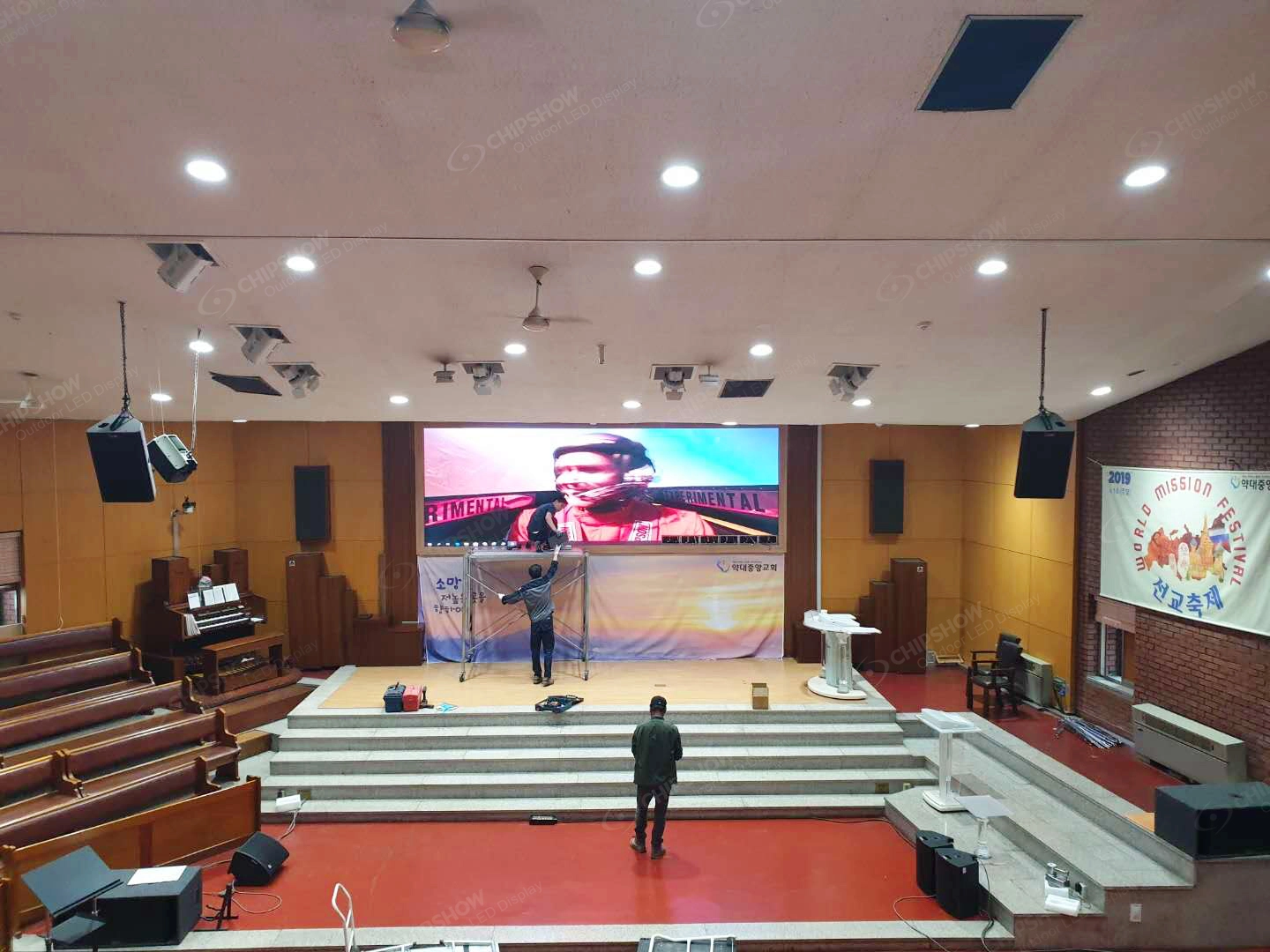
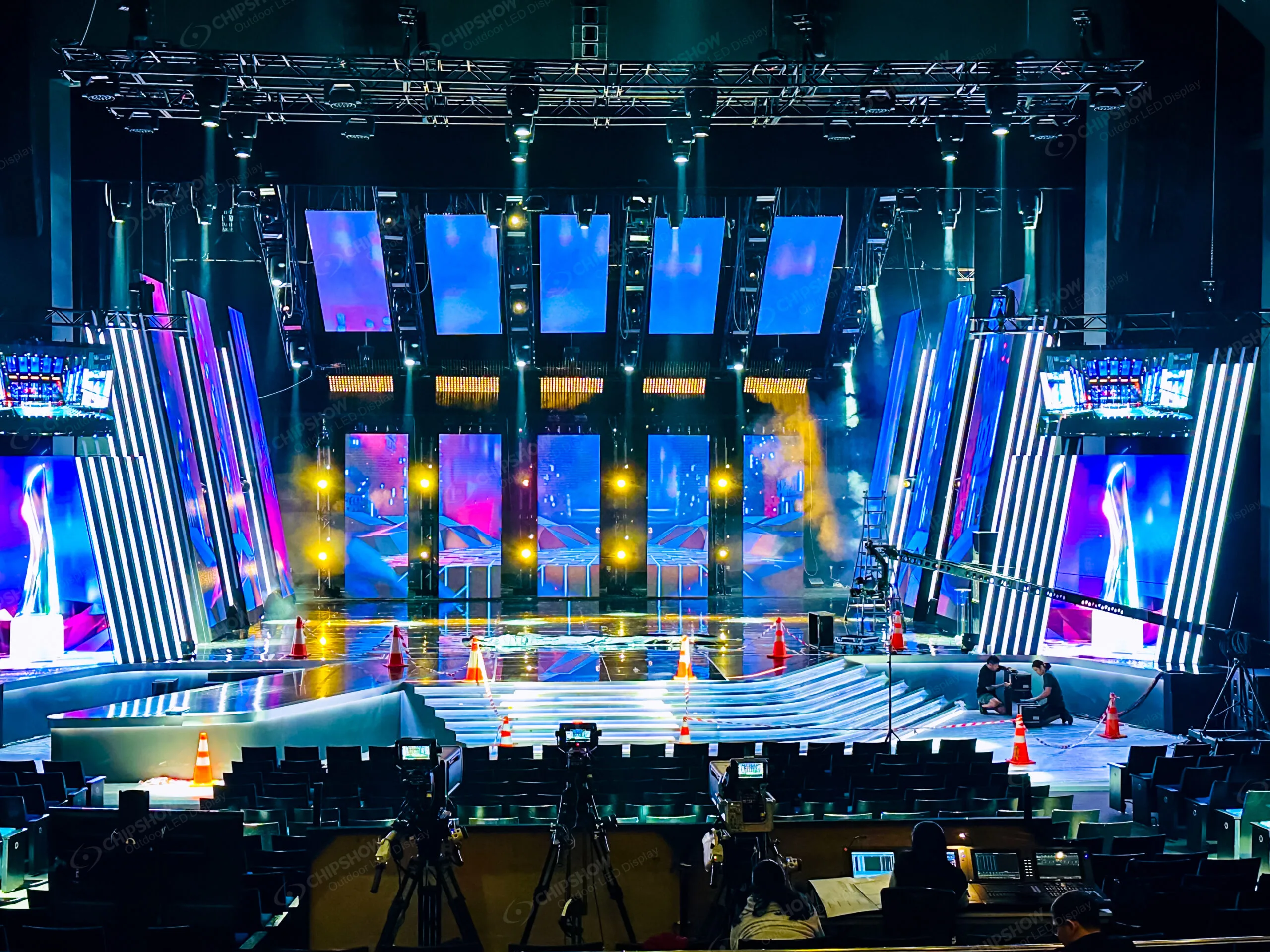
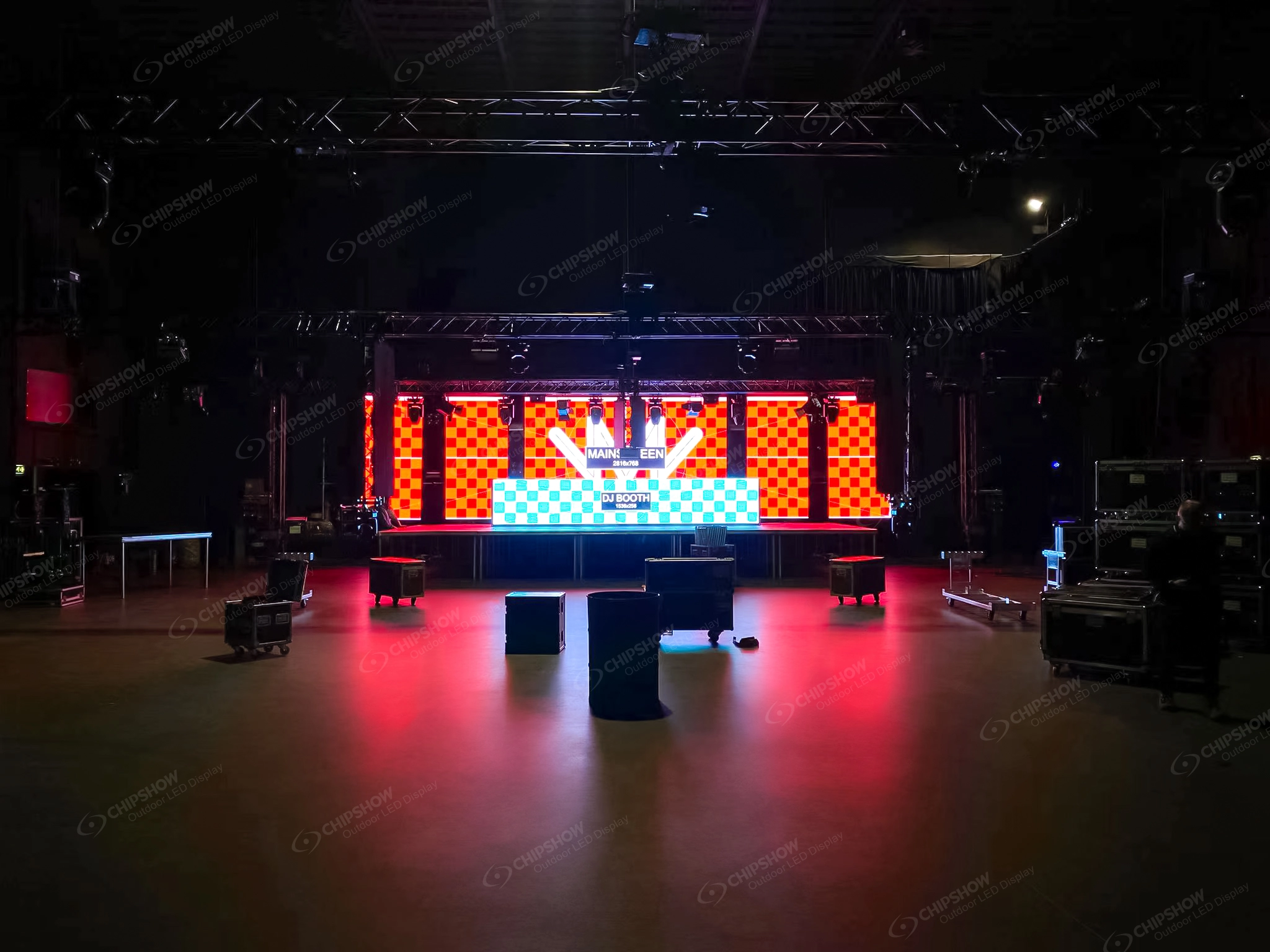
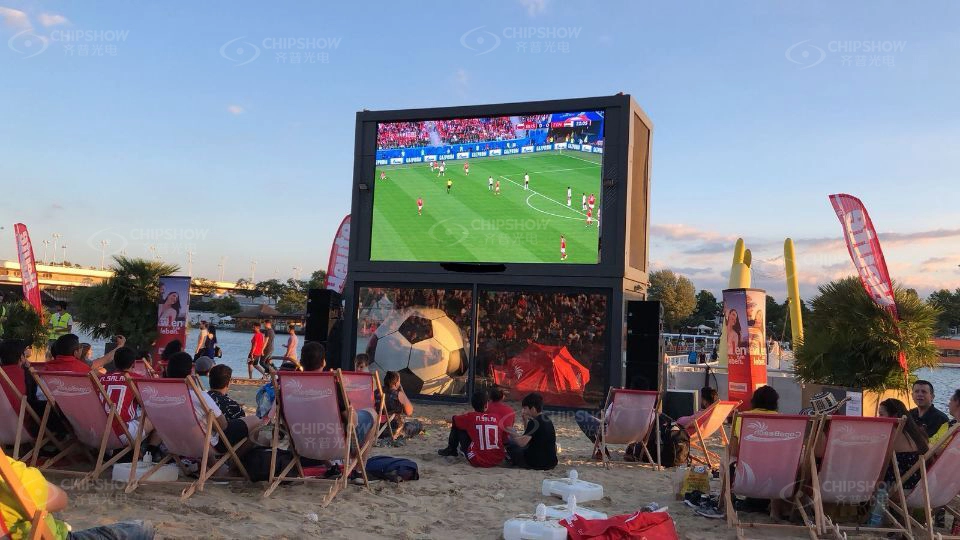
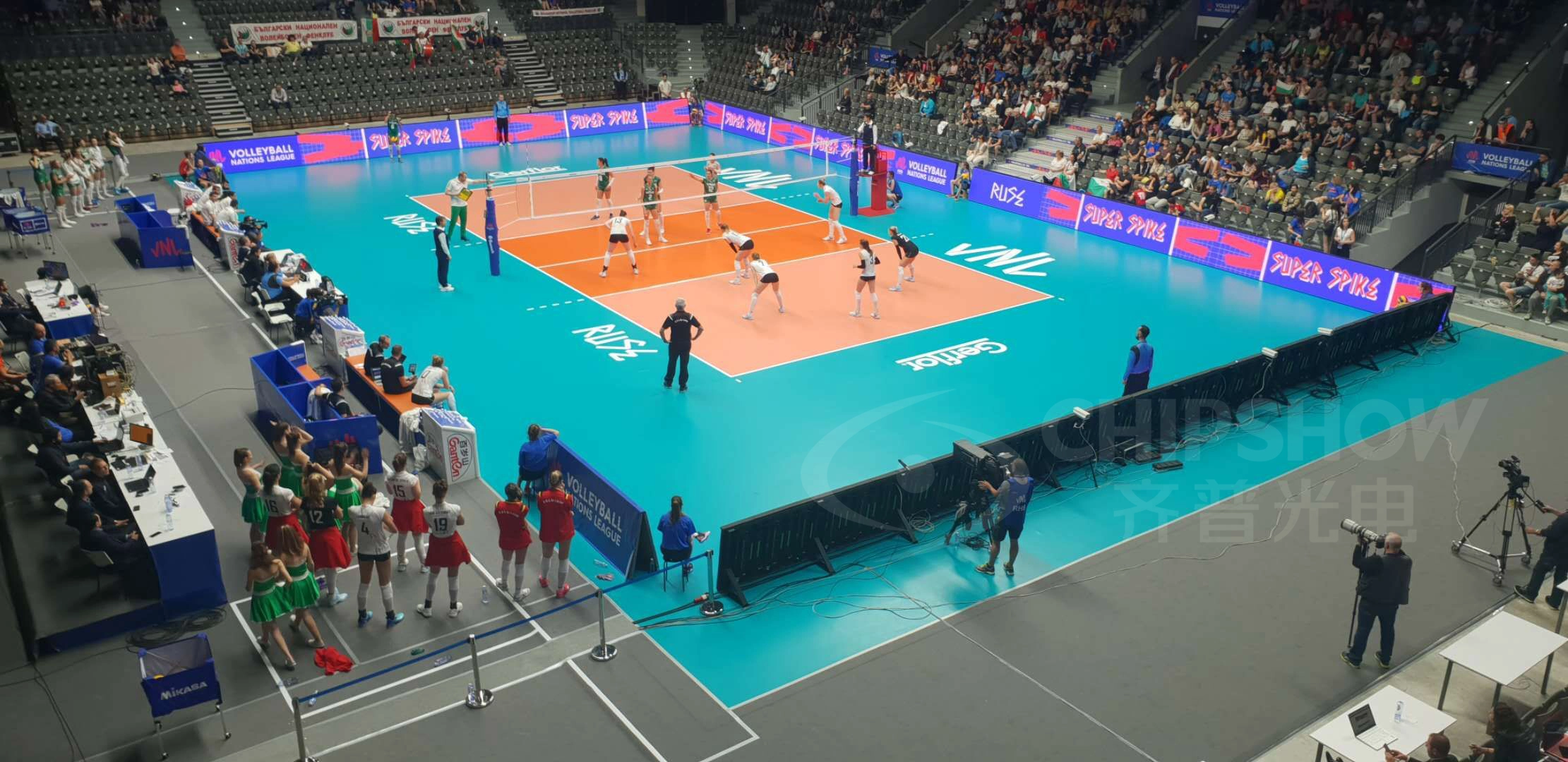
4.4 Event and Stage LED: Rental, production, touring. C-Rock series – cabinet weight, rigging, refresh rate, fast module replacement.
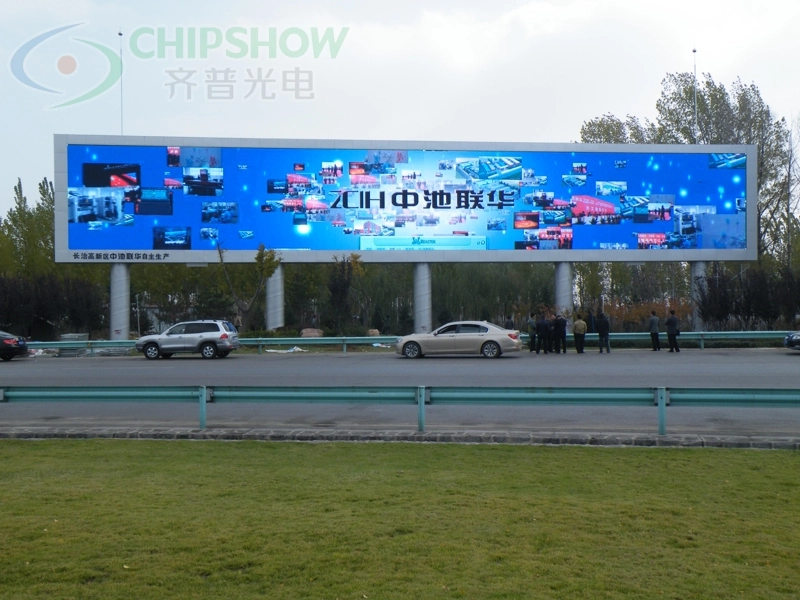
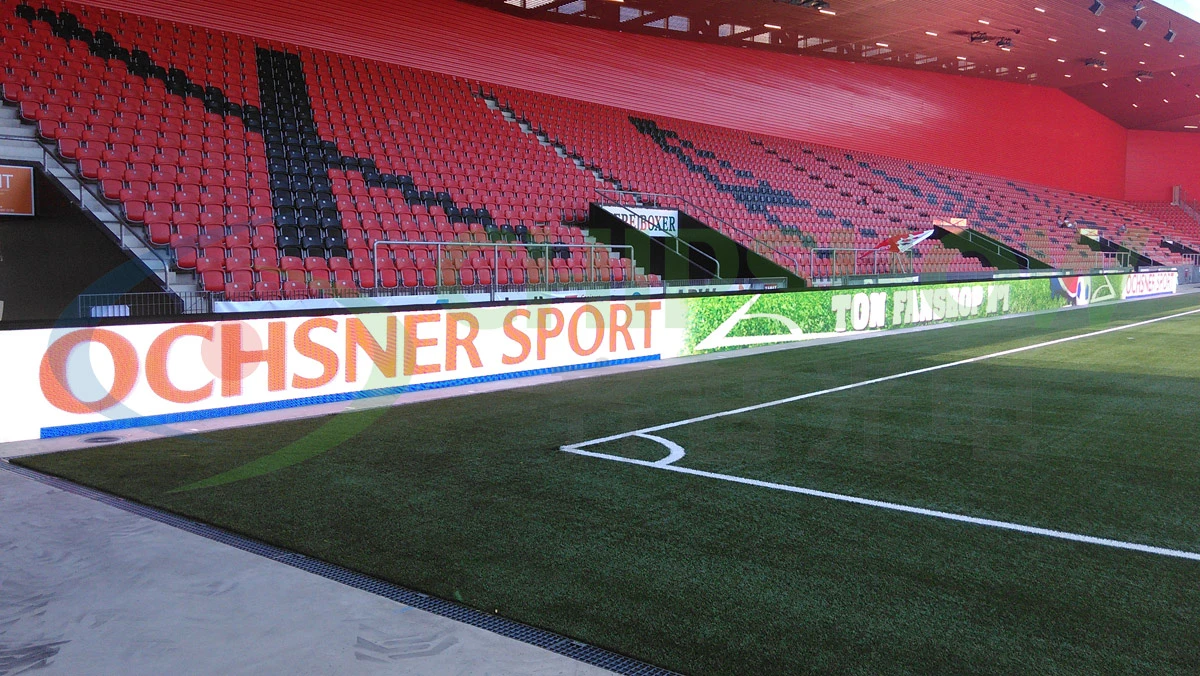
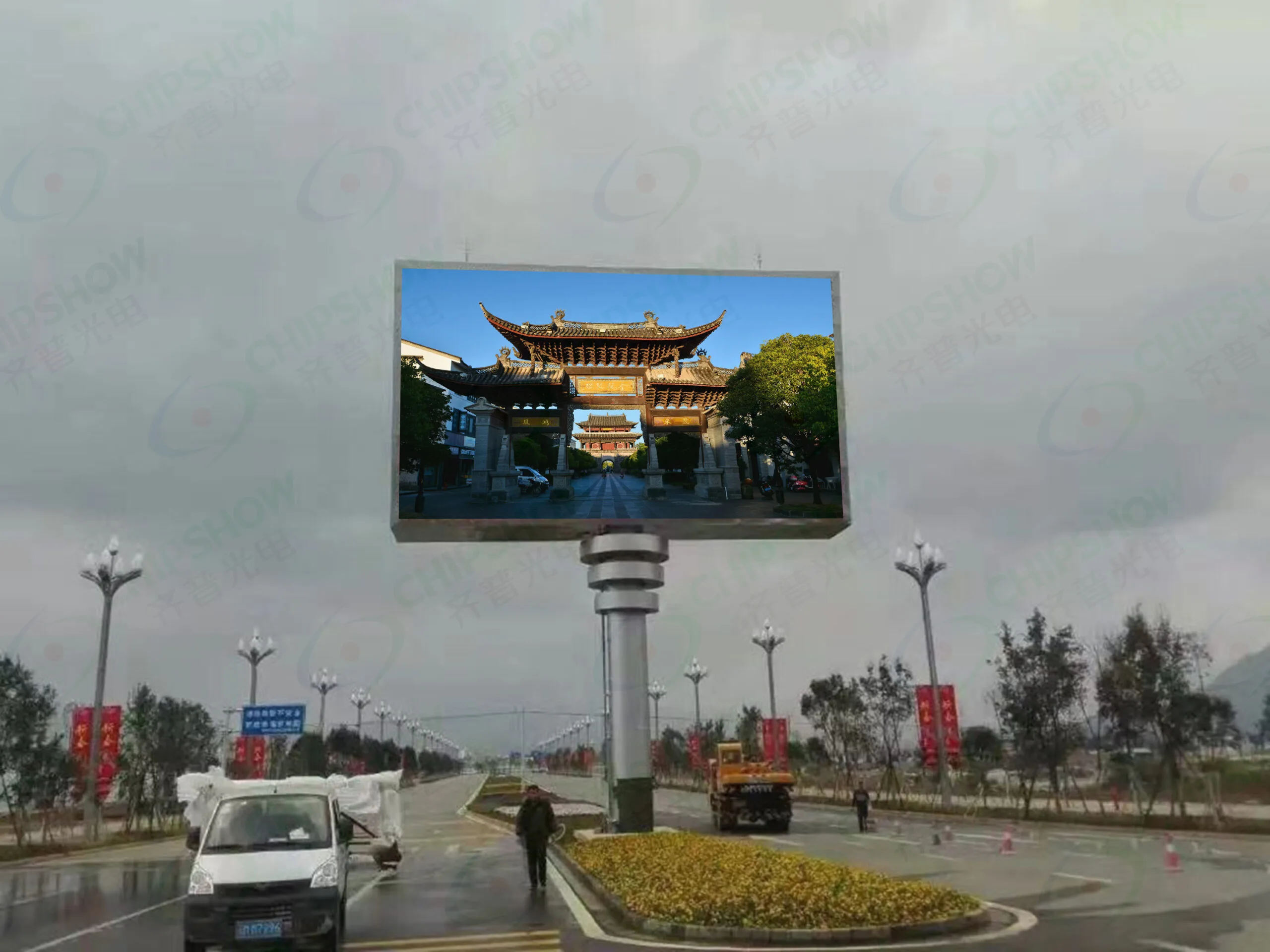
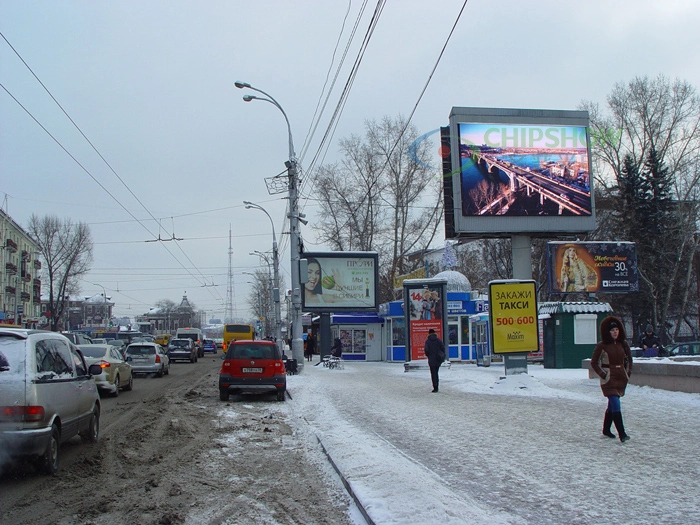
4.5 Outdoor LED and DOOH: Billboards, building displays, public-facing media. C-Slim outdoor solutions with automatic dimming, weather resistance.
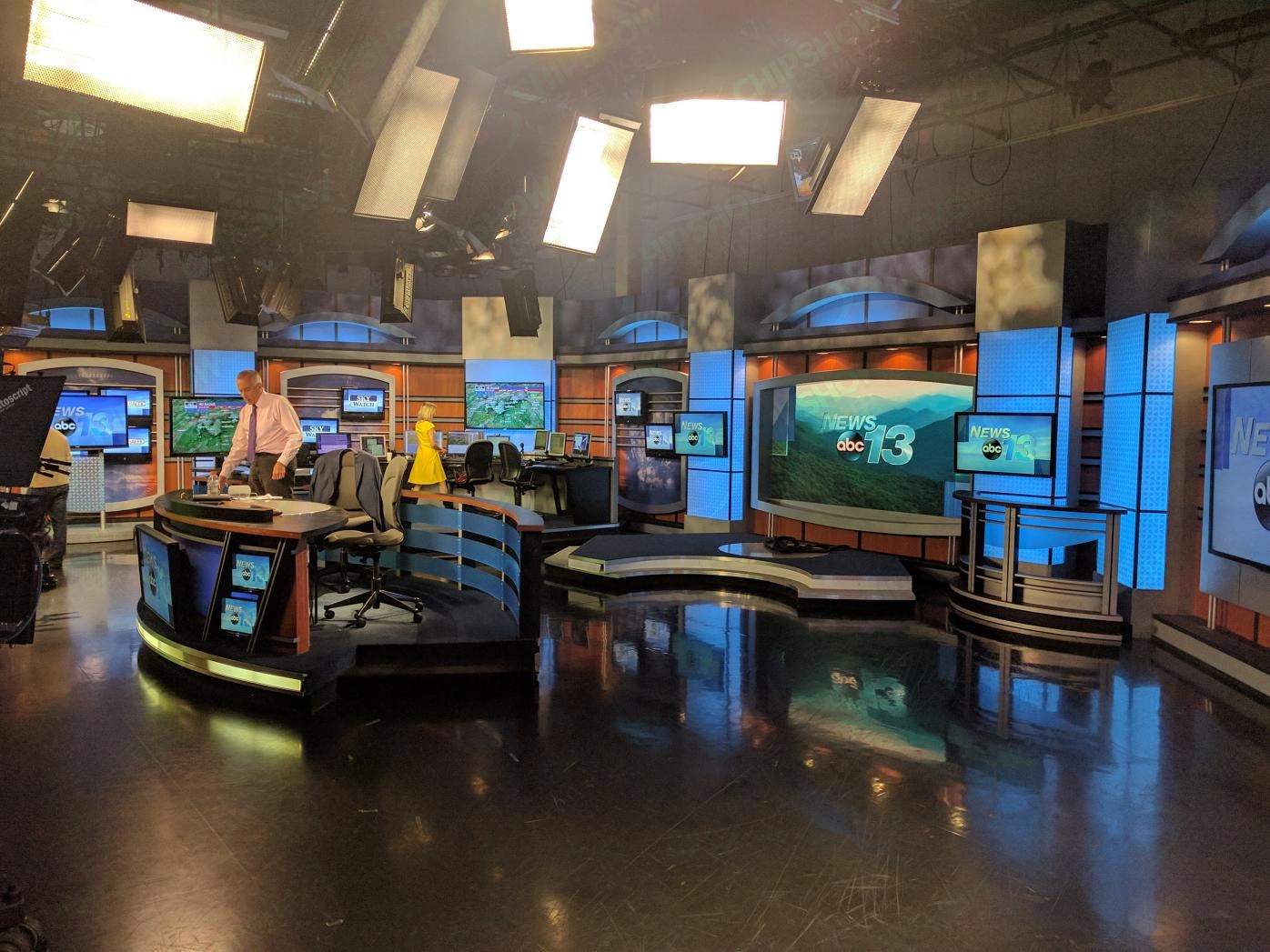
4.6 Control Rooms and Command Centers: Mission-critical visualization. Fine pixel pitch, 24/7 operation, redundant power/signal.
AV Integrator Partnership Workflow
[1. Submit Project Requirements] → [2. Receive Preliminary Solution Review] → [3. Confirm Product Selection and Drawings] → [4. Coordinate Logistics and Installation Support] → [5. Complete Acceptance, Training, and Long-Term Support]
FAQ: Questions AV Integrators Commonly Ask
How do I choose the right pixel pitch for an AV video wall?
Start with viewing distance, not screen size. A boardroom, lobby, command room, and retail space all need different pixel pitches because viewers stand at different distances. For close-view indoor AV projects, finer pitch improves text clarity and presentation detail. For longer viewing distances, a larger pitch can reduce budget without hurting the visual result.
What information should I prepare before requesting an LED video wall quote?
Prepare the screen width and height, viewing distance, indoor or outdoor location, mounting method, expected brightness, content type, and project deadline. If available, include drawings, photos, and power access details. This helps Chipshow recommend a suitable product series, pixel pitch, cabinet layout, and control package without repeated back-and-forth.
Can an LED video wall replace an old LCD video wall?
Yes, but the replacement should be planned around wall depth, service access, resolution goals, and existing structure. LED removes LCD bezels and creates a more seamless image, but it may require different power, mounting, and control planning. For AV integrators, the key is confirming whether the old wall space can support a front-service LED design.
What hidden costs should AV integrators check before selecting an LED wall?
Look beyond the display price. Check mounting hardware, processor needs, spare parts, freight, lift access, labor time, power distribution, service clearance, and future module replacement. A cheaper screen can cost more if it needs extra structure, difficult rear maintenance, or custom site work. The best choice protects both project margin and long-term service efficiency.
Is COB or SMD better for indoor AV projects?
COB is often better for close-view, high-touch, or premium indoor spaces because the LED surface has stronger protection and a smoother viewing feel. SMD can still work well for many corporate, education, worship, and retail projects. The better choice depends on viewing distance, budget, durability needs, and how often people may stand near the screen.
How can AV integrators make client handover easier?
Prepare a simple handover package: basic operation steps, input source notes, brightness settings, cleaning guidance, spare parts list, and support contact path. The end user does not need deep LED engineering knowledge, but they do need clear daily-use instructions. A clean handover reduces support calls and helps the integrator look more professional.
Why AV Integrators Choose Chipshow as an LED Video Wall Partner: Chipshow America Inc. supports integrators with indoor, outdoor, rental, retail, education, command center LED solutions, U.S.-based coordination, front-service cabinet options, technical support, spare parts coordination, and long-term partner relationships.
Ready to scope your sign? The USA LED sign selector walks through viewing distance, format and layout in one pass.