The Hidden Balance Sheet: How Enclosure Weight Rules US Tour Budgets
In North American live event production, the physical weight of a led screen stage is far more than a technical specification. It represents a recurring financial variable that directly impacts your logistics invoices, local crew headcounts, and venue compliance approvals. From cross-country freight lanes to rigid metropolitan labor shifts, every single pound shaved from an LED cabinet delivers immediate cost control across the lifespan of your staging fleet.
Not sure which pitch or cabinet format fits your build? Run the requirements through the Chipshow USA LED sign selector to shortlist signs by nearest viewer and sign opening before requesting a quote.

Deconstructing Cabinet Material Weight Classes
Understanding how enclosure engineering translates to real-world physical mass is essential for accurate project forecasting. Below is how modern manufacturing materials compare under standard imperial staging configurations.
- Standard Aluminum Enclosures (2.6 to 3.5 lbs/sq ft): Typically utilized for local corporate events or single-city installations where shipping distances are minimal and rapid turnarounds are not a core priority.
- Refined Die-Cast Aluminum (2.0 to 2.6 lbs/sq ft): A mainstream structural option engineered for mid-tier regional touring, offering a balanced compromise between rigidity and physical weight.
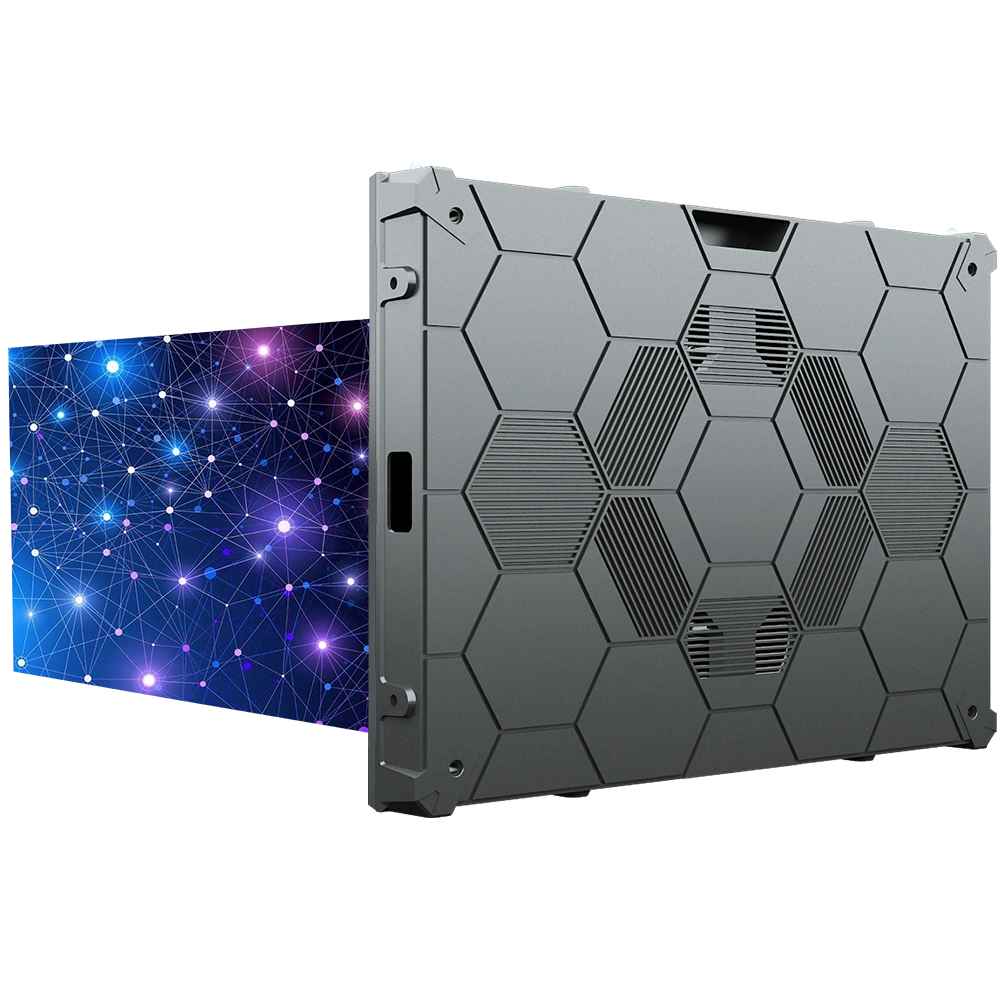
- Advanced Carbon Fiber Framework (1.3 to 1.9 lbs/sq ft): The premium tier for high-frequency national touring. Utilizing high-tensile carbon strands reduces raw frame weight by up to 40% compared to standard metal alternatives across identical 20×20 inch or 20×40 inch formats.
This material evolution is changing permanent architectures as well. Modern fixed-outdoor magnesium enclosures now match standard rental weight baselines. However, for continuous mobile staging applications, specialized carbon fiber frames remain the industry benchmark for structural efficiency.
Enclosure Mass vs. True Gross Shipping Weight
Evaluating hardware based entirely on net panel weight creates severe logistics miscalculations. A complete tour shipping manifest must calculate the entire ecosystem. While a bare cabinet may seem manageable, the addition of protective flight cases frequently injects an extra 30% to 50% of dead weight per unit. A comprehensive procurement audit must evaluate the unified bundle: the LED tiles, integrated rigging bars, power/signal cabling infrastructure, and rolling tour cases combined.
Maximizing Trailer Payload and Reducing Cross-Country Freight Fees
North American over-the-road freight is heavily governed by strict Department of Transportation (DOT) axle weight limits and fluctuating fuel surcharges. Because tour logistics usually consolidate audio, lighting, video, and staging elements into a fixed trailer layout, video wall mass directly dictates your overall freight footprints.
Consider a standard 500 sq ft staging array deployed across a multi-state arena schedule:
Choosing traditional heavy aluminum housing forces a gross shipping weight of roughly 5,400 lbs once flight cases are bundled.
Moving to standard die-cast alternatives scales that gross payload down to approximately 4,320 lbs.
Opting for an advanced carbon fiber matrix cuts the gross shipping mass down to just 2,620 lbs—effectively slashing your freight payload by over 2,700 lbs compared to the heavy baseline.
For massive production designs extending between 1,500 and 2,500 sq ft, this engineering change eliminates more than 22,000 lbs from the trailer manifest. This significant reduction frees up crucial payload capacity for heavy lighting trusses or audio sub-low arrays, helping production managers prevent the logistical nightmare of leasing an expensive secondary chase vehicle.
Navigating the OSHA Lift Limit and Union Overtime Exposure
While transport logistics represent one major cost avenue, on-site labor overhead is where weight pressure intensifies, operating through two specific regulatory mechanisms.
The Two-Person Ergonomic Threshold
OSHA frequently references NIOSH ergonomic frameworks, which establish a safe single-person lifting baseline of 51 lbs under optimal physical conditions. In fast-paced staging environments, steep lifting angles and repetitive motions pull that safe working limit even lower.
As a standard operating procedure, North American staging companies enforce a mandatory two-person lift protocol for any hardware approaching or exceeding the 50 lb threshold.
Panels under 50 lbs: Safe single-person handling is fully feasible, allowing a single stagehand to efficiently seat and lock modules, maintaining a lean crew footprint.
Panels at or above 50 lbs: Automated two-person crew assignments apply, instantly doubling the billed crew-hours required for both initial assembly and final strike.
Load-In Speed and Metropolitan Overtime Mitigation
In major US union markets like New York, Las Vegas, Chicago, and Orlando, crew rates escalate rapidly once overtime multipliers (1.5x to 2x) trigger after standard 8-hour shift windows.
Because heavy panels require coordinated two-person movements for every single lift, build timelines naturally extend. Across a 30-city national tour, those added minutes compound into massive overtime exposure. Deploying structural panels engineered comfortably below the 50 lb safe lifting mark allows production managers to control crew sizes and minimize expensive labor overages simultaneously.
Overcoming Rigging Point Limitations in Corporate Venues
Weight restrictions extend far beyond the loading dock; they dictate what configurations are structurally possible inside a venue.
- Ballroom and Theater Structural Caps: Corporate hotel ballrooms, historic municipal theaters, and local convention facilities vary widely in certified ceiling load ratings. Older venues often restrict Safe Working Load (SWL) capacities to low thresholds per rigging position.
- Avoiding Ground-Stack Redundancies: Heavy LED walls easily exhaust these vintage rigging limits, forcing production teams to build extensive ground-support truss structures. This alternative adds hours of setup labor and consumes valuable floor space that could otherwise hold premium guest seating.
- Maintaining Touring Uniformity: Utilizing ultra-lightweight carbon fiber panels ensures your primary flown production layout remains uniform across the entire tour schedule, eliminating the need for costly on-site engineering re-designs at more restrictive venues.
Four Practical Steps to Evaluate True Weight-to-Cost ROI
Before signing off on your next pro-AV inventory acquisition, process your candidate panels through this strict financial model:
- Step 1: Multiply Total Projected Wall Area (sq ft) × Net Panel Weight per sq ft to establish your base system net weight.
- Step 2: Multiply that base net weight by 1.4 to calculate your real-world Consolidated Fleet Shipping Mass, accounting for tour cases and cabling.
- Step 3: Quantify your per-mile freight variance across your regional tour routes using the gross shipping mass differential.
- Step 4: Cross-reference regional union crew rates against your projected build timelines to map your total labor savings across the calendar year.
Tour-Proven Engineering: The Chipshow Carbon Solution
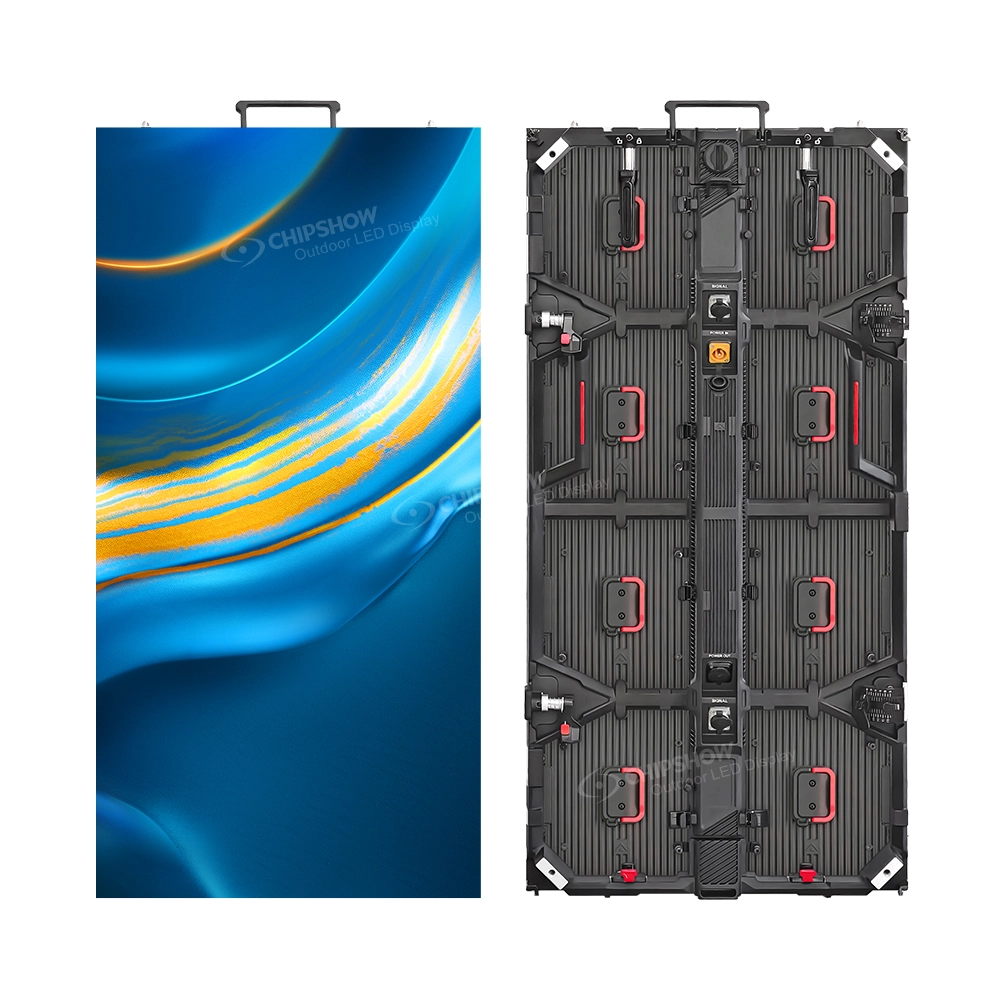
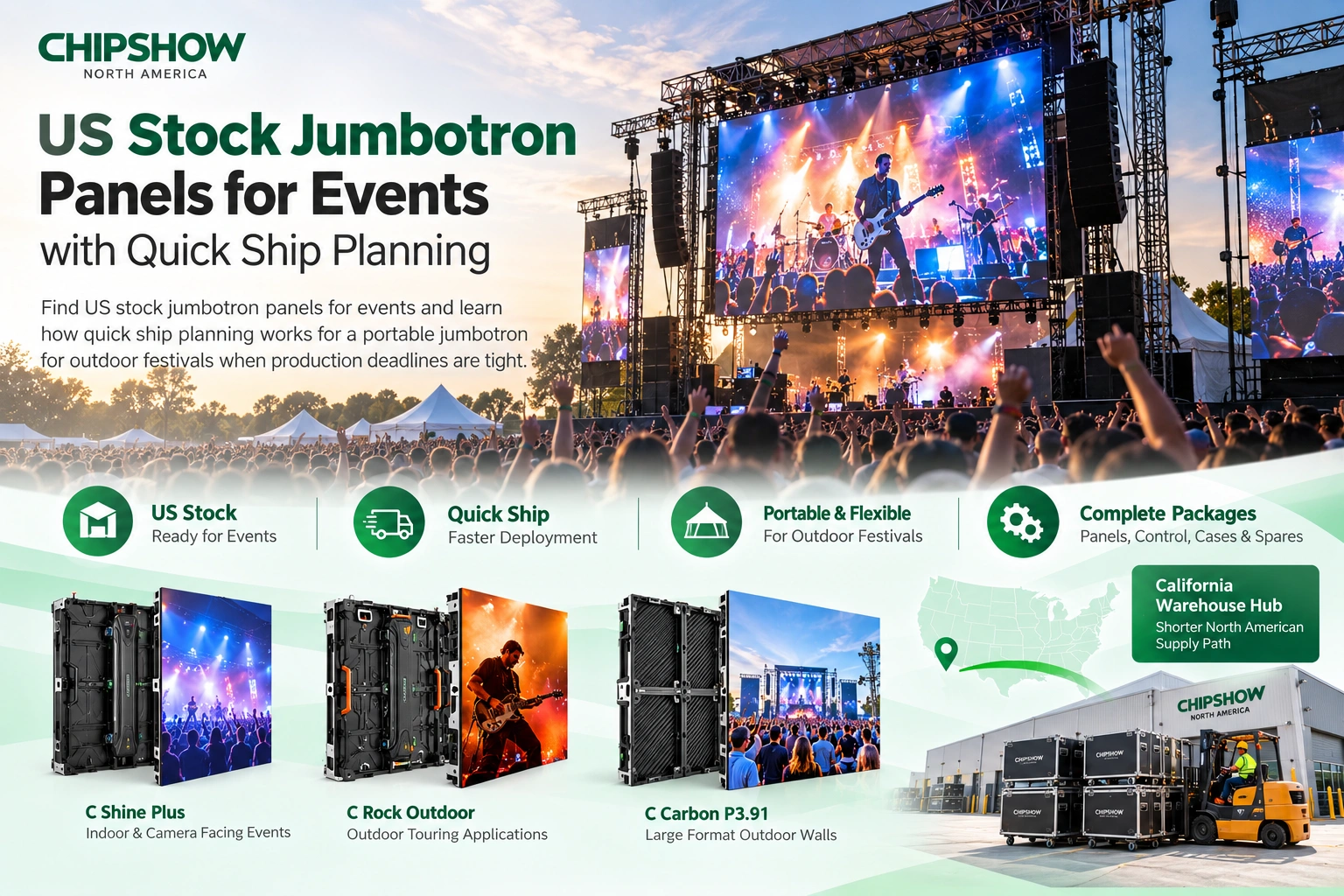
The Chipshow C-Carbon LED screen rental is purposely engineered to break the operational compromise between physical durability and mobile weight efficiency.
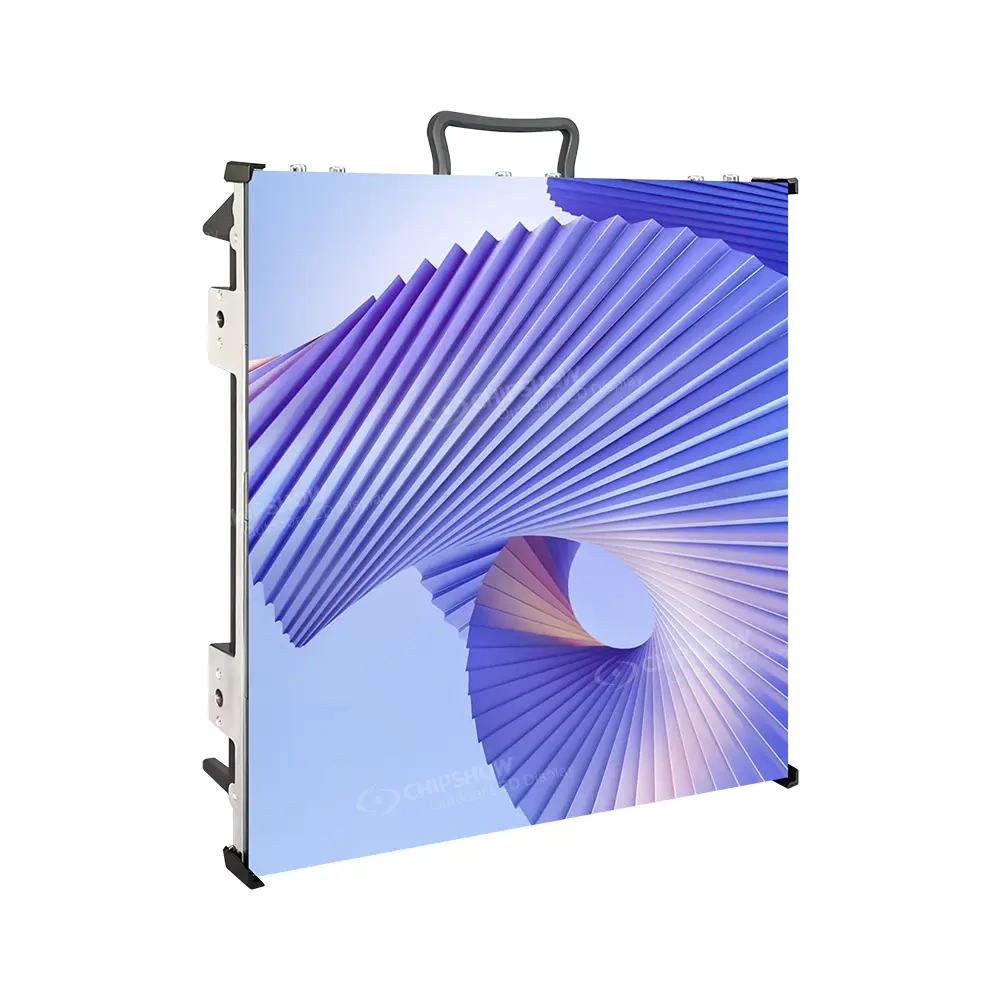
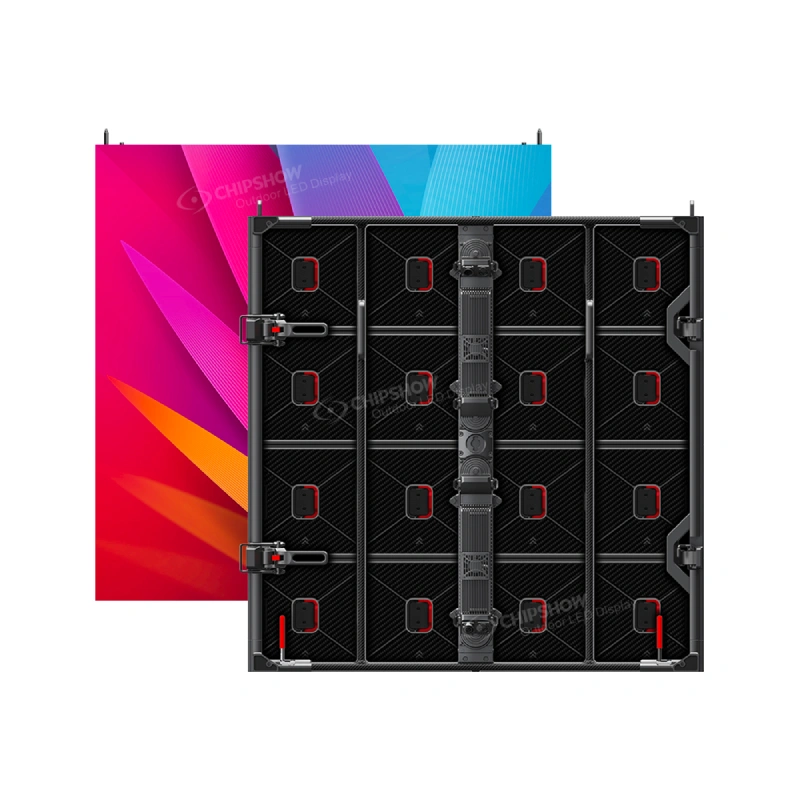
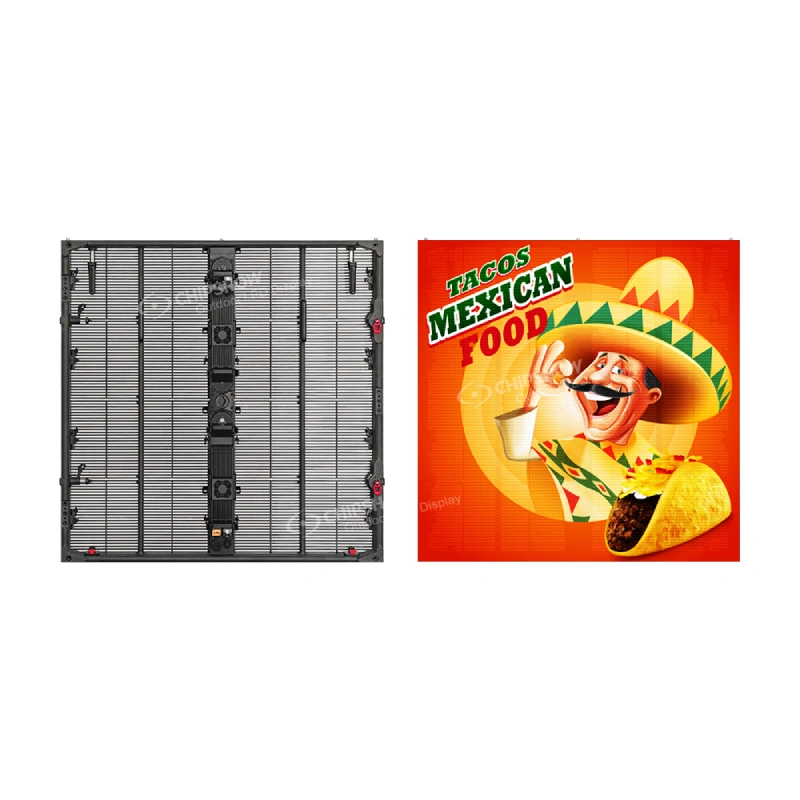
By integrating an advanced high-modulus carbon fiber chassis with a ruggedized magnesium alloy control enclosure, a large-format 39×39 inch touring cabinet weighs only 44 lbs at a P3.91 pixel pitch. This structural design positions the panel safely below the 50 lb OSHA single-person handling limit, enabling rapid, single-man assembly.
Built for demanding outdoor festival environments and corporate keynotes alike, it delivers an impressive 6,000 nits high-contrast brightness output and true IP65 ingress protection front and rear, ensuring absolute weather resilience across diverse North American climates without requiring separate specialized tooling.
Explore full physical layouts and certified staging configurations for your staging fleet at the official [Chipshow Rental and Stage LED Panels] division.
Not sure which format or pixel pitch fits your project? Try the Chipshow USA LED sign selector to shortlist options.