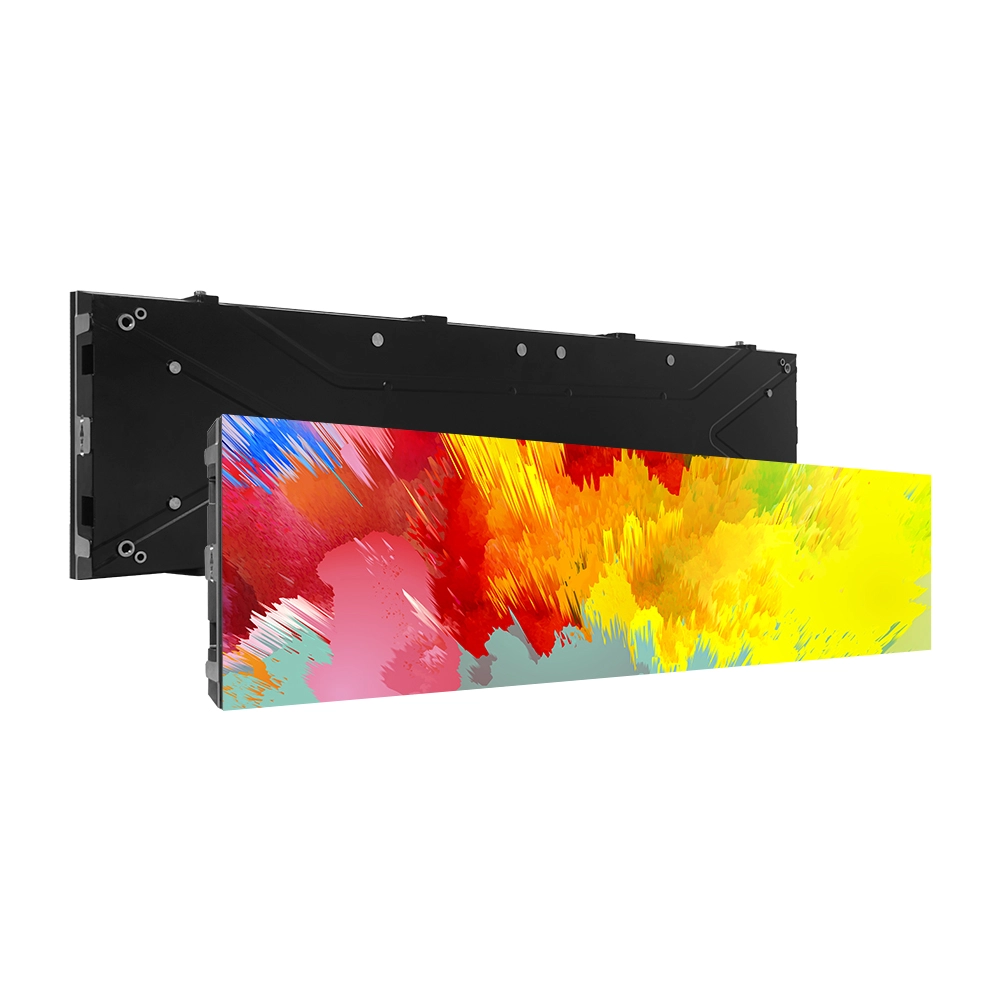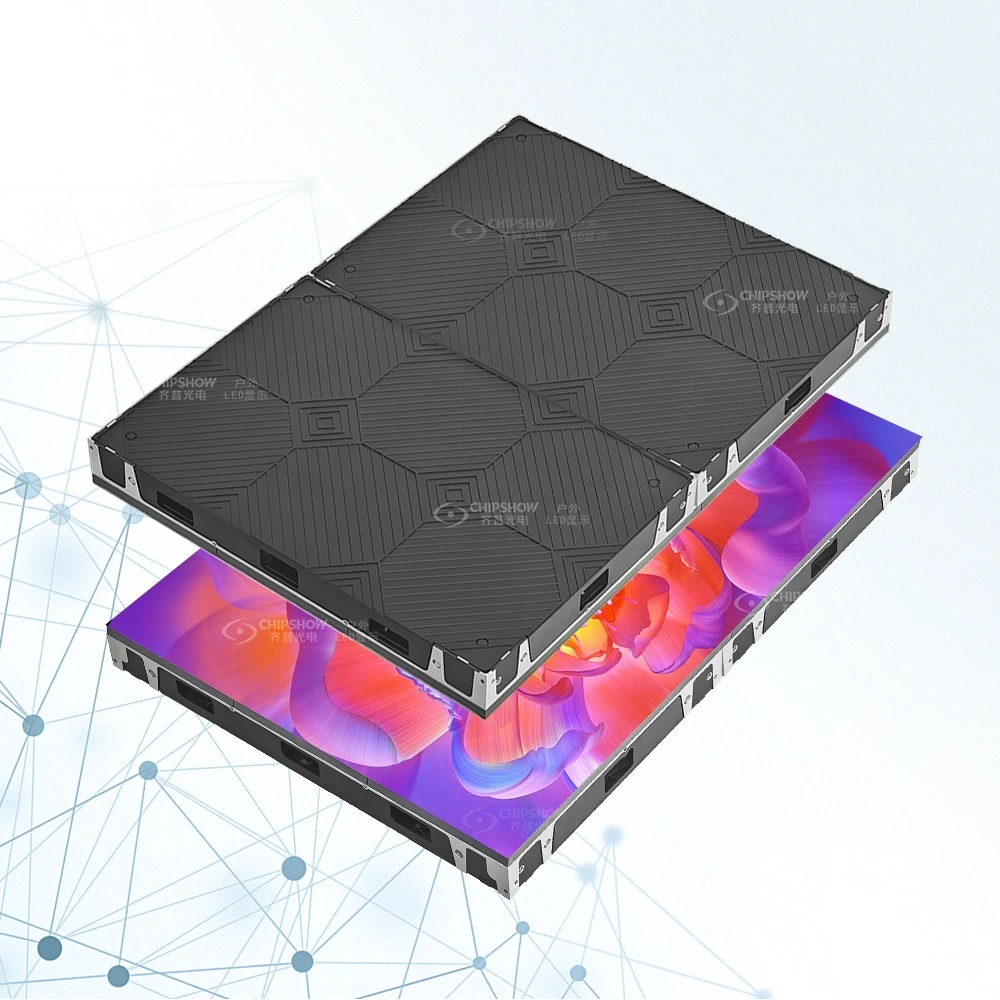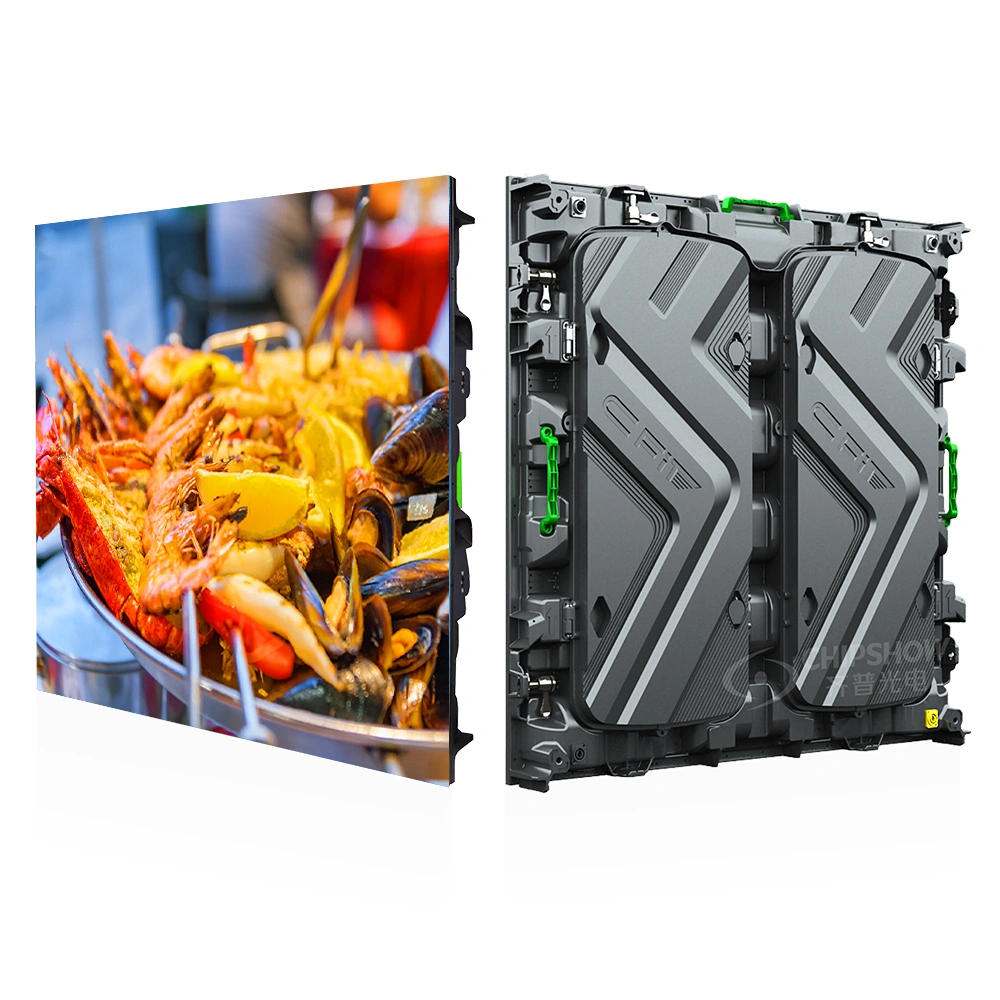
Aging LCD video wall. Visible bezel grid. Panels fading at different rates. If this sounds familiar, the upgrade to a seamless direct-view LED display is a proven path — thousands of US commercial spaces make the switch every year. Before you start comparing video wall manufacturers or pixel-pitch options, get clear on two things: the hardware dimensions that let you reuse your existing wall structure, and the fast-delivery supply chain that gets cabinets to your site without a production backlog.
Not sure which pitch or cabinet format fits your build? Run the requirements through the Chipshow USA LED sign selector to shortlist signs by nearest viewer and sign opening before requesting a quote.
Why LCD Video Walls Are Being Phased Out
Three structural problems push facility managers toward a direct-view LED replacement.
Bezels destroy the image. A 3×3 LCD grid reads as nine separate screens stitched together. In a corporate lobby or broadcast studio, that crosshair ruins what should be one continuous canvas.
Brightness fades unevenly. After two to three years of 12-to-16-hour daily operation, one or two panels run visibly darker. Swapping a single unit rarely helps — the new panel’s color temperature never matches the survivors.
Maintenance adds up fast. Power supplies fail. Cooling fans seize. Backlights drift. Each service call costs labor — and in markets with union electrician rates, every visit is a line item that makes “just one more repair” an expensive decision.
A seamless LED video wall eliminates all three. No bezel grid. Stable brightness across the surface. Front-access modules that swap in 30 seconds with a single technician.
Can You Replace LCD with LED Without Structural Changes?
Yes — the key is matching cabinet aspect ratio to the 16:9 footprint of your old LCD array.
LCD panels (46″, 49″, 55″) all follow a 16:9 proportion. A 2×2, 3×3, or 4×4 grid stays 16:9. Your wall structure, cable routing, and video source resolution were all built around this ratio.
Replace that grid with an LED cabinet at a different aspect ratio, and the math breaks — you rebuild the wall or live with a smaller display.
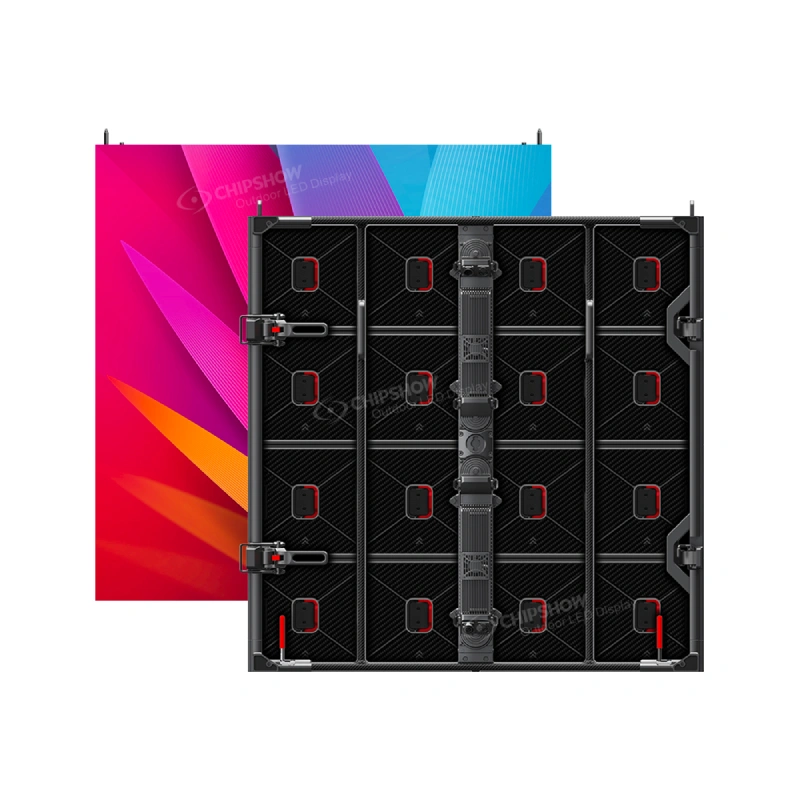
Pick a 4:3 cabinet at 640 × 480 mm, and the math works: three tall by four wide gives you 2,560 × 1,440 mm — a clean 16:9 surface. Same footprint, same mounting rails, no structural changes. This holds whether you start from a 2×2 of 55″ panels or a 3×3 of 46″.
Two numbers matter specifically for US installations.
First: mounting depth. Front-access LED cabinets sit 75 to 90 mm from the wall surface. ADA limits wall-mounted objects in a pedestrian path to 4 inches. Your old articulating LCD mount may have been pushing past that limit. The LED replacement gets you back into compliance.
Second: ETL Listing. Request the ETL certificate before ordering. Bundle it with your permit application. Fire marshals and insurance carriers reference NEC standards — and ETL Listed hardware satisfies that reference in a single document.
Matching LCD Layouts to LED Panel Dimensions
A 640 × 480 mm cabinet grid maps cleanly onto every standard LCD video wall configuration.
| Original LCD Setup | LCD Wall Dimensions (approx.) | LED Equivalent | LED Display Area |
| 2×2 × 55″ | 2,430 × 1,370 mm | 4×3 cabinets (P2.5) | 2,560 × 1,440 mm |
| 3×3 × 46″ | 3,060 × 1,720 mm | 5×4 cabinets (P2.0) | 3,200 × 1,920 mm |
| 3×3 × 55″ | 3,650 × 2,050 mm | 6×4 cabinets (P2.5) | 3,840 × 1,920 mm |
| 4×4 × 46″ | 4,080 × 2,300 mm | 6×5 cabinets (P2.5) | 3,840 × 2,400 mm |
| 1×1 × 98″ | 2,160 × 1,220 mm | 3×2 cabinets (P1.86) | 1,920 × 960 mm |
In most cases, the LED replacement lands slightly larger than the old LCD footprint — a visual upgrade without touching the wall.
Need the exact same footprint? Drop to a finer pixel pitch (P1.86 or P1.53) and use fewer cabinets at a closer viewing distance. Same resolution, same wall cavity.
Step-by-Step Retrofit: From LCD to LED
Step 1 — Site Assessment
Document four things before touching a panel:
- Wall structure: steel frame, drywall, or structural beam?
- Mount type: articulating brackets or fixed rail grid?
- Cable routes: power and signal paths. Mark them before disassembly.
- Viewing distance and ADA clearance: closest viewer in feet, and total mount protrusion from wall. If the existing LCD bracket exceeds 4 inches, the LED replacement resolves it.
Step 2 — Remove the LCD Array
Disconnect power and signal. Remove panels and brackets. Inspect the steel frame. If it’s level and sound, keep it — the LED rail system bolts on directly. You save a day of steel fabrication and avoid new wall penetrations.
Step 3 — Install Rails and Cabinets
Mount modular rails on the existing frame. Hang cabinets. Integrated fast-lock alignment pins snap adjacent panels together with 0.2 mm precision — no separate bolts, no hand-leveling. Internal float connectors carry power and data between cabinets. Nothing crosses the rear face.
For a 6×4 configuration, fast-lock cabinets save 8 to 16 hours of on-site labor compared to bolt-and-shim installation. Where union rates apply, that difference is a direct line-item reduction.
Step 4 — Connect and Calibrate
Power on segment by segment. Run the calibration routine: 15 to 30 minutes for a medium-sized wall. Map your content source — typically a 1920 × 1080 or 3840 × 2160 signal — through the video wall processor to the new LED pixel canvas.
LCD Replacement vs. LED Retrofit: Cost Comparison
Upfront price favors LCD. Total cost of ownership over six to eight years favors LED. Here is the breakdown.
| Cost Factor | LCD Video Wall (3×3 × 55″) | LED Retrofit (6×4 × P2.5) |
| Initial hardware | Lower | Higher |
| Bezel-free viewing | No — grid across every image | Yes — one seamless surface |
| Panel replacement (years 2–4) | Likely 1–2 panels, color mismatch | None expected |
| Brightness uniformity | Degrades unevenly | Stays stable |
| Maintenance labor | Panel swaps, recalibration | Front-access module swap, under 30 seconds |
| Compliance documentation | Varies by panel, no system-level cert | ETL Listed, single system-level document |
| ADA protrusion | Often over 4″ on articulating mounts | 75–90 mm, within limit |
| Service life | 3–5 years | 6–8+ years |
The hidden cost of an uncertified LCD wall running in a public commercial space is insurance audit exposure. An ETL Listed LED system with documented compliance satisfies carrier requirements on the first pass.
For multi-location operators — retail chains, bank branch networks, franchise groups — standardized LED hardware means one service team, one spare-module inventory, and zero panel-model fragmentation across sites.
Real Retrofit Scenarios
Corporate Lobby
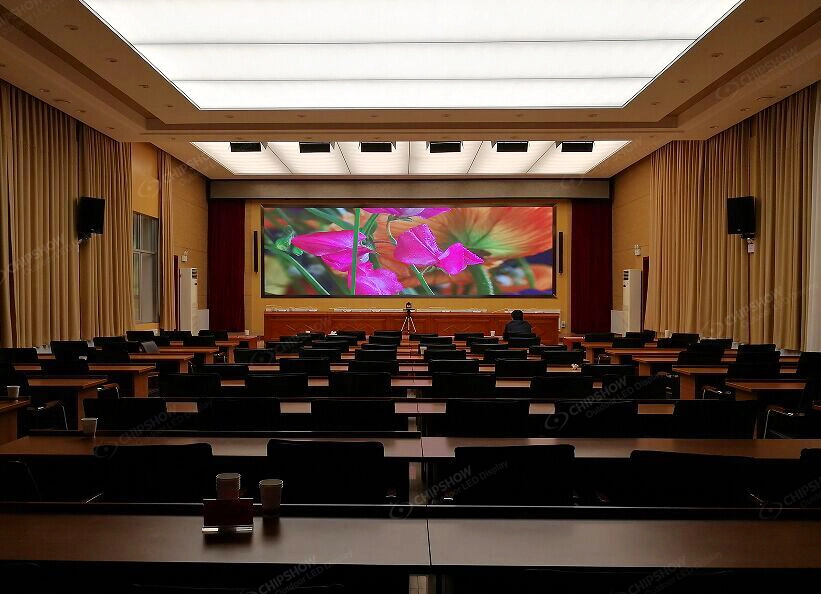
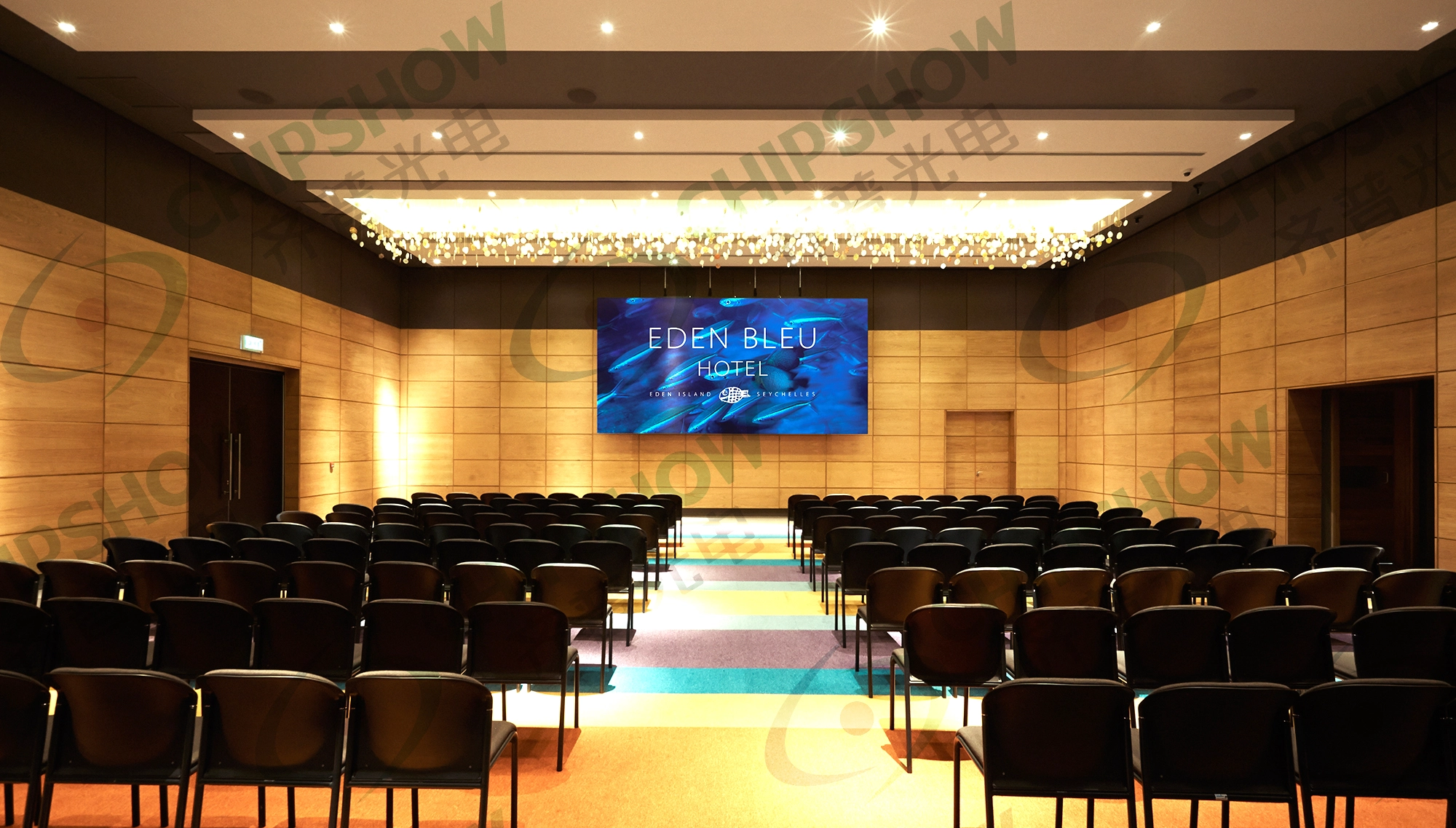
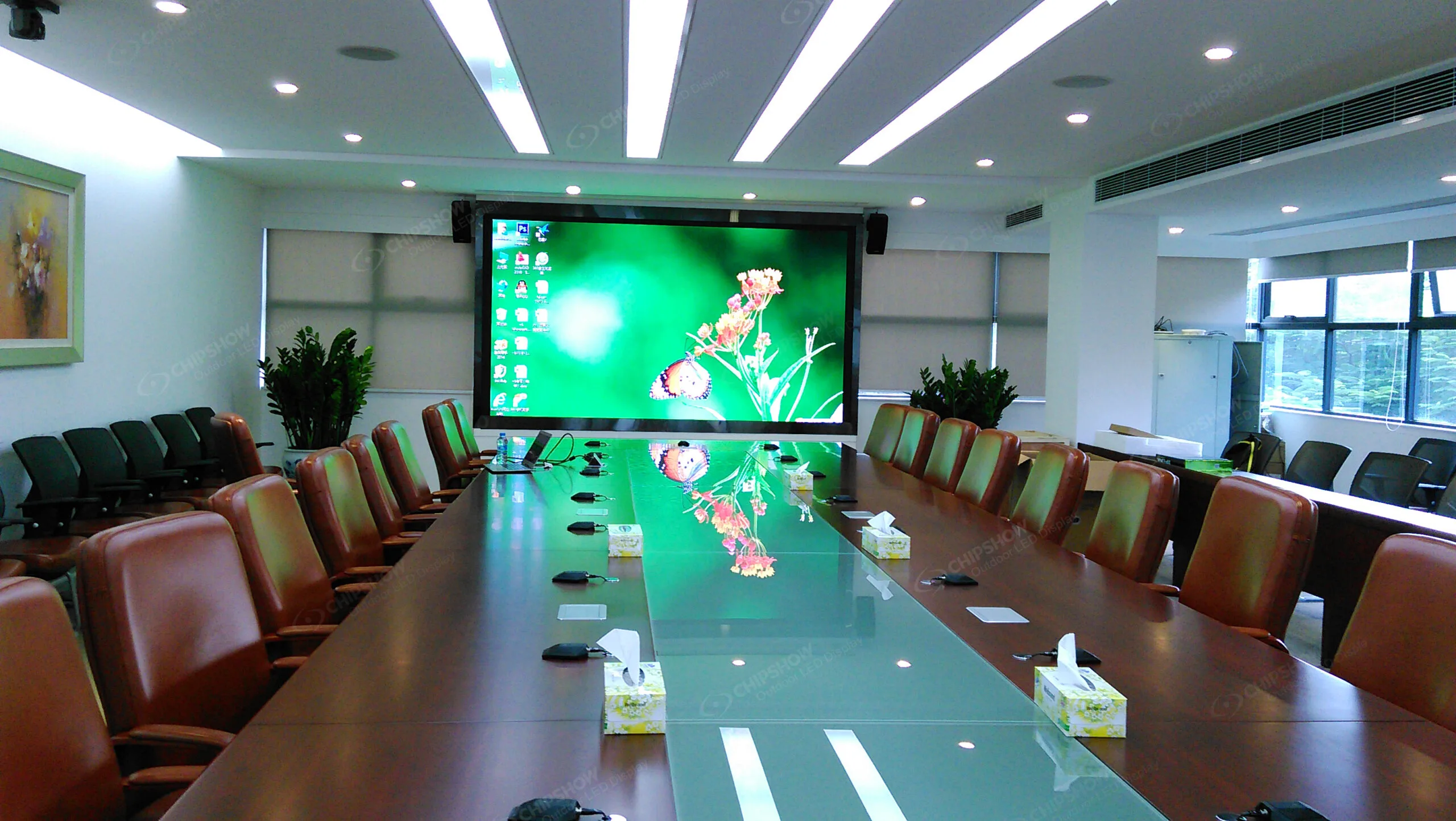
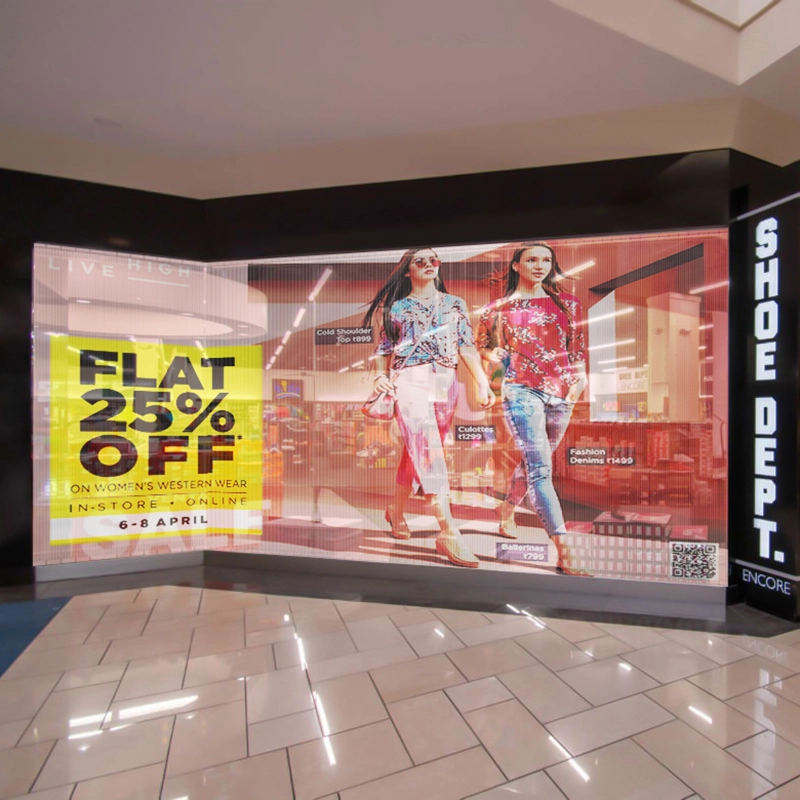
When a corporate lobby swaps its LCD video wall for a seamless LED display, the company logo and welcome messaging render as one continuous image with no bezel interruption. The display sits on the same wall section, reusing the existing steel frame with no structural changes.
Retail Store
Retailers who replace the LCD video wall behind the checkout counter with an LED display gain a single seamless canvas for promotional content. Campaign imagery runs clean across the full surface with uniform brightness edge to edge, keeping brand visuals sharp and professional at every square metre of the display.
How to Choose the Right LED Display
Three categories. Match to your viewing distance and environment.
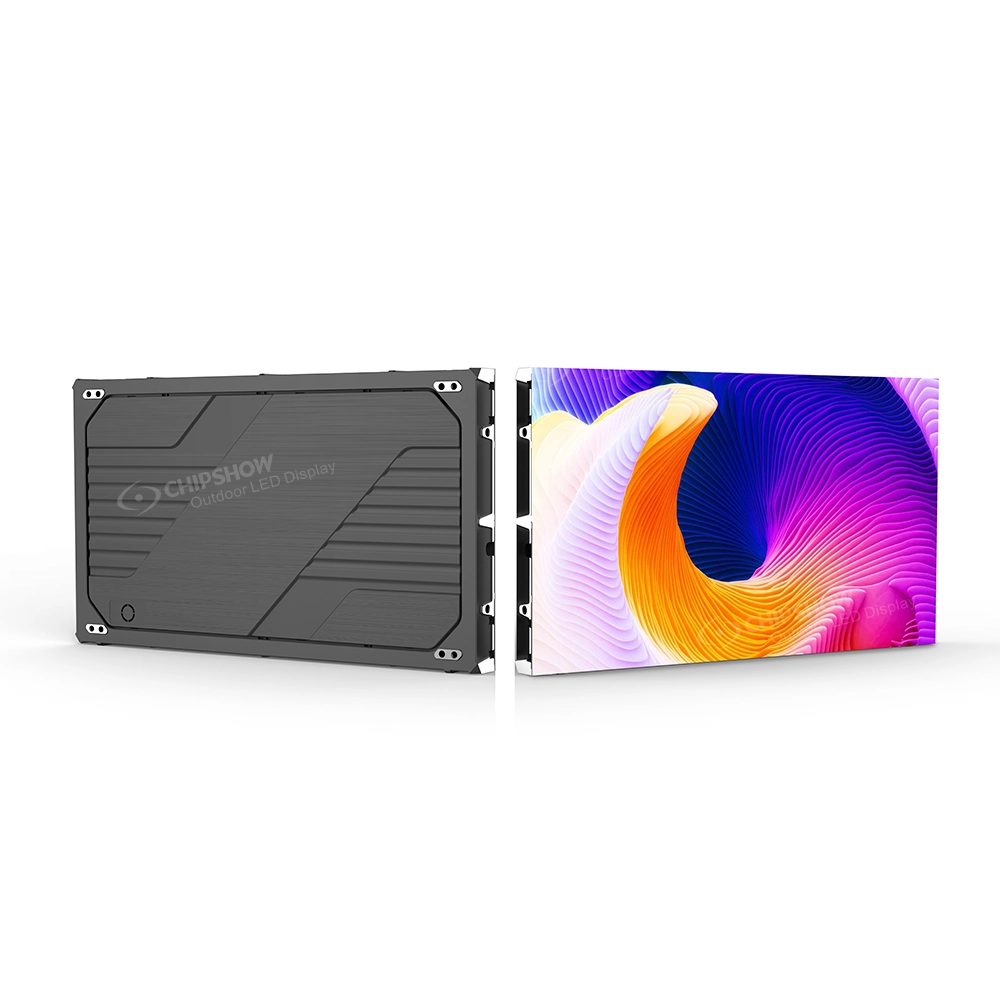
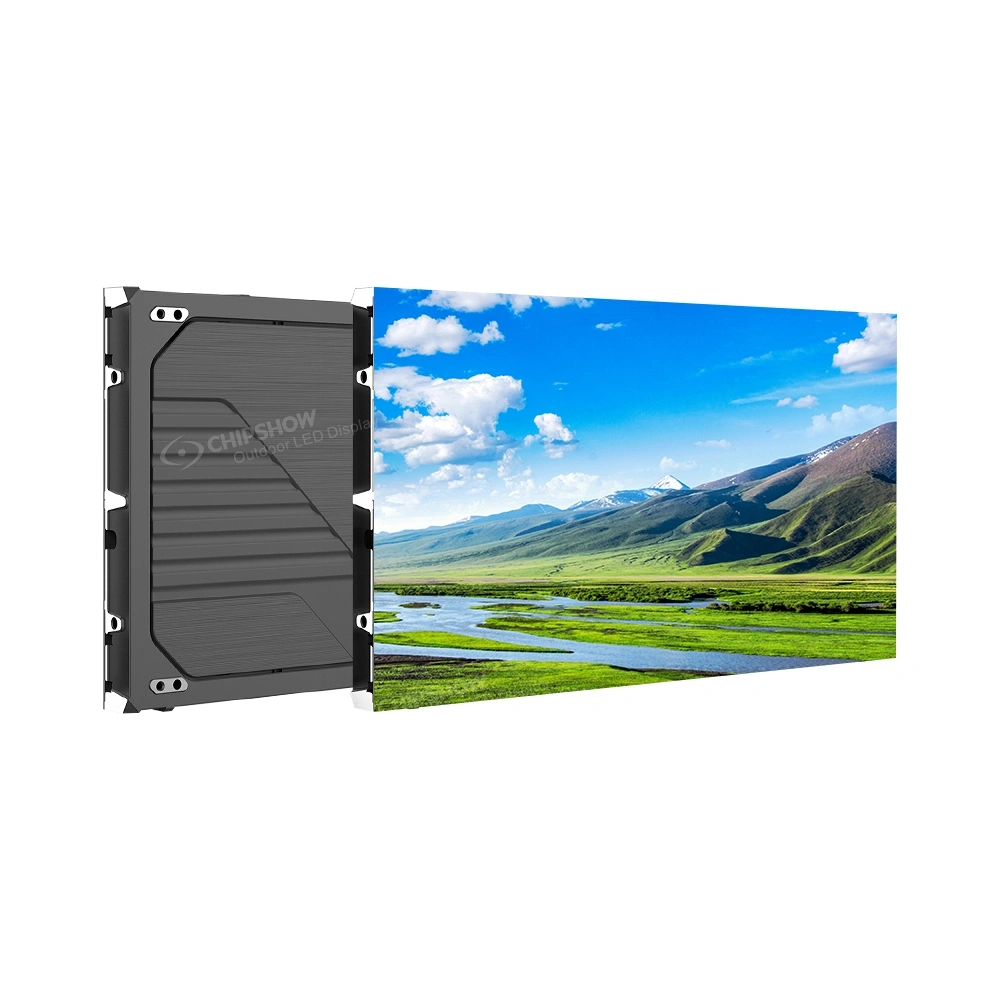
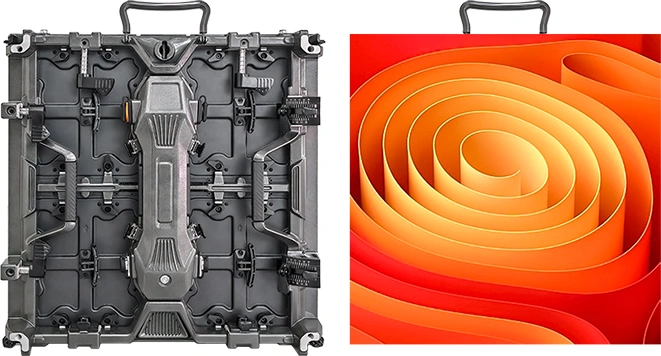
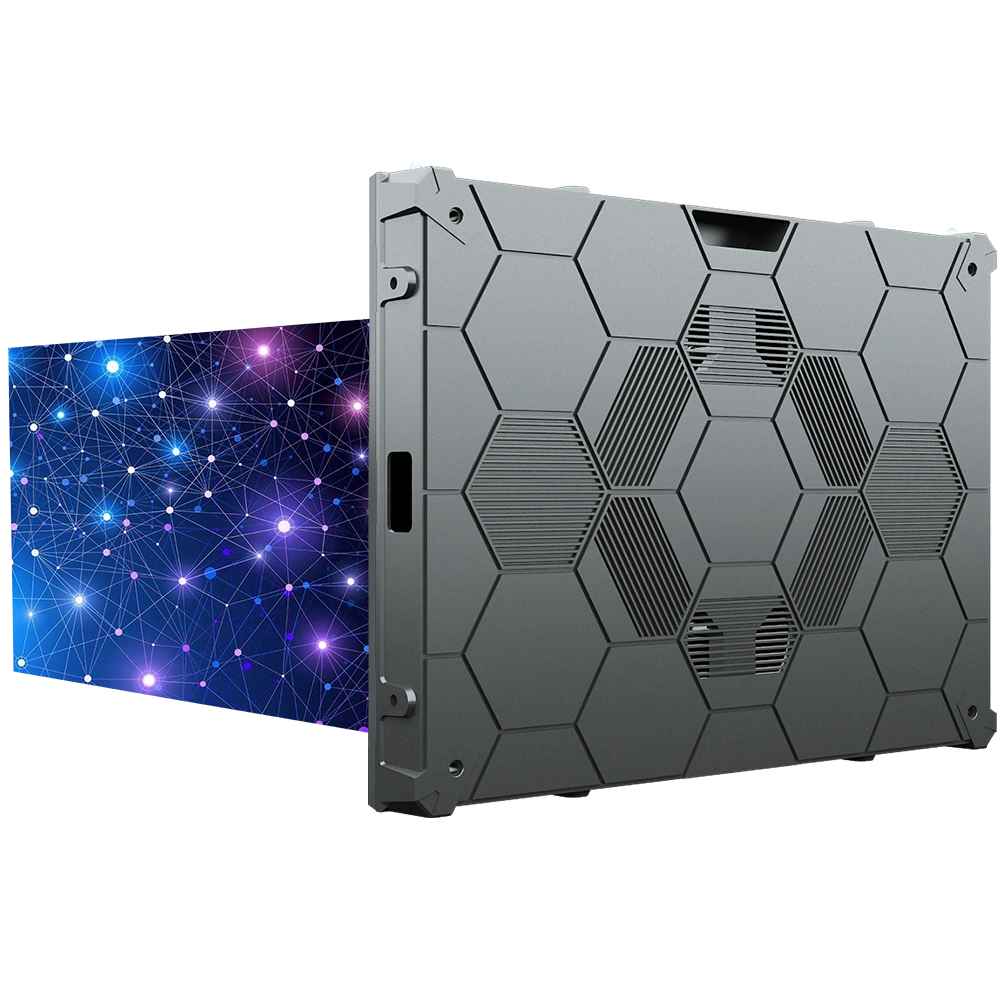
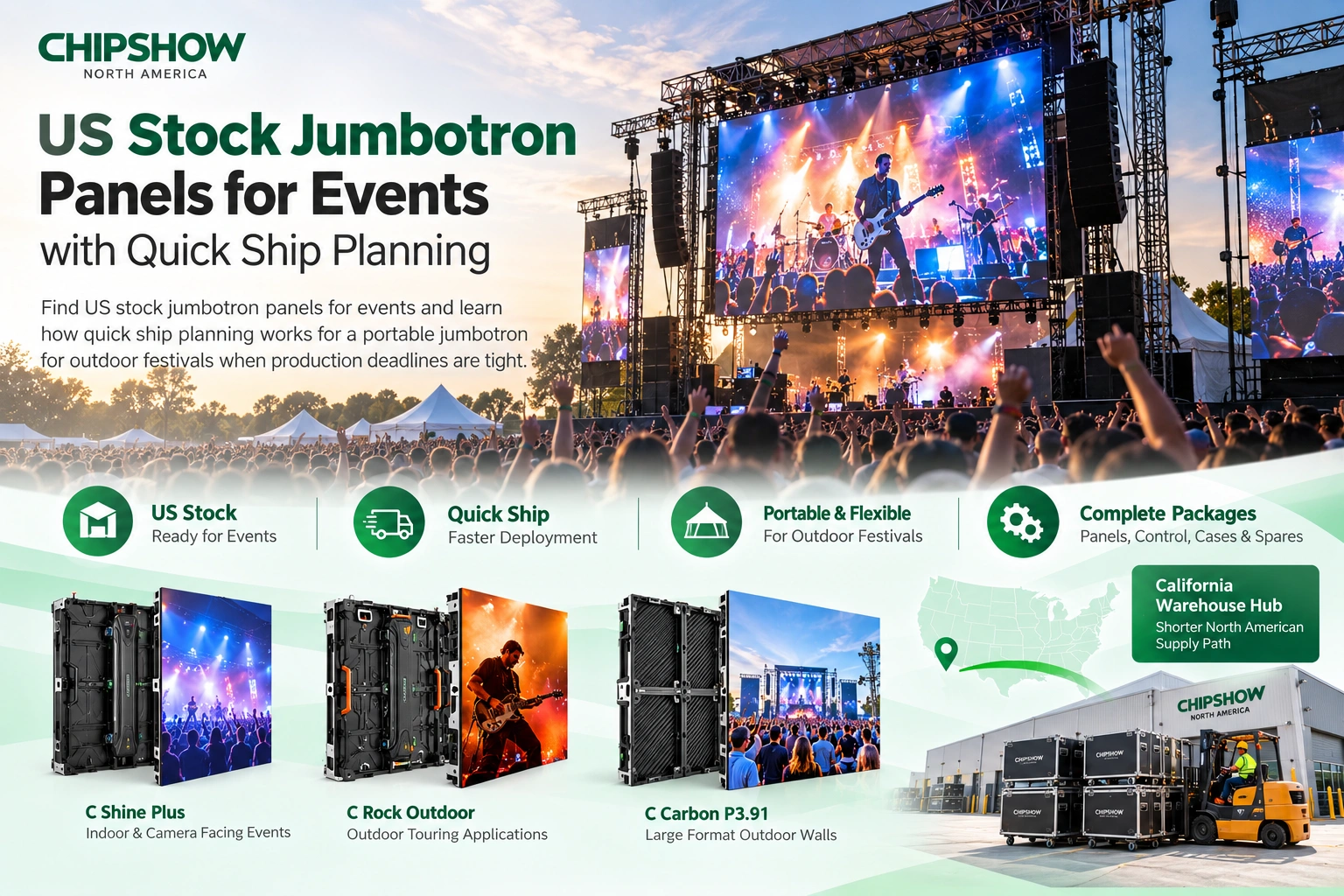
Standard SMD — the workhorse. Die-cast aluminum cabinets, P1.5 to P4.0. Balanced image quality and price. Front-service design. Confirm ETL Listed certification before ordering. For quick-ship from US stock with a standard 3-to-5-business-day lead time, this category handles most corporate lobbies, retail spaces, and public areas. Chipshow’s C-Max Commercial series is a direct fit: 640 × 480 mm 4:3 cabinet, front-serviceable, ETL Listed, California warehouse.
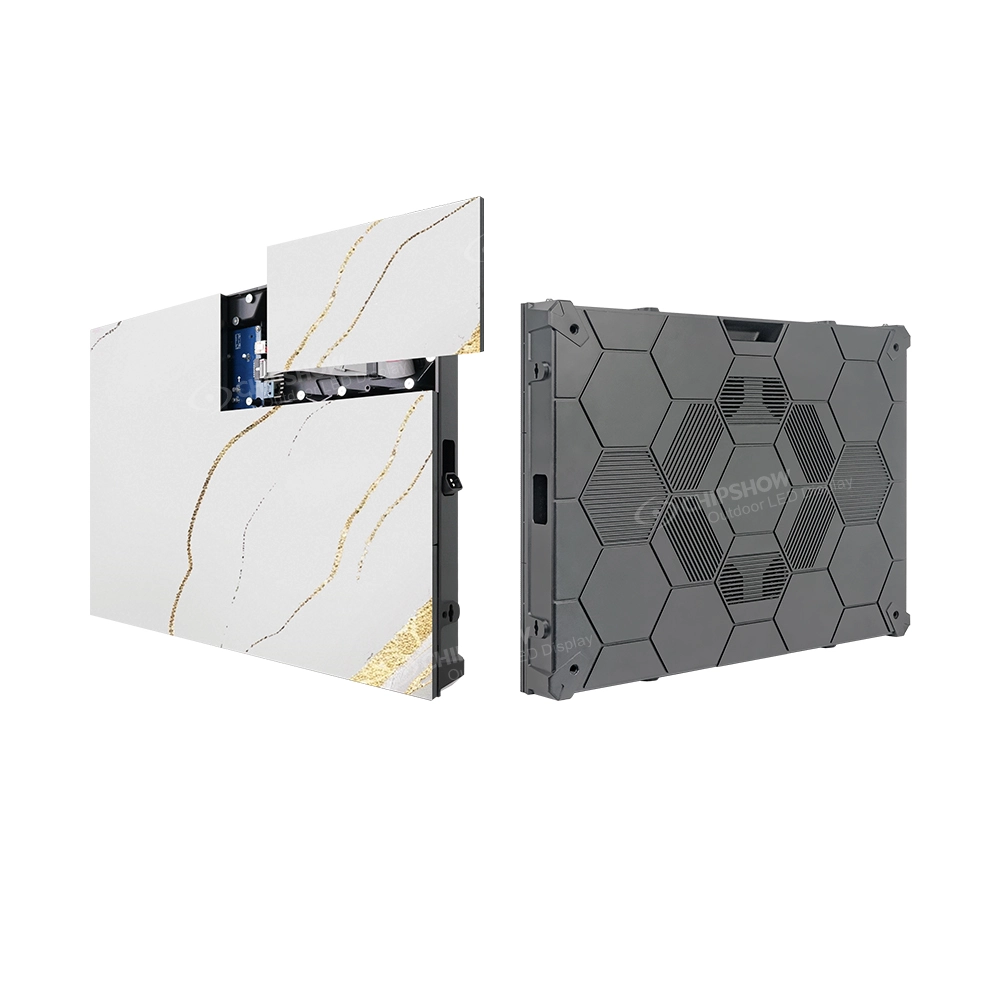
COB — for close viewing. Chip-on-Board encapsulation seals LED chips under epoxy. Hardened surface. Matte anti-glare finish. Viewers at 1.5 to 2 meters. Boardrooms, broadcast studios, luxury retail. P1.5 to P1.8.
Budget SMD — for franchise rollouts. Same form factor as standard SMD at a lower price. QSR menu boards, small retail, franchise deployments.
Pixel pitch: closest viewing distance in meters ÷ 1.2 = pitch in mm. For 3 meters: 3 ÷ 1.2 = P2.5. This confirms P2.5 as the practical default for most indoor retrofit applications.
Frequently Asked Questions
Q1: Can I reuse the existing LCD wall mount?
Yes. LCD panels use VESA patterns. LED cabinets use a continuous rail system. If the steel frame is sound, bolt the rails directly onto it. No new wall penetrations.
Q2: Do I need a new video wall controller?
Probably not. If your current setup uses a dedicated controller with HDMI or DVI output, it feeds the LED sending card directly. Check that the output resolution maps to the new LED pixel canvas. Most modern controllers handle custom resolutions.
Q3: How long does the install take?
Plan one day for LCD removal and prep. One to two days for LED installation and calibration. Fast-lock cabinets cut 8 to 16 hours of on-site labor versus bolt-and-shim methods. Full project: two to three working days.
Q4: How do I handle fire marshal and insurance inspection?
Get the ETL Listed certificate from the manufacturer. Include it in your permit package. ETL satisfies NEC reference requirements for US municipal fire marshals and commercial insurance carriers.
Conclusion
An LCD video wall has a finite service life — bezels, brightness drift, and recurring maintenance calls make that clear. Replacing it with a direct-view LED display is a straightforward retrofit. The key variables are planning: match the cabinet aspect ratio to your 16:9 footprint so you reuse the existing wall structure, pick the right pixel pitch for your closest viewing distance, and budget the upfront LED hardware cost against near-zero maintenance for six to eight years.
For US project planning, add three items to the checklist: verify ETL listing before ordering, confirm the mounting depth fits within the ADA 4-inch limit, and bundle the certification documentation with the permit application. If those three boxes are checked, the retrofit is the most durable upgrade path available for aging commercial display infrastructure.
Not sure which format or pixel pitch fits your project? Try the Chipshow USA LED sign selector to shortlist options.