Guía de Jumbotron de Alta Luminosidad para Zonas de Ventiladores: Niças, Luz solar, Ángulo de Visión y Stock de EE. UU.
Una pantalla LED de 14.000 nit no es automáticamente más fácil de ver que una de 6.000 nit en cualquier recinto al aire libre.
¿Quieres echar un segundo vistazo a las opciones de formato? El Selector de señales LED de EE. UU. Reduce los carteles por distancia de visualización, inclinación de píxeles y estilo de armario en una sola pasada.
El brillo máximo es solo una parte de la visibilidad diurna. La orientación de la pantalla, el resplandor del cielo, el ángulo de visión, el contraste, el tono de los píxeles, el diseño del contenido y la hora del día pueden cambiar lo que los espectadores ven realmente.
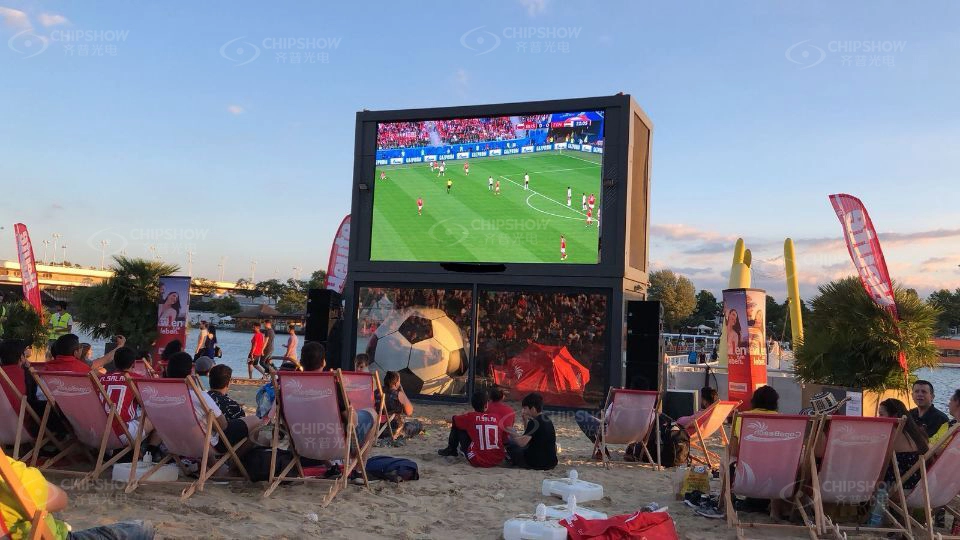
Esto importa en las zonas de aficionados, las zonas de tailgate y las plazas exteriores de los recintos porque la pantalla puede funcionar desde el mediodía hasta la noche, mirar hacia un camino solar en movimiento y atender a una multitud repartida en una amplia zona de visualización.
Para los operadores de estadios, integradores AV, productores de eventos y equipos de DOOH que comparan un fabricante de jumbotron de alta luminosidad con acciones estadounidenses, la pregunta útil no es qué producto publica el mayor número de bits.
Es la cantidad de brillo utilizable que necesita el sitio durante su periodo de visualización más difícil.
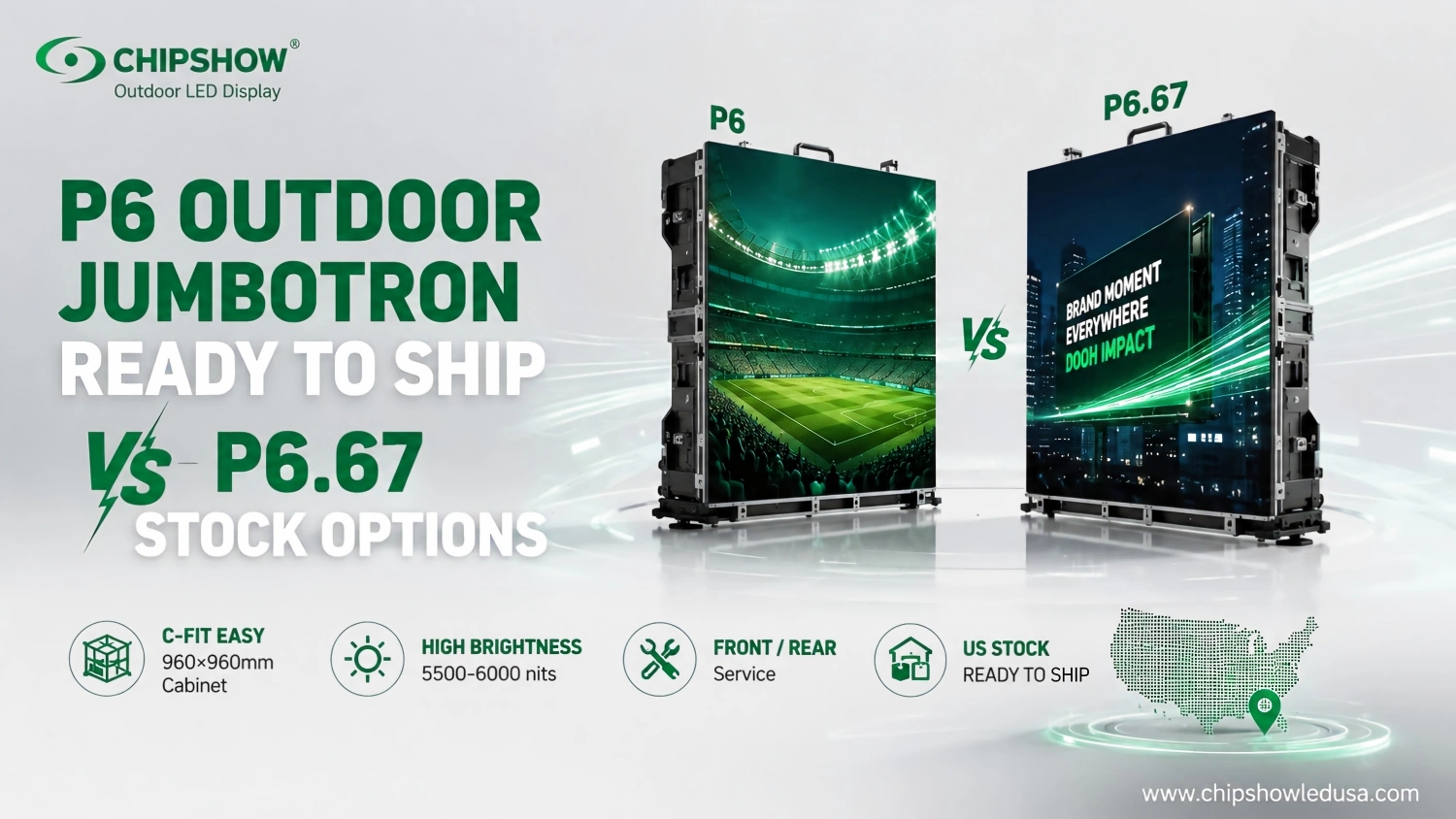
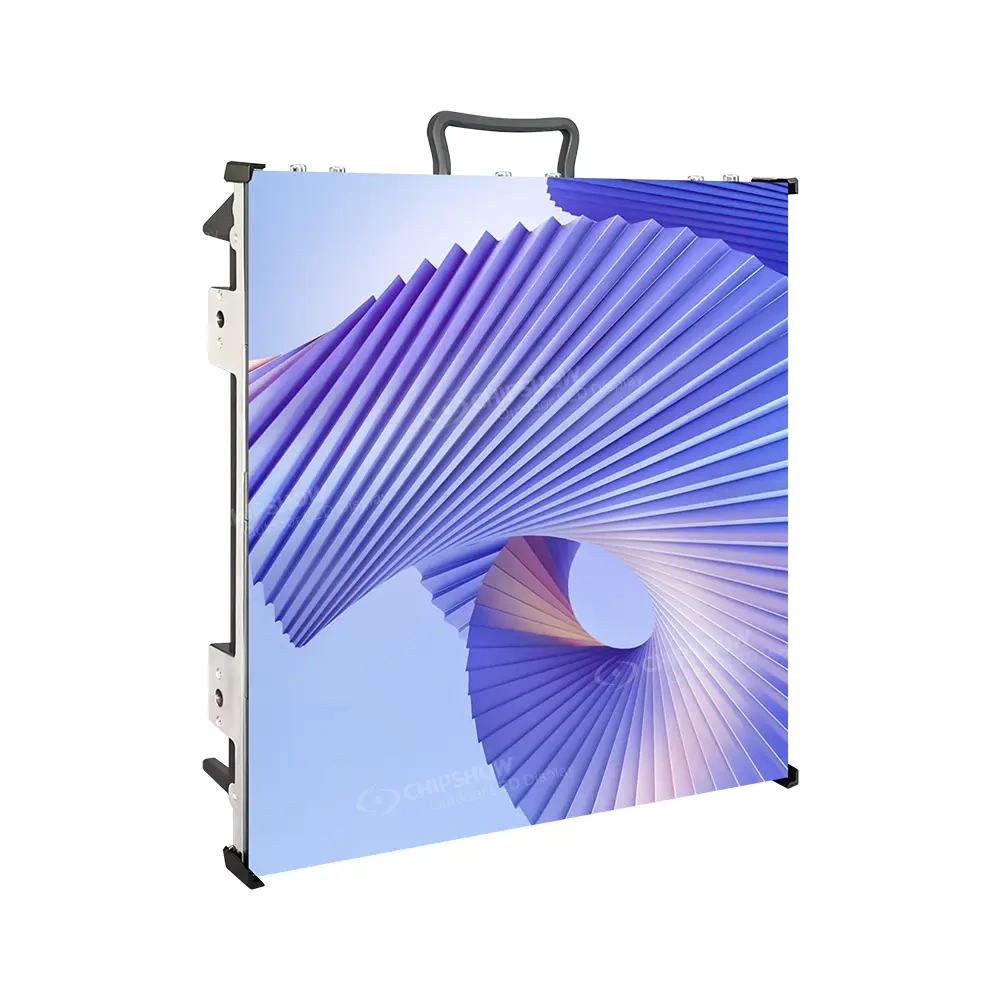
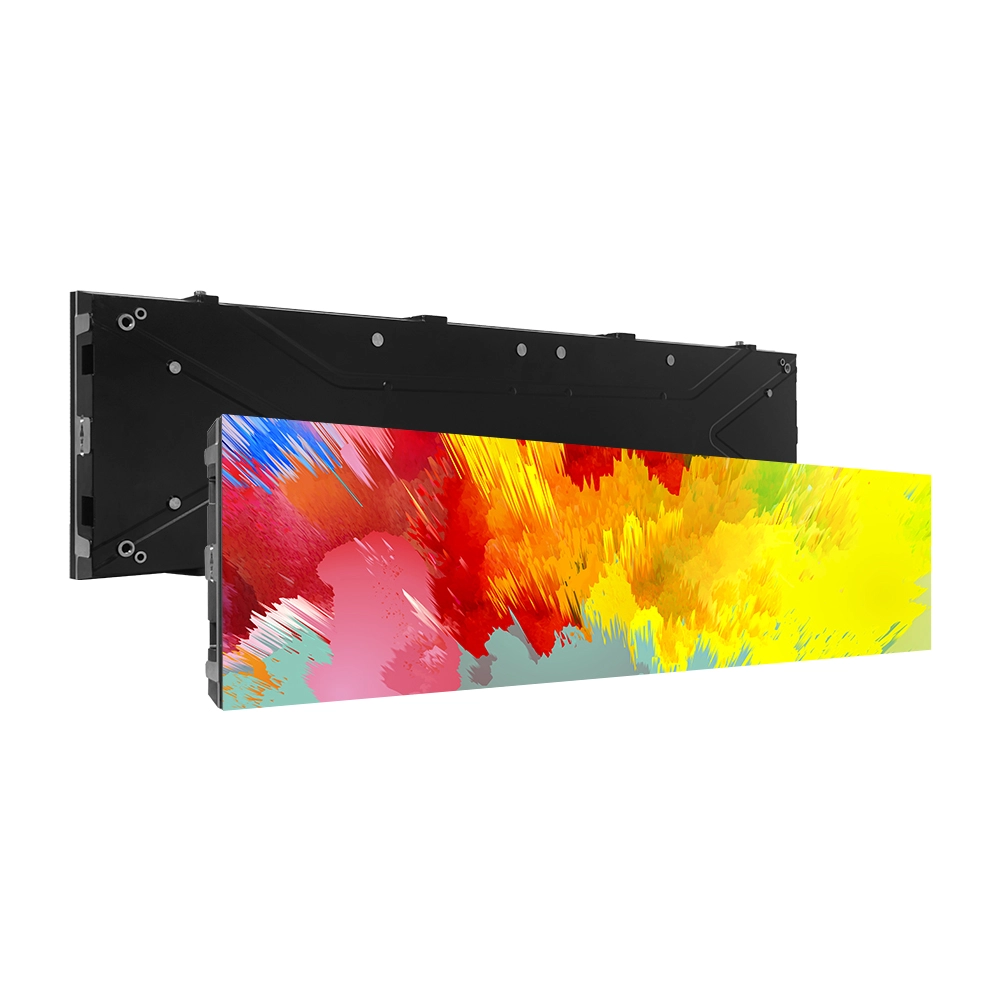
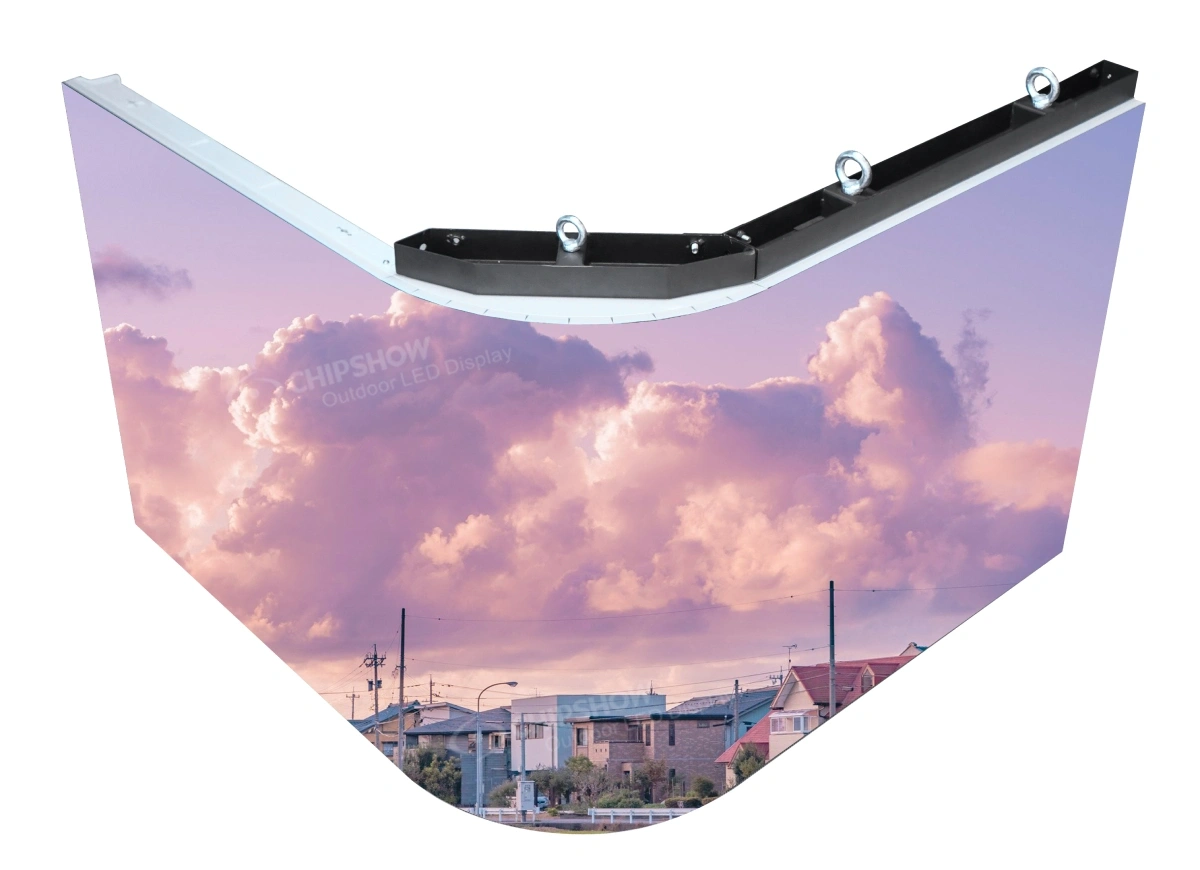
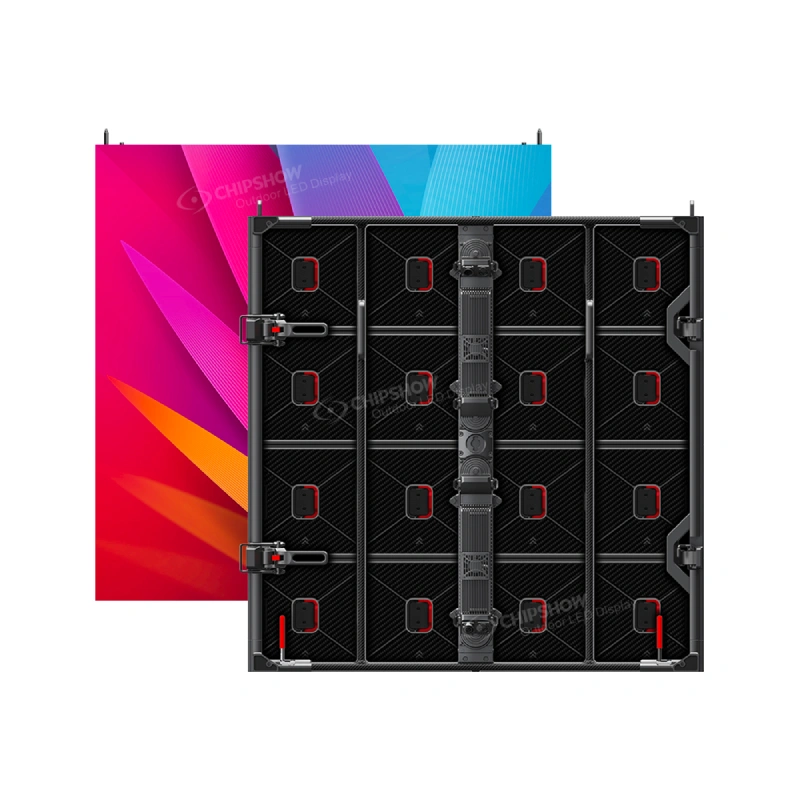
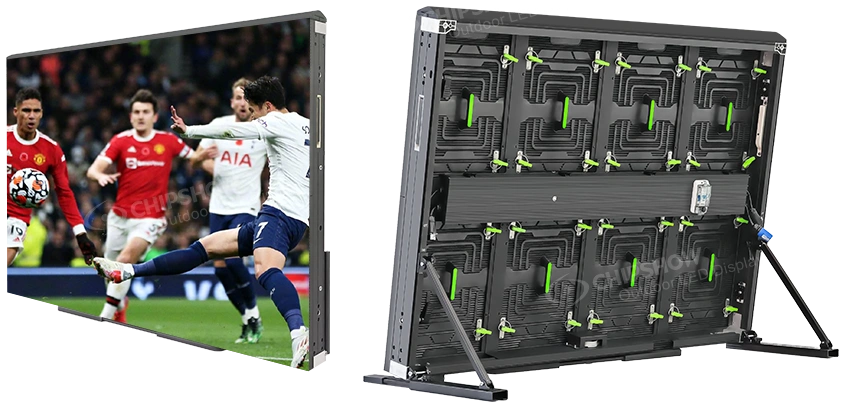
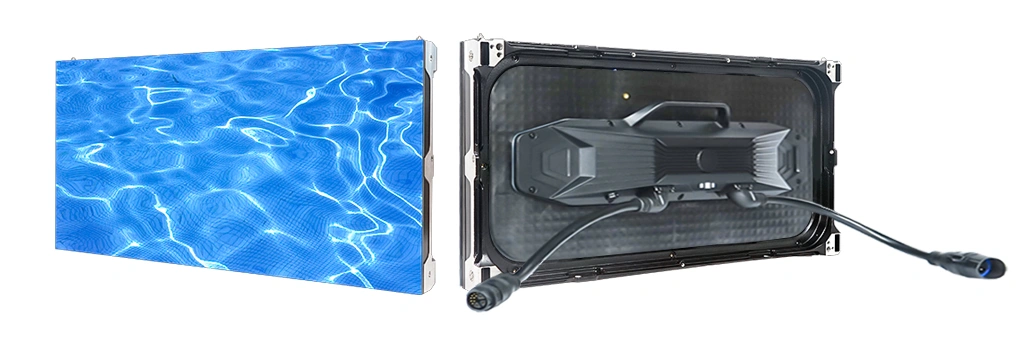
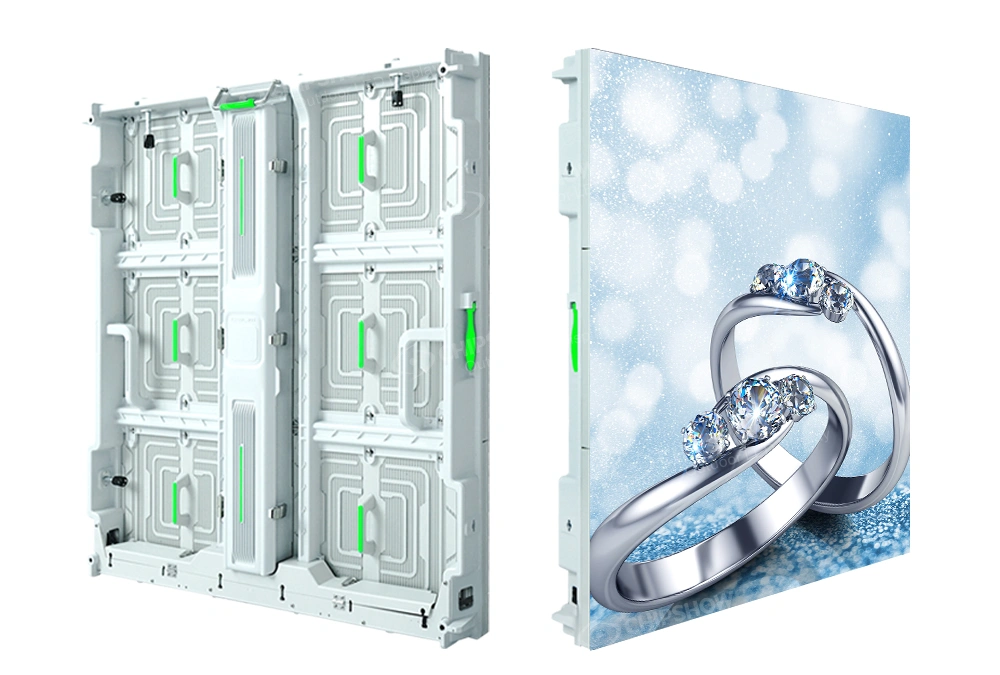
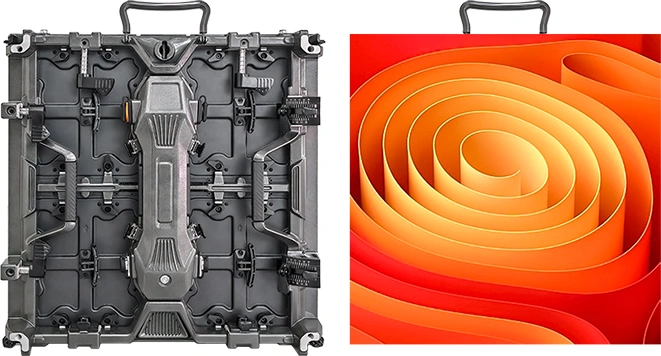
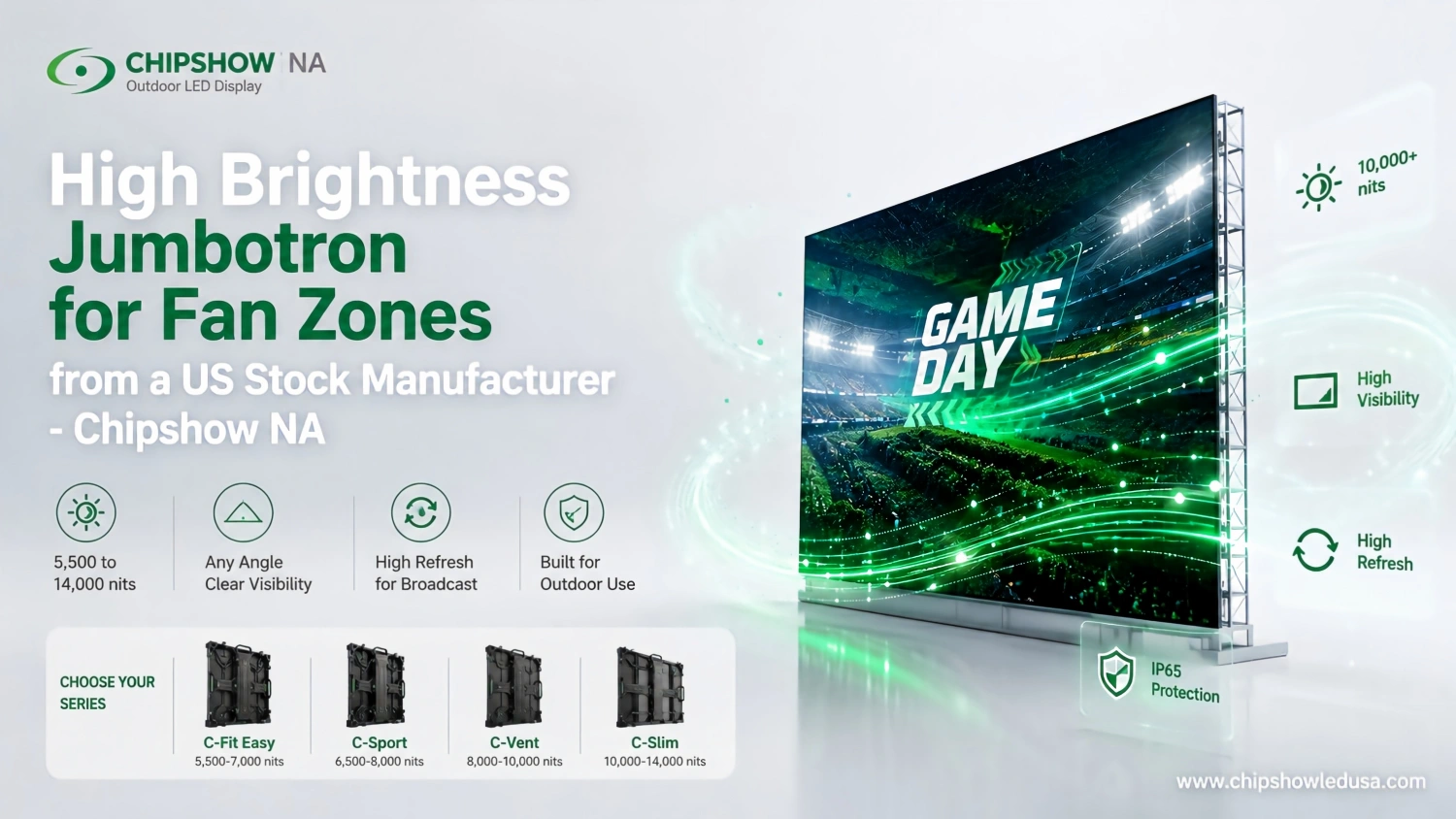
Chipshow apoya ese proceso de selección a través de su gama de productos, incluyendo el C-Fit Easy plataforma para despliegues fijos estandarizados al aire libre. C-Fit Easy P6.67 actualmente lista entre 5.500 y 6.000 nits con soporte de atenuación automática y tiene una posición definida en stock estadounidense. C-Vent ofrece configuraciones de 7.000 a 7.500 nits para aplicaciones permanentes en pantallas publicitarias exteriores y fachadas. El C-Sport P8 varía desde 5.500 hasta hasta 10.000 nits según la configuración y está diseñado específicamente para el perímetro del estadio. C-Slim puede alcanzar hasta 14.000 nits con su configuración de alta luminosidad ICE para exigentes sitios exteriores DOOH.
Especifica suficiente brillo para la peor condición de luz útil del sitio — no la mayor luminosidad disponible en el catálogo.
Chipshow combina la fabricación en fábrica con un Warehouse Hub de California para hardware seleccionado en Norteamérica. Esto proporciona a los integradores un camino práctico desde los datos del sitio hasta un plan de hardware específico para la configuración, mientras que los equipos locales de proyecto mantienen responsabilidades estructurales, eléctricas e de instalación.
Por qué las zonas de ventiladores crean un entorno difícil de luz natural
Una zona de fans no se comporta como una valla publicitaria convencional en la carretera.
La mayoría de la publicidad en carretera tiene una dirección de visualización relativamente predecible. El público de la zona de fans se desplaza por una plaza, un vestíbulo exterior o una zona de portón trasero y puede ver la misma pantalla desde varias distancias y ángulos horizontales.
Un espectador puede situarse a 30 pies de la pantalla. Otro puede observar desde el lado opuesto de una plaza abierta. Miles de personas pueden cambiar de posición cuando se abren las puertas, comienzan las activaciones de patrocinadores o comienza la cobertura en directo.
Por tanto, el brillo debe trabajar junto con la geometría de la multitud.
El sol cambia durante el evento
Una pantalla exterior permanente puede comenzar el día a la sombra y pasar a una luz solar directa intensa varias horas después.
Una pantalla orientada al oeste puede sufrir un resplandor especialmente difícil a última hora de la tarde. Una pantalla protegida por un edificio puede tener un entorno operativo mucho más sencillo incluso cuando ambas pantallas están en la misma ciudad.
Por eso, una solicitud de brillo debería incluir la orientación de la pantalla y los horarios en los que el recinto espera su mayor audiencia.
Si el periodo previo más importante ocurre entre las 14:00 y las 17:00, esas condiciones solares importan más que una media anual genérica.
Un cielo brillante puede reducir el contraste percibido
La luz solar directa que golpea la superficie del LED no es el único problema.
Una pantalla situada sobre un gran fondo de cielo abierto puede parecer menos rica en contraste que la misma pantalla vista frente a una fachada de edificio más oscura.
Los espectadores valoran la visibilidad de la imagen en relación con el entorno circundante. Por tanto, la pantalla debe competir tanto con la luz que cae en la pantalla como con la luz que entra en el campo de visión del espectador.
Esta es una de las razones por las que simplemente aumentar la puntuación de lendiduras no puede resolver todos los problemas de visibilidad.
El contenido de la zona de fans cambia constantemente
Una pantalla de la zona de aficionados puede cambiar entre retransmisiones en directo de los partidos, información de puntuación, gráficos de patrocinadores, invitaciones al público y mensajes del recinto en cuestión de minutos.
Esos activos no tienen el mismo contraste.
Un logotipo de patrocinador con colores llamativos y un fondo sencillo puede mantenerse muy legible bajo intensa luz del día. Una toma oscura con cámara real puede parecer menos vívida con exactamente los mismos ajustes de pantalla.
Por tanto, el lugar debería evaluar el brillo usando contenido representativo en lugar de juzgar la pantalla solo con una imagen de prueba en blanco.
Las zonas de ventiladores fijas y temporales necesitan diferentes caminos de hardware
El brillo no determina si la pantalla debe usar hardware permanente o de alquiler.
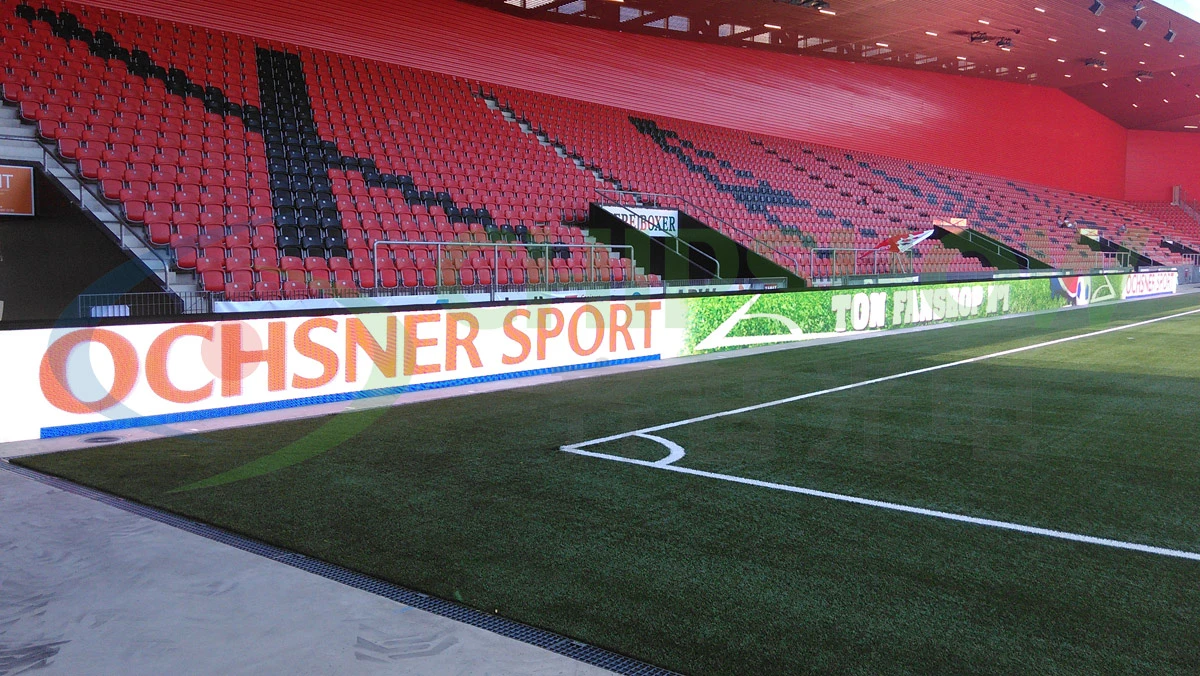
Una zona de ventiladores exterior permanente puede usar LED exterior fijo cuando la estrategia de montaje y mantenimiento la respalden. La página de producto C-Fit Easy P6.67 de Chipshow actualmente incluye zonas de portón deportivo de estadios entre sus ejemplos de aplicación.
Una zona de fans temporal creada para juegos individuales, festivales o activaciones de patrocinadores pertenece a un flujo de trabajo de alquiler o despliegue de eventos. Ese proyecto debería evaluarse mediante la ruta de hardware de eventos adecuada en lugar de seleccionar un gabinete DOOH permanente solo porque publica una especificación de brillo más alta.
C-Sport también necesita un límite claro. Es una plataforma perimetral diseñada para los requisitos de seguridad y retransmisión orientados al atleta, no un armario universal para la zona de aficionados.
5.500 vs. 7.500 vs. 10.000 vs. 14.000 Nits
Los números de brillo solo se vuelven útiles después de que se asocian a una aplicación real.
| Brillo publicado | Referencia a Chipshow | Dónde encaja el campo de tiro | Lo que el proyecto aún necesita verificar |
|---|---|---|---|
| 5.500–6.000 nits | C-Fit Easy P6.67 | Zonas permanentes de portón trasero, exposiciones exteriores y DOOH exterior fijo convencional | Orientación, horas de sol directo, distancia de visión P6,67 y requisitos de cámara |
| 7.000–7.500 nits | C-Vent | Pantallas publicitarias permanentes expuestas o instalaciones de fachadas donde la visibilidad diurna acompaña una arquitectura exterior abierta | Configuración exacta, distancia de audiencia y aplicación estructural |
| 5.500–10.000 nits | C-Sport P8 | Zonas perimetrales del estadio que requieren iluminación diurna y emisión específicas para deportes | Configuración exacta del brillo, flujo de trabajo de la cámara y aplicación a nivel de campo |
| Hasta 14.000 nits | C-Slim ICE | Sitios de DOOH con sol directo severo y ubicaciones de publicidad exterior premium | Si el emplazamiento necesita una salida extrema y la configuración exacta del motor ICE |
Estos rangos son específicos de configuración. Nunca deberían ampliarse en la afirmación de que cada modelo dentro de la familia de productos ofrece el valor más alto listado.
5.500–6.000 nits: un rango de partida práctico para muchos emplazamientos fijos al aire libre
C-Fit Easy P6.67 publica actualmente un rango de brillo de 5.500–6.000 nit con soporte de atenuación automática. Su página en Norteamérica también posiciona el producto para aplicaciones fijas de DOOH al aire libre y zonas de portón trasero en estadios.
Ese rango puede ser adecuado cuando la pantalla tiene una orientación manejable, el público se encuentra dentro de la geometría útil de visualización y la luz solar directa intensa no domina las horas de funcionamiento más importantes.
El hecho de que C-Fit Easy tenga una posición definida en la serie estadounidense no debería anular el análisis de brillo.
Si el sitio realmente requiere mucho más espacio para la luz del día, el inventario local no es motivo para subestimar la pantalla.
7.000–7.500 nits: más margen para pantallas permanentes al aire libre expuestas
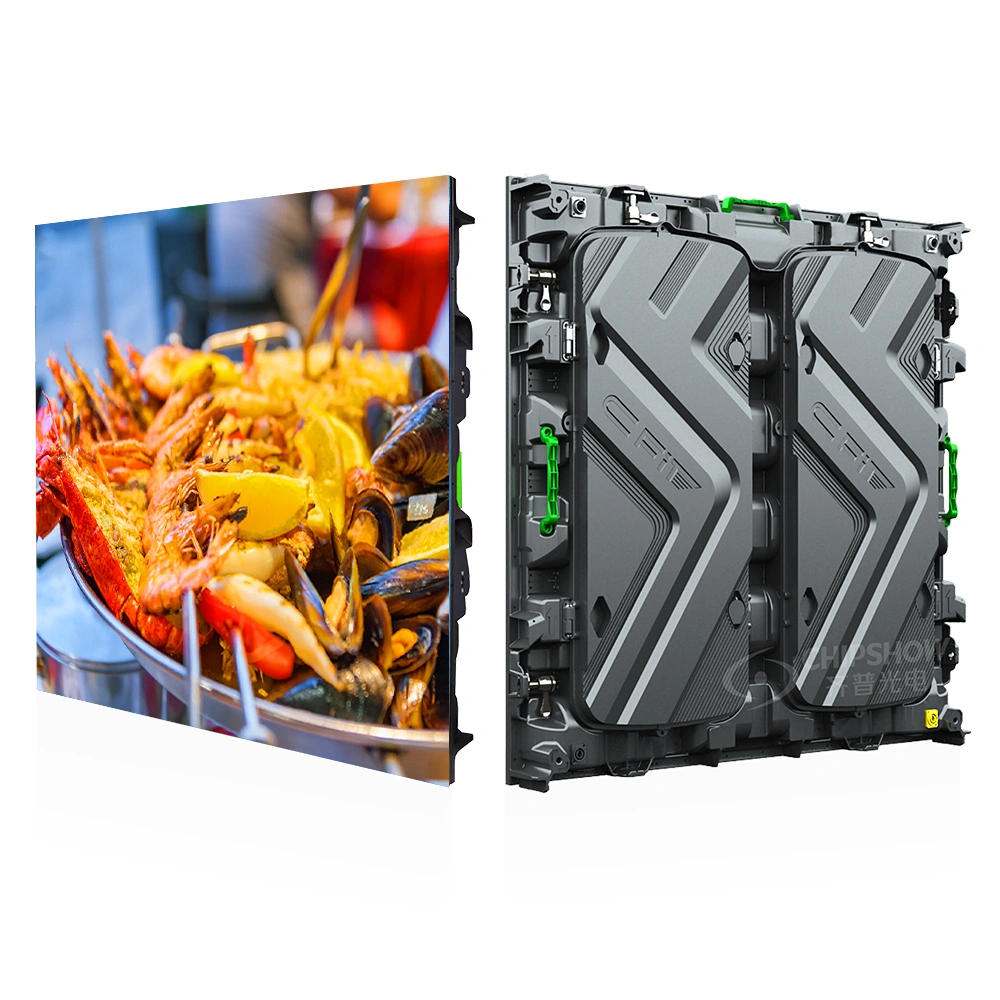
Actualmente, C-Vent lista entre 7.000 y 7.500 nits en sus configuraciones publicadas para exteriores P15.6, P16 y P25.
Esta gama es relevante para aplicaciones de vallas publicitarias permanentes expuestas y fachadas multimedia.
C-Vent no debe tratarse como un producto deportivo para fan-zones simplemente porque ofrece mayor brillo que C-Fit Easy. Su función principal sigue siendo una gran exposición publicitaria y arquitectónica al aire libre, donde la visibilidad diurna funciona junto con la construcción exterior ventilada.
Para los propietarios de locales que también operan superficies comerciales exteriores para medios, esa distinción impide que dos requisitos no relacionados se fusionen en una sola especificación.
Hasta 10.000 nits: margen diurno específico para deportes
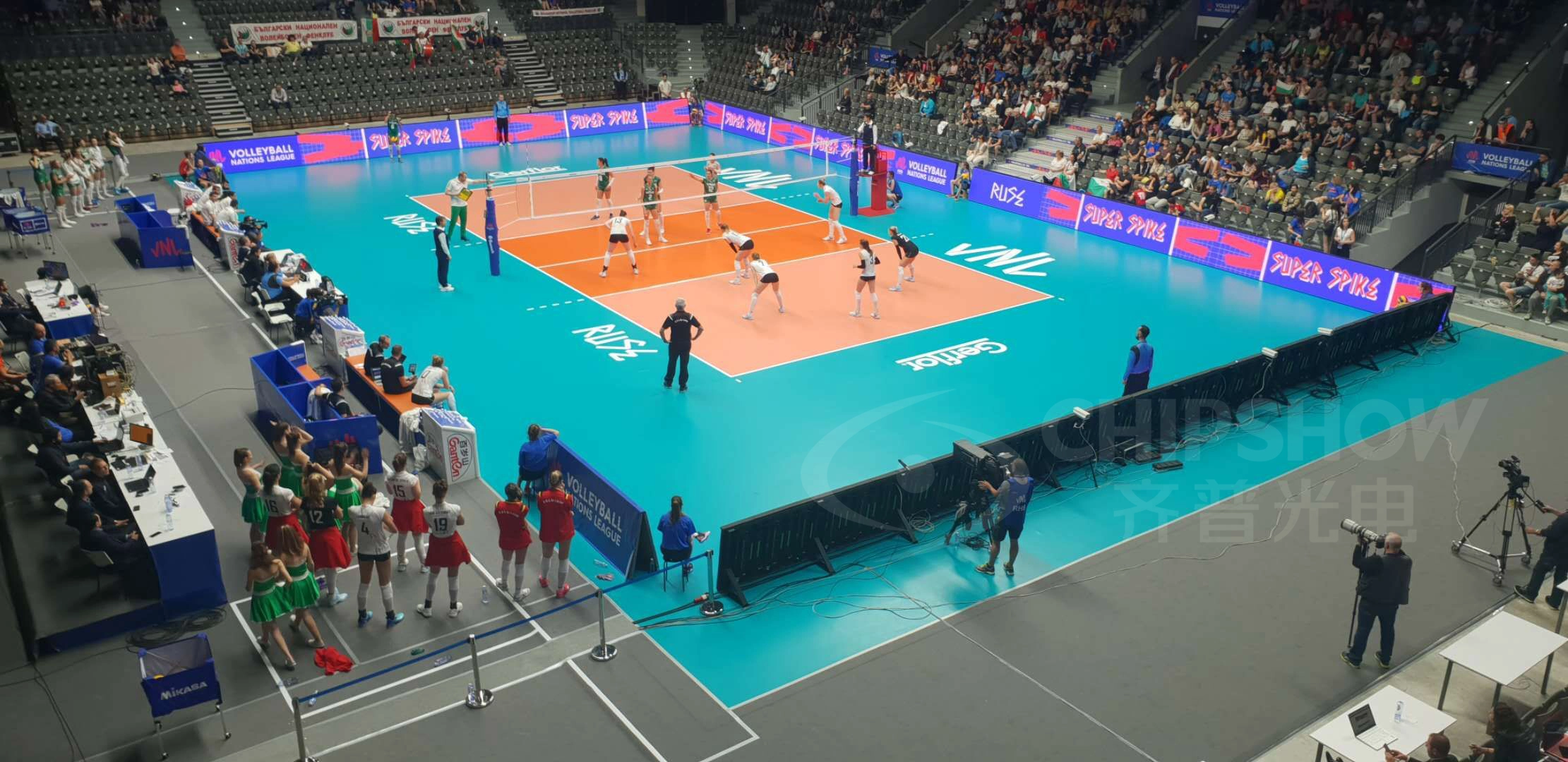
Actualmente, el C-Sport P8 indica un brillo de 5.500 a hasta 10.000 nits según la configuración, junto con una tasa de refresco de al menos 3.840 Hz.
Su arquitectura actual de producto permite utilizar módulos de alta luminosidad en zonas orientadas al sol y módulos SMD de menor consumo en áreas sombreadas, manteniendo el mismo formato de cabina.
Esto ilustra un importante principio de ingeniería de brillo: un solo recinto puede contener varias condiciones de luz solar.
Una línea de banda orientada al sol puede requerir mayor potencia que un lado sombreado del mismo estadio.
Sin embargo, C-Sport sigue siendo un producto perimetral. Su estrategia de brillo es una referencia útil en ingeniería deportiva, no una razón para usar armarios perimetrales como la pared principal de vídeo en cada zona de ventiladores.
Hasta 14.000 nits: Exposición extrema al aire libre
La especificación actual de C-Slim para Norteamérica cubre opciones P4–P16 y lista hasta 14.000 nits para configuraciones de alta brillantez con motor de combustión interna.
Ese rendimiento pertenece al límite superior de los requisitos exteriores.
Puede proporcionar un margen útil de luz diurna para DOOH premium junto a la carretera y otros lugares comerciales donde un sol directo intenso podría desafiar una configuración exterior convencional.
El sitio debería justificar esa elección.
Una pantalla que permanece sombreada la mayor parte del día apenas gana de los picos extremos si la audiencia ya tiene suficiente visibilidad a un nivel más bajo.
La visibilidad depende de más que de las lendres
La luminancia máxima indica al comprador cuánta luz puede producir la pantalla.
No indica al comprador cuán legible será una puntuación, un gráfico del patrocinador o una transmisión de vídeo en directo desde todas las posiciones del público.
El contraste cambia lo que ve el ojo
La visibilidad percibida depende de la relación entre los píxeles brillantes y las áreas oscuras de la imagen.
La luz ambiental intensa puede elevar el nivel de negro aparente de una superficie LED. Cuando los negros parecen grises, la profundidad de imagen disminuye incluso si la luminancia máxima se mantiene alta.
Ese efecto se vuelve especialmente evidente con el vídeo en directo.
Un gráfico completamente blanco puede parecer poderoso, mientras que los rostros, los uniformes sombreados o las tomas de cámara más oscuras son menos distintivos.
Durante una revisión de brillo, prueba contenido en directo y patrocina creatividad en lugar de basarte solo en los números de especificación.
El ángulo de visión importa a lo largo de una plaza
Una multitud en la zona de fans rara vez se coloca justo delante de la pantalla.
El proyecto debe identificar la zona principal de multitud y compararla con el rendimiento en ángulo de visión de la configuración seleccionada.
Si una gran parte del público se desvía del eje, cambiar la orientación física de la pantalla puede a veces mejorar la visibilidad de forma más efectiva que aumentar el brillo máximo.
Unos pocos grados de mejor colocación pueden afectar a miles de espectadores sin aumentar la demanda de potencia.
El pitch de píxeles determina si el detalle es útil
El brillo puede hacer visible una imagen, pero el tono de píxel determina cuánta cantidad de detalle puede resolver.
Una gran pantalla de zona de ventiladores vista desde lejos en una plaza puede no necesitar una densidad de píxeles extremadamente fina. Una pantalla más pequeña situada cerca de zonas de comida, venta de entradas o patrocinadores puede requerir más detalle de imagen.
Por eso el brillo y el tono deben especificarse juntos.
Una pantalla muy brillante no puede hacer que el texto pequeño sea legible a distancia si el contenido y la resolución física de píxeles no lo soportan.
El contenido exterior debería ayudar al hardware
El hardware de alta luminosidad funciona mejor con contenido diseñado para el entorno.
La tipografía grande, la clara separación de primer plano y fondo y los diseños de partituras más sencillos siguen siendo más fáciles de leer con luz ambiental intensa que en tipos finos o gráficos sutiles de bajo contraste.
Los creativos patrocinadores deberían recibir el mismo trato.
Una marca puede suministrar activos creados para televisión o publicidad digital en dispositivos personales. Estos recursos pueden necesitar ajustes antes de funcionar eficazmente en una gran pantalla exterior bajo luz directa del día.
La especificación de los LED y el flujo de trabajo de contenido deberían reforzarse mutuamente.
La orientación de la pantalla puede ser más valiosa que otros 2.000 nits
El camino solar debe entrar en el proyecto antes de que la ubicación de la pantalla sea irreversible.
Un cambio modesto en el ángulo, la posición de montaje o la sombra que rodea puede reducir el deslumbramiento directo durante el periodo operativo más valioso.
La biblioteca de proyectos publicada por Chipshow incluye trabajos fijos al aire libre, como una valla publicitaria C-Fit Outdoor P10 LED en Brasil, que demuestra una historia consolidada de aplicaciones al aire libre. Ese proyecto confirma experiencia en despliegues al aire libre; no establece el requisito de brillo para una nueva zona de fans en EE. UU. Cada nuevo sitio sigue necesitando su propia orientación y evaluación de la luz del día.
Potencia, calefacción y atenuación automática
El alto brillo tiene una consecuencia eléctrica.
Un proyecto que especifica una mayor salida de luz también debe entender cómo la configuración exacta gestiona la energía y el calor a lo largo del día.
Tamaño Capacidad eléctrica alrededor de la configuración real
No estimes la carga eléctrica de una pantalla de alta luminosidad de otra versión de la misma familia de productos.
Diferentes paquetes de LEDs y configuraciones de brillo pueden tener distintas características de potencia.
Solicita los datos eléctricos que pertenecen al modelo exacto y la versión de brillo en la lista de materiales de hardware.
Esto resulta especialmente importante cuando el sitio tiene una capacidad eléctrica limitada o la pantalla funciona durante largos periodos diarios.
La producción máxima no equivale a la producción durante todo el día
La pantalla puede necesitar la máxima salida de luz diurna solo para una parte del horario de funcionamiento.
Un periodo de sol por la tarde puede crear la mayor visibilidad, mientras que la misma pantalla necesita mucha menos potencia tras la puesta de sol.
Por tanto, la planificación del brillo debería separar la capacidad máxima del comportamiento operativo normal.
Esto evita que el propietario trate la luminancia máxima como el único modo de funcionamiento.
La gestión del calor sigue la carga eléctrica
Los LEDs, los drivers y la electrónica de potencia generan calor mientras que el entorno exterior puede estar ya caliente.
La arquitectura exacta del producto debe eliminar ese calor sin comprometer la operación a largo plazo.
C-Slim utiliza un armario exterior de magnesio y lista configuraciones de combustión interna de alta luminosidad, mientras que C-Vent utiliza una arquitectura exterior abierta con una apertura ventilada del 25%–63% según la configuración.
Estos son roles de producto diferentes.
Las características de flujo de aire de C-Vent tienen sentido en su entorno permanente de DOOH y fachada; No son motivo para reemplazar el hardware deportivo en el perímetro de un estadio.
El requisito de brillo identifica el desafío óptico. La aplicación sigue determinando la arquitectura del producto.
El atenuado automático importa después del atardecer
C-Fit Easy P6.67 actualmente soporta atenuación automática.
Esa capacidad permite al sistema reducir la salida cuando la luz ambiental disminuye en lugar de seguir funcionando con brillo diurno durante toda la noche.
Una estrategia nocturna adecuada puede mejorar el confort de visualización, reducir el consumo innecesario de energía y ayudar al proyecto a coordinarse con la iluminación local o los requisitos de señalización.
Los límites reales dependen de la ciudad, la propiedad y la Autoridad Competente. Chipshow proporciona hardware y datos de producto con capacidad de brillo; El equipo local del proyecto coordina los requisitos específicos del sitio.
Cámara y tasa de refresco en las zonas de ventiladores
Una exhibición en la zona de aficionados puede parecer excelente para los espectadores y aun así producir malos resultados frente a la cámara.
Los locutores locales, equipos de producción del recinto, equipos de retransmisión en directo y creadores de redes sociales pueden colocar la pantalla LED dentro del marco de la cámara.
Cuando eso ocurre, hay que revisar el brillo y la frecuencia de refresco juntos.
Utilizar datos de actualización específicos de configuración
El C-Sport P8 de Chipshow indica explícitamente una tasa de refresco de al menos 3.840 Hz junto con su rango de brillo dependiente de la configuración de 5.500–10.000 nits.
Esa combinación refleja su papel en el deporte y la retransmisión.
Un producto fijo para exteriores que se está considerando para una zona de ventiladores no debería heredar automáticamente esa especificación.
Si la pantalla principal de la fan-zone se coloca detrás de los presentadores o aparece regularmente en la cobertura de la emisión, pide la tasa de refresco exacta de la configuración propuesta antes de que se apruebe el hardware.
Una etiqueta de aplicación como "zona de portón trasero" no sustituye una especificación de cámara.
La tasa de refresco es solo una parte del flujo de trabajo de la cámara
La velocidad de obturación de la cámara, la tasa de fotogramas, la arquitectura de escaneo LED, la configuración del procesamiento y el ajuste de brillo pueden afectar a la imagen grabada.
Por tanto, una especificación de 3.840 Hz es una entrada importante, no garantiza que todos los ajustes de la cámara produzcan resultados idénticos.
Para un uso de alta visibilidad en difusión, el integrador debe coordinar el entorno de cámara planificado con la configuración y el procesador del LED.
Esa revisión debería hacerse antes de la puesta en servicio, no durante el primer evento en vivo.
Mantén separado el alcance del sistema deportivo
Si un proyecto también necesita LED perimetral, integración en el marcador, caminos de señal redundantes u otras funciones deportivas críticas, esos requisitos pertenecen al diseño del sistema Sports & Stadium.
La decisión de brillo de esta página debería alimentar esa especificación del sistema en lugar de reemplazarla.
Material estadounidense y plazos de entrega para configuraciones de alta luminosidad
El stock estadounidense debe comprobarse a nivel de configuración cuando el brillo es un factor decisivo.
C-Fit Easy P6.67 actualmente tiene una posición publicada en acciones estadounidenses y lista entre 5.500 y 6.000 nits.
Esa es una ruta específica y verificable para el stock.
No demuestra que una configuración C-Sport de 10.000 nits, una configuración C-Vent particular de 7.500 nit o una configuración C-Slim ICE de 14.000 nit estén actualmente disponibles en la cantidad requerida en EE. UU.
Las variantes de alta luminosidad pueden utilizar diferentes paquetes o opciones de configuración de LEDs, por lo que el proyecto debe confirmar el tono real, el nivel de salida y la cantidad antes de establecer una fecha de entrega en el calendario de construcción o evento.
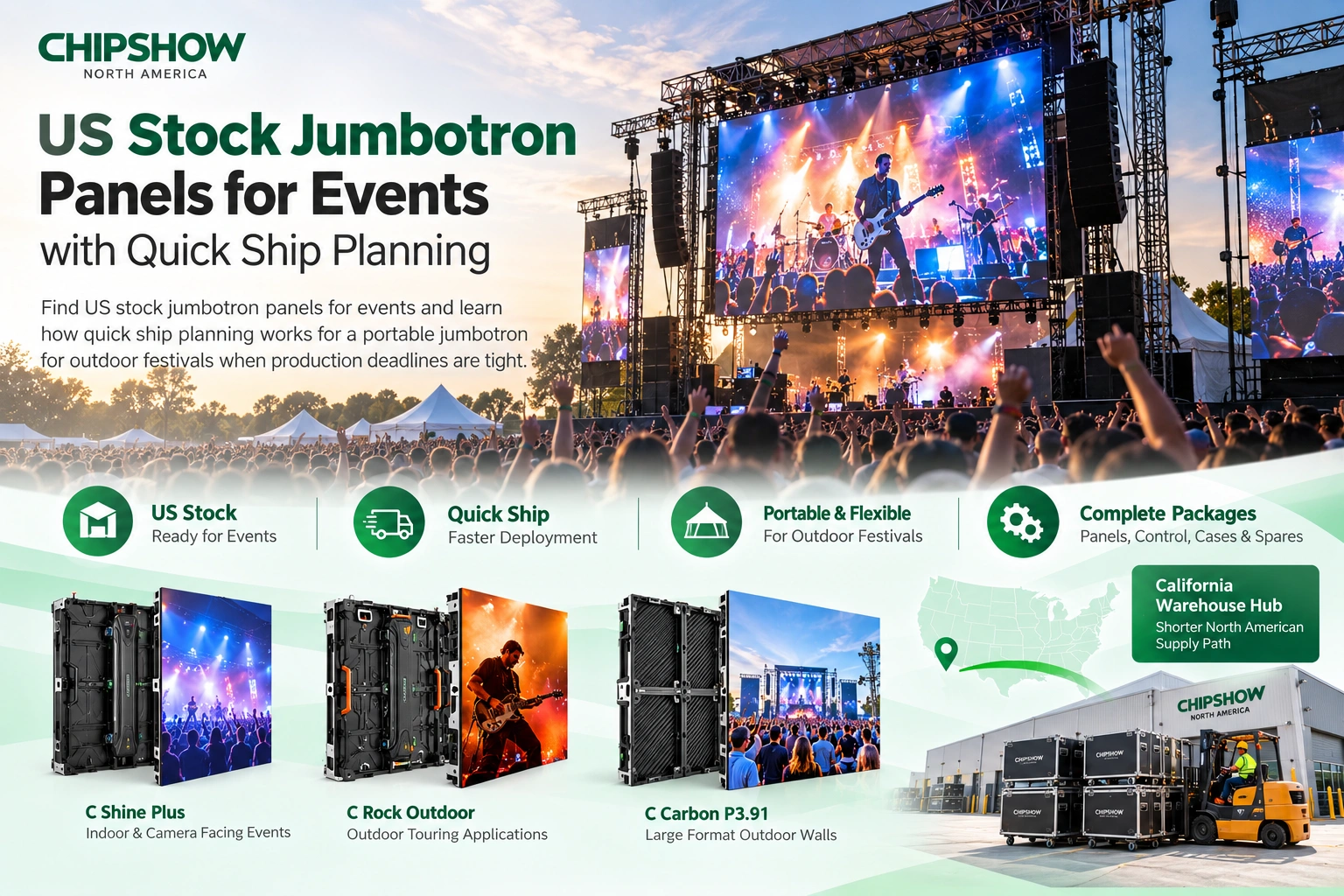
El California Warehouse Hub de Chipshow admite la disponibilidad de hardware seleccionado en Norteamérica, mientras que la producción en fábrica proporciona la vía para configuraciones que no están disponibles en la cantidad local requerida.
Para los integradores AV, Chipshow se mantiene centrado en el alcance del hardware del lado del fabricante: planificación de configuración, documentación de hardware, coordinación de inventario y paquetes de hardware listos para instalar. Los ámbitos estructurales, eléctricos e de instalación locales permanecen en manos de los equipos cualificados responsables del sitio.
Cuando el calendario del proyecto es sensible, envía las dimensiones de la pantalla, la orientación, la distancia de visualización, el periodo de funcionamiento requerido y el rango de brillo objetivo. Eso le da a Chipshow suficiente información para comprobar la configuración correcta en lugar de limitarse a comprobar el nombre de la familia de productos.
Preguntas frecuentes sobre la planificación de jumbotron de alta luminosidad
¿Cuántos lendres necesita un jumbotron de zona de ventilación?
No existe un número universal de brillo en la zona del ventilador. Una criba permanente orientada favorablemente puede rendir bien dentro del rango de 5.500–6.000 nits, mientras que la luz solar directa intensa puede justificar una producción sustancialmente mayor. La dirección de la pantalla, la exposición al sol, el fondo del cielo, la distancia de visualización y el contenido afectan al resultado. Fija el objetivo desde el periodo de visualización más difícil y útil del sitio en lugar de elegir la especificación más alta disponible.
¿Siempre es mejor 10.000 o 14.000 nits?
No. Estos niveles de salida proporcionan espacio adicional para la luz del día en condiciones exigentes, pero una pantalla sombreada o bien orientada puede no beneficiarse de esta capacidad adicional. C-Sport puede alcanzar hasta 10.000 nits para aplicaciones específicas para deportes y para aplicaciones soleadas específicas, mientras que C-Slim ICE puede alcanzar hasta 14.000 nits para una exposición extrema al aire libre DOOH. Usa esas configuraciones donde el sitio las justifique.
¿Cómo afecta la orientación de la pantalla al brillo exterior?
La orientación cambia cuando la luz solar directa llega a la superficie del LED y donde aparece el fondo más brillante detrás de la pantalla. Una pantalla orientada al oeste puede soportar un resplandor mucho más fuerte a última hora de la tarde que una pared sombreada. Registra la dirección de la pantalla y las horas de sol directo antes de establecer el objetivo final de brillo.
¿Puede un jumbotron de alta luminosidad seguir luciendo bien en cámara?
Sí, pero el brillo por sí solo no es suficiente. Confirma la tasa de refresco de la configuración exacta del LED y coordinala con la tasa de fotogramas de la cámara, los ajustes del obturador y el flujo de trabajo de procesamiento. Por ejemplo, el C-Sport P8 indica al menos 3.840 Hz para su configuración orientada al deporte. Un producto con zona de ventilación diferente debe comprobarse por separado en lugar de asumir que tiene la misma especificación de cámara.
¿Existen configuraciones de alta luminosidad disponibles de fábrica en EE. UU.?
La disponibilidad depende del producto exacto, el tono de los píxeles, la configuración de brillo y la cantidad. C-Fit Easy P6.67 actualmente tiene una ruta publicada de stock estadounidense entre 5.500 y 6.000 nits. Las configuraciones de mayor potencia C-Sport, C-Vent y C-Slim deben confirmarse para la disponibilidad actual antes de que un proyecto las considere listas para enviar.
¿Listo para mirar tu cartel? El Selector de señales LED de EE. UU. Camina a través de la distancia de visualización, formato y distribución en un solo paso.