High-Brightness Jumbotron Guide for Fan Zones: Nits, Sunlight, Viewing Angle & US Stock
A 14,000-nit LED display is not automatically easier to see than a 6,000-nit screen at every outdoor venue.
Want a second look at the format options? The USA LED sign selector narrows signs by viewing distance, pixel pitch and cabinet style in one pass.
Peak brightness is only one part of daylight visibility. Screen orientation, sky glare, viewing angle, contrast, pixel pitch, content design and the time of day can all change what spectators actually see.
That matters in fan zones, tailgate areas and outdoor venue plazas because the screen may work from noon through night, face a moving sun path and serve a crowd spread across a wide viewing area.
For stadium operators, AV integrators, event producers and DOOH teams comparing a high-brightness jumbotron manufacturer with US stock, the useful question is not which product publishes the largest nit number.
It is how much usable brightness the site needs during its most difficult viewing period.
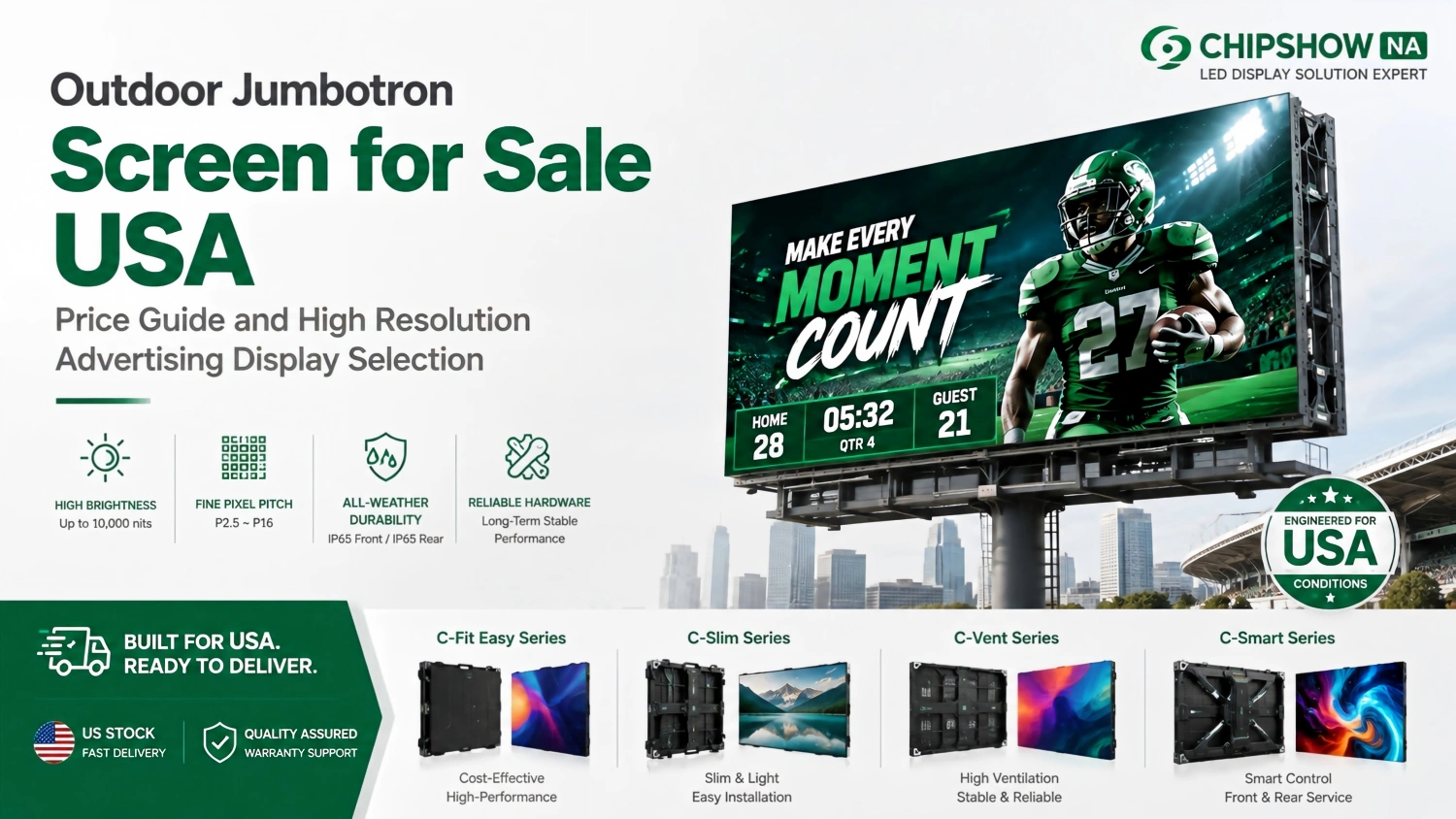
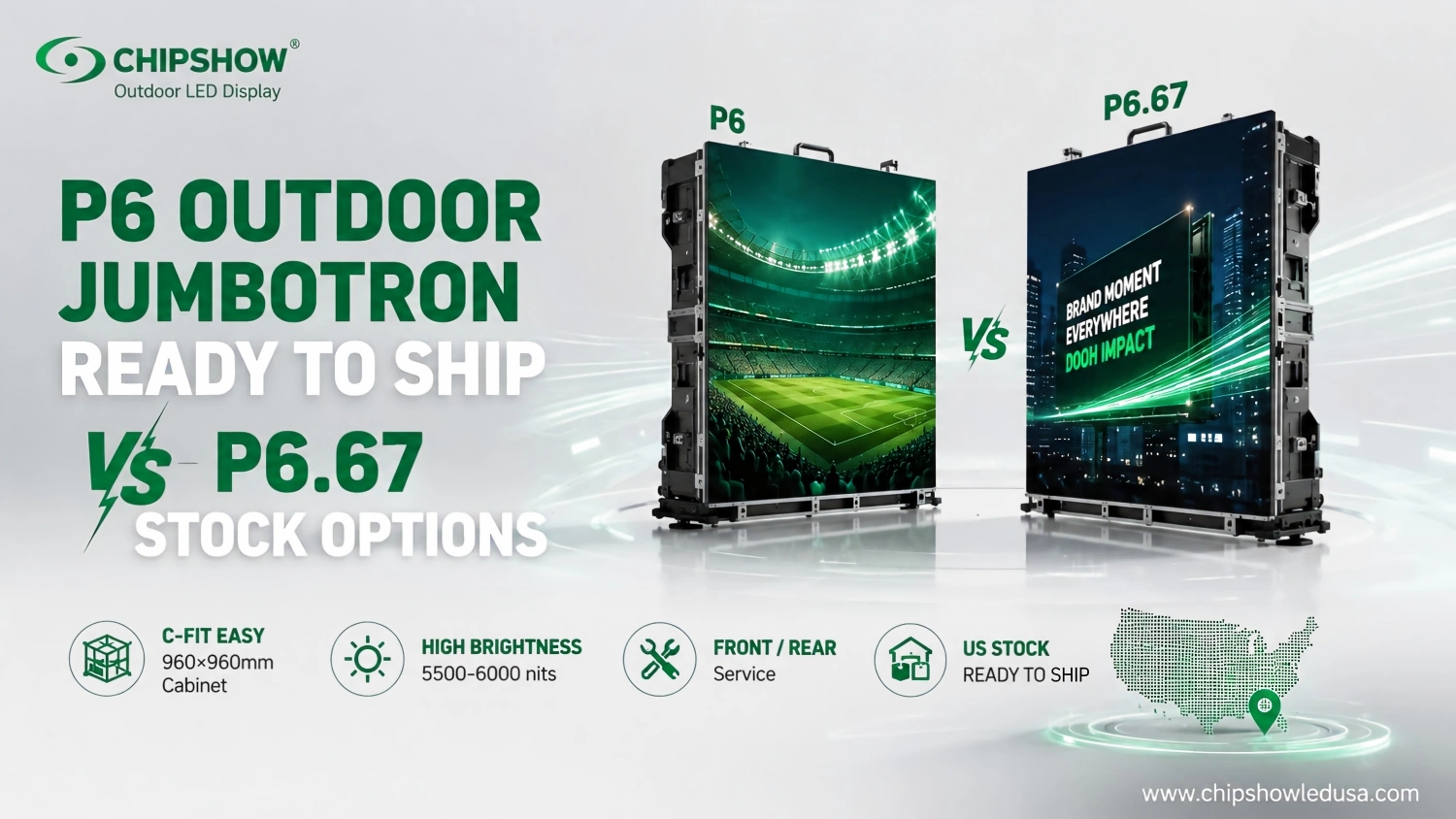
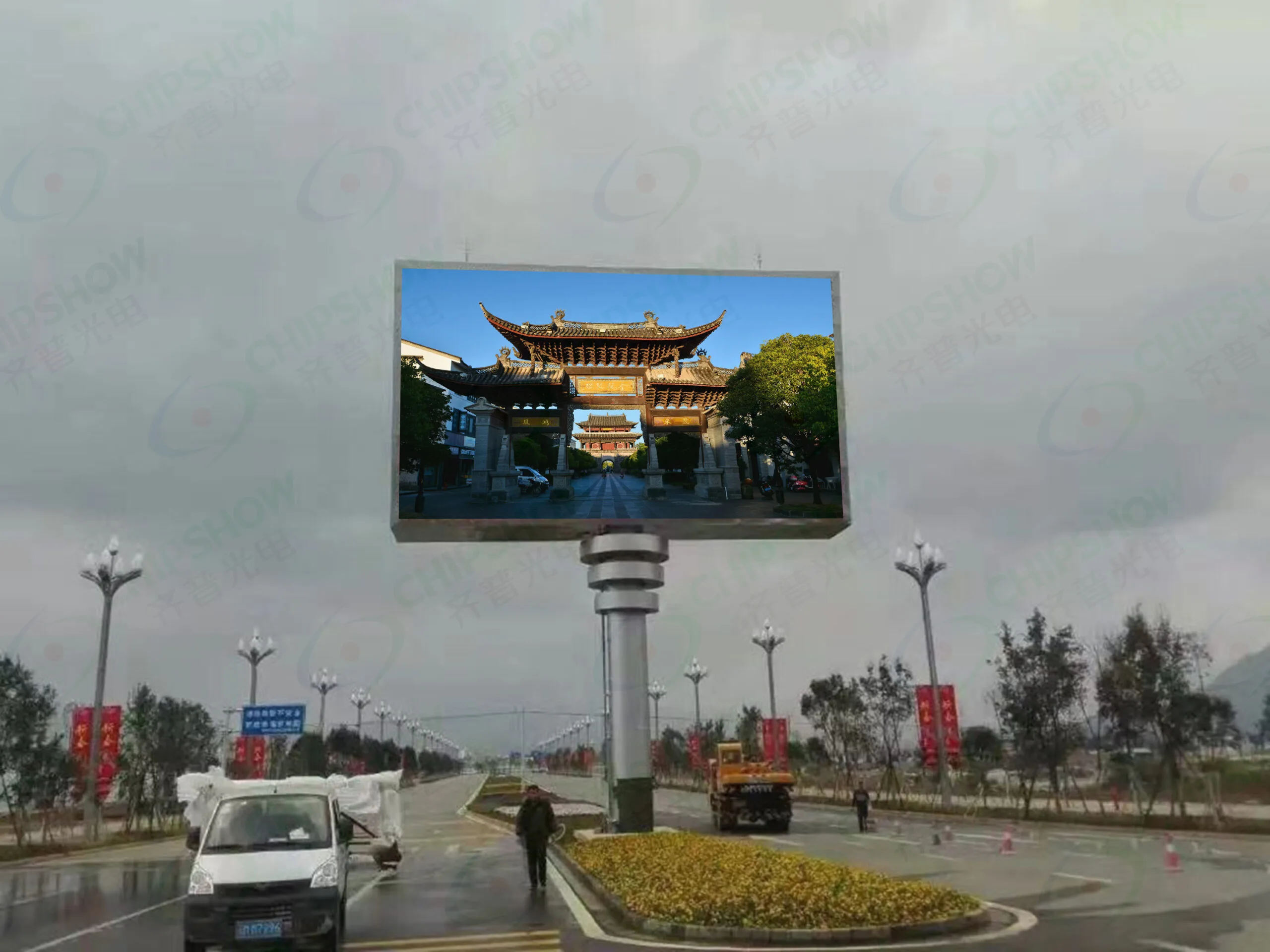
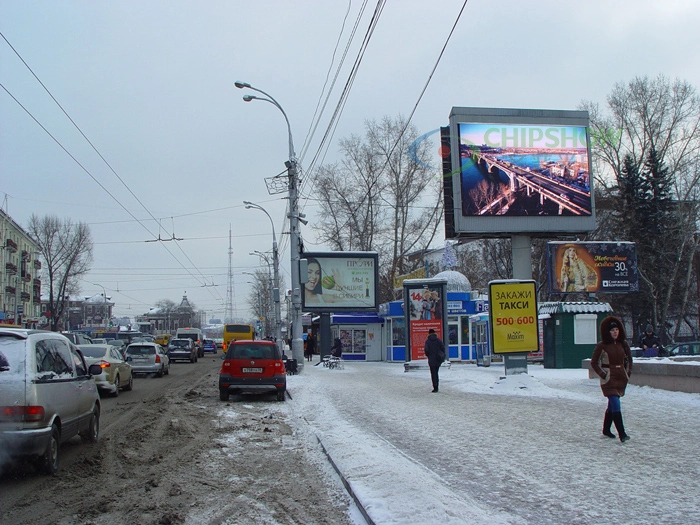
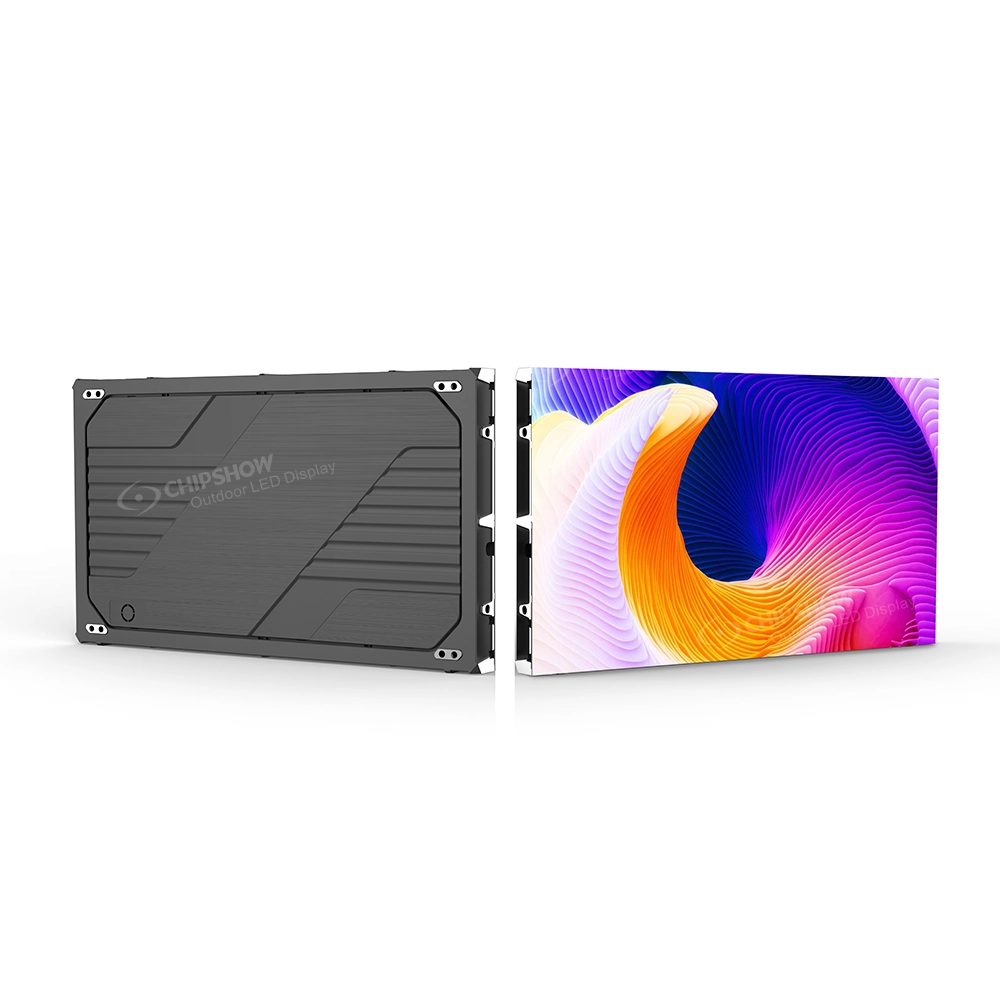
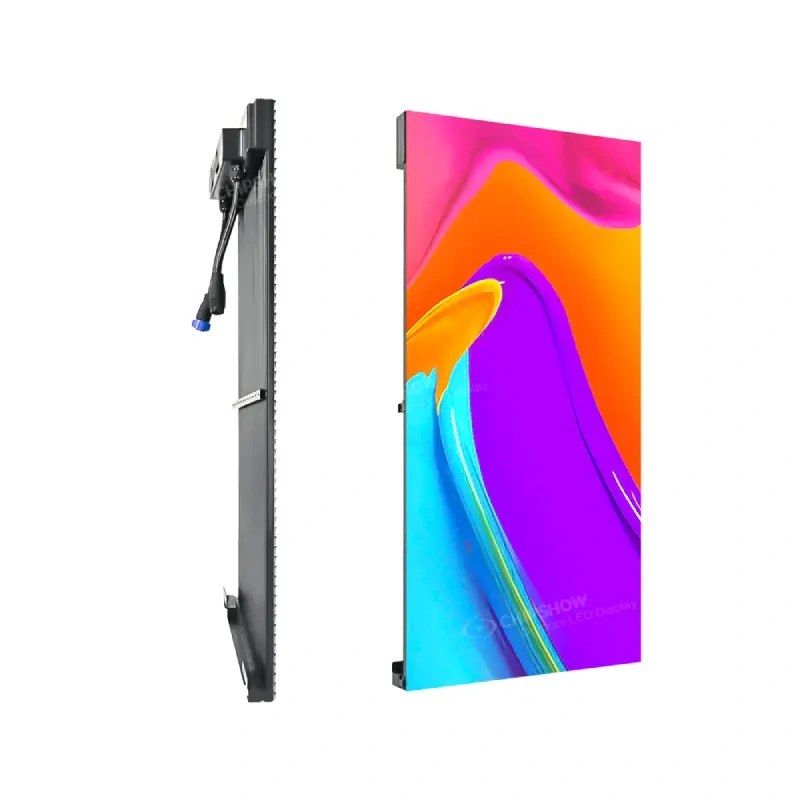
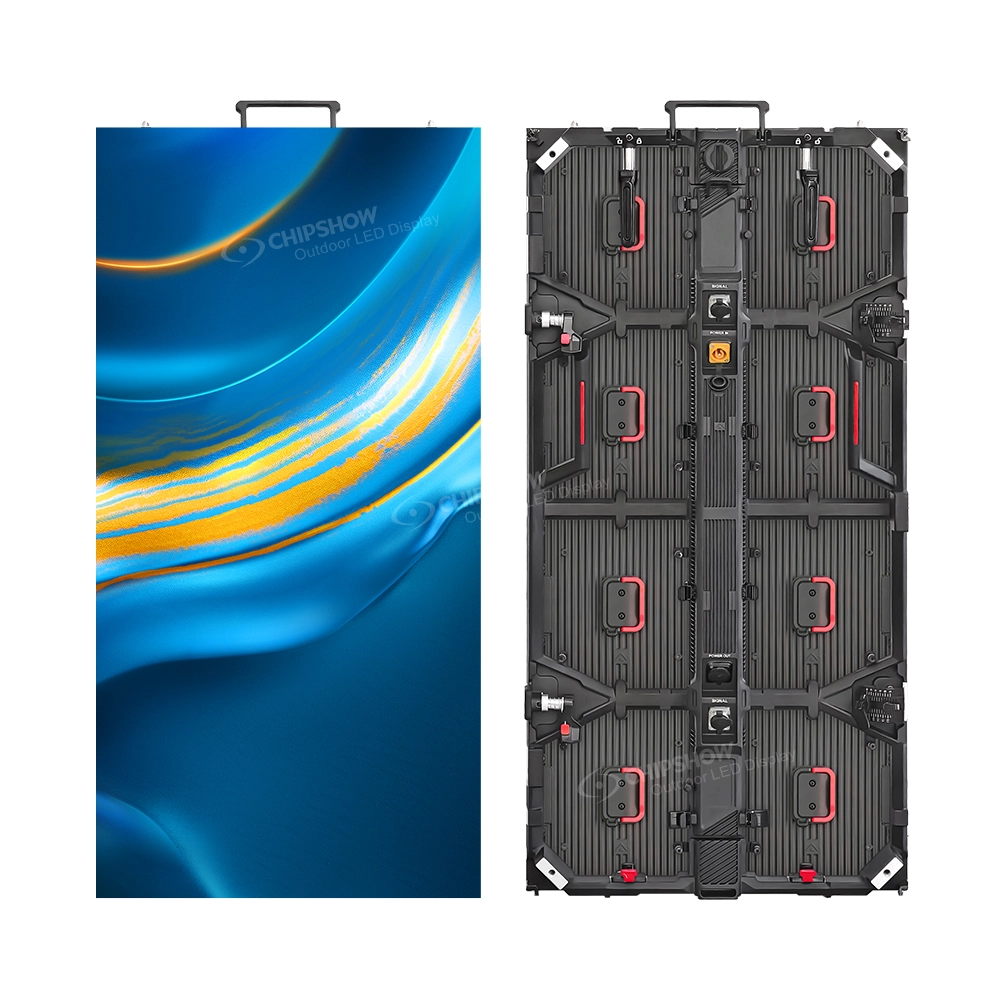
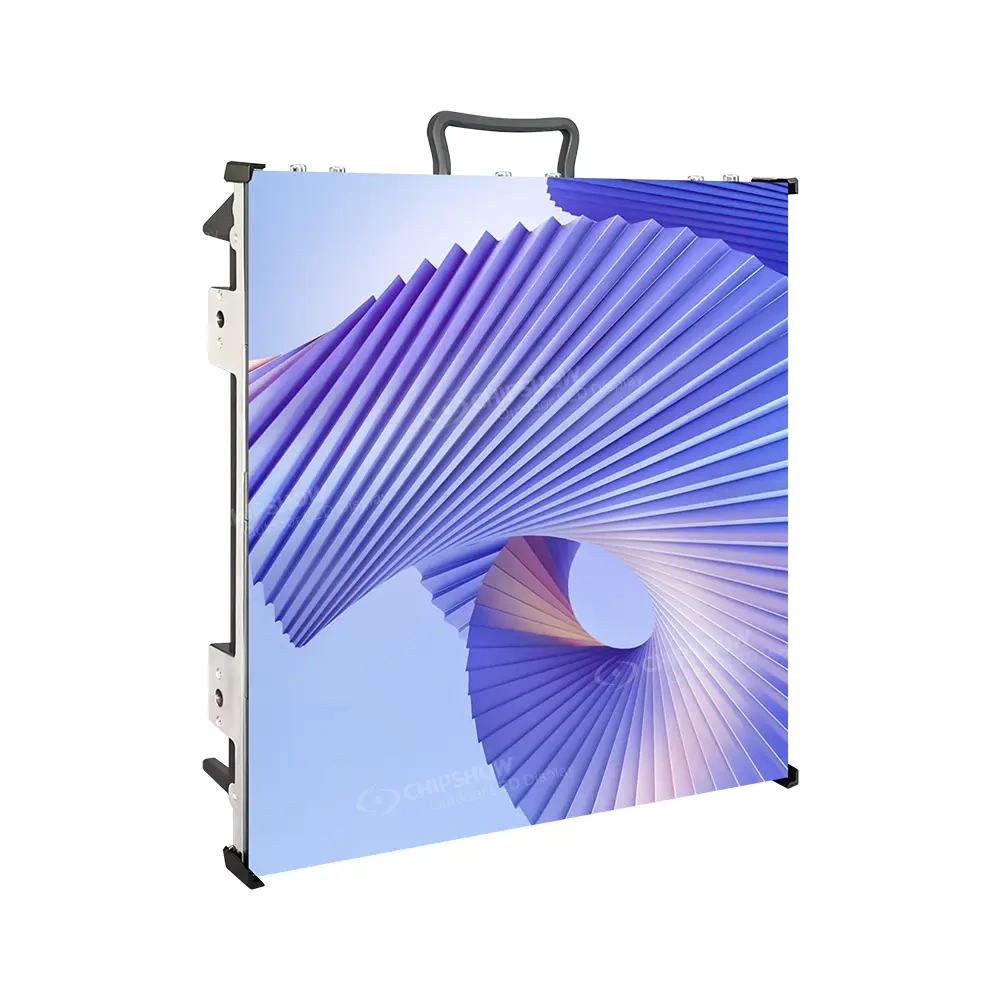
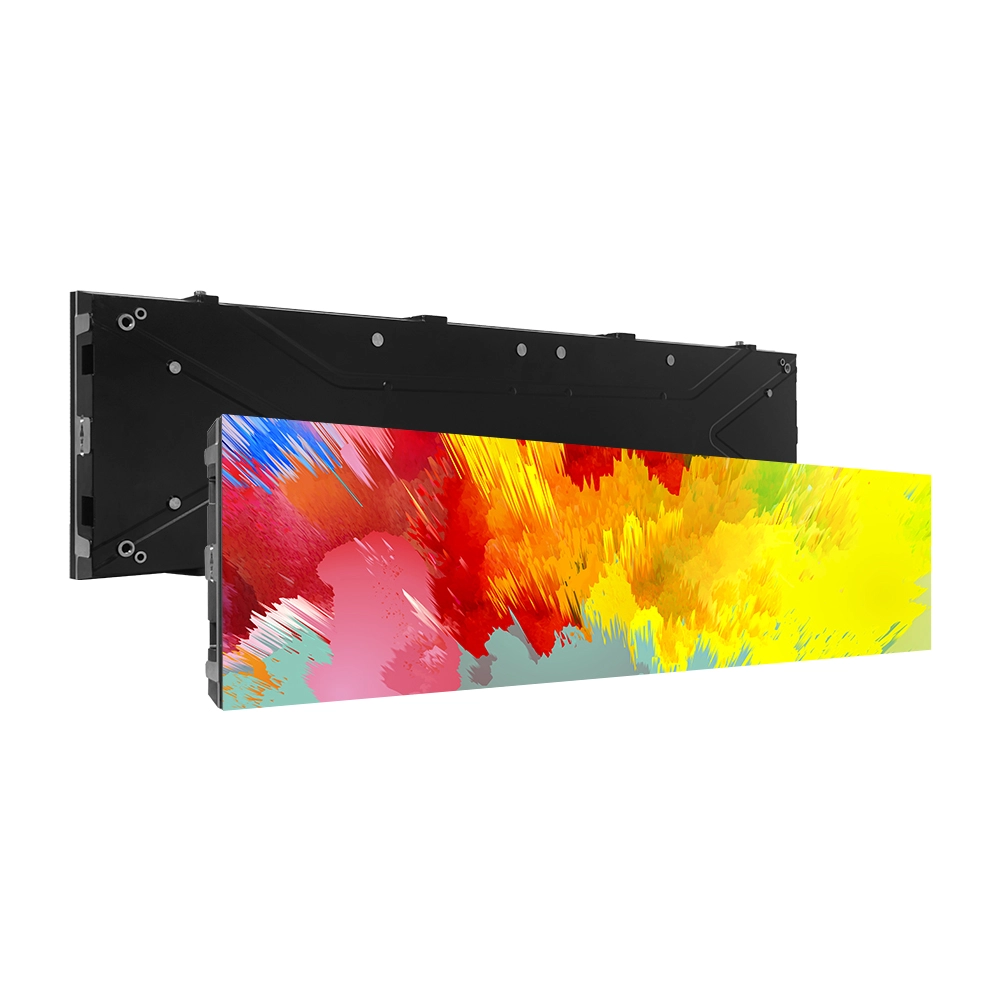
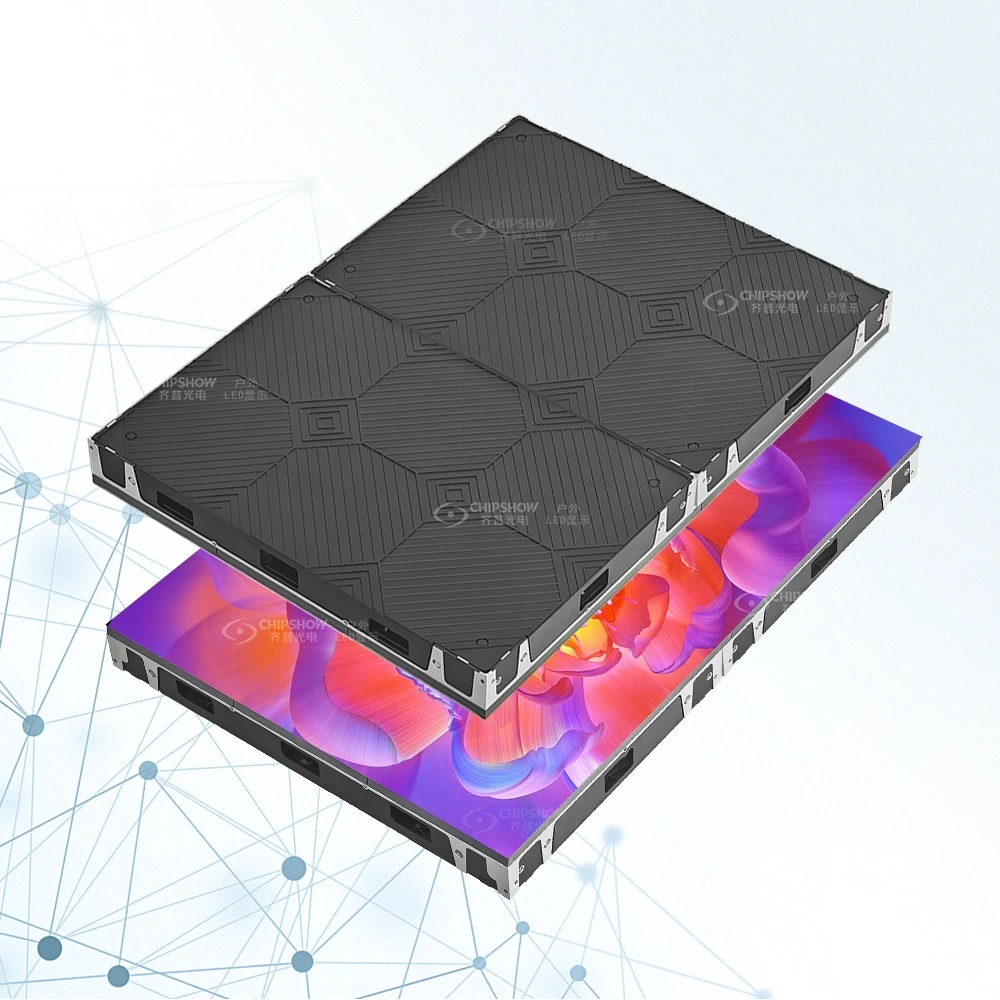
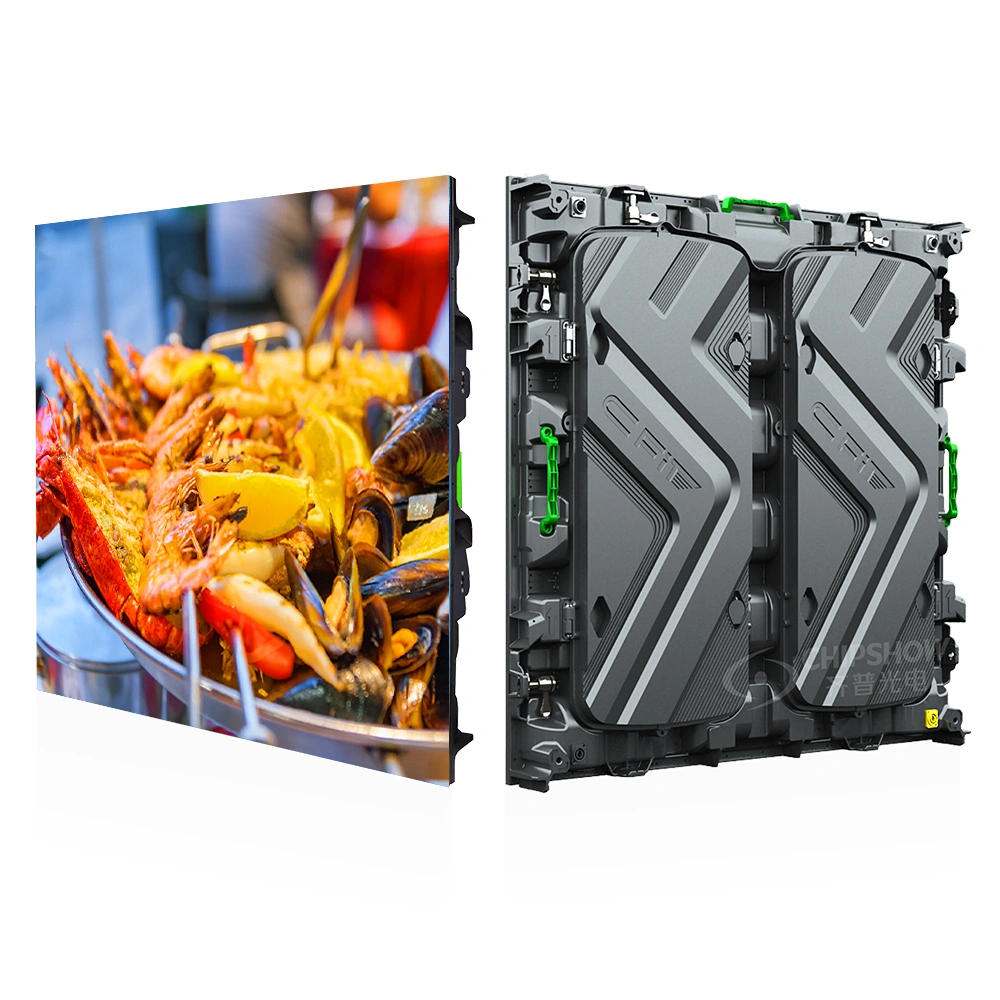
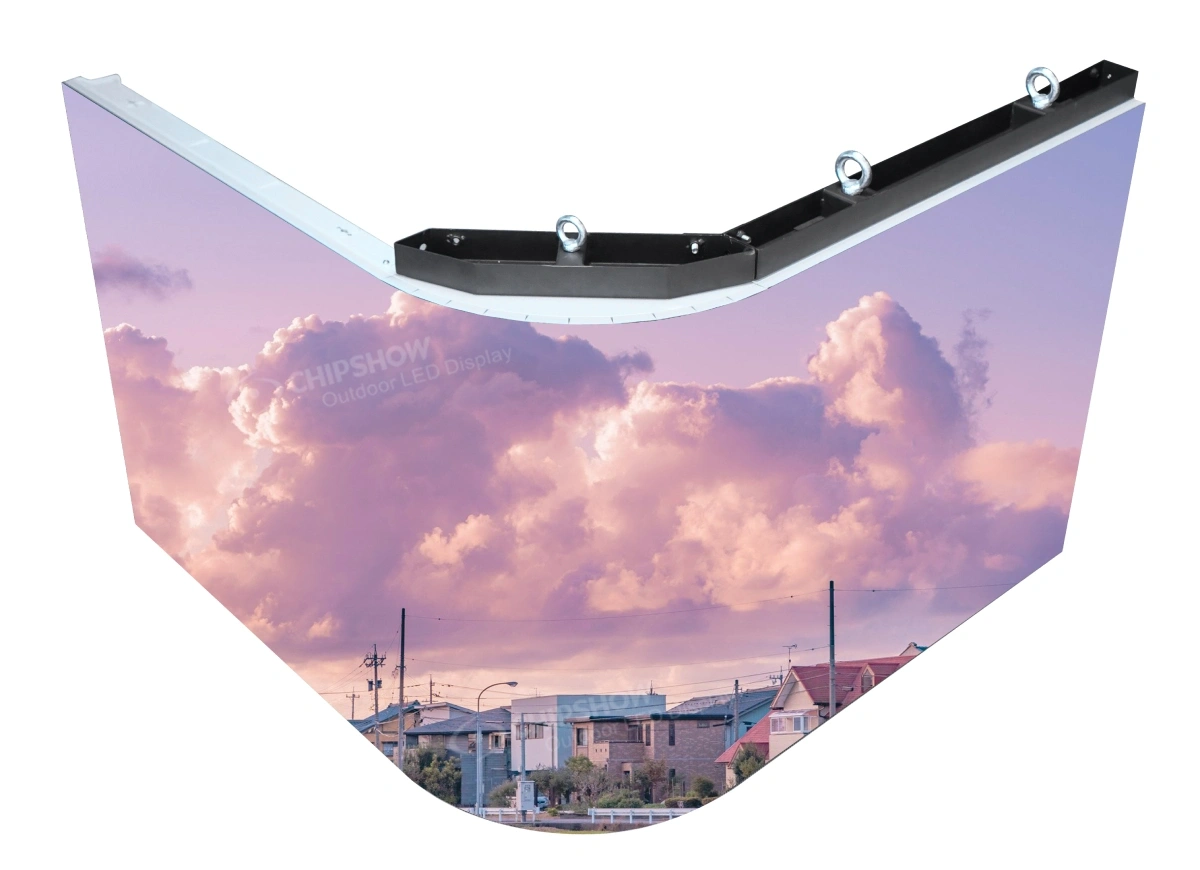
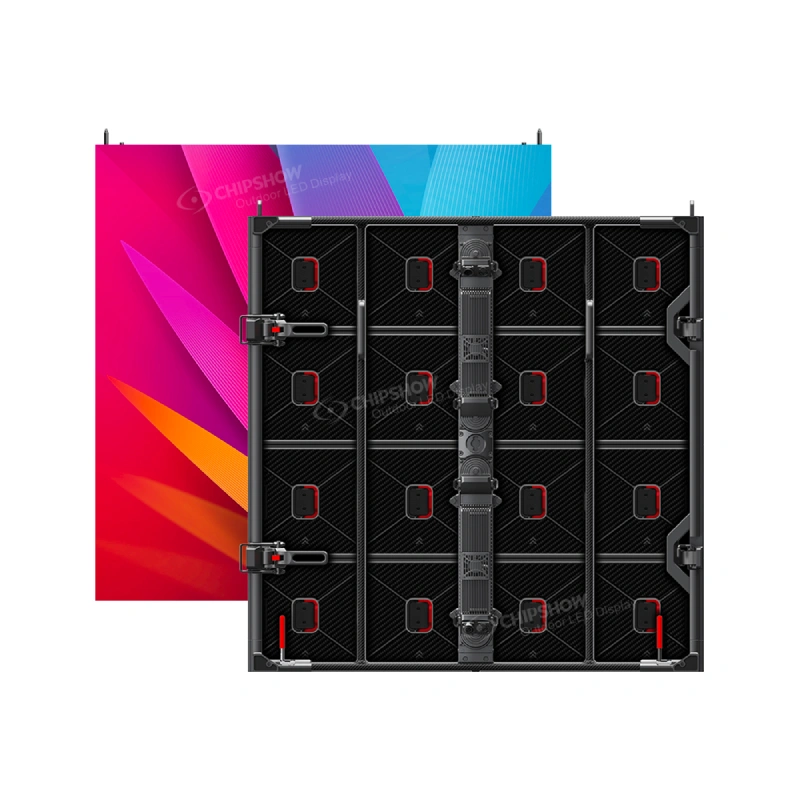
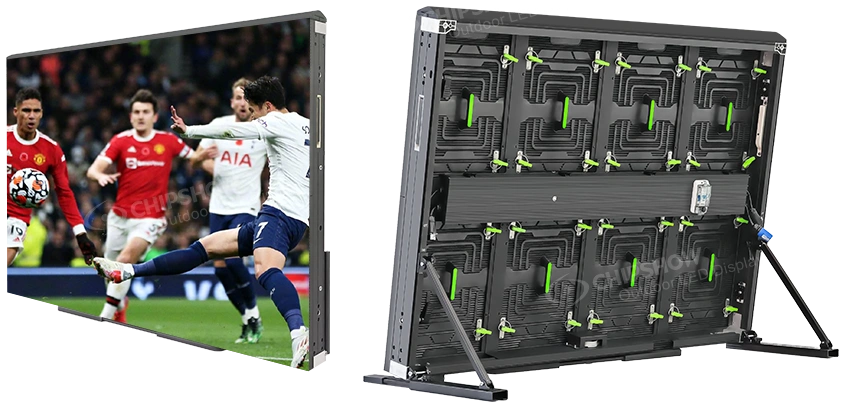
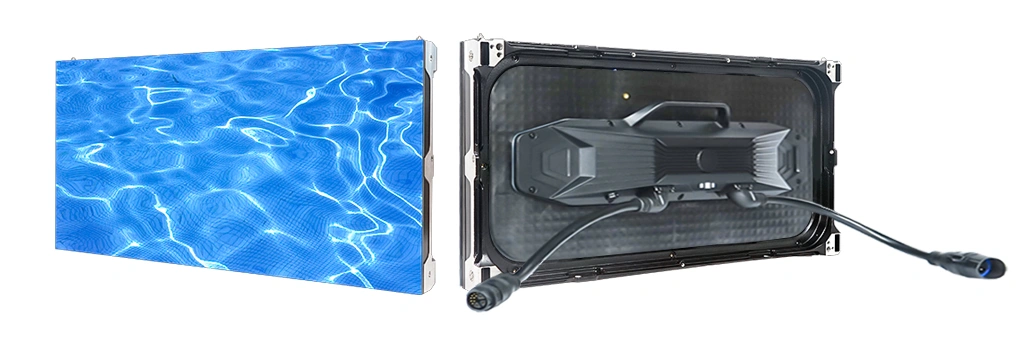
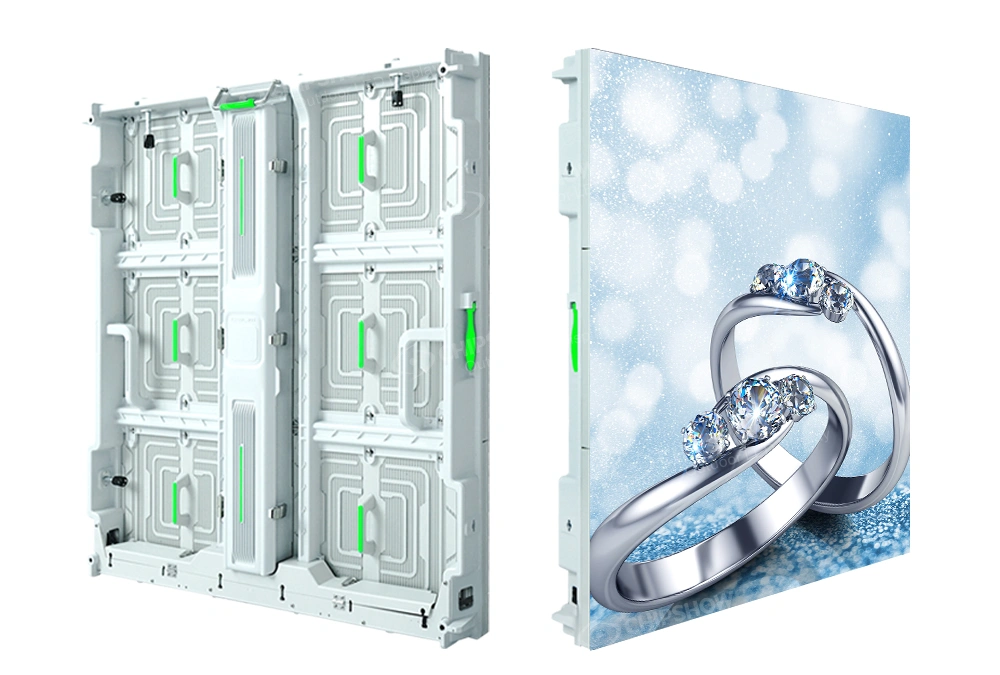
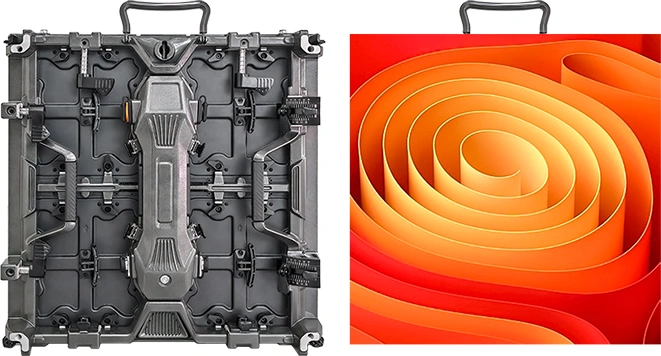
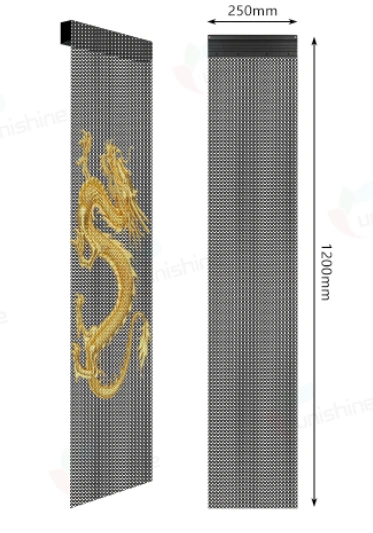
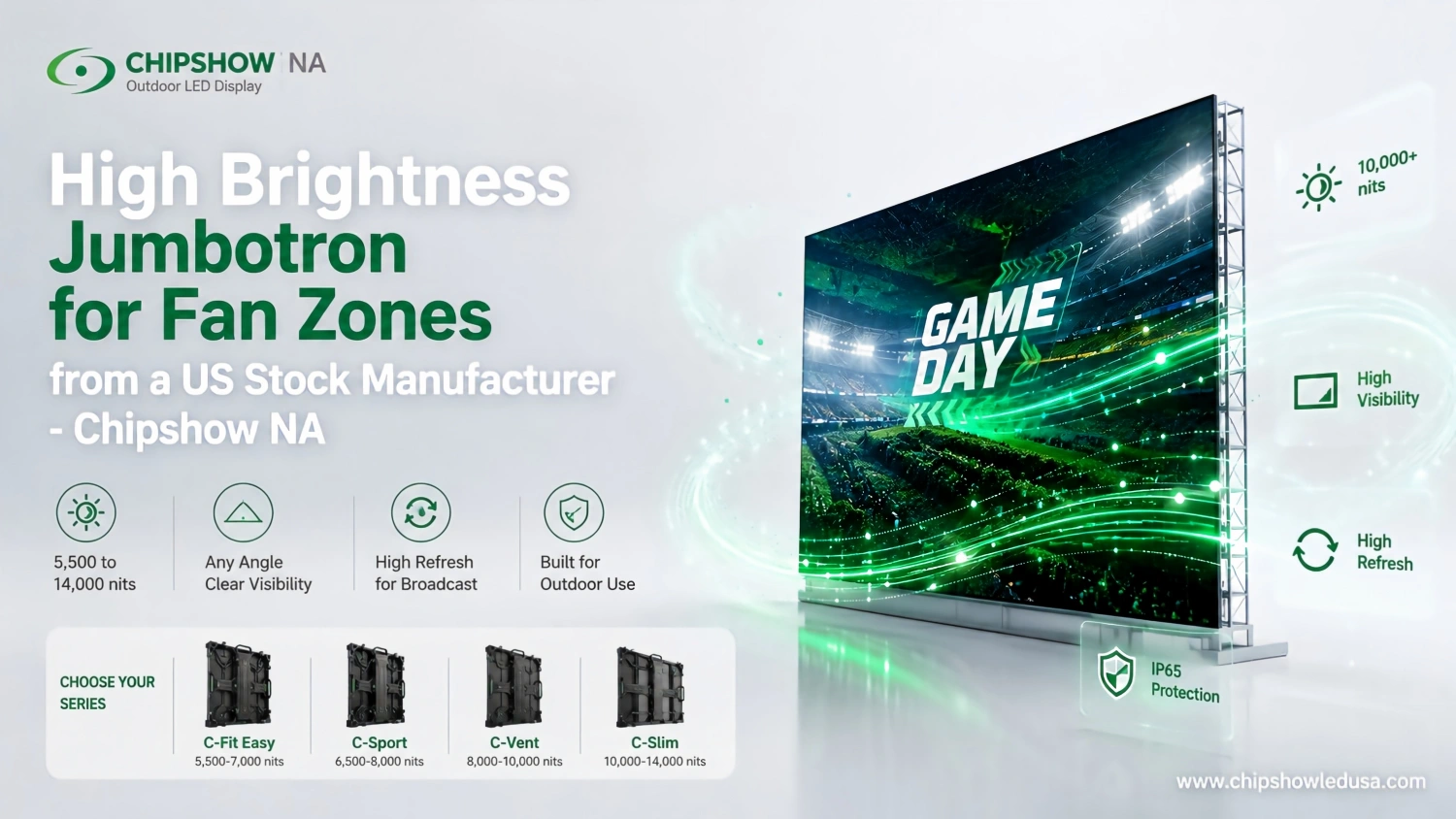
Chipshow supports that selection process through its product range, including the C-Fit Easy platform for standardized fixed outdoor deployments. C-Fit Easy P6.67 currently lists 5,500–6,000 nits with auto-dimming support and has a defined US-stock position. C-Vent offers 7,000–7,500-nit configurations for permanent outdoor billboard and facade applications. C-Sport P8 ranges from 5,500 to as high as 10,000 nits depending on configuration and is engineered specifically for stadium perimeter use. C-Slim can reach up to 14,000 nits with its ICE high-brightness configuration for demanding outdoor DOOH sites.
Specify enough brightness for the site’s worst useful daylight condition—not the highest brightness available in the catalog.
Chipshow combines factory manufacturing with a California Warehouse Hub for selected North American hardware. That gives integrators a practical path from site data to a configuration-specific hardware plan while local project teams retain structural, electrical and installation responsibilities.
Why Fan Zones Create a Difficult Daylight Environment
A fan zone does not behave like a conventional roadside billboard.
Most roadside advertising has a relatively predictable viewing direction. A fan-zone audience moves around a plaza, exterior concourse or tailgate area and can watch the same display from several distances and horizontal angles.
One spectator may stand 30 feet from the screen. Another may watch from the opposite side of an open plaza. Thousands of people can shift position as gates open, sponsor activations begin or live coverage starts.
Brightness therefore has to work together with crowd geometry.
The Sun Changes During the Event
A permanent outdoor screen may begin the day in shade and move into severe direct sunlight several hours later.
A west-facing screen can experience particularly difficult late-afternoon glare. A screen protected by a building may have a much easier operating environment even when both displays sit in the same city.
This is why a brightness request should include screen orientation and the hours when the venue expects its largest audience.
If the most important pregame period occurs between 2:00 p.m. and 5:00 p.m., those sunlight conditions matter more than a generic annual average.
A Bright Sky Can Reduce Perceived Contrast
Direct sunlight hitting the LED surface is not the only problem.
A screen placed against a large open-sky background can appear less contrast-rich than the same screen viewed against a darker building facade.
Spectators judge image visibility relative to the surrounding environment. The display therefore has to compete with both light falling on the screen and light entering the viewer’s field of vision.
This is one reason why simply increasing the nit rating cannot solve every visibility problem.
Fan-Zone Content Changes Constantly
A fan-zone screen may switch between live game feeds, score information, sponsor graphics, crowd prompts and venue messaging within minutes.
Those assets do not carry the same contrast.
A sponsor logo with bold colors and a simple background can remain highly readable under intense daylight. A dark live-camera shot can appear less vivid under exactly the same screen settings.
The venue should therefore evaluate brightness using representative content rather than judging the display from a white test image alone.
Fixed and Temporary Fan Zones Need Different Hardware Paths
Brightness does not determine whether the display should use permanent or rental hardware.
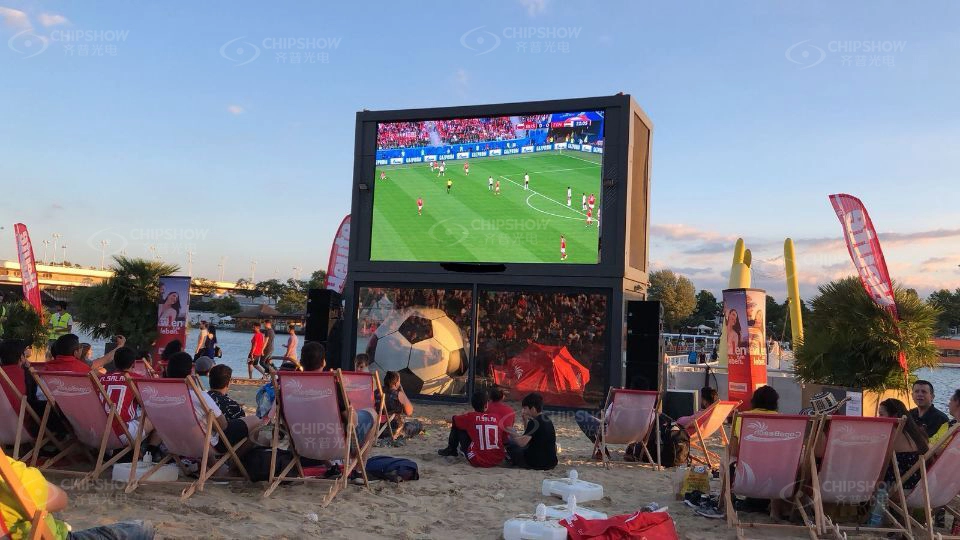
A permanent outdoor fan zone can use fixed outdoor LED when the mounting and service strategy support it. Chipshow’s C-Fit Easy P6.67 product page currently lists sports stadium tailgate zones among its application examples.
A temporary fan zone assembled for individual games, festivals or sponsor activations belongs to a rental/event deployment workflow. That project should be evaluated through the appropriate event hardware path rather than selecting a permanent DOOH cabinet only because it publishes a higher brightness specification.
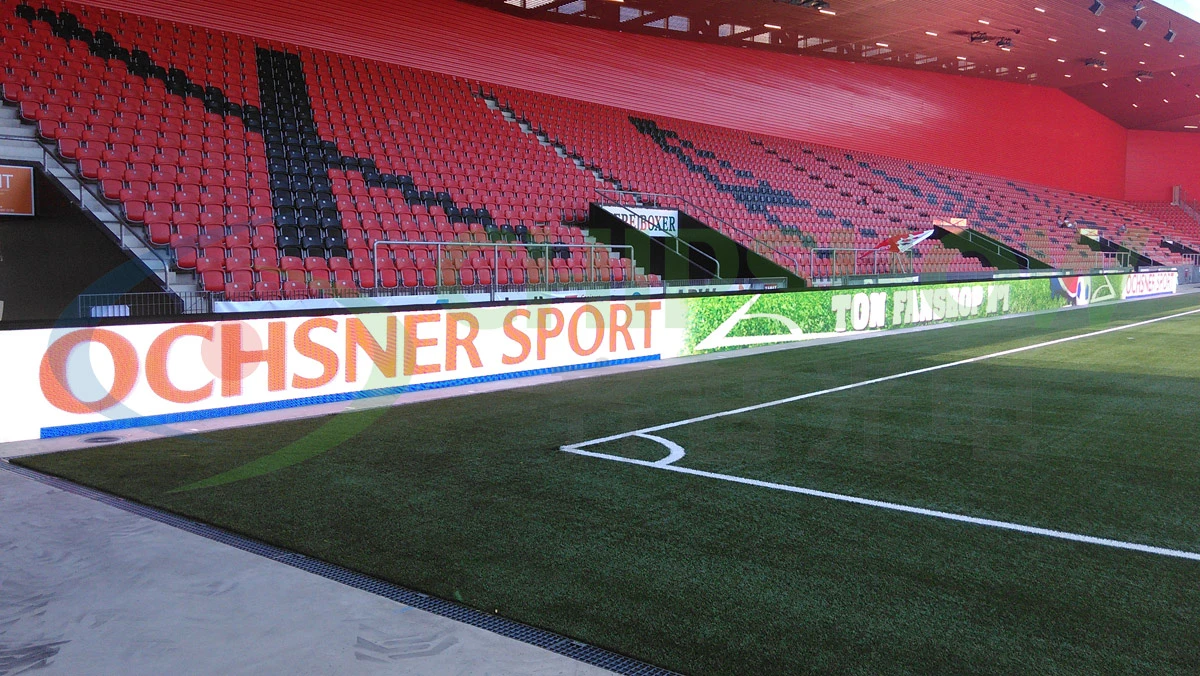
C-Sport also needs a clear boundary. It is a stadium perimeter platform designed around athlete-facing safety and broadcast requirements, not a universal fan-zone cabinet.
5,500 vs. 7,500 vs. 10,000 vs. 14,000 Nits
Brightness numbers become useful only after they are attached to a real application.
| Published Brightness | Chipshow Reference | Where the Range Fits | What the Project Still Needs to Verify |
|---|---|---|---|
| 5,500–6,000 nits | C-Fit Easy P6.67 | Permanent tailgate zones, exterior venue displays and conventional fixed outdoor DOOH | Orientation, direct-sun hours, P6.67 viewing distance and camera requirements |
| 7,000–7,500 nits | C-Vent | Exposed permanent billboard or facade installations where daylight visibility accompanies an open outdoor architecture | Exact configuration, audience distance and structural application |
| 5,500–10,000 nits | C-Sport P8 | Stadium perimeter zones requiring sports-specific daylight and broadcast performance | Exact brightness configuration, camera workflow and field-level application |
| Up to 14,000 nits | C-Slim ICE | Severe direct-sun DOOH sites and premium outdoor advertising locations | Whether the site needs extreme output and the exact ICE configuration |
These ranges are configuration-specific. They should never be expanded into a claim that every model within the product family delivers the highest listed value.
5,500–6,000 Nits: A Practical Starting Range for Many Fixed Outdoor Sites
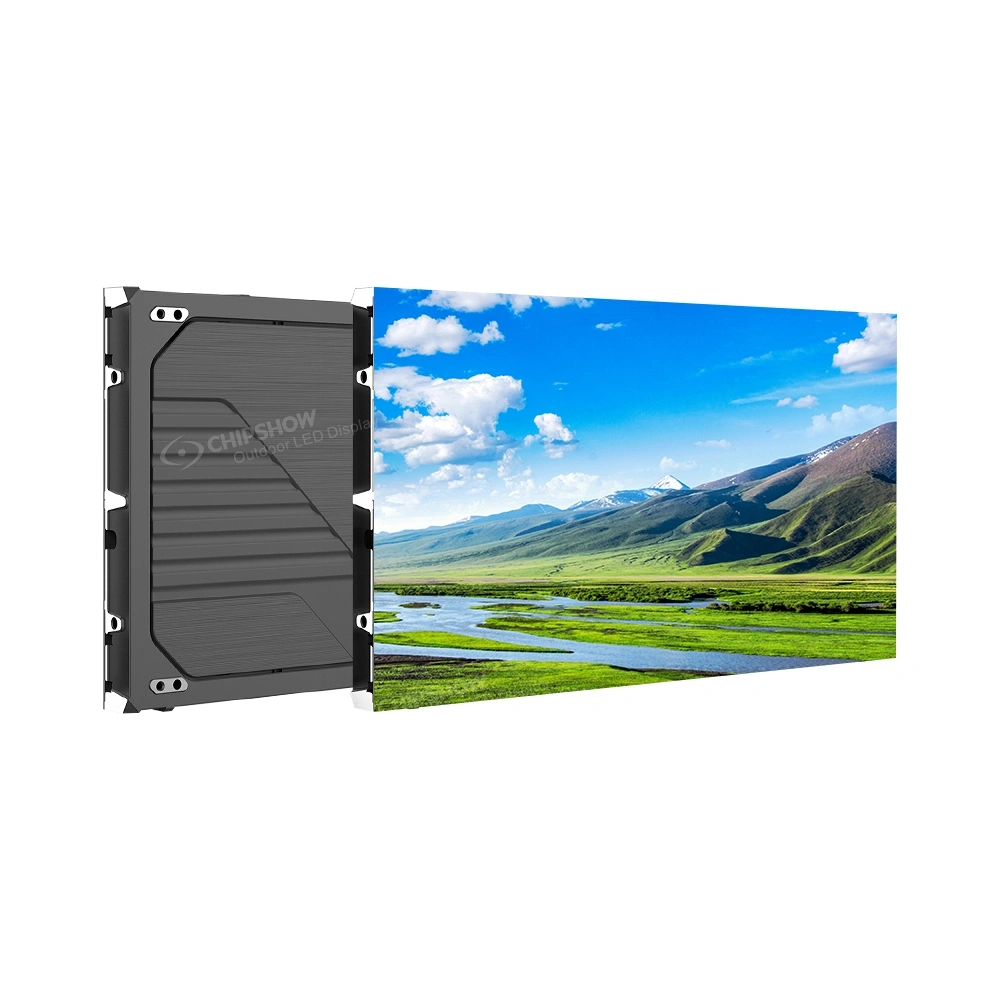
C-Fit Easy P6.67 currently publishes a 5,500–6,000-nit brightness range with automatic dimming support. Its North American page also positions the product for fixed outdoor DOOH and stadium tailgate-zone applications.
That range can be appropriate when the screen has a manageable orientation, the audience stands within the useful viewing geometry and severe direct sunlight does not dominate the most important operating hours.
The fact that C-Fit Easy has a defined US-stock position should not override the brightness analysis.
If the site genuinely requires substantially more daylight headroom, local inventory is not a reason to under-specify the display.
7,000–7,500 Nits: More Headroom for Exposed Permanent Outdoor Displays
C-Vent currently lists 7,000–7,500 nits across its published P15.6, P16 and P25 outdoor configurations.
This range is relevant to exposed permanent billboard and media-facade applications.
C-Vent should not be treated as a fan-zone sports product simply because it offers higher brightness than C-Fit Easy. Its core role remains large outdoor advertising and architectural display, where daylight visibility works alongside ventilated outdoor construction.
For venue owners who also operate exterior commercial media surfaces, that distinction prevents two unrelated requirements from being merged into one specification.
Up to 10,000 Nits: Sports-Specific Daylight Headroom
C-Sport P8 currently lists brightness from 5,500 to up to 10,000 nits depending on configuration, together with a refresh rate of at least 3,840 Hz.
Its current product architecture allows high-brightness ICE modules to be used on sun-facing areas and lower-power SMD modules on shaded areas while retaining the same cabinet format.
This illustrates an important brightness-engineering principle: one venue can contain several sunlight conditions.
A sun-facing touchline may need greater output than a shaded side of the same stadium.
However, C-Sport remains a perimeter product. Its brightness strategy is a useful sports-engineering reference, not a reason to use perimeter cabinets as the primary video wall in every fan zone.
Up to 14,000 Nits: Extreme Outdoor Exposure
C-Slim’s current North American specification covers P4–P16 options and lists up to 14,000 nits for ICE high-brightness configurations.
That output belongs at the upper end of outdoor requirements.
It can provide useful daylight margin for premium roadside DOOH and other commercial sites where severe direct sun would challenge a conventional outdoor configuration.
The site should justify that choice.
A screen that remains shaded for most of the day gains little from extreme peak output if the audience already has sufficient visibility at a lower level.
Visibility Depends on More Than Nits
Peak luminance tells the buyer how much light the display can produce.
It does not tell the buyer how readable a score, sponsor graphic or live video feed will appear from every position in the crowd.
Contrast Changes What the Eye Sees
Perceived visibility depends on the relationship between bright pixels and dark image areas.
Strong ambient light can lift the apparent black level of an LED surface. When blacks look gray, image depth falls even if peak luminance remains high.
That effect becomes especially noticeable with live video.
A full-white graphic can look powerful while faces, shaded uniforms or darker camera shots appear less distinct.
During a brightness review, test live content and sponsor creative rather than relying only on specification numbers.
Viewing Angle Matters Across a Plaza
A fan-zone crowd rarely stands directly in front of the screen.
The project should identify the main crowd area and compare it with the viewing-angle performance of the selected configuration.
If a large portion of the audience stands far off-axis, changing the physical screen orientation can sometimes improve visibility more effectively than increasing peak brightness.
A few degrees of better placement can affect thousands of spectators without increasing power demand.
Pixel Pitch Determines Whether the Detail Is Useful
Brightness can make an image visible, but pixel pitch determines how much detail the audience can resolve.
A large fan-zone screen viewed from far across a plaza may not need extremely fine pixel density. A smaller screen located close to food, ticketing or sponsor areas may require more image detail.
This is why brightness and pitch should be specified together.
A very bright screen cannot make tiny text readable from a distance if the content and physical pixel resolution do not support it.
Outdoor Content Should Help the Hardware
High-brightness hardware works best with content designed for the environment.
Large typography, clear foreground/background separation and simpler score layouts remain easier to read in strong ambient light than thin type or subtle low-contrast graphics.
Sponsor creative should receive the same treatment.
A brand may supply assets created for television or digital advertising on personal devices. Those assets can require adjustment before they work effectively on a large outdoor screen under direct daylight.
The LED specification and content workflow should reinforce each other.
Screen Orientation Can Be More Valuable Than Another 2,000 Nits
Sun path should enter the project before the screen location becomes irreversible.
A modest change in angle, mounting position or surrounding shade can reduce direct glare during the most valuable operating period.
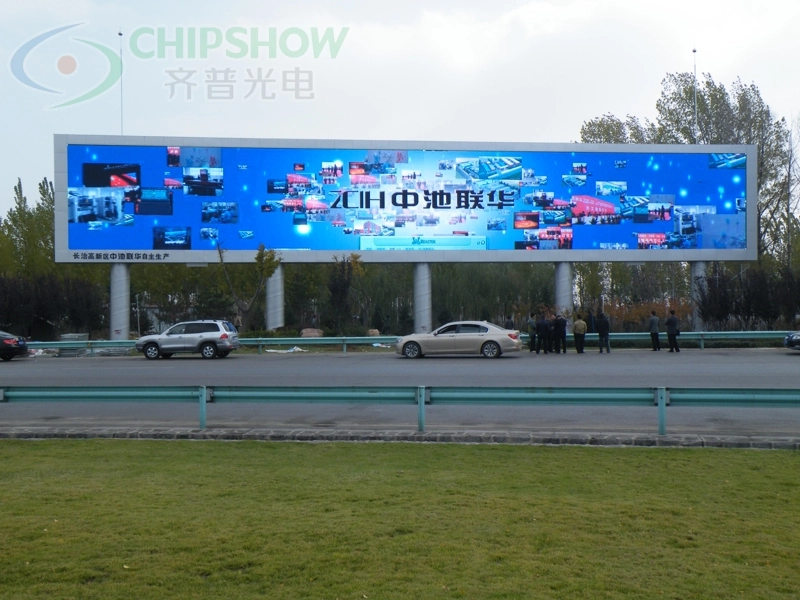
Chipshow’s published project library includes fixed outdoor work such as a C-Fit Outdoor P10 LED billboard in Brazil, demonstrating established outdoor application history. That project confirms outdoor deployment experience; it does not establish the brightness requirement for a new US fan zone. Every new site still needs its own orientation and daylight assessment.
Power, Heat and Auto Dimming
High brightness has an electrical consequence.
A project that specifies more light output also needs to understand how the exact configuration handles power and heat throughout the day.
Size Electrical Capacity Around the Actual Configuration
Do not estimate the electrical load of a high-brightness screen from another version of the same product family.
Different LED packages and brightness configurations can have different power characteristics.
Request the electrical data that belongs to the exact model and brightness version in the hardware BOM.
This becomes particularly important when the site has limited existing electrical capacity or the display will operate for long daily periods.
Peak Output Does Not Equal All-Day Output
The display may need maximum daylight output for only a portion of the operating schedule.
An afternoon sun period can create the hardest visibility condition, while the same screen needs substantially less output after sunset.
Brightness planning should therefore separate maximum capability from normal operating behavior.
This prevents the owner from treating peak luminance as the only operating mode.
Heat Management Follows Electrical Load
LEDs, drivers and power electronics generate heat while the surrounding outdoor environment may already be hot.
The exact product architecture must remove that heat without compromising long-term operation.
C-Slim uses a magnesium outdoor cabinet and lists high-brightness ICE configurations, while C-Vent uses an open outdoor architecture with 25%–63% ventilated openness depending on configuration.
These are different product roles.
C-Vent’s airflow characteristics make sense in its permanent DOOH and facade environment; they are not a reason to replace sports-specific hardware at a stadium perimeter.
The brightness requirement identifies the optical challenge. The application still determines the product architecture.
Auto Dimming Matters After Sunset
C-Fit Easy P6.67 currently supports automatic dimming.
That capability allows the system to reduce output when ambient light falls instead of continuing to operate at daytime brightness throughout the evening.
A proper nighttime strategy can improve viewing comfort, reduce unnecessary power use and help the project coordinate with local lighting or sign requirements.
The actual limits depend on the city, property and Authority Having Jurisdiction. Chipshow provides brightness-capable hardware and product data; the local project team coordinates site-specific requirements.
Camera and Refresh Rate in Fan Zones
A fan-zone display may look excellent to spectators and still produce poor results on camera.
Local broadcasters, venue production teams, livestream crews and social-media creators can all place the LED screen inside the camera frame.
When that happens, brightness and refresh rate need to be reviewed together.
Use Configuration-Specific Refresh Data
Chipshow’s C-Sport P8 explicitly lists a refresh rate of at least 3,840 Hz alongside its configuration-dependent 5,500–10,000-nit brightness range.
That combination reflects its sports and broadcast role.
A fixed outdoor product being considered for a fan zone should not automatically inherit that specification.
If the main fan-zone screen will sit behind presenters or appear regularly in broadcast coverage, ask for the refresh rate of the exact proposed configuration before the hardware is approved.
An application label such as “tailgate zone” does not replace a camera specification.
Refresh Rate Is Only One Part of the Camera Workflow
Camera shutter speed, frame rate, LED scanning architecture, processing configuration and brightness setting can all affect the recorded image.
A 3,840 Hz specification is therefore an important input, not a guarantee that every camera setting will produce identical results.
For high-profile broadcast use, the integrator should coordinate the planned camera environment with the LED configuration and processor.
That review belongs before commissioning, not during the first live event.
Keep the Sports-System Scope Separate
If a project also needs perimeter LED, scoreboard integration, redundant signal paths or other mission-critical sports functions, those requirements belong in the Sports & Stadium system design.
This page’s brightness decision should feed that system specification rather than replace it.
US Stock and Lead Time for High-Brightness Configurations
US stock needs to be checked at the configuration level when brightness is a deciding factor.
C-Fit Easy P6.67 currently has a published US-stock position and lists 5,500–6,000 nits.
That is a specific and verifiable stock route.
It does not prove that a 10,000-nit C-Sport configuration, a particular 7,500-nit C-Vent configuration or a 14,000-nit C-Slim ICE configuration is currently available in the required US quantity.
High-brightness variants can use different LED packages or configuration options, so the project should confirm the actual pitch, output level and quantity before placing a delivery date on the construction or event schedule.
Chipshow’s California Warehouse Hub supports selected North American hardware availability, while factory production provides the route for configurations that are not available in the required local quantity.
For AV integrators, Chipshow remains focused on the manufacturer-side hardware scope: configuration planning, hardware documentation, inventory coordination and ready-to-install hardware packages. Local structural, electrical and installation scopes remain with the qualified teams responsible for the site.
When the project schedule is sensitive, send the screen dimensions, orientation, viewing distance, required operating period and target brightness range together. That gives Chipshow enough information to check the correct configuration rather than simply checking the product family name.
Frequently Asked Questions About High-Brightness Jumbotron Planning
How many nits does a fan-zone jumbotron need?
There is no universal fan-zone brightness number. A favorably oriented permanent screen may perform well within the 5,500–6,000-nit range, while severe direct sunlight can justify substantially more output. Screen direction, sun exposure, sky background, viewing distance and content all affect the result. Set the target from the site’s hardest useful viewing period rather than choosing the highest available specification.
Is 10,000 or 14,000 nits always better?
No. Those output levels provide extra daylight headroom for demanding conditions, but a shaded or well-oriented display may not benefit from the additional capability. C-Sport can reach up to 10,000 nits for sports-specific sun-facing applications, while C-Slim ICE can reach up to 14,000 nits for extreme outdoor DOOH exposure. Use those configurations where the site justifies them.
How does screen orientation affect outdoor brightness?
Orientation changes when direct sunlight reaches the LED surface and where the brightest background appears behind the display. A west-facing screen can face much stronger late-afternoon glare than a shaded wall. Record the screen direction and the hours of direct sun before setting the final brightness target.
Can a high-brightness jumbotron still look good on camera?
Yes, but brightness alone is not enough. Confirm the refresh rate of the exact LED configuration and coordinate it with the camera frame rate, shutter settings and processing workflow. C-Sport P8, for example, lists at least 3,840 Hz for its sports-focused configuration. A different fan-zone product should be checked separately rather than assumed to carry the same camera specification.
Are high-brightness configurations available from US stock?
Availability depends on the exact product, pixel pitch, brightness configuration and quantity. C-Fit Easy P6.67 currently has a published US-stock route at 5,500–6,000 nits. Higher-output C-Sport, C-Vent and C-Slim configurations should be confirmed for current availability before a project treats them as ready to ship.
Ready to scope your sign? The USA LED sign selector walks through viewing distance, format and layout in one pass.