Jumbotron LED Display Solutions USA
One of the fastest ways to overspend on a large LED display is to choose pixel pitch before deciding what the screen actually needs to accomplish.
Want a second look at the format options? The USA LED sign selector narrows signs by viewing distance, pixel pitch and cabinet style in one pass.
A stadium operator, AV integrator, event production company, church production team and outdoor media owner may all search for a jumbotron LED display in the USA, but they should not buy the same hardware. Viewing distance, sunlight exposure, camera use, structural conditions, operating hours, service access and deployment schedules can lead to completely different specifications.
Chipshow approaches large-format LED procurement from the application outward. Instead of forcing stadiums, indoor venues, outdoor advertising structures and temporary events onto one cabinet platform, we first identify how the display will operate and then route the project toward the appropriate hardware family.
For North American projects, the California Warehouse Hub can also function as a local inventory buffer when the required model, pixel pitch and quantity are available. Chipshow focuses on manufacturer-backed LED hardware, product documentation and ready-to-install hardware packages while leaving structural engineering, electrical work, installation and site-specific contracting to the qualified teams responsible for those scopes.
Choose the application first. Specify the LED hardware second.
If your screen dimensions, viewing distance and installation date are already defined, the next useful step is a hardware plan rather than a generic cabinet quotation.
Choose the Application Before Pixel Pitch
Pixel pitch affects resolution, but it cannot answer the first question in a jumbotron project: where will the display operate, and what will the audience expect from it?
A finer pixel pitch increases pixel density and usually raises hardware and processing requirements. That investment can make sense when audiences stand close to an indoor screen. The same specification may add little visible value to a large stadium display viewed from hundreds of feet away.
Brightness creates a similar problem. An indoor display does not become better simply because it can produce outdoor-level luminance. Outdoor hardware, meanwhile, must account for sunlight, weather and thermal conditions that do not exist in a controlled auditorium.
This is why the application needs to come first.
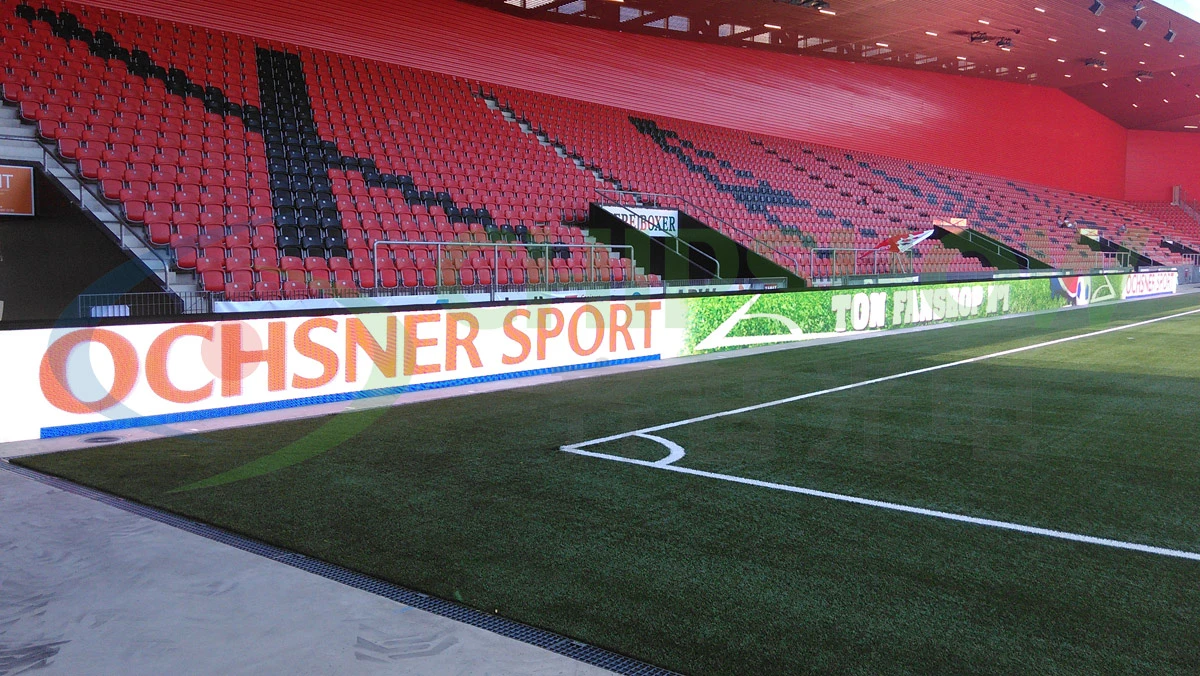
Stadium and Sports Applications
Sports displays operate inside a live-event and broadcast environment.
They may show scores, instant replays, sponsor content, live camera feeds and venue information while thousands of spectators are watching at the same time. Reliability therefore has a different meaning here than it does on a conventional commercial signage project.
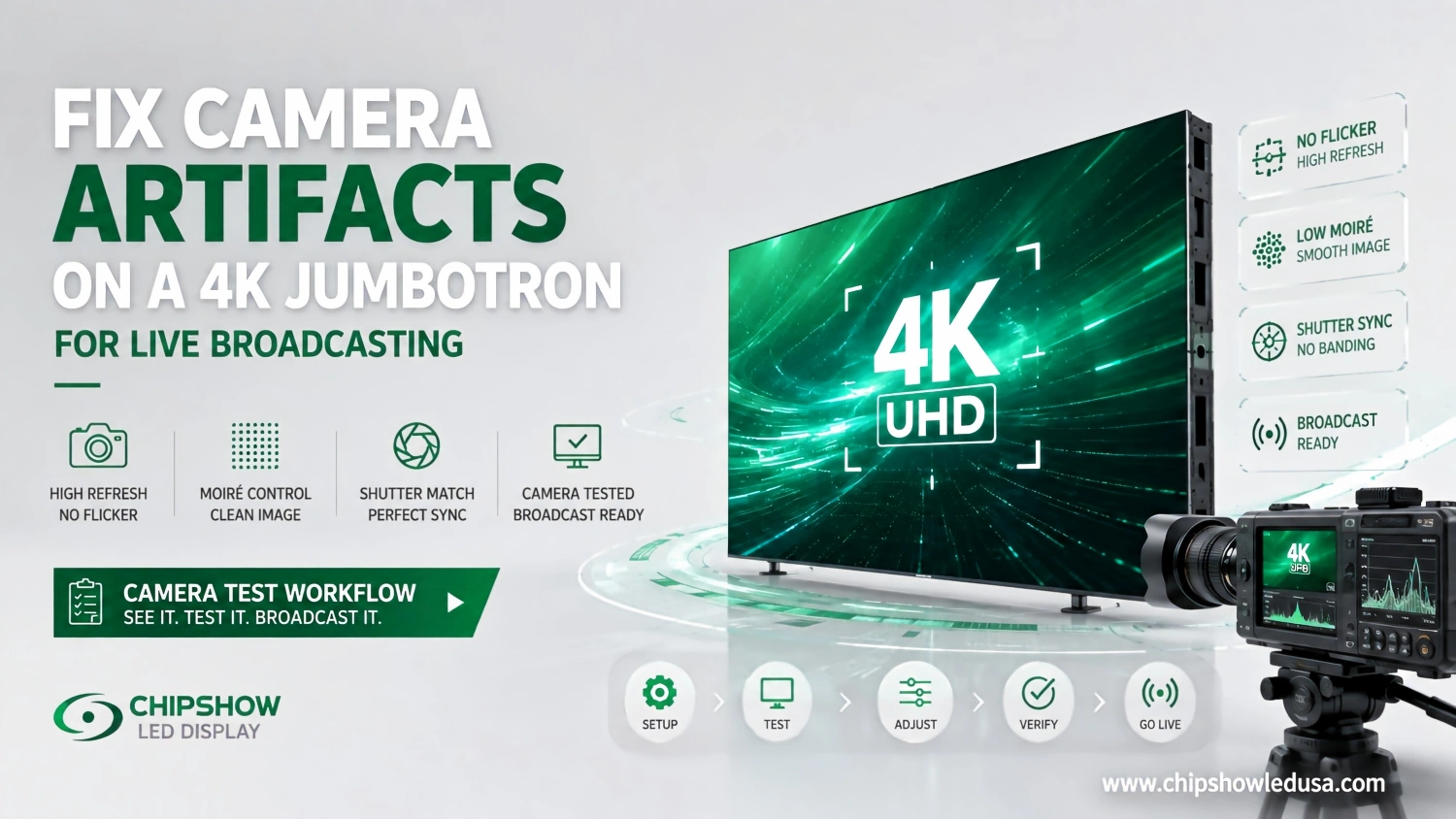
Refresh performance matters because television and production cameras can expose artifacts that spectators do not notice with the naked eye. Signal architecture matters because an interruption during live play can immediately affect venue operations. Power architecture matters for the same reason.
For venue systems where uninterrupted operation is critical, redundancy should be designed at the system level. Depending on the project requirements, that can include redundant signal paths, backup processing strategies and dual or redundant power architecture. These features need to be specified for the actual system rather than assumed from the LED cabinet alone.
Physical safety also deserves its own review. A field-level perimeter display is not mechanically equivalent to an end-zone video board or suspended arena display.
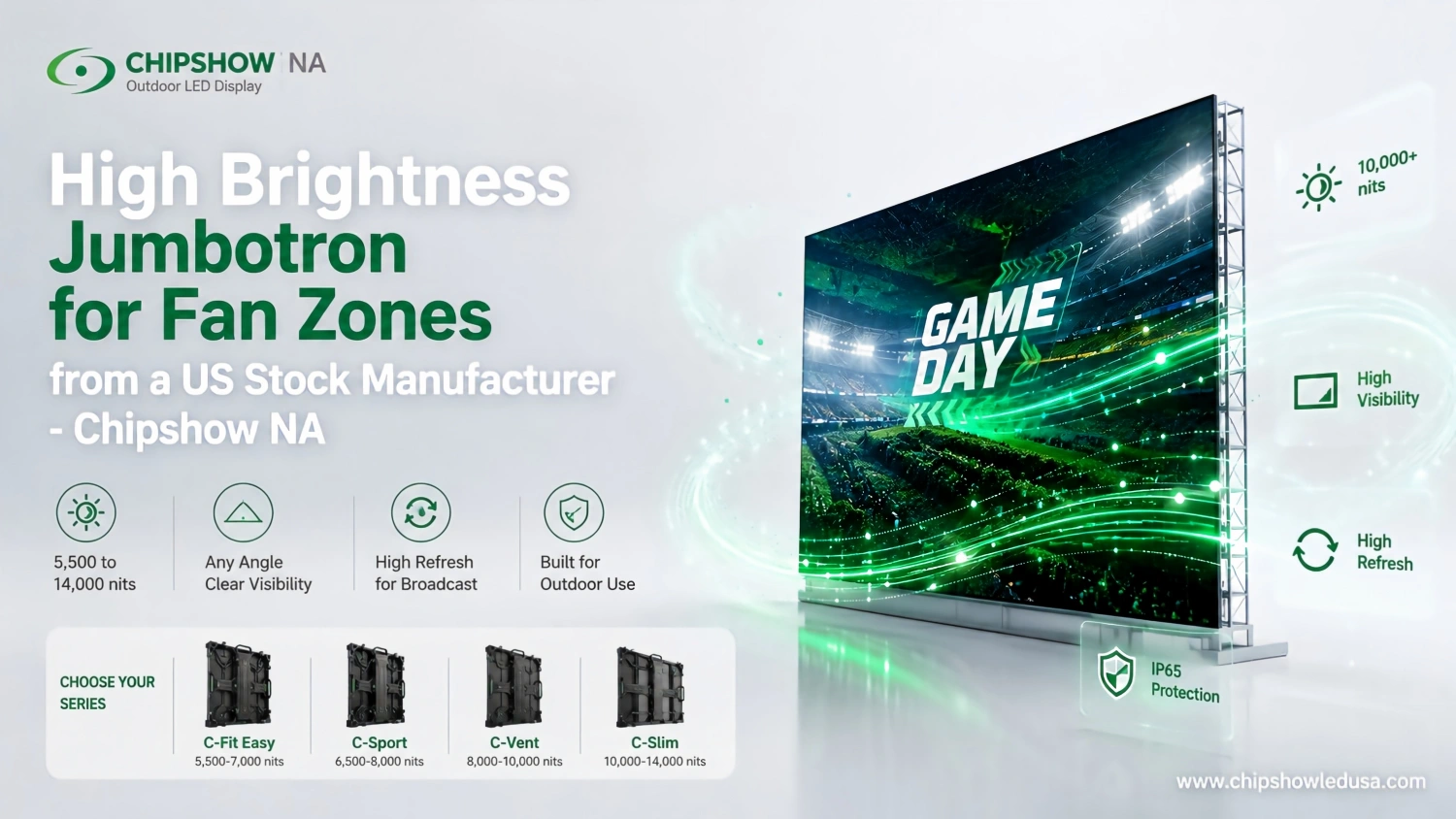
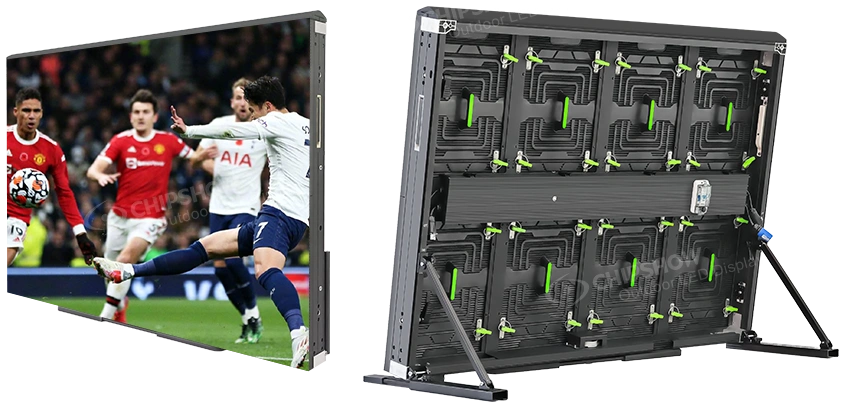
That is why Chipshow routes stadium perimeter requirements toward C-Sport instead of treating them as another outdoor advertising application.
Fast deployment also matters when venues have restricted construction windows. Cabinet geometry, service access, preplanned cabling, spare modules and clearly documented hardware can reduce the time crews spend troubleshooting the LED package during installation.
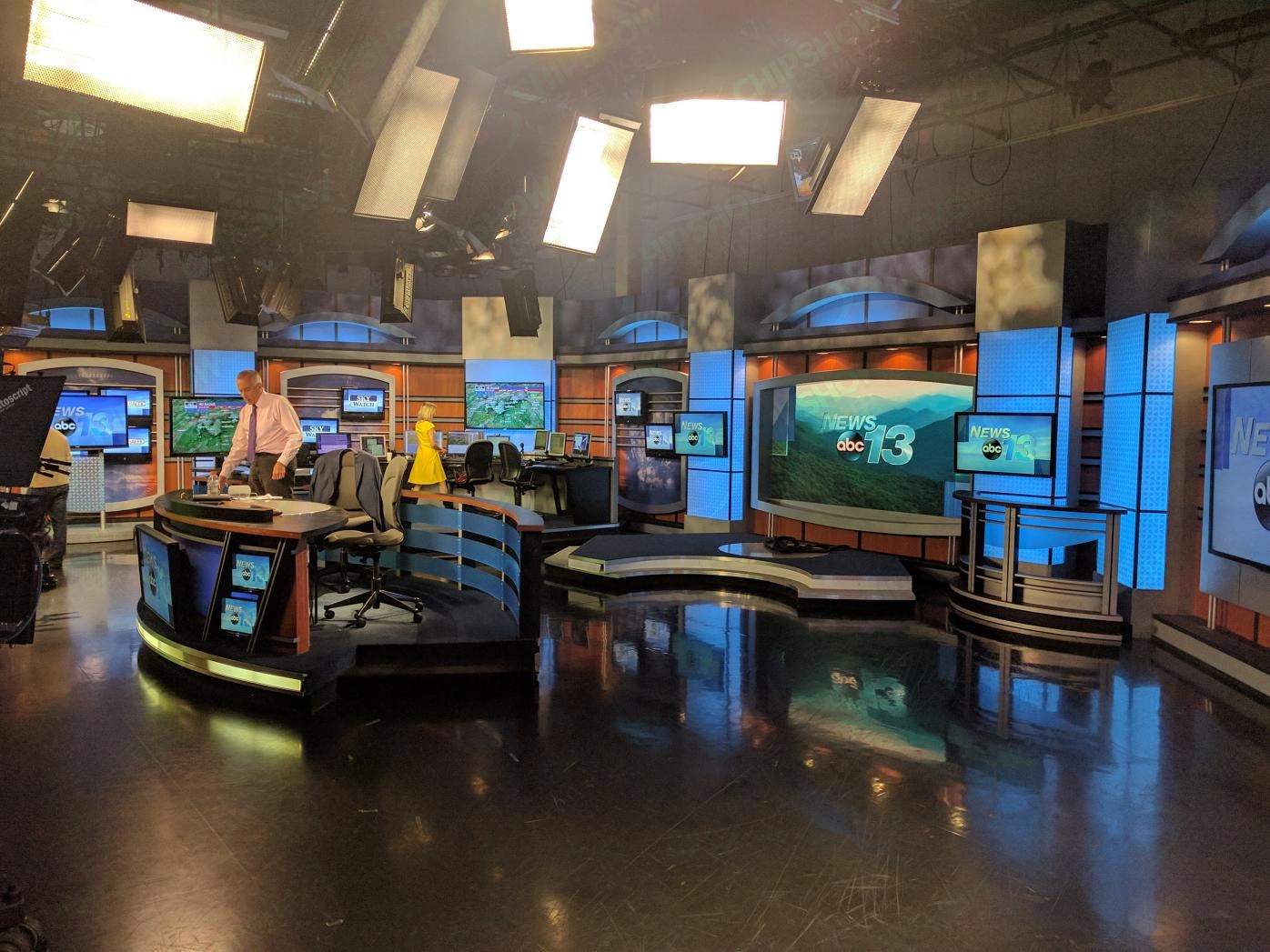
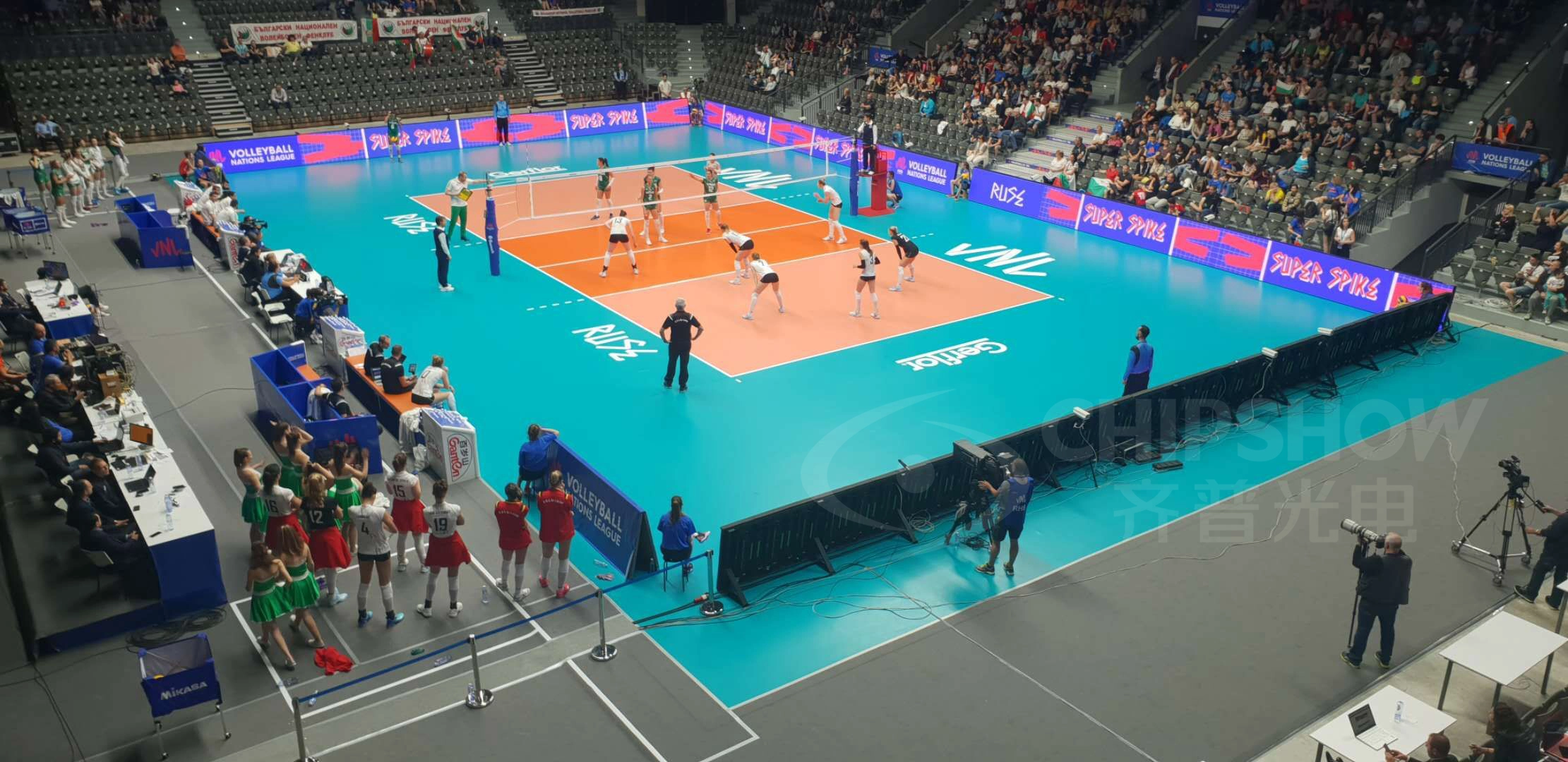
Arenas and Indoor Venues
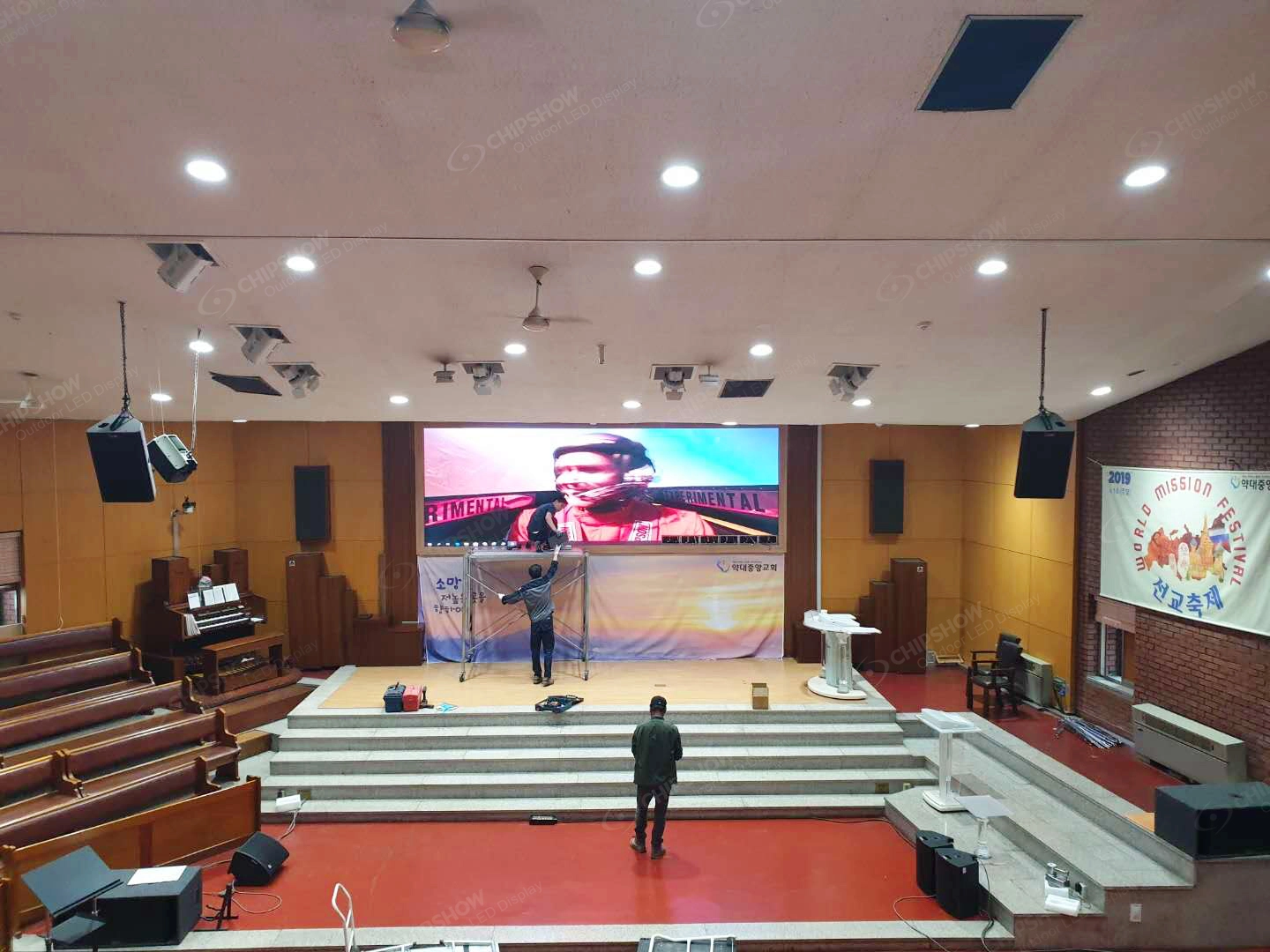
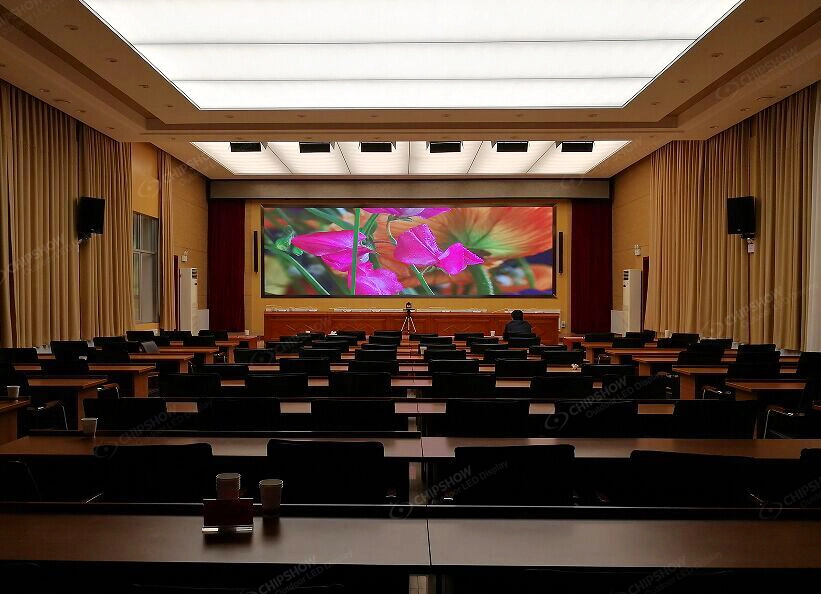
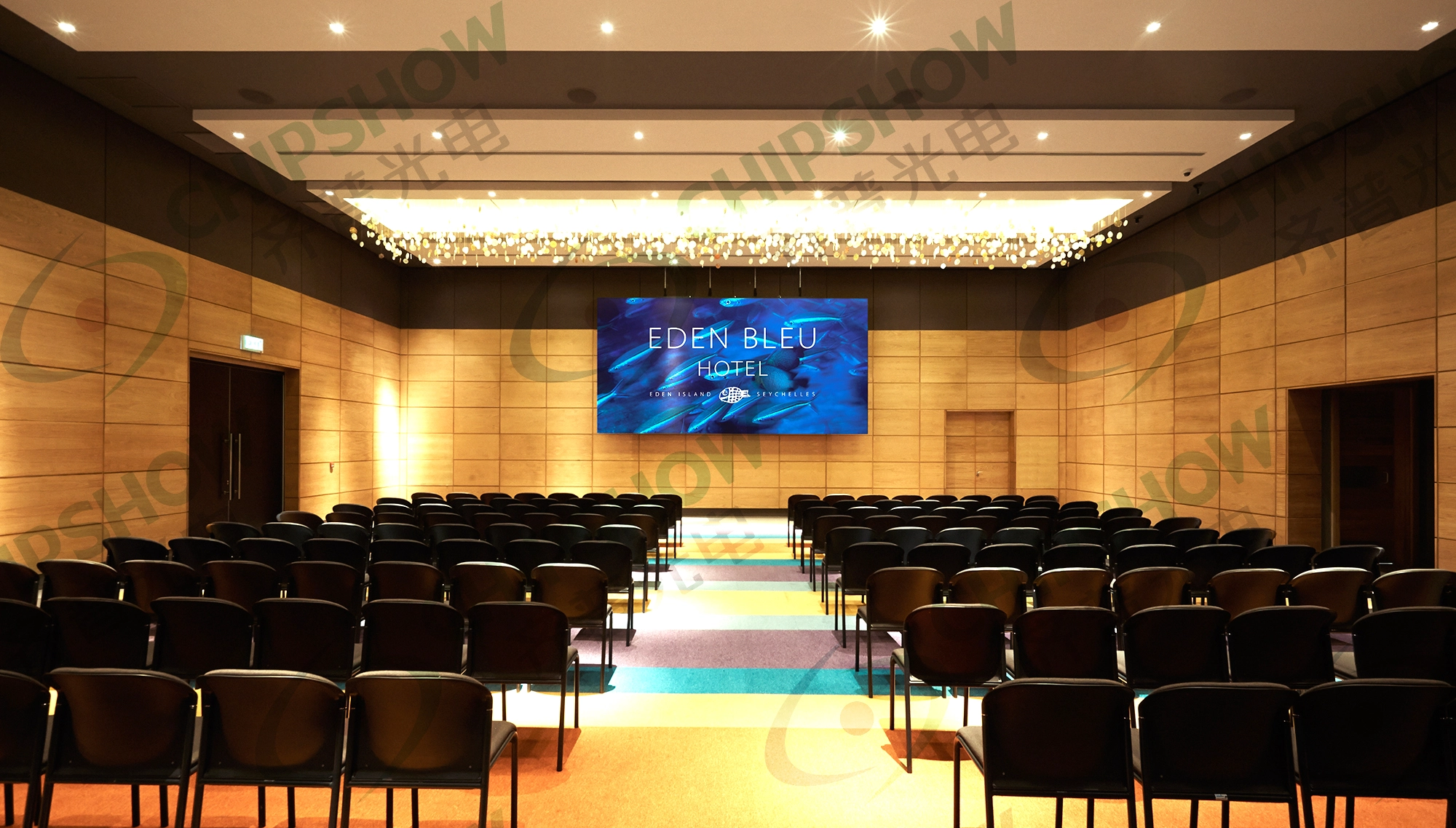
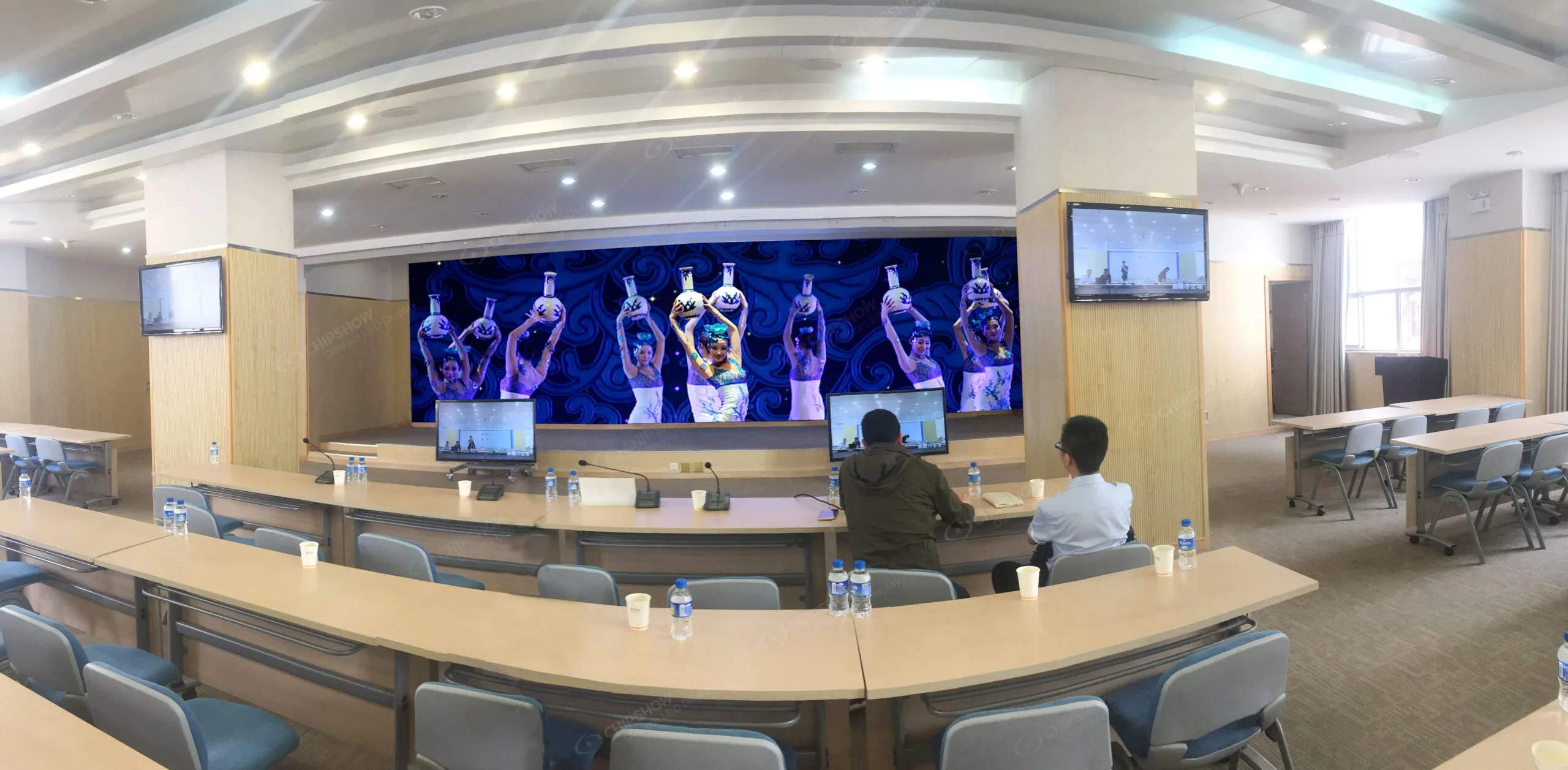
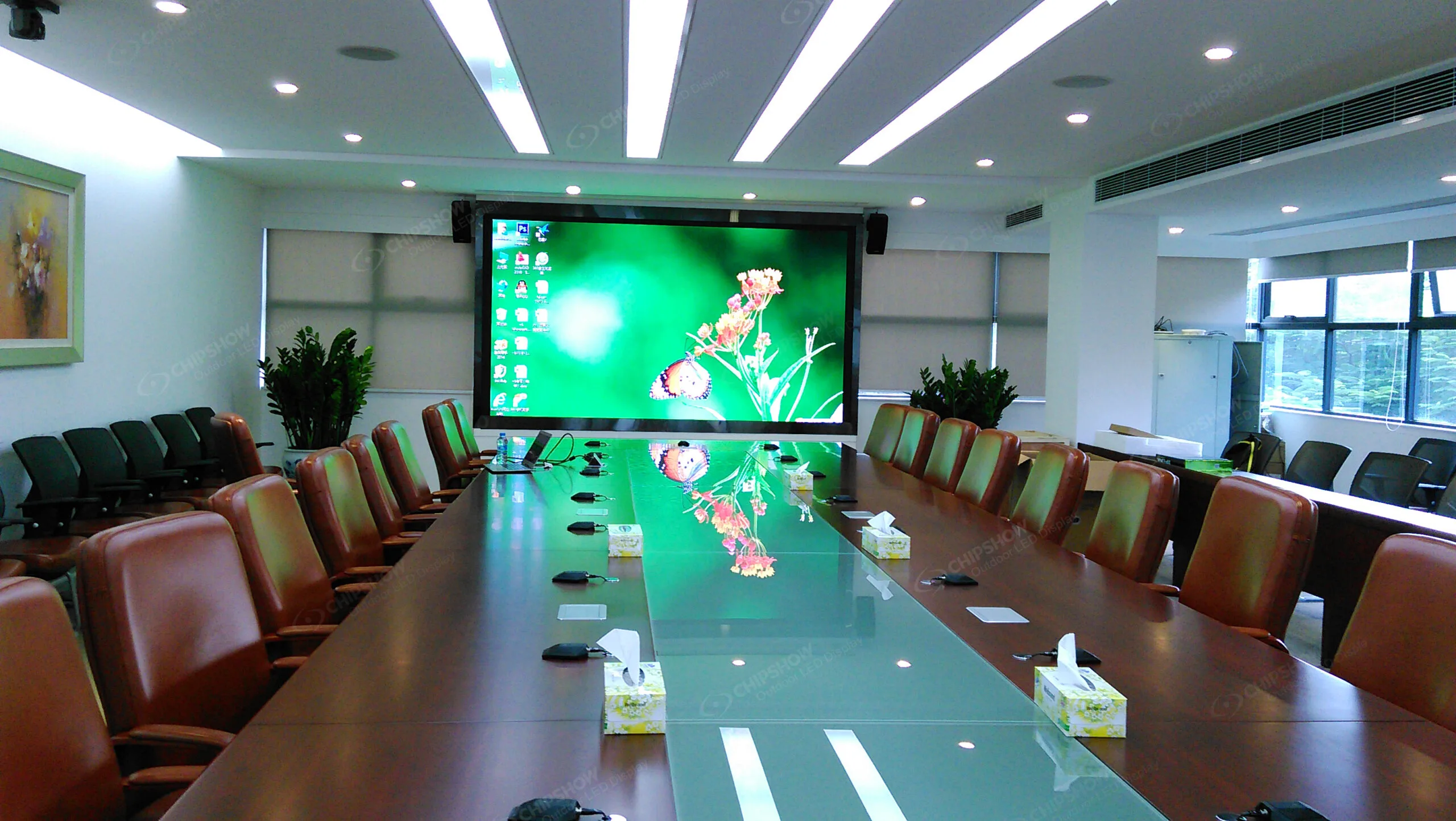
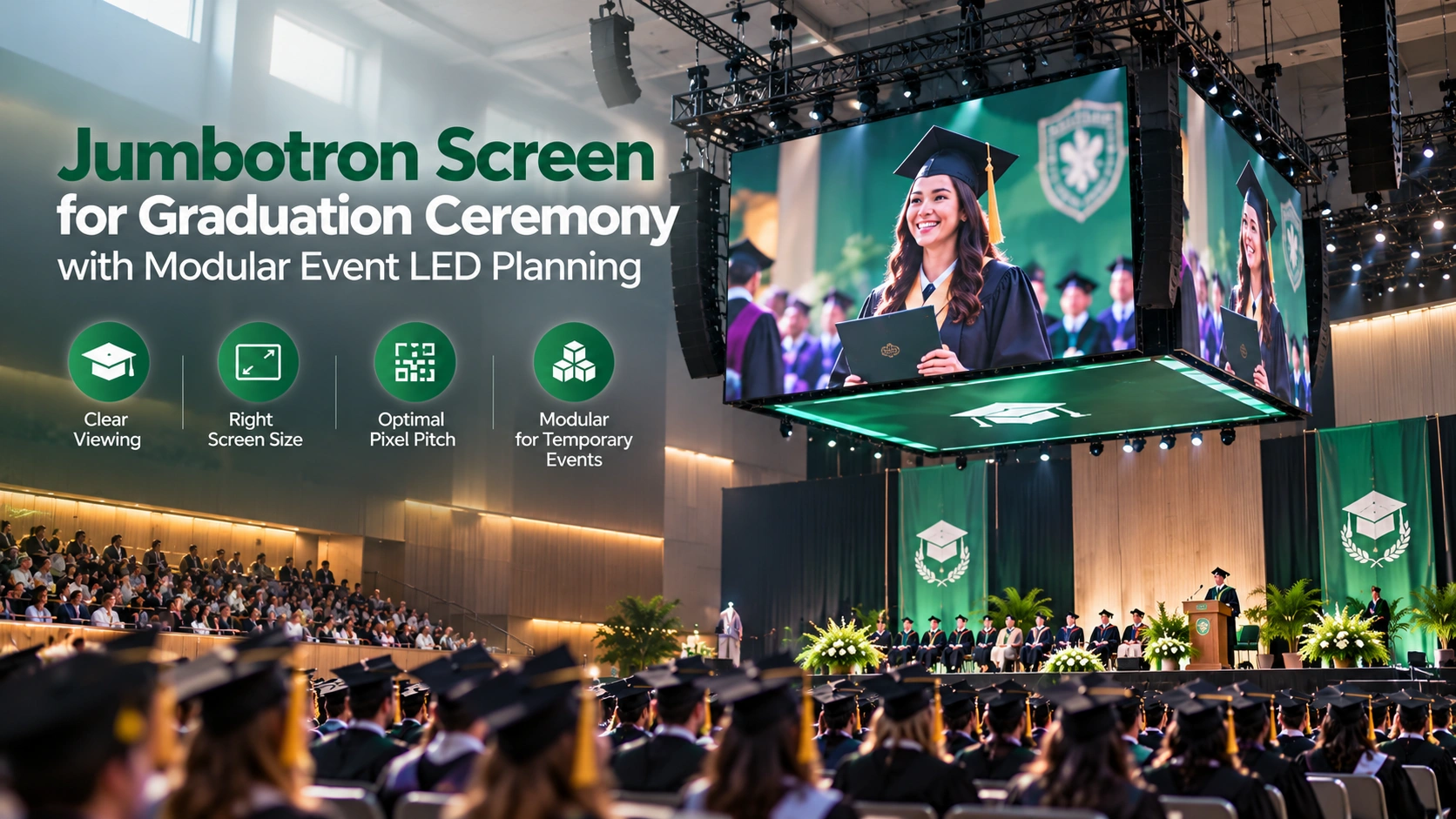
Indoor arenas, auditoriums and multi-purpose venues remove many outdoor weather constraints, but they often place viewers much closer to the LED surface.
That changes the specification priorities.
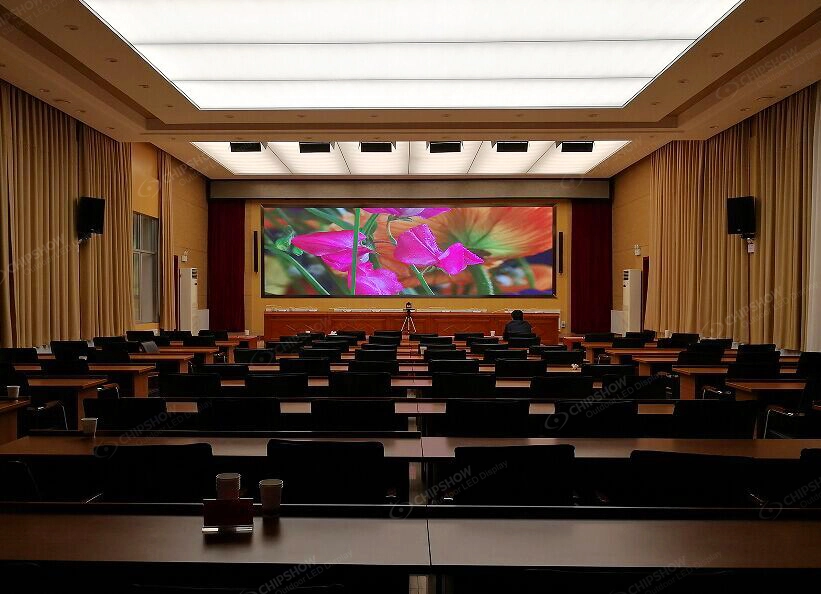
Fine pixel pitch becomes more valuable as viewing distance decreases. Contrast, grayscale performance and image uniformity become more visible. The project may also need to coordinate the LED wall with architectural finishes, cameras, presentation systems or existing AV infrastructure.
Maintenance access deserves attention before construction begins.
If the display sits directly against an interior wall, leaving a large rear service corridor may waste valuable floor space. Front-service architecture can make much more sense in these environments because technicians can reach key components from the viewing side.
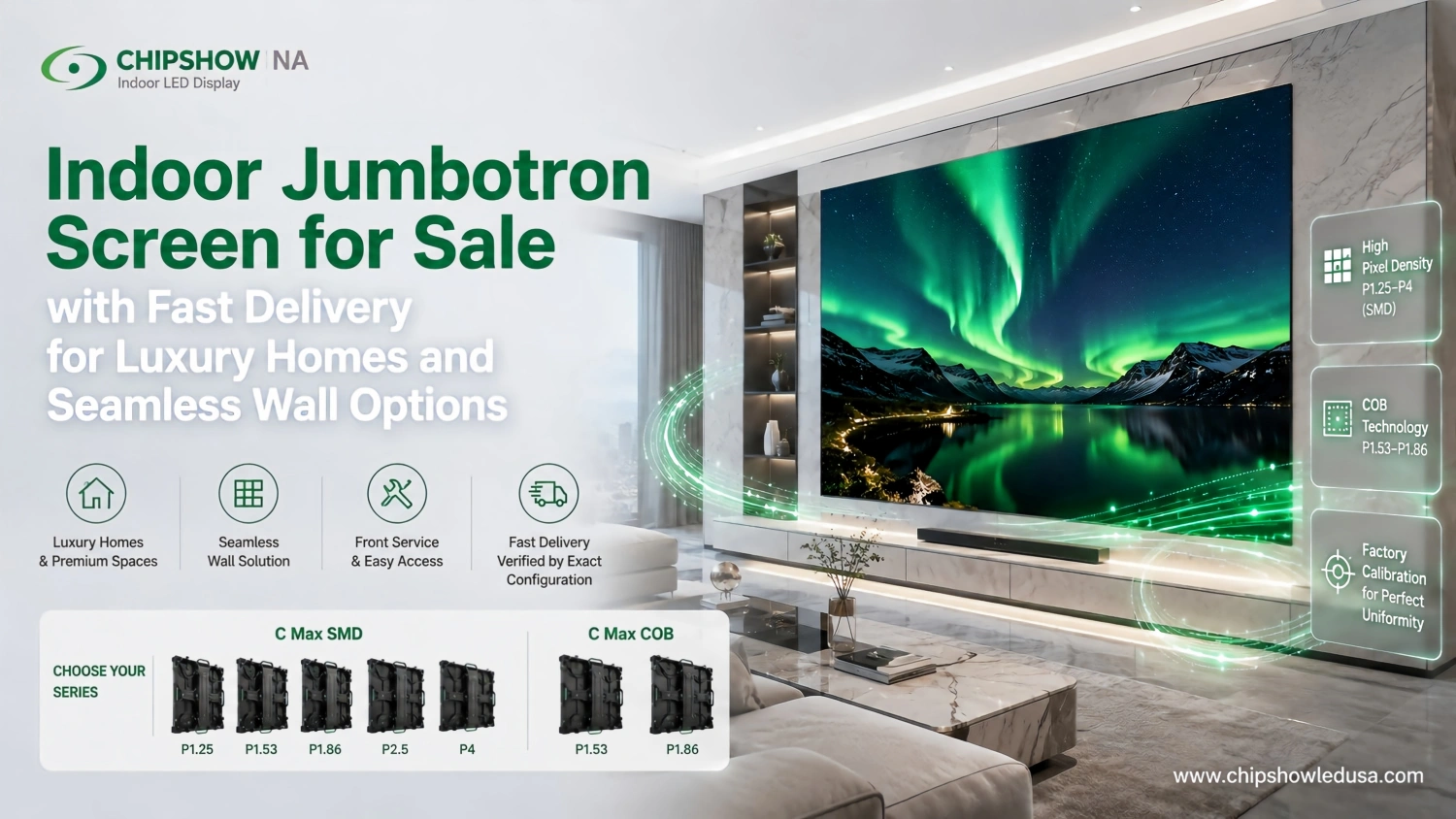
For close-viewing permanent installations, Chipshow can route the project toward C-Max SMD or COB platforms rather than using weatherproof outdoor cabinets simply because the finished screen is physically large.
Outdoor DOOH Follows a Different Procurement Logic
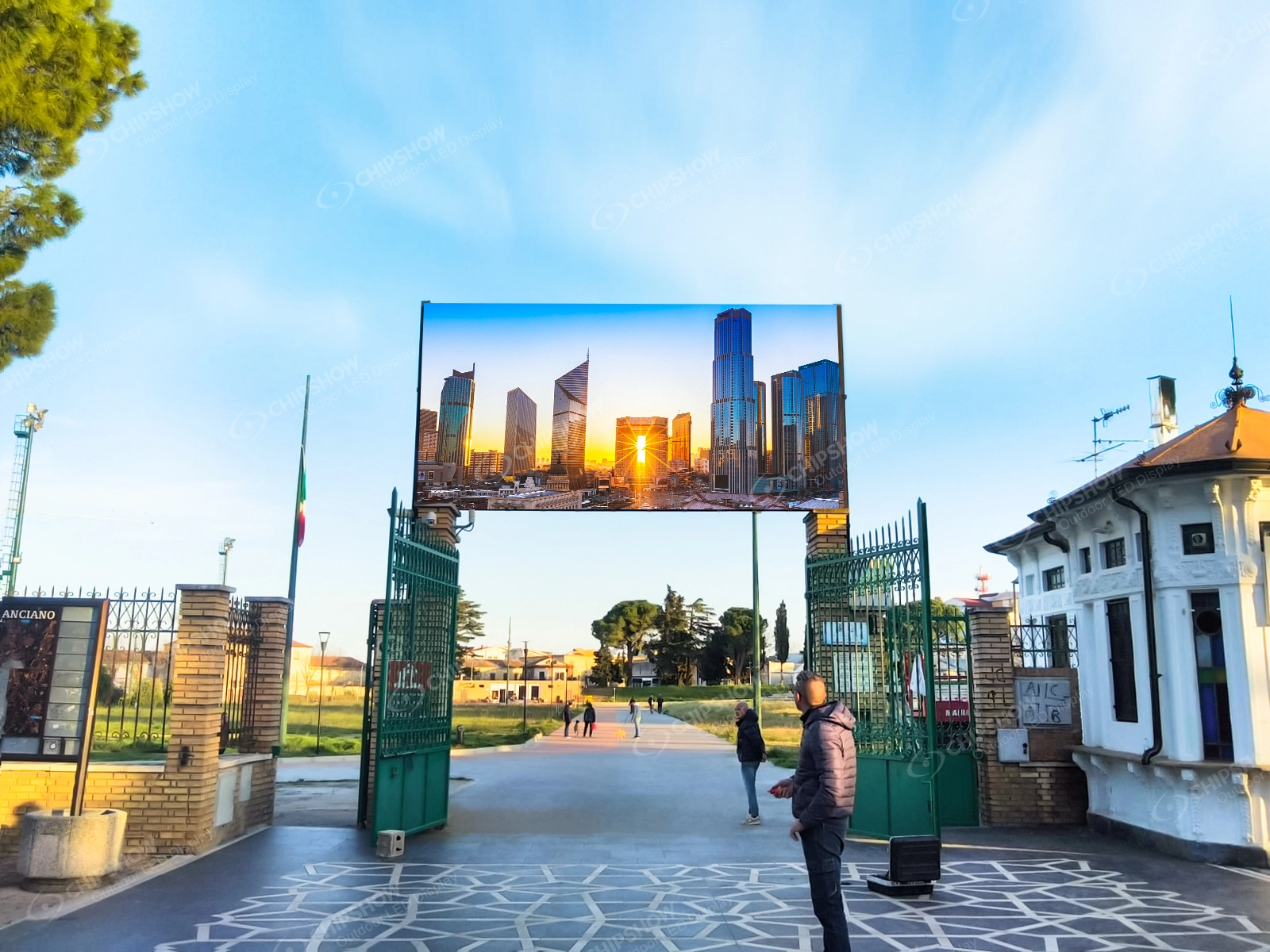
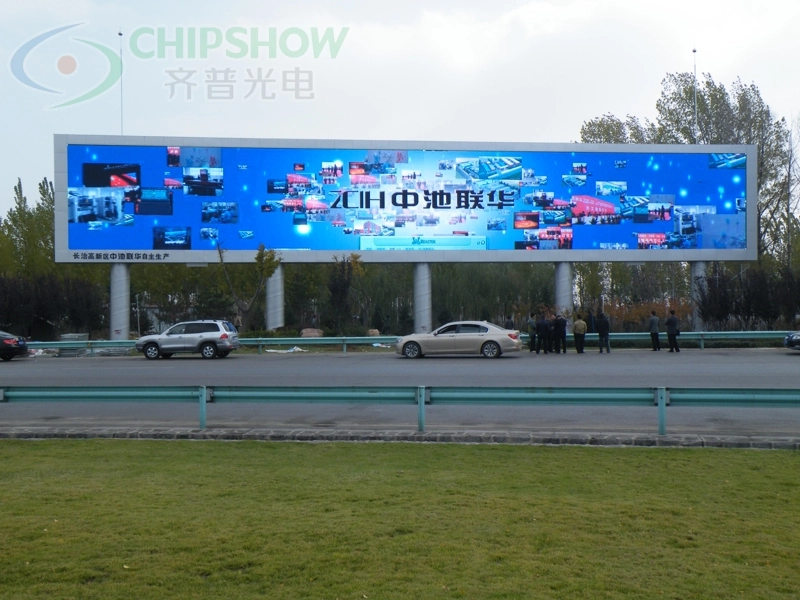
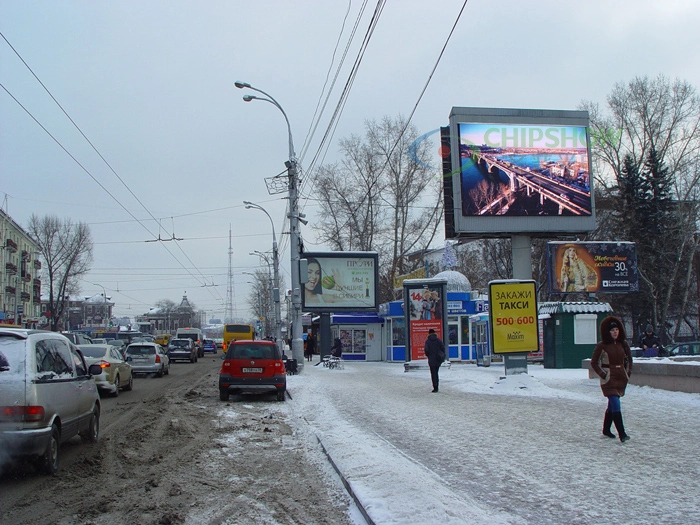
A large roadside billboard or commercial media facade can resemble a jumbotron from a distance, but its business model is fundamentally different.
DOOH operators generate revenue through continuous media playback. Their procurement decisions therefore revolve around sunlight visibility, long operating hours, energy consumption, weather exposure, maintenance access and total cost of ownership.
The display acts as an industrial revenue asset.
That changes what buyers should prioritize.
An outdoor media owner may care about whether a lighter cabinet can reduce structural burden, whether front access eliminates a difficult rear maintenance corridor, how well the display deals with direct sun, and how much energy the screen consumes across years of operation.
These questions belong to the Outdoor DOOH path, not the sports path.
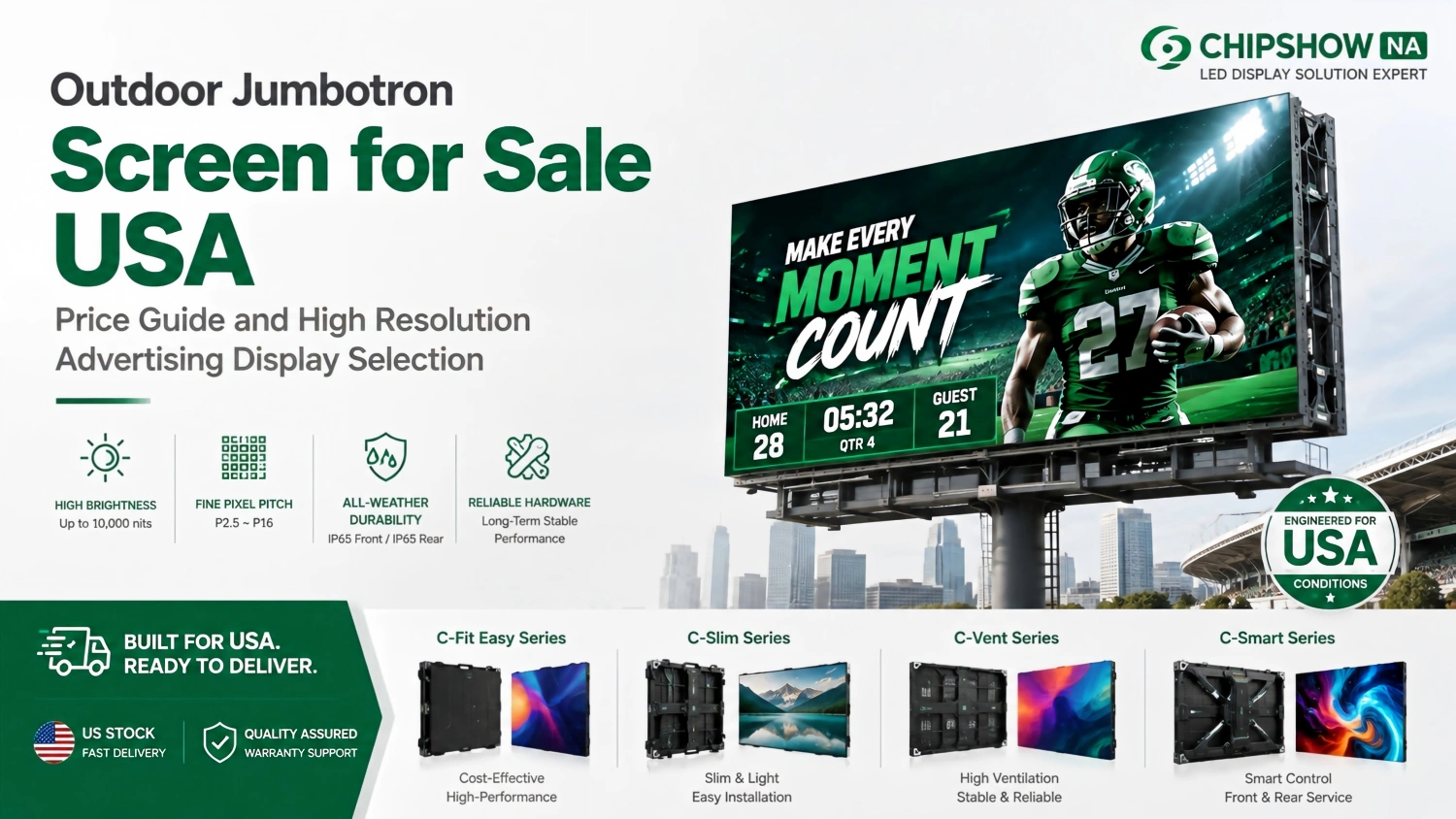
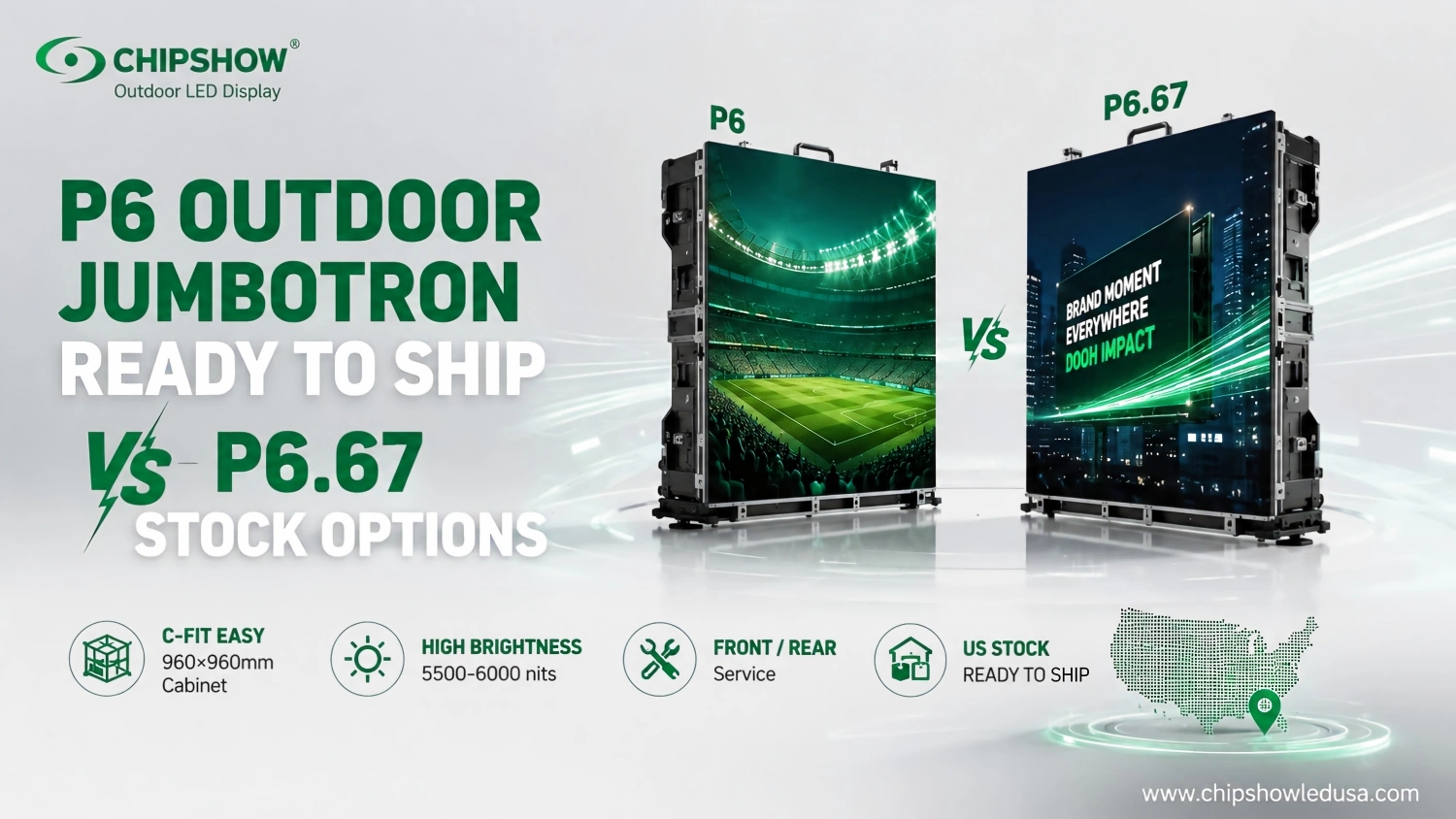
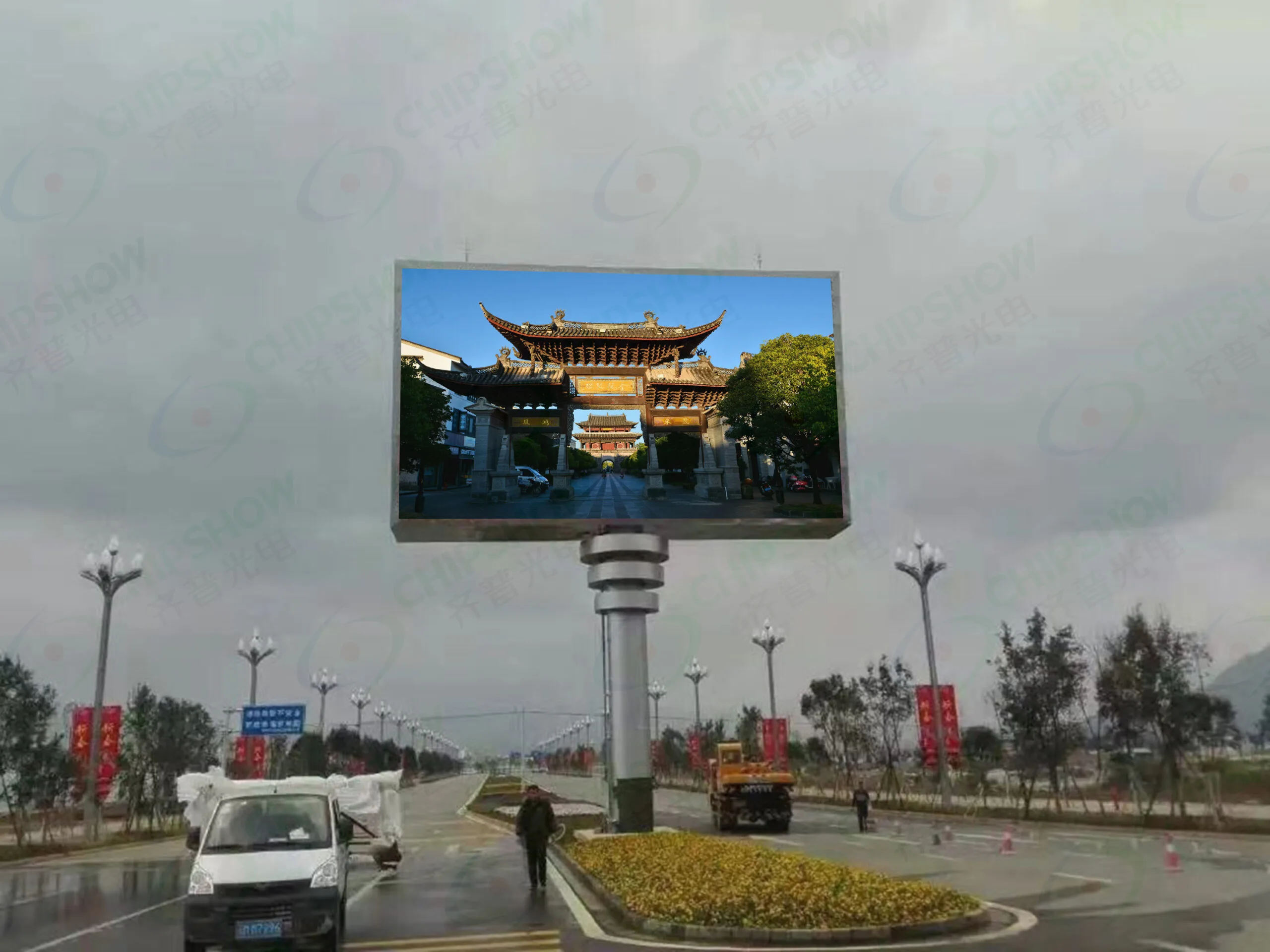
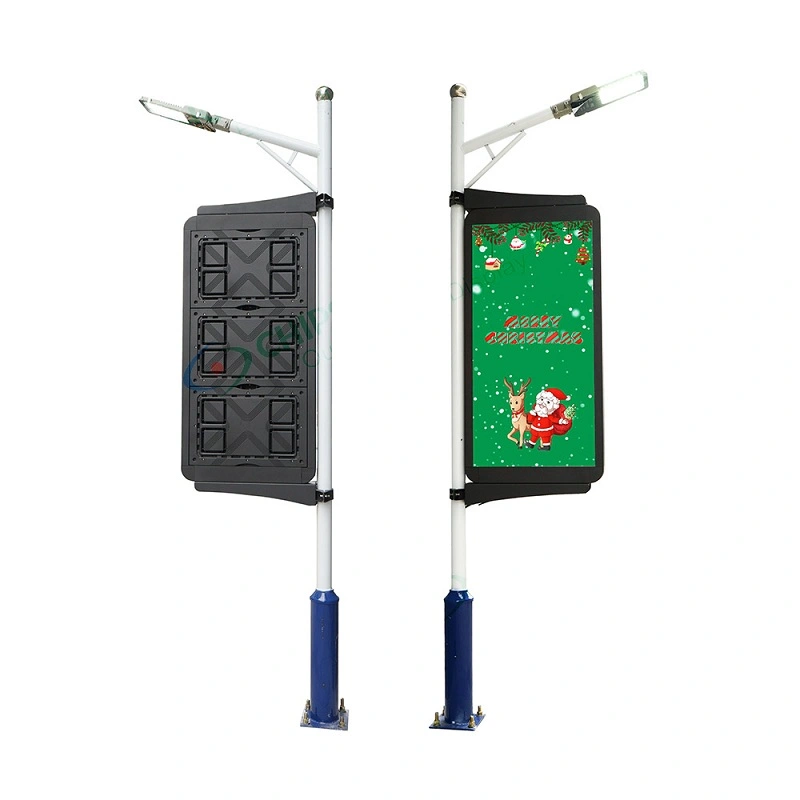
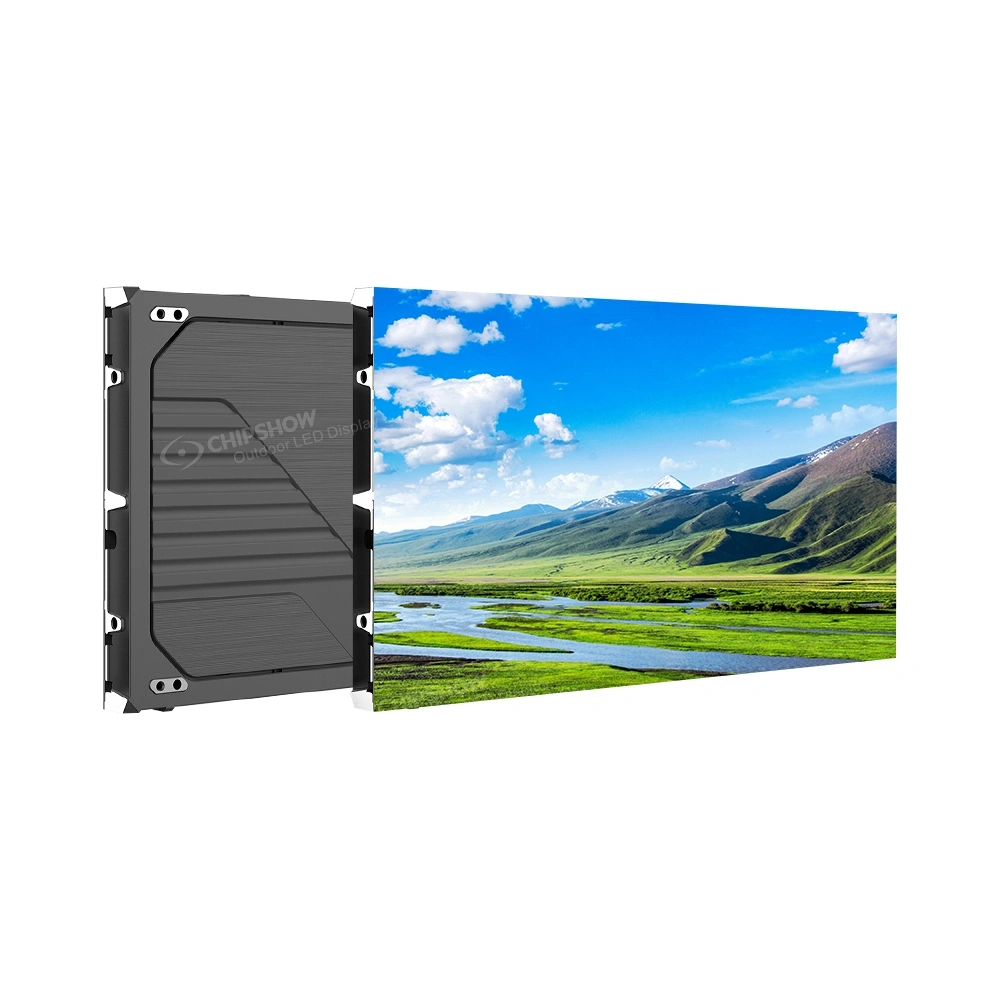
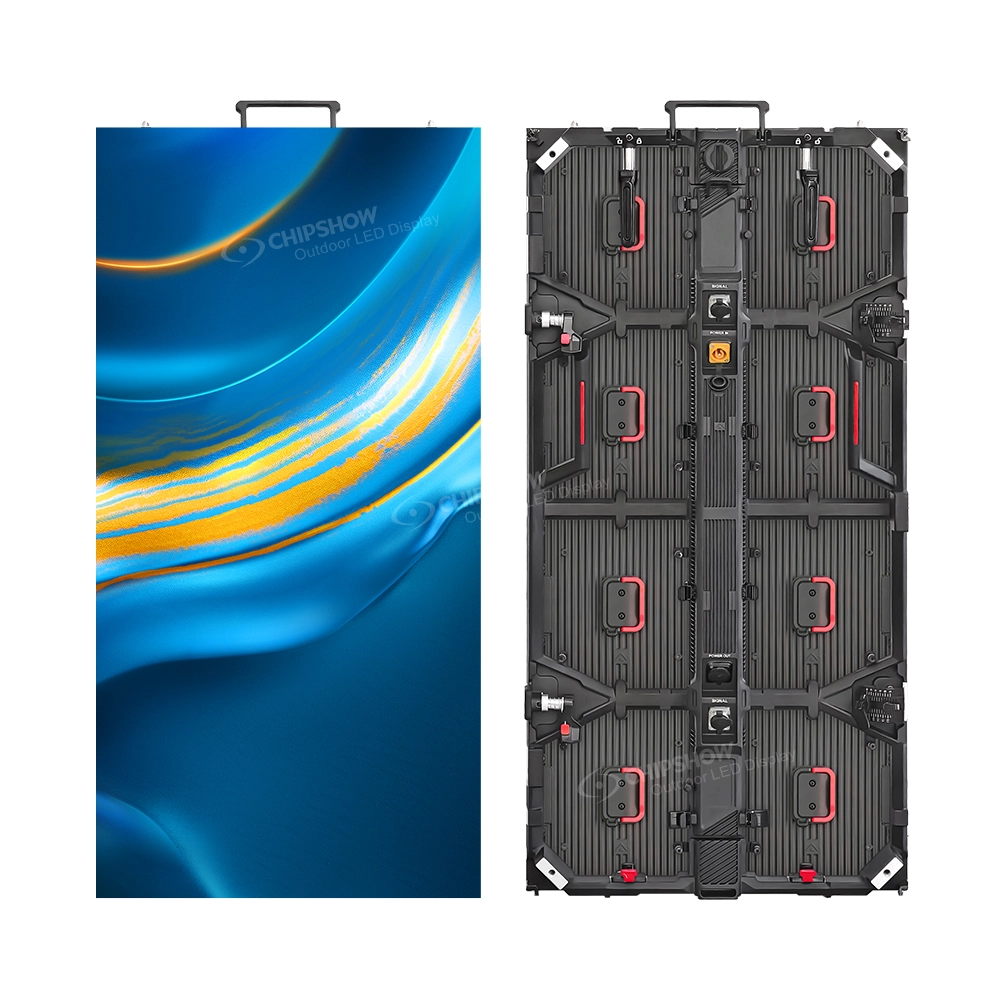
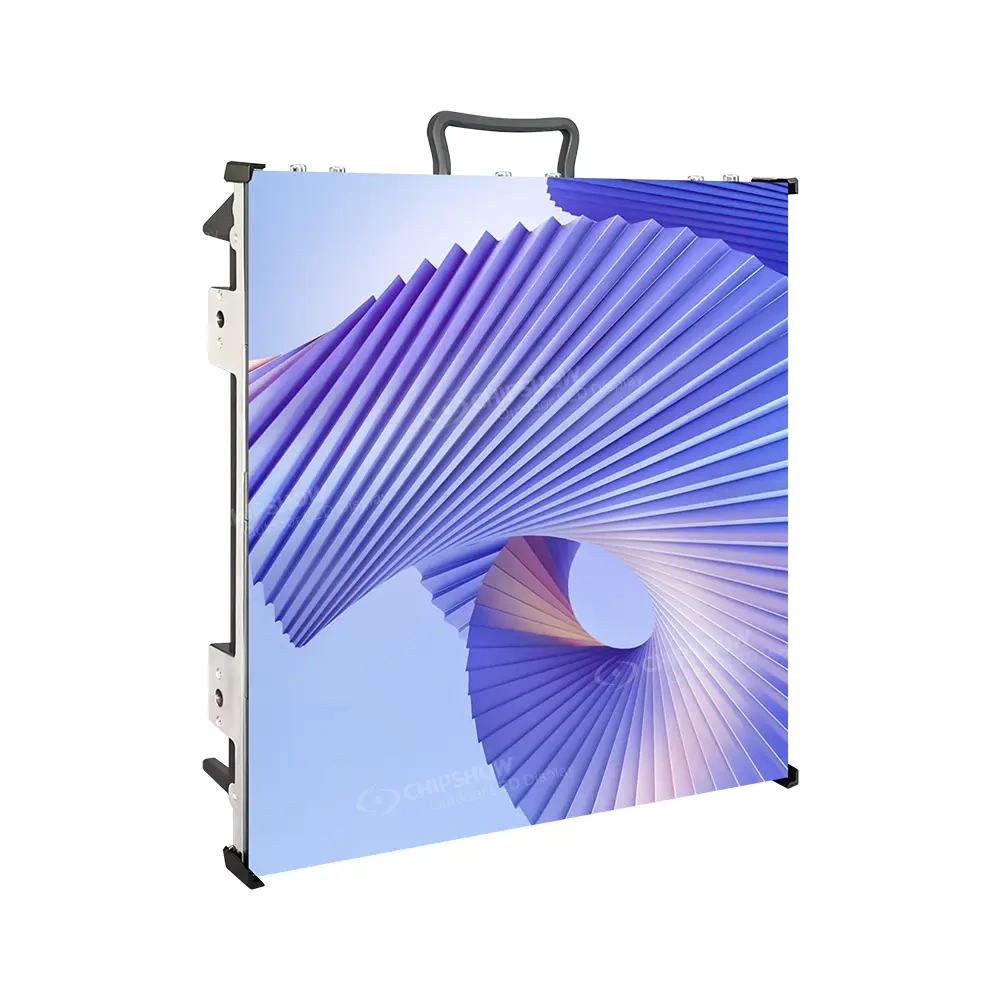
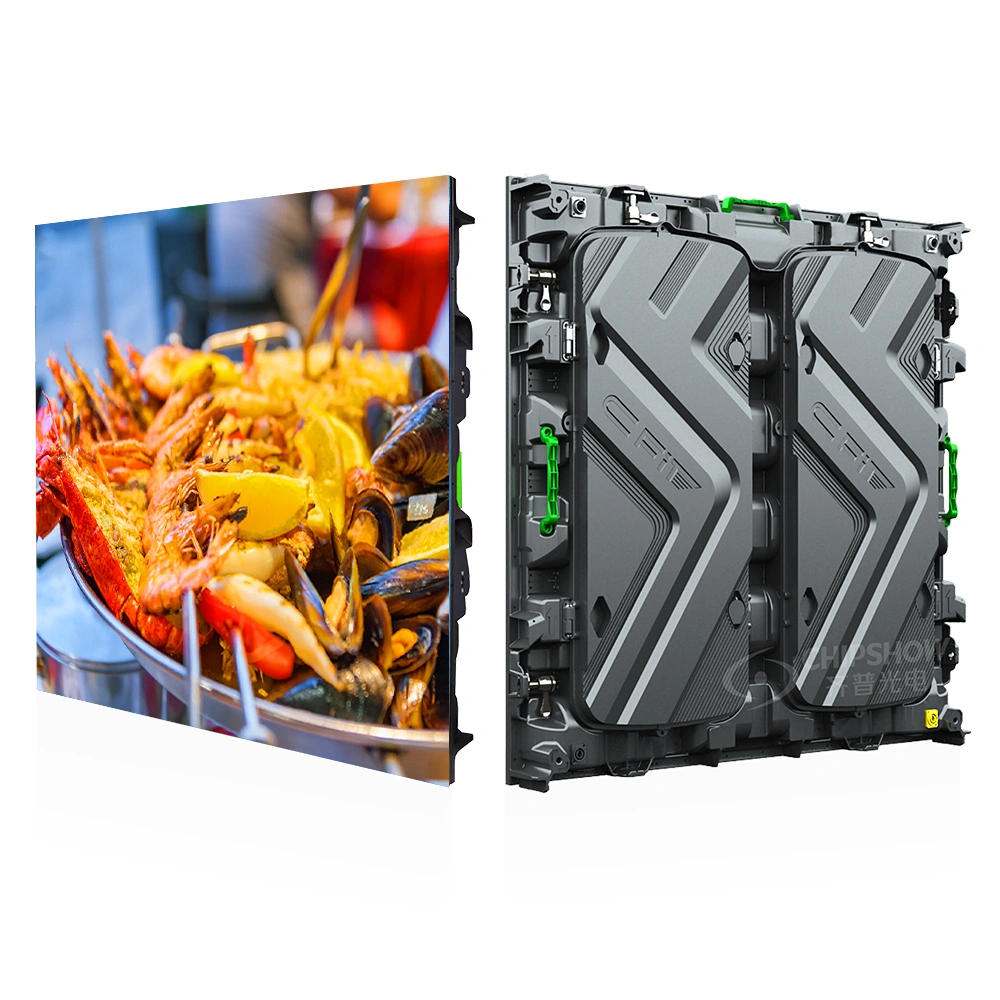
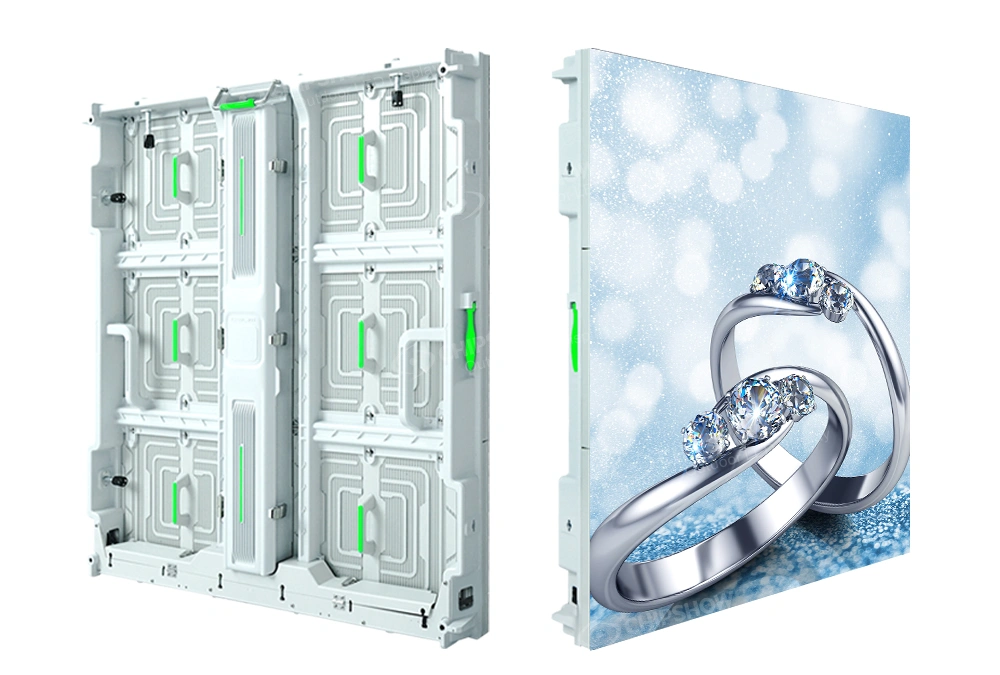
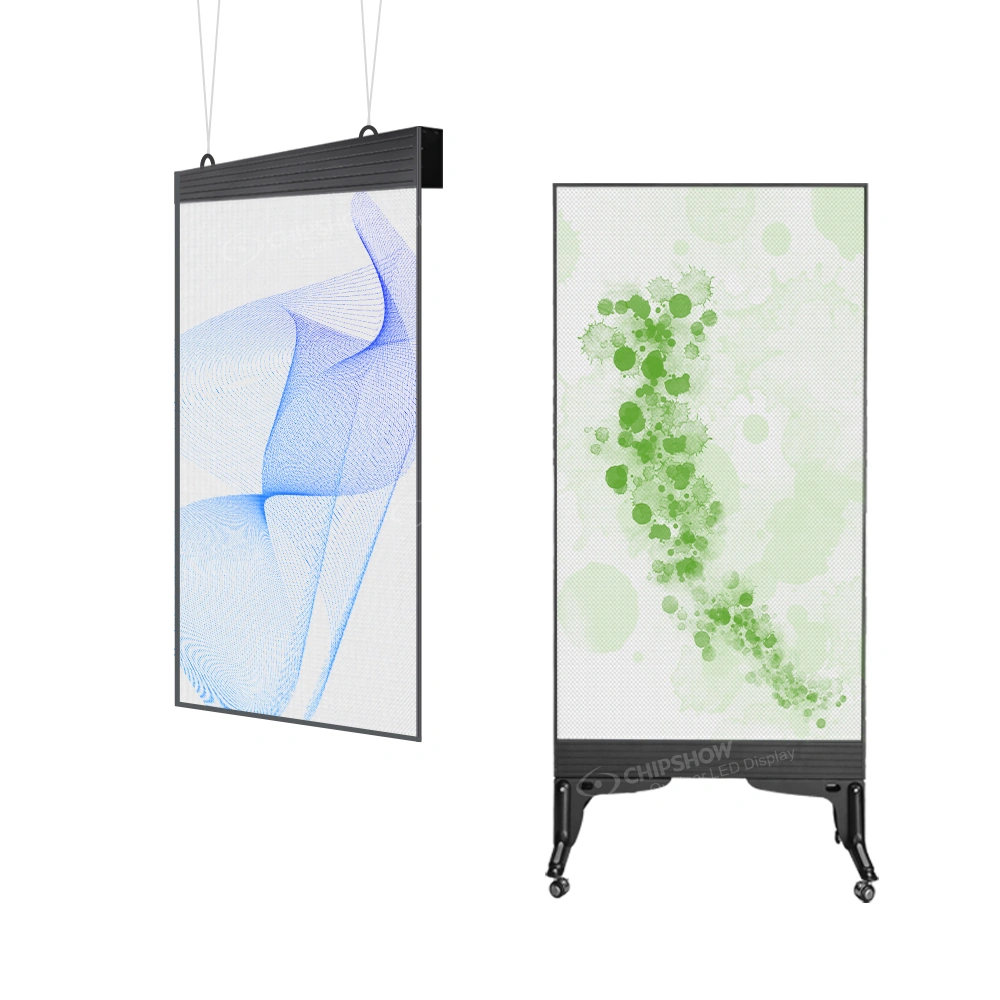
Chipshow’s C-Slim, C-Fit Easy and C-Vent families address different fixed outdoor conditions. C-Slim is positioned for demanding high-exposure installations. C-Fit Easy uses a standardized outdoor cabinet platform that can simplify fixed-installation planning. C-Vent addresses projects where airflow, facade integration or structural wind loading becomes an important part of the engineering discussion.
The important point is not to call all three products “jumbotrons.” The important point is to identify whether the buyer is operating a sports venue or a revenue-generating outdoor media asset.
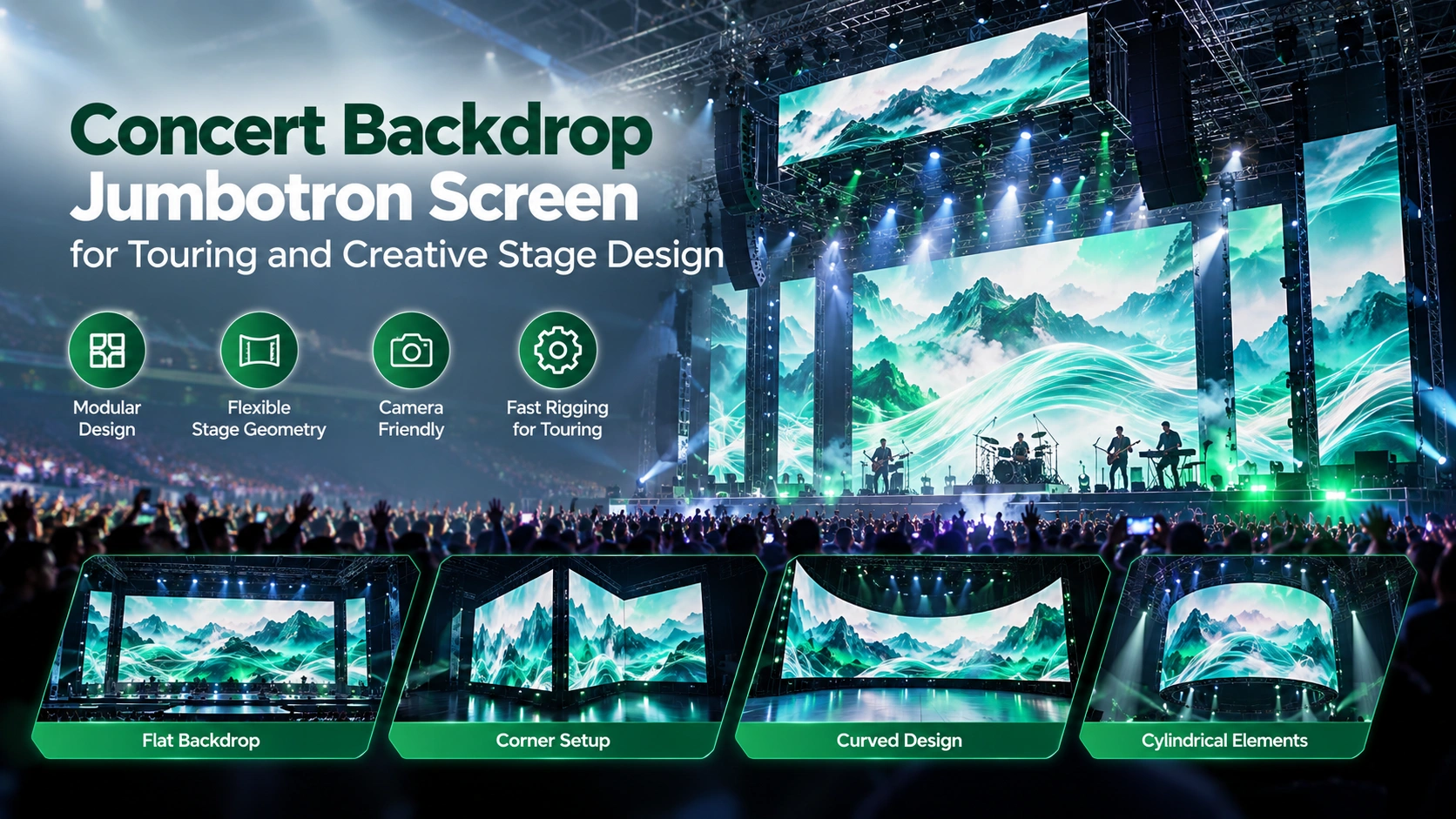
Events and Touring Productions
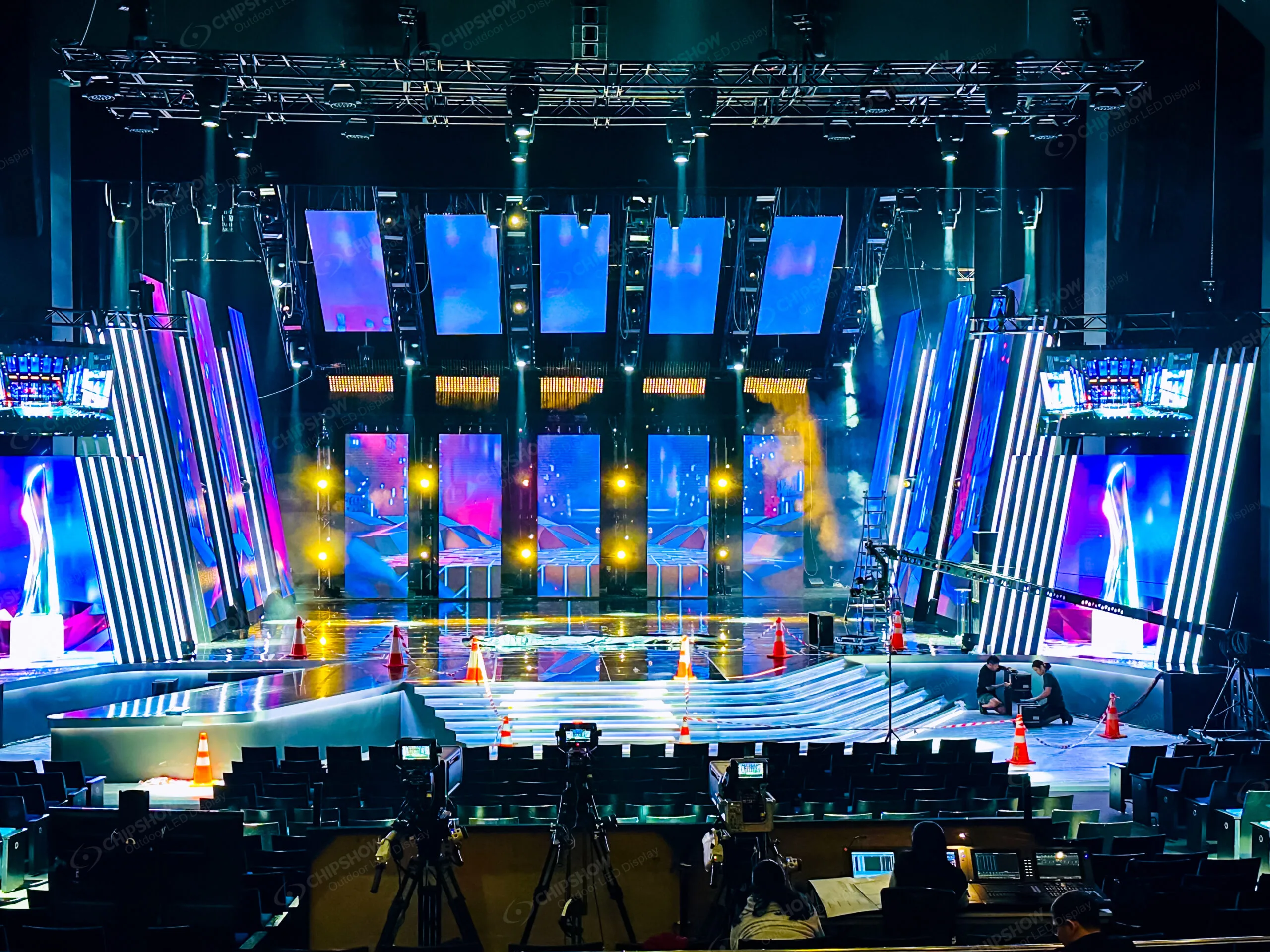
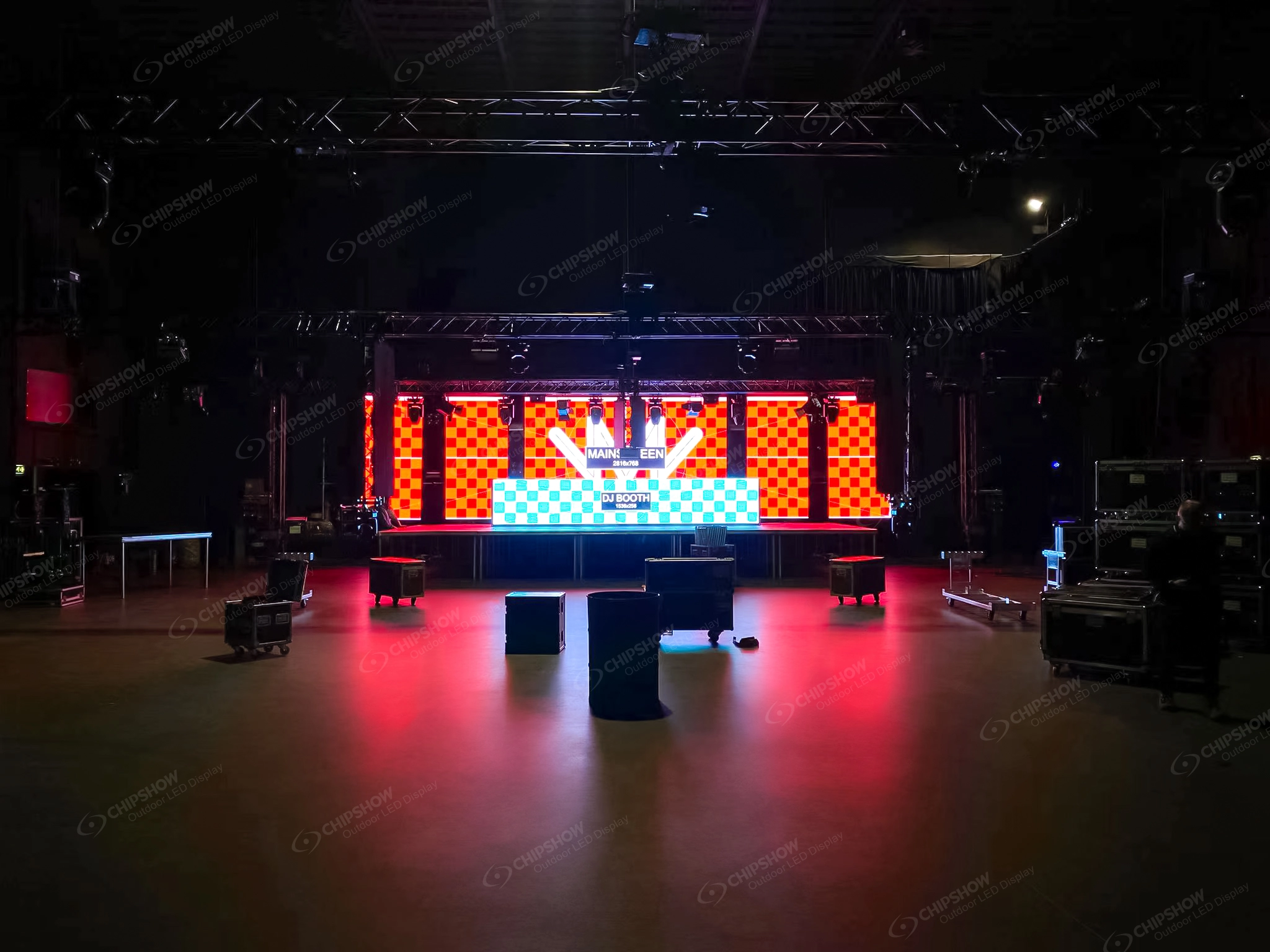
Rental and touring companies measure LED hardware differently again.
A permanent screen may be assembled once and operate for years. A rental cabinet can be installed, removed, transported and rebuilt dozens or hundreds of times.
Every unnecessary pound travels repeatedly. Every slow locking mechanism consumes labor repeatedly. Every alignment problem returns at the next venue.
Event procurement should therefore consider cabinet weight, rigging speed, mechanical durability, repeatable alignment, service access and camera performance together.
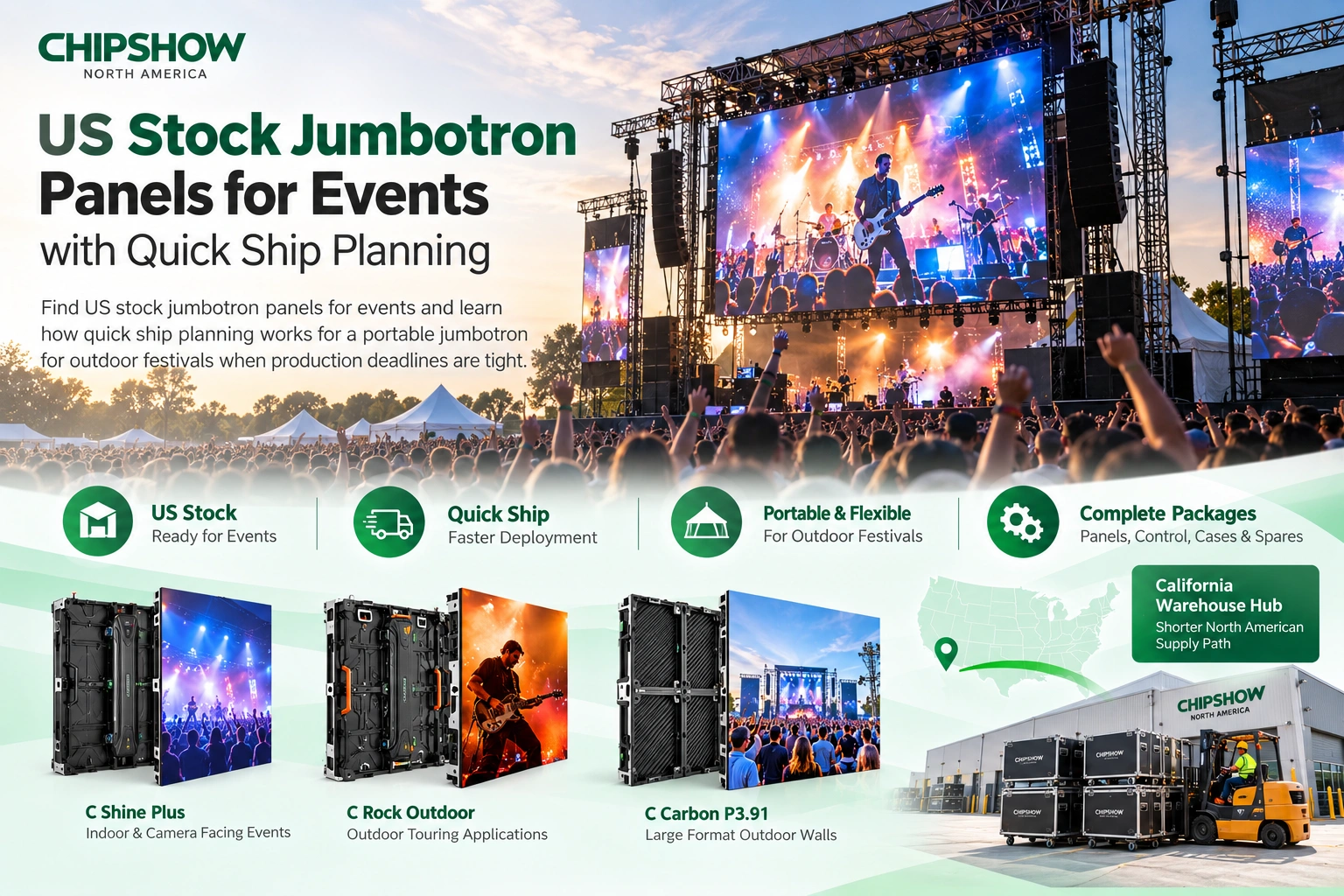
Chipshow routes this application toward rental-focused platforms such as C-Shine Plus, C-Rock and C-Carbon.
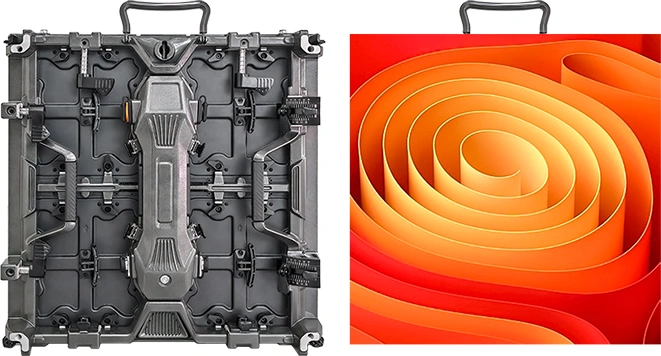
C-Shine Plus suits event environments where fast handling and flexible rental deployment matter. C-Rock addresses demanding outdoor event and touring conditions. C-Carbon uses lightweight construction for projects where reducing transport and rigging burden can produce value across repeated deployments.
The correct choice depends on the actual fleet strategy, not simply on which cabinet has the lowest initial price.
House of Worship
A church can require a very large screen without requiring stadium hardware.
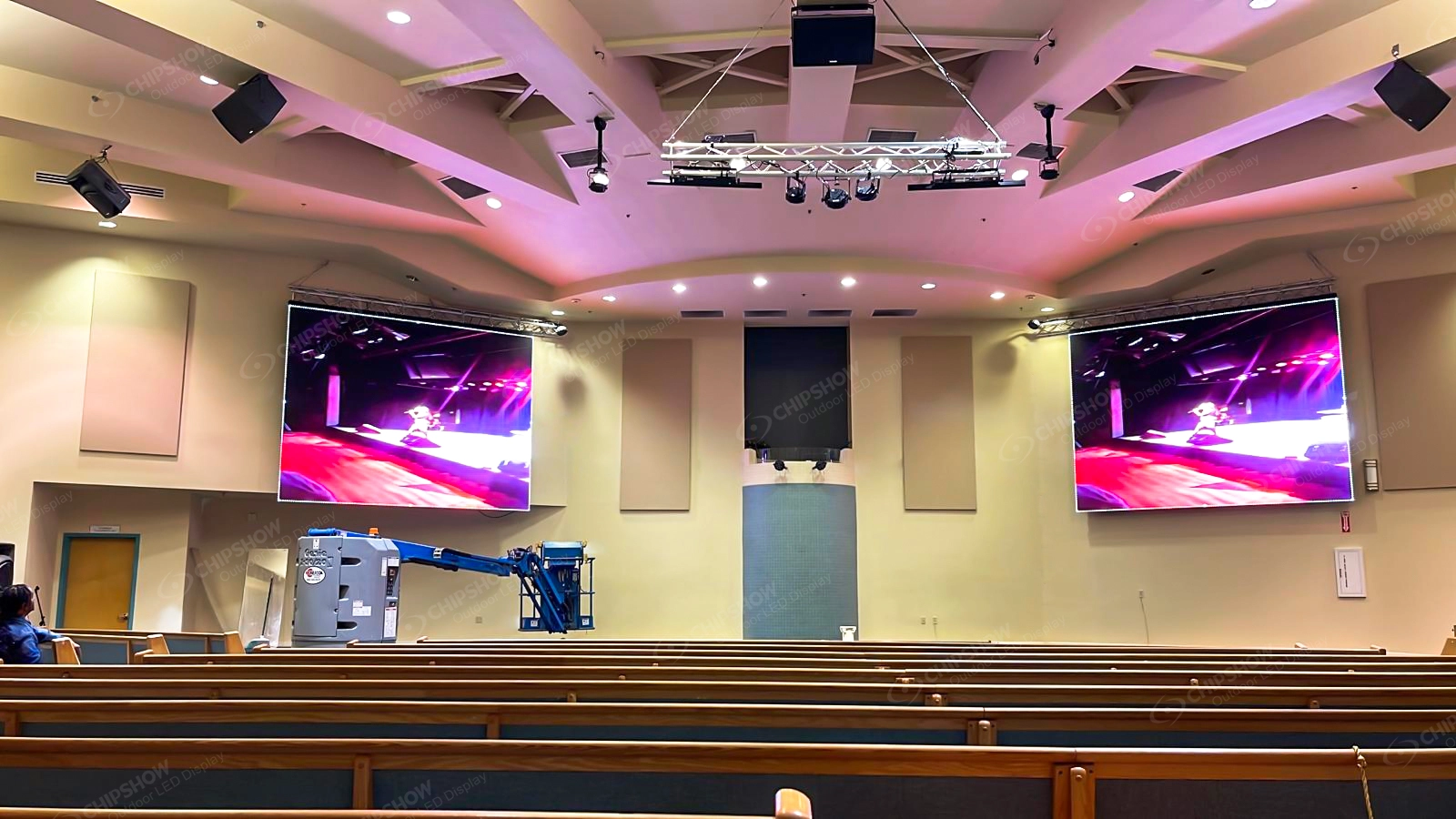
The audience may sit much closer to the display, cameras may capture the wall during services, volunteers may operate the AV system, and the installation may remain fixed for many years.
Those conditions often move pixel density, image quality, simple operation and front maintenance higher on the priority list.
A permanent indoor C-Max configuration can therefore make more sense than an event rental cabinet when the display will remain integrated into the worship space.
The control system should also fit the church’s existing production workflow. Adding complexity that the operating team does not need creates more risk, not more value.
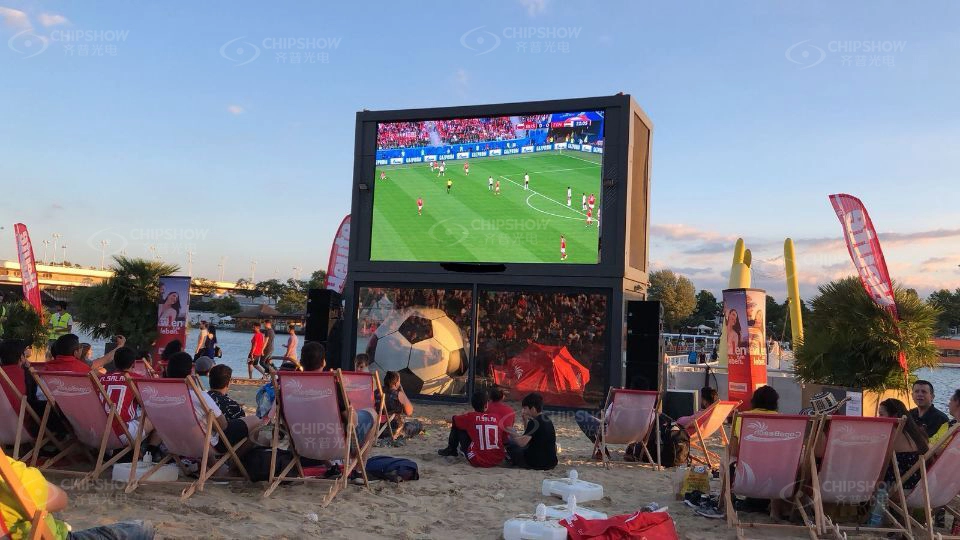
Outdoor Cinema Should Remain Its Own Visual Route
Outdoor cinema is another application that should not inherit a stadium specification automatically.
A sports display prioritizes live-event visibility, broadcast performance and operational continuity. A cinema-oriented display places much greater emphasis on grayscale, contrast, image detail and controlled reproduction of darker content.
Even when both systems operate outdoors, they solve different visual problems.
A temporary movie-night screen may also have very different mechanical requirements from a permanent stadium display. Viewing distance, operating time, ambient light, installation duration and weather exposure should determine whether the project moves toward a rental platform or a fixed outdoor solution.
Detailed cinema image-quality specifications belong in the dedicated Outdoor Cinema Guide. At the Pillar level, the important decision is recognizing that “large outdoor screen” does not describe one universal product category.
The 6 Decisions Buyers Get Stuck On
1. Cost and TCO
The LED cabinets are only one part of the project budget.
A complete hardware plan can also involve controllers, receiving hardware, power distribution, signal components, mounting-related hardware, cables and spare parts. Freight adds another layer. Permanent installations may then involve structural engineering, electrical work, permits and installation labor outside the LED hardware package.
For DOOH, operating expenses continue after installation.
Electricity, access equipment and maintenance can influence the economics of a revenue-generating billboard for years. A cabinet that costs less at purchase can become more expensive to own if servicing it repeatedly requires lifts, large crews or difficult rear access.
Rental companies calculate value differently. Their TCO includes truck space, crew hours, load-in and load-out time, repair frequency and the number of profitable deployments a fleet can complete.
Sports venues add the financial impact of redundancy, serviceability and operational continuity.
This is why price per square foot or square meter should never become the only comparison.
Use the dedicated Jumbotron Cost or Investment Guide when the project reaches budgeting depth. This Pillar Page should first establish which cost model applies.
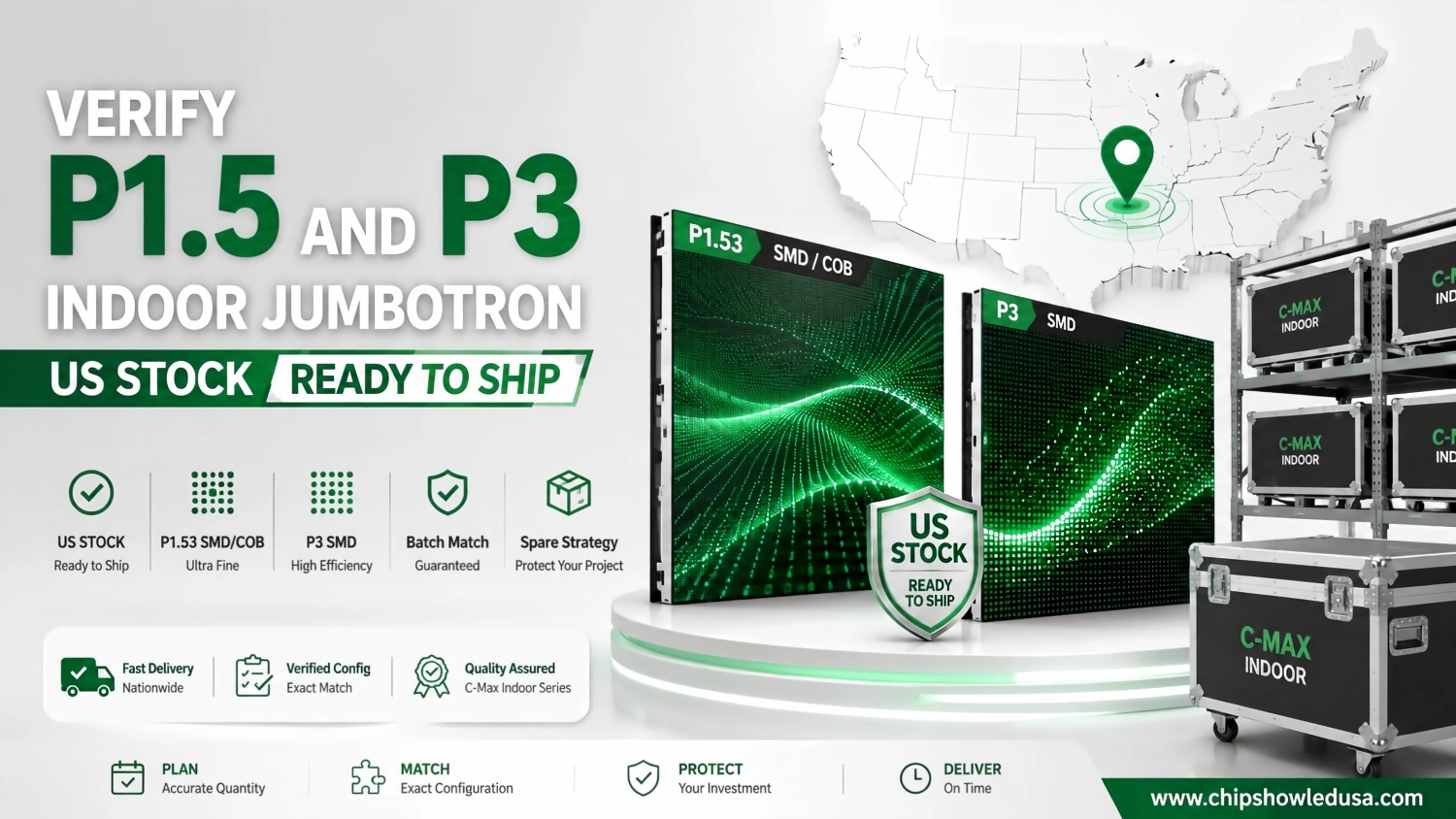
2. US Stock
Inventory can reduce schedule risk only when the stocked hardware matches the project.
“US stock” should not be interpreted as every pixel pitch, cabinet type and accessory being permanently available.
Chipshow uses its California Warehouse Hub as a North American inventory buffer for selected hardware. The exact model, pixel pitch, configuration and quantity still need to be checked before a project team commits to a delivery schedule.
That check should happen early when project dates are inflexible.
A designer who finalizes a specification first and asks about inventory afterward may discover that a closely related configuration is available locally while the exact one on the drawing requires another production cycle.
A better workflow is to provide the application, screen dimensions, approximate pitch range and required date at the beginning of the conversation. Chipshow can then compare the project requirement with current inventory before the BOM is finalized.
3. Pixel Pitch
Pixel pitch should follow viewing geometry.
An indoor wall viewed from a few feet away may justify a fine-pitch platform. A large stadium display viewed across a seating bowl may not.
The same rule applies to total resolution.
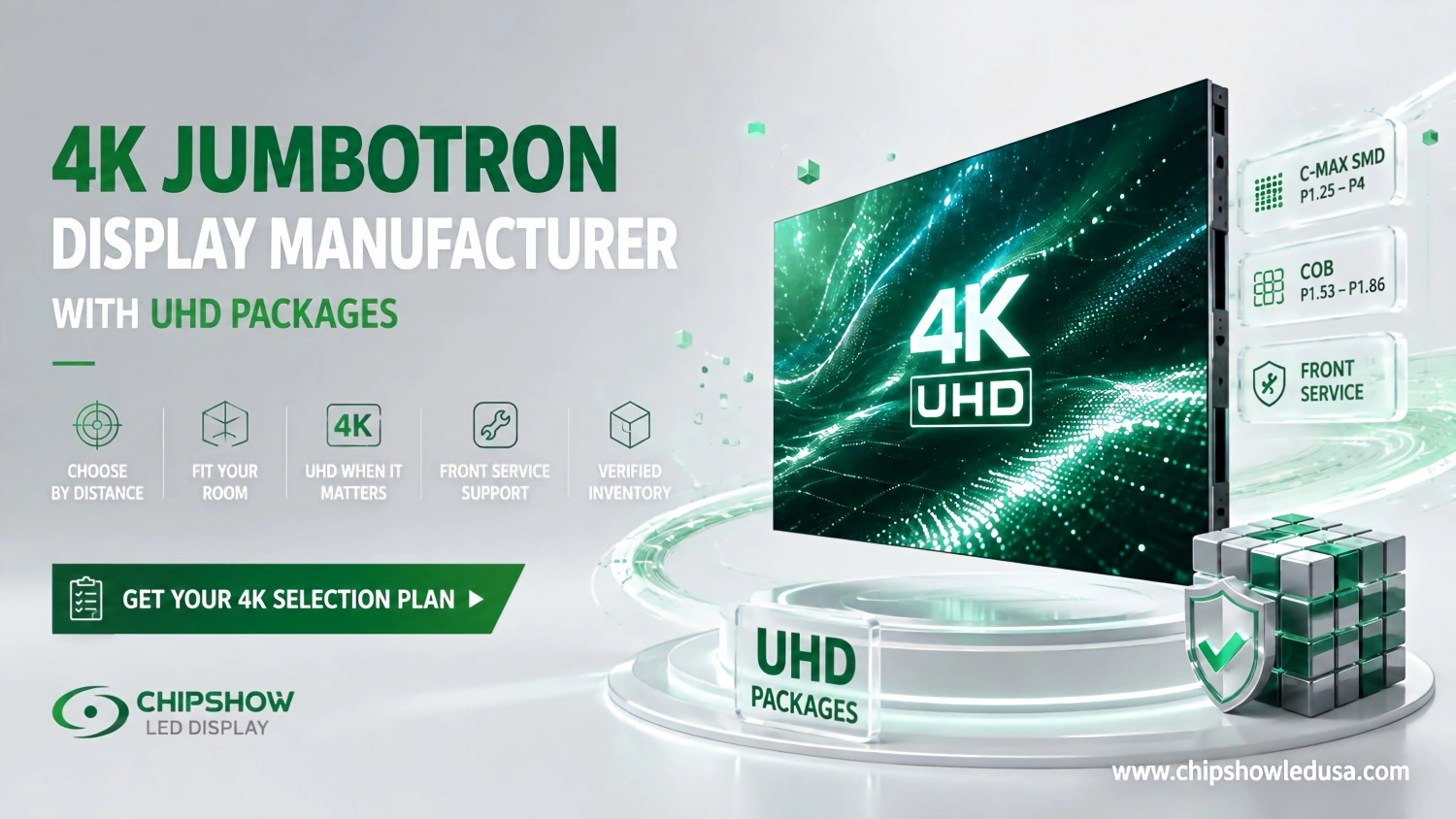
A buyer looking for a 4K display is asking for a total pixel resolution, not a particular cabinet type. Physical screen dimensions and pixel pitch together determine whether the final canvas reaches the desired resolution.
Buying an unnecessarily fine pitch can increase hardware cost without creating a visible benefit for the actual audience.
Buying a pitch that is too coarse can create visible pixel structure when viewers stand close.
The right answer therefore starts with minimum viewing distance, typical viewing distance, screen dimensions and content type.
Use the dedicated Specifications or 4K Guide when the project requires detailed resolution calculations.
4. Brightness
Brightness is an environmental requirement, not a quality ranking.
A screen facing direct sunlight needs a very different output level from a screen operating inside an auditorium.
Outdoor projects should consider orientation, direct sun exposure, operating schedule and surrounding ambient light before a brightness target is finalized.
Sports projects need enough output for audience visibility while also considering how the display behaves on camera.
Indoor spaces should prioritize comfortable luminance, contrast and image quality instead of purchasing outdoor-level brightness that the room never needs.
Specific brightness claims also need to remain configuration-specific.
For example, Chipshow offers high-brightness outdoor configurations within the C-Slim family, but the capability of one configuration should never be used as the specification for every C-Slim screen or every Chipshow outdoor product.
5. Refresh Rate
Refresh rate becomes especially important when cameras are involved.
Sports broadcasting, concerts, corporate productions and worship livestreams can reveal scan artifacts that may not appear obvious to the audience in the room.
A higher refresh platform can help support camera-facing applications, but refresh rate alone does not guarantee the final image.
Camera shutter settings, scan architecture, processing, receiving configuration and content workflow also influence the result.
Event and sports buyers should therefore evaluate the LED display as part of the camera and processing chain rather than selecting hardware from a single refresh-rate number.
6. Controller and Maintenance
A large LED display is a system.
The project needs to coordinate LED cabinets with processing, signal distribution, power architecture, control workflow and service planning.
Chipshow projects can be configured around mainstream LED control workflows such as NovaStar and, where the selected system supports it, Brompton. The controller should still be chosen for the specific resolution, application and operating requirements.
Maintenance planning should happen before the display is mounted.
Ask where technicians will stand. Ask whether modules and power components can be accessed from the front. Ask whether the venue has space for rear service. Ask which spare parts need to remain on site.
For an outdoor asset, those questions directly affect long-term TCO.
For an indoor architectural wall, they affect how much building space the display consumes.
For sports, they affect how quickly the venue can recover from a component issue.
Chipshow Jumbotron Product Map
The purpose of a product map is not to place every Chipshow display into one “jumbotron” category. It is to stop buyers from comparing products designed for fundamentally different jobs.
C-Sport: Stadium Perimeter and Sports
C-Sport sits in the dedicated sports route.
It is designed around stadium perimeter applications where athlete-facing hardware, broadcast performance and venue-specific mechanical requirements matter.
A buyer evaluating field-level perimeter LED should therefore start here instead of selecting a standard outdoor billboard cabinet solely because both products can operate outdoors.
C-Slim: High-Exposure Outdoor Commercial Displays
C-Slim belongs to the fixed outdoor commercial route.
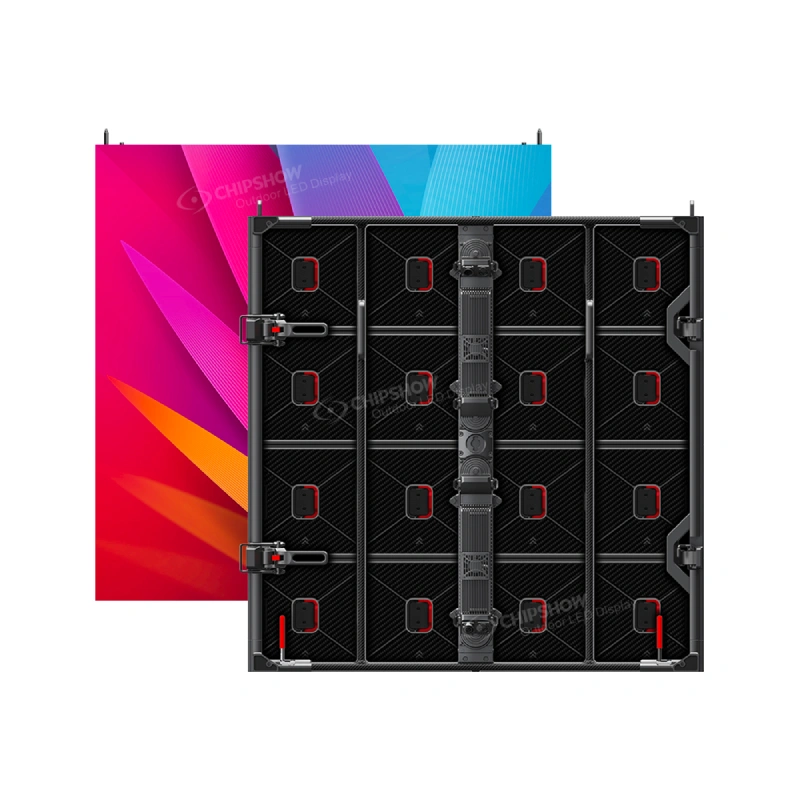
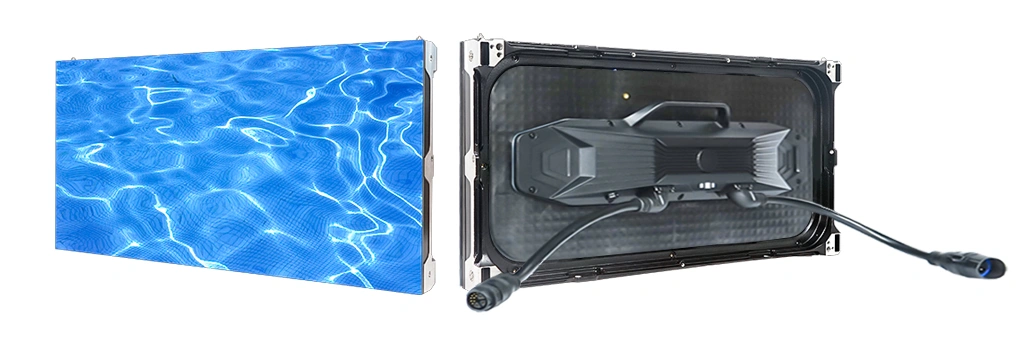
Its magnesium platform and high-brightness configurations make it relevant where direct sunlight, outdoor durability, cabinet weight and maintenance strategy influence the design.
That makes C-Slim particularly relevant to large permanent outdoor media applications.
It should not, however, replace a sports-specific perimeter platform simply because the screen is located at a stadium.
C-Fit Easy: Standardized Outdoor Fixed Installation
C-Fit Easy addresses fixed outdoor projects that benefit from a standardized cabinet format and straightforward installation planning.
This can be useful for billboard and commercial display projects where predictable cabinet geometry simplifies screen layout, replacement planning and installation preparation.
Selected C-Fit Easy configurations are also relevant to California inventory discussions. Stock should still be confirmed against the exact project requirement before delivery commitments are made.
C-Vent: Billboard and Media Facade Applications
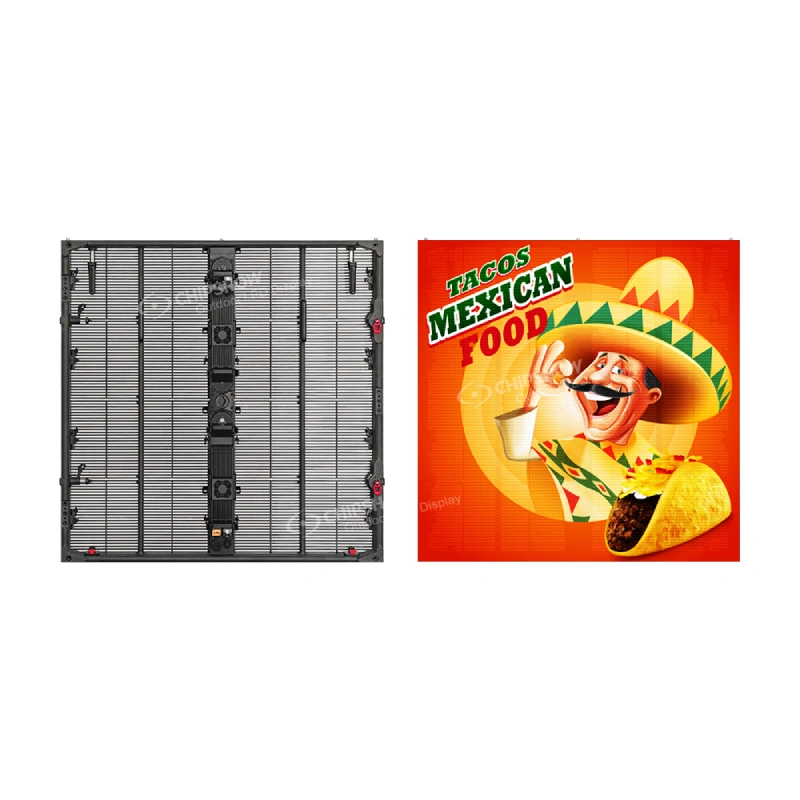
C-Vent addresses another outdoor problem: airflow and structural burden.
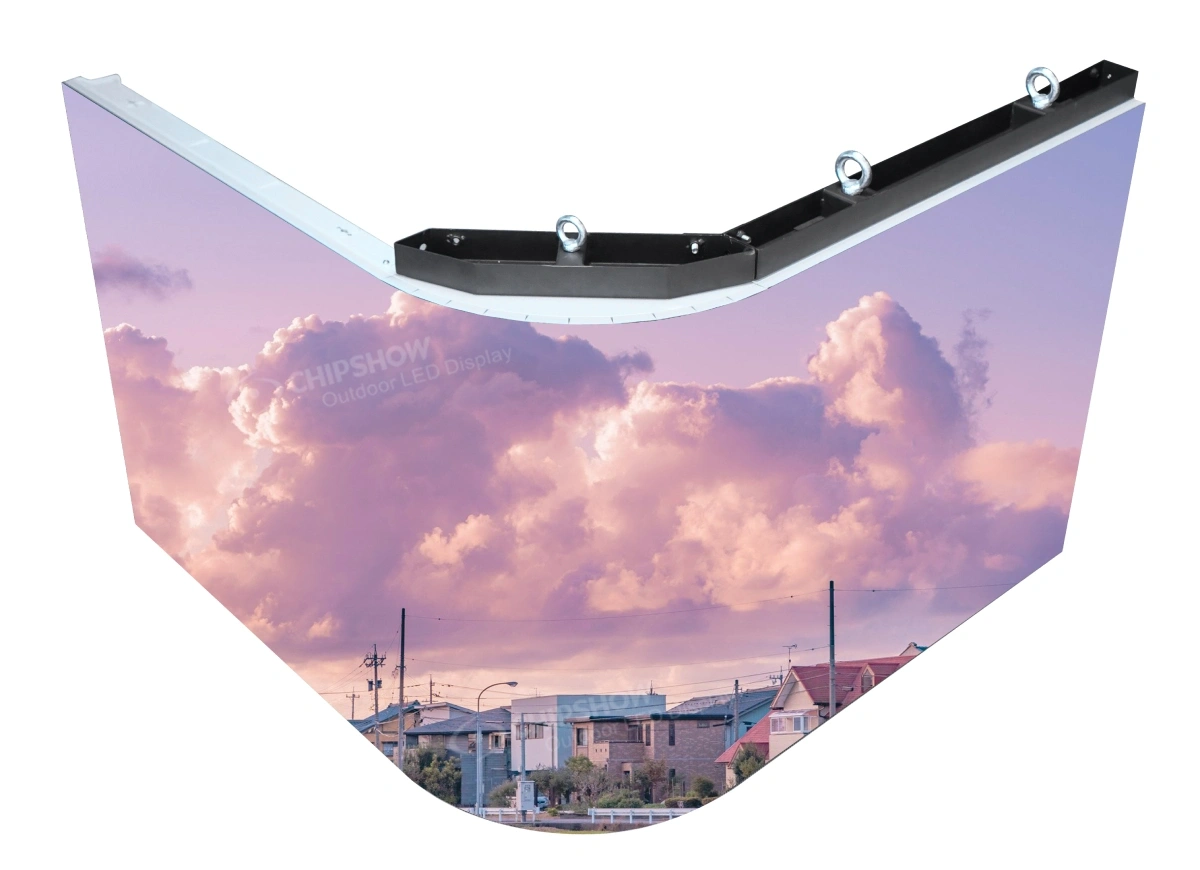
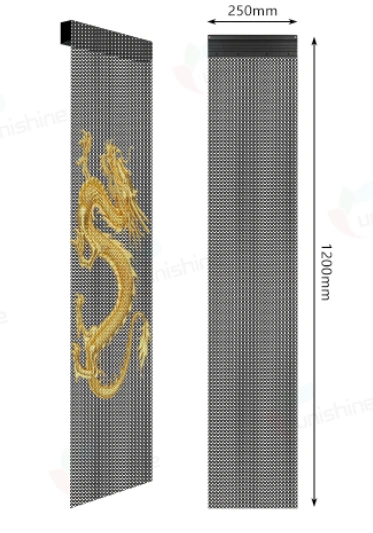
Very large solid LED surfaces can create significant wind-loading considerations. A ventilated or open-structure platform can become valuable when an engineer wants to reduce the amount of solid area presented to the wind or integrate digital media into a large building facade.
C-Vent therefore belongs primarily in the outdoor commercial and media-facade branch rather than the indoor venue or stadium-perimeter branch.
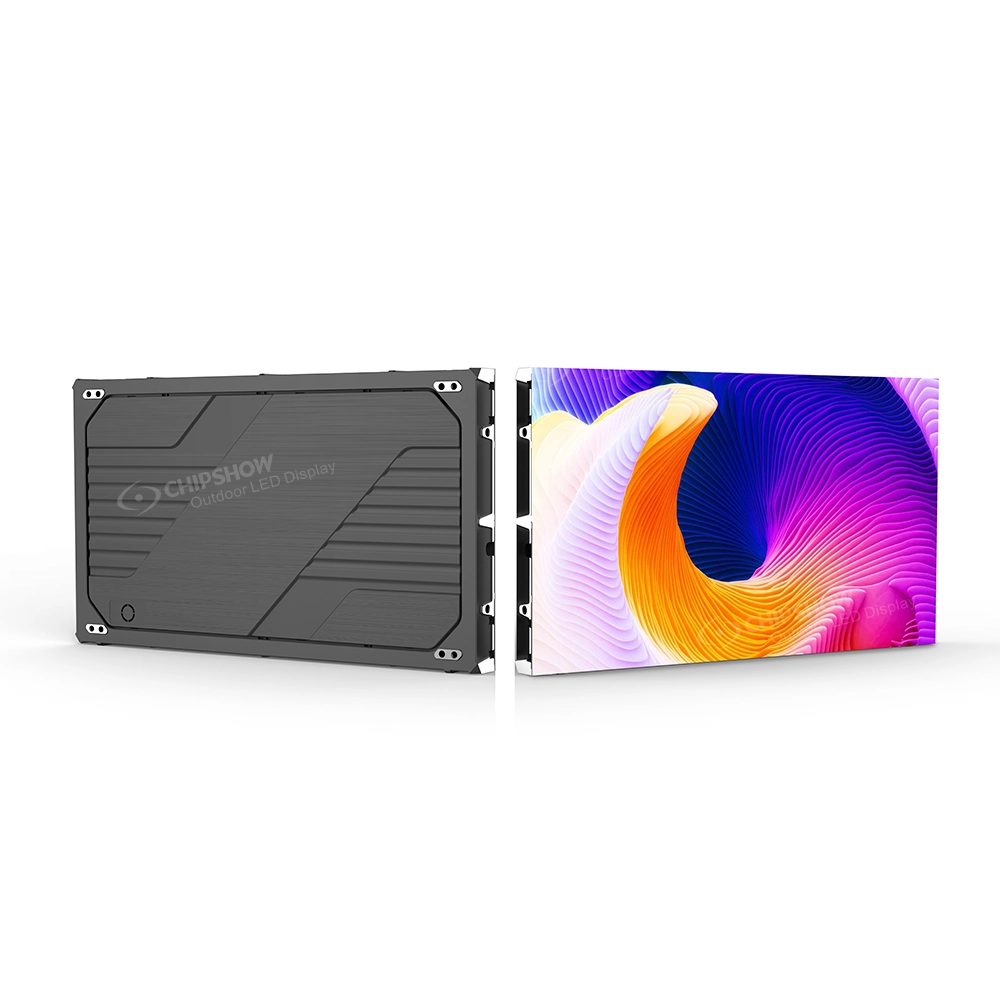
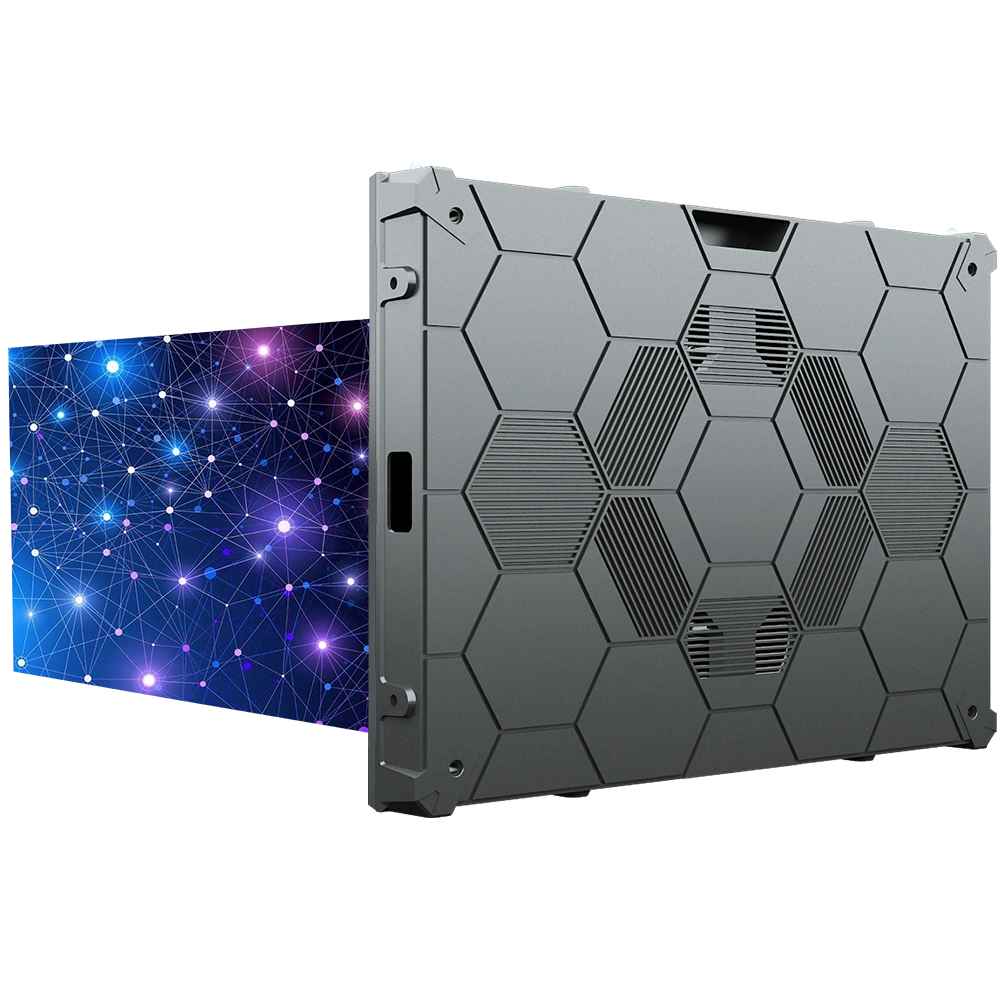
C-Max SMD/COB: Indoor Fine-Pitch Displays
C-Max serves the indoor permanent-installation path.
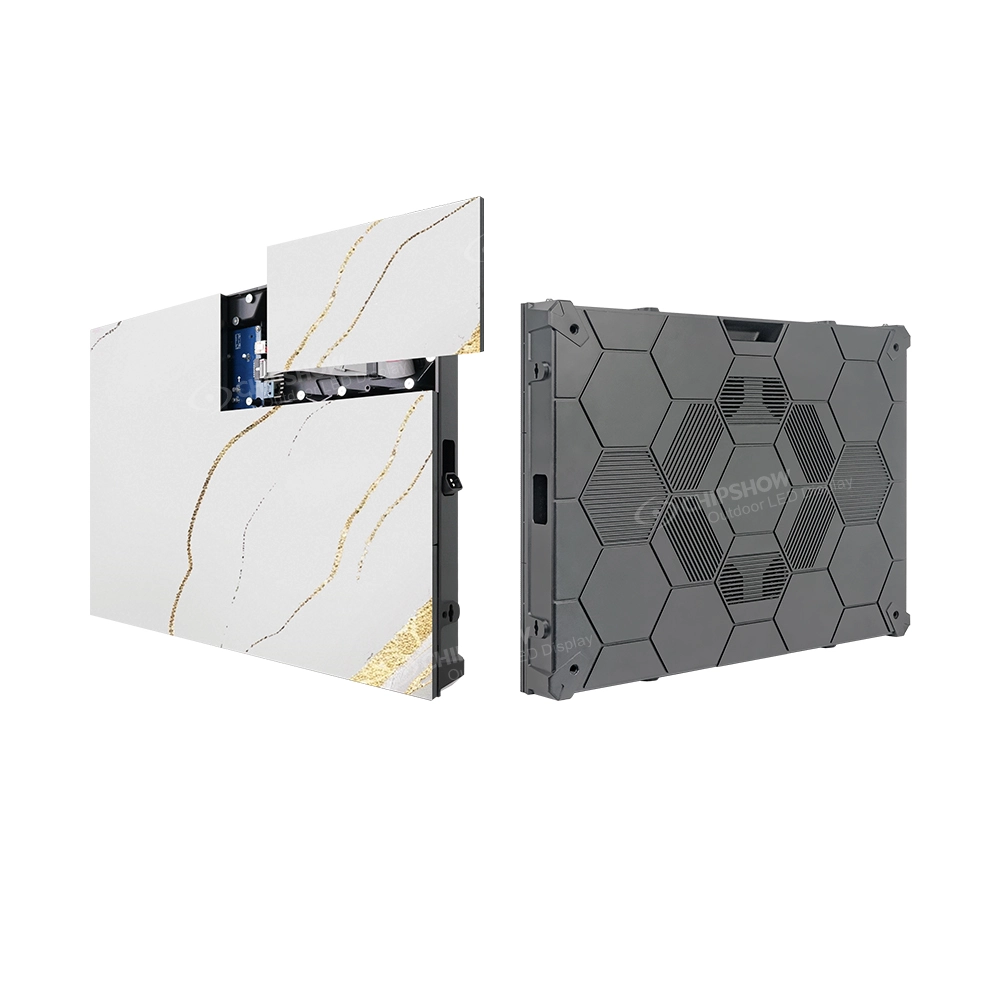
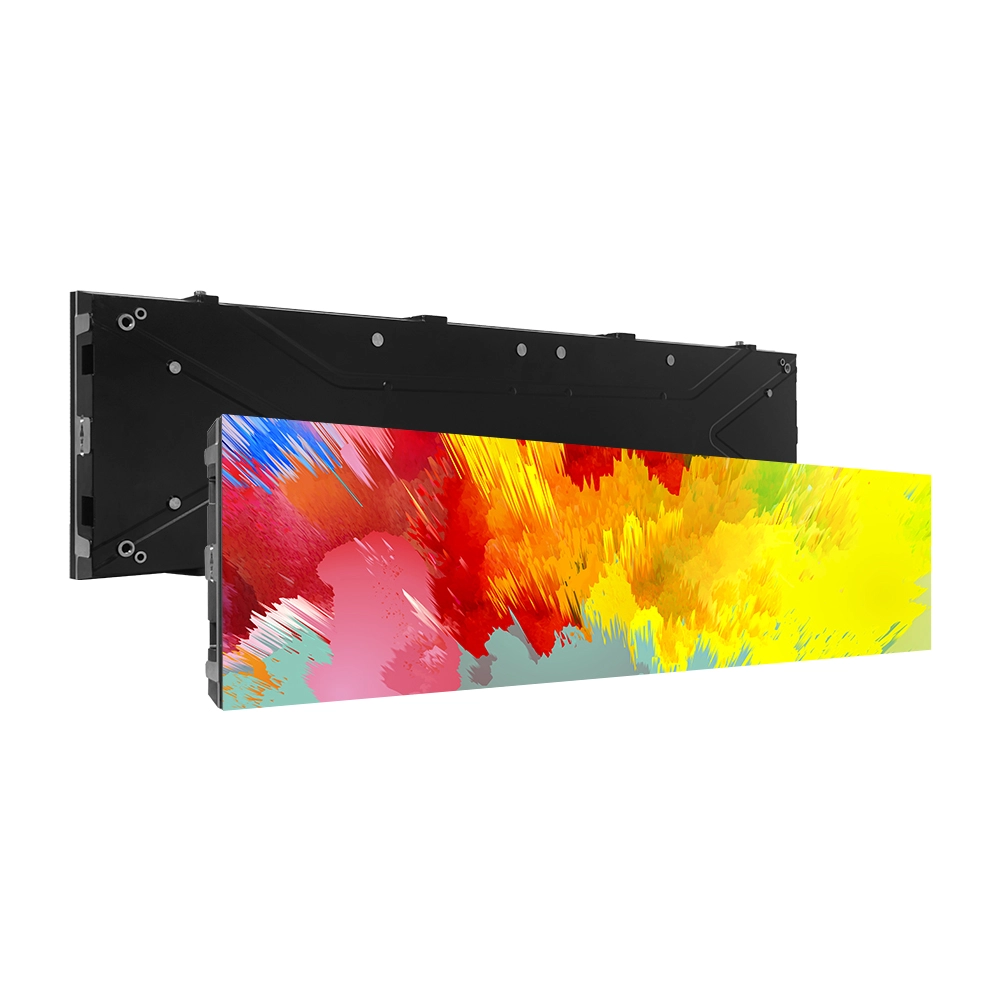
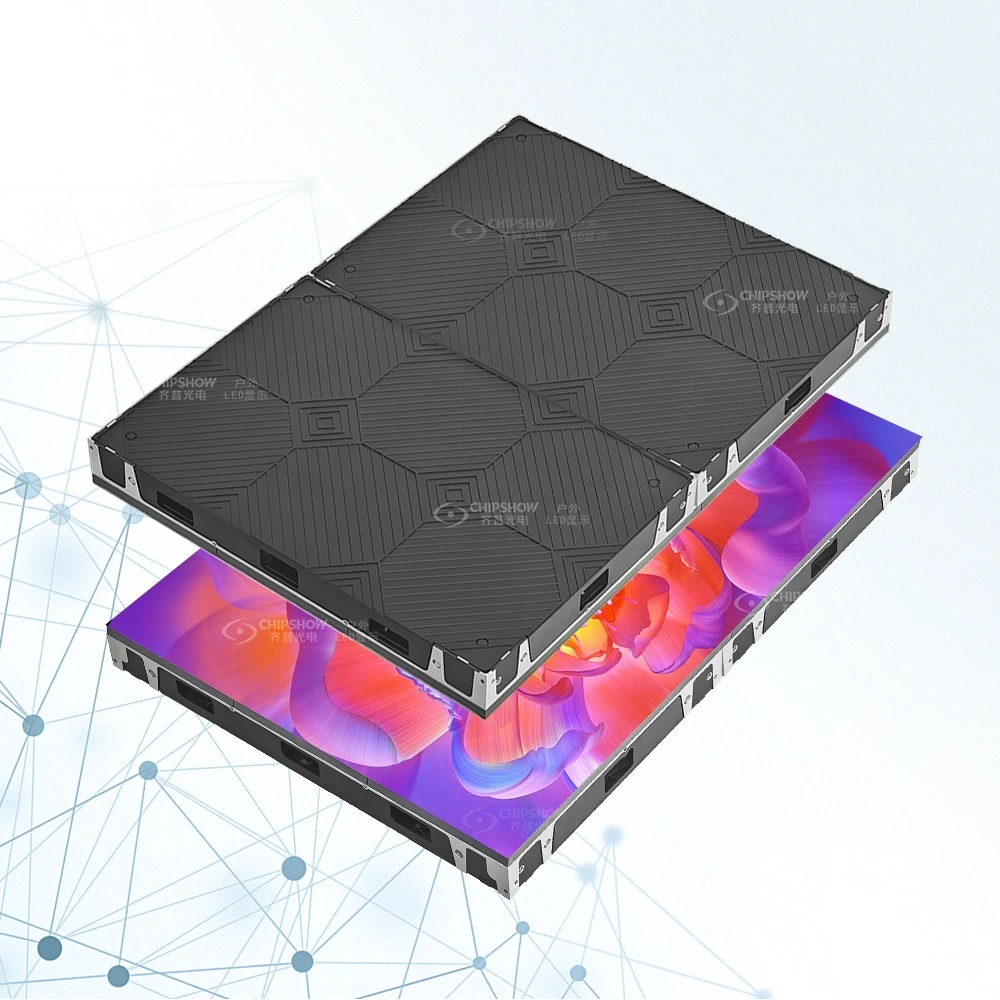
Fine-pitch SMD and COB configurations make it relevant to close-viewing environments such as corporate spaces, command environments, houses of worship and premium indoor venues.
Its front-service approach also supports projects where the display sits close to an architectural wall and rear maintenance space is limited.
COB configurations add surface protection advantages for applications where audiences or staff can come close to the display.
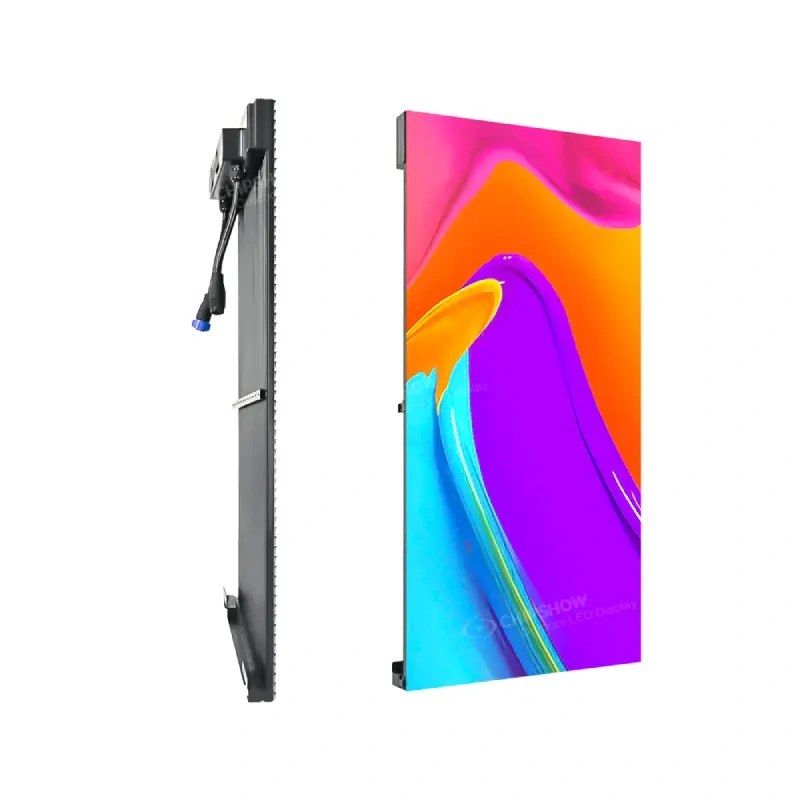
C-Shine Plus: Event and Rental
C-Shine Plus belongs in the rental and stage route.
Rental buyers should evaluate it around crew workflow, repeated assembly, camera use, cabinet handling and the types of event geometries their fleet needs to create.
The commercial value comes from how efficiently the hardware moves through repeated productions, not merely from how it performs during a single installation.
C-Rock: Outdoor Event and Touring
C-Rock addresses demanding rental and touring environments where outdoor operation, repeated handling and structural confidence are important.
This places it closer to event production than permanent DOOH.
Even when an outdoor festival screen and an outdoor billboard operate under similar weather, the hardware spends its life very differently. One may remain fixed for years; the other may be transported and rebuilt every week.
Procurement should reflect that distinction.
C-Carbon: Lightweight Touring Applications
C-Carbon focuses on projects where hardware weight has an outsized impact on rental economics.
Reducing panel mass can influence transportation, rigging effort and crew workflow across repeated deployments.
That value becomes more significant as screen size and deployment frequency increase.
The product therefore makes the most sense when the buyer evaluates lifetime fleet utilization rather than only initial cabinet cost.
Specification Selection Matrix
The matrix below should route the project toward the correct specification family. Exact pixel pitch, brightness, refresh rate, IP protection, cabinet weight and certification should always come from the specification documents for the quoted model.
| Application | Recommended Product Route | Primary Image Priority | Operational Priority | Environment / Structure | Deployment Type |
|---|---|---|---|---|---|
| Stadium perimeter / sports | C-Sport | Viewing distance, motion and camera performance | Reliability, redundancy planning and service recovery | Sports-specific safety and mechanical integration | Permanent / venue use |
| Outdoor DOOH / billboard | C-Slim / C-Fit Easy | Sunlight readability and advertising visibility | TCO, energy use and maintainability | Weather, wind and fixed structure | Permanent |
| Large media facade | C-Vent | Long-distance visibility | Stable long-term operation | Airflow, facade load and wind exposure | Permanent |
| Indoor venue / worship / commercial AV | C-Max SMD/COB | Fine-pitch clarity, contrast and grayscale | Front service and AV integration | Controlled indoor environment | Permanent |
| Event / concert / rental | C-Shine Plus / C-Rock | Camera performance and audience viewing distance | Fast rigging and repeated handling | Temporary indoor or outdoor environment | Temporary |
| Lightweight touring build | C-Carbon | Application-dependent | Transport and rigging efficiency | Repeated touring conditions | Temporary |
Once the project reaches the correct row, open the exact product specification rather than selecting hardware from the matrix alone.
Cost and Delivery Process
A reliable procurement process starts with project inputs, not cabinet quantity.
Chipshow first needs to understand the display application, physical width and height, minimum viewing distance, indoor or outdoor environment, mounting concept, installation schedule, camera use and control requirements.
Those inputs determine which hardware family deserves consideration.
The next step is to build the hardware bill of materials, or BOM.
The BOM can include LED cabinets or modules, agreed processing hardware, power and signal components, cables, mounting-related hardware and project spares.
At this stage, the team should also confirm whether the required configuration matches available California inventory or needs to enter a production schedule.
Once the selected hardware is confirmed, the BOM can be finalized and matched with product documentation before freight is released.
Site-specific structural engineering, permit submissions, electrical work and physical installation remain with the appropriate project professionals and contractors.
This separation matters to AV integrators.
Chipshow’s North American role is intentionally integrator-friendly: we manufacture and supply the LED hardware and support the technical hardware package rather than taking over the integrator’s installation contract or customer relationship.
That structure lets the integrator continue to own the project scope, labor relationship and project margin while working with manufacturer-backed LED hardware.
Freight planning also changes by application.
Permanent outdoor projects may focus on packaging, lifting and coordinated delivery to the construction site. Rental companies may pay much more attention to how the hardware will move repeatedly after the first shipment.
Spare-part planning should happen at the same time.
A venue should not wait until the first component issue to decide which modules, receiving components or power-related spares it needs readily available.
For detailed capital-cost comparisons, continue to the dedicated Cost and Investment Guide. For schedule-sensitive jobs, check current California inventory before the project team promises a hardware delivery date.
Trust & Compliance
In a U.S. commercial LED project, display performance and documentation have to travel together.
Electrical equipment may need applicable safety documentation from a Nationally Recognized Testing Laboratory, depending on the product, installation and Authority Having Jurisdiction. Project teams commonly encounter UL or ETL documentation during commercial submittals.
Electronic equipment may also need the applicable FCC Part 15 compliance documentation and device classification. The correct requirement should be checked against the actual product and use environment rather than assuming that one FCC classification applies to every project.
Outdoor work introduces additional structural, electrical, weather and permitting considerations. Indoor commercial projects can involve building, fire and electrical review as well. For standalone outdoor displays like a Monument Sign, Pylon Sign, or Outdoor Message Center, structural and compliance planning is equally critical.
The important procurement rule is simple: verify documents against the exact hardware in the BOM.
A certificate associated with one product cannot establish certification for an entire product portfolio. A test report for one configuration should not be extended automatically to another pitch, power architecture or model.
The same principle applies to IP ratings, brightness, refresh rate, weight and inventory.
Give the consultant, contractor, Building Inspector, Fire Marshal or other AHJ the documentation associated with the hardware actually being supplied.
Product documentation can support the submittal process, but local approval remains subject to the applicable code, project conditions and Authority Having Jurisdiction.
This is why the Chipshow Download Center and product-specific documentation should become part of procurement before the shipment reaches the jobsite, not an afterthought after installation begins.
Frequently Asked Questions
A College Arena Needs a Main Video Display
Begin with venue operations and broadcast requirements.
Map viewing distances, screen location, camera requirements, acceptable downtime and service access. Determine whether the project needs redundant signal or power architecture at the system level.
If the venue also needs field-level perimeter LED, treat that as a separate sports hardware requirement rather than assuming that the main video display and perimeter boards should use the same cabinet.
The goal is a coordinated venue system, not one universal panel.
An Outdoor Media Owner Is Replacing a Billboard
Move this project immediately into the Outdoor DOOH path.
Evaluate sunlight orientation, weather, energy consumption, structure, wind exposure and service access.
C-Slim, C-Fit Easy or C-Vent may become relevant depending on those site conditions.
Here, TCO and revenue-generating uptime deserve more attention than sports-specific broadcast or player-safety features.
An Event Company Is Expanding Its Rental Fleet
Start with the way the company earns revenue.
How many times will the panels travel each year? How many technicians normally complete load-in? How frequently does the screen appear on camera? Does the company build flat walls, outdoor stages or more complex temporary structures?
Those answers create a more useful comparison between C-Shine Plus, C-Rock and C-Carbon than initial cabinet price alone.
A panel that reduces repetitive labor or transportation burden can create value every time it leaves the warehouse.
A Church Wants a Permanent Seamless LED Wall
Start with viewing distance, room lighting, camera use, service access and operator workflow.
A C-Max configuration can be a more logical route than a rental cabinet when the screen will remain permanently integrated into the room.
The display should also fit the production team’s existing control environment instead of forcing volunteers into an unnecessarily complicated workflow.
A Schedule-Sensitive Project Needs Hardware Quickly
Start with the requirement, not the phrase “US stock.”
Send the application, screen dimensions, preferred pitch range, quantity and required date.
Chipshow can then compare the requirement with current California inventory and identify whether a stocked configuration fits the project.
That approach protects the schedule without making a blanket stock promise.
How do I choose between an indoor and outdoor jumbotron?
Start with the operating environment and audience distance. Outdoor systems must address sunlight, rain, dust, temperature changes and site-specific structural conditions. Indoor displays can prioritize finer pixel pitch, controlled luminance and closer viewing. If the project is a commercial billboard or media facade, move it into the DOOH specification path. If it serves live sports, evaluate broadcast, operational continuity and venue safety separately.
What specs matter most for a stadium or event jumbotron?
For sports, evaluate viewing distance, camera performance, brightness, signal and power reliability, service access and physical integration with the venue. For rental events, add cabinet weight, rigging speed, repeated handling and transportation. Pixel pitch and refresh rate matter in both applications, but the correct specification depends on the audience, camera workflow and deployment environment.
How much does a jumbotron hardware system cost?
There is no useful single price without screen dimensions and application requirements. Hardware cost changes with pixel pitch, total area, indoor or outdoor construction, processing, power hardware, spares and mounting requirements. The installed project budget can also include structural engineering, electrical work, permits, freight and labor. Build the hardware BOM first, then use the dedicated Jumbotron Cost Guide for detailed budget planning.
Which jumbotron products can ship from US stock?
Chipshow maintains selected hardware through its California Warehouse Hub, but inventory changes as projects ship. Exact availability should always be checked by product model, pixel pitch, quantity and required accessories. For a schedule-sensitive project, provide the screen dimensions, application and required date before the final specification is locked.
Who handles structural work, permits and on-site installation?
Chipshow focuses on LED hardware planning, manufacturer-backed equipment and applicable product documentation. Qualified project partners handle site-specific structural engineering, permit submissions, electrical work and installation according to the project’s contractual scope and local requirements. This hardware-focused model is designed to remain integrator-friendly rather than competing with AV integrators for installation revenue.
A successful jumbotron project does not start with the smallest pixel pitch or the biggest cabinet. It starts by specifying the hardware around the job the screen has to perform.
Ready to scope your sign? The USA LED sign selector walks through viewing distance, format and layout in one pass.