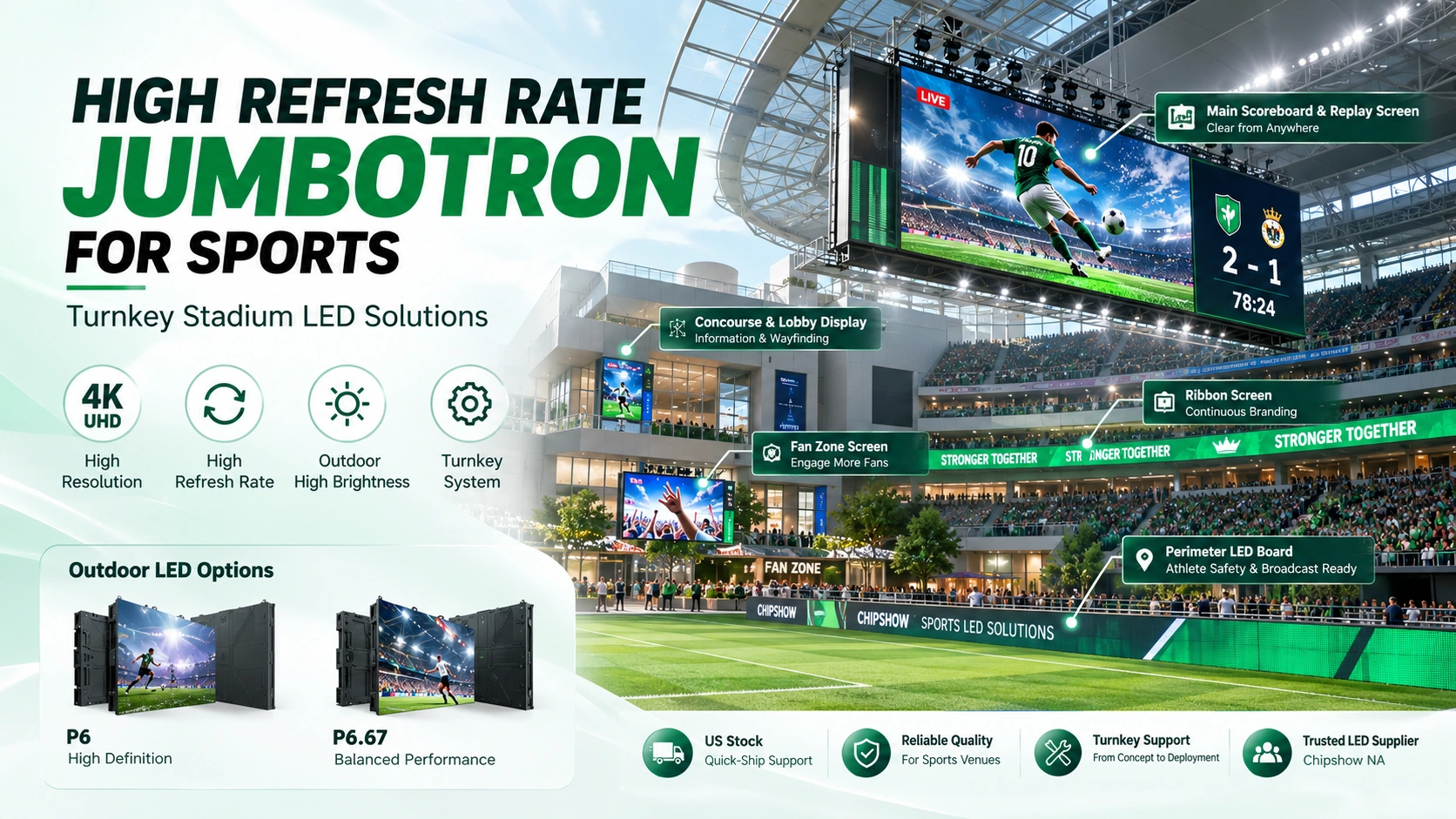
A stadium can invest heavily in LED and still end up with the wrong screen in the wrong part of the venue.
The main replay screen, field level perimeter boards, fan zone display, concourse wall and sponsor ribbon do not perform the same job. They serve different viewing distances, camera positions, brightness conditions, safety requirements and maintenance routines.
Treating all of them as one generic stadium jumbotron creates problems quickly.
A cabinet designed to protect athletes at field level should not automatically become the main scoreboard. A large outdoor replay screen should not inherit the same specification as an indoor concourse wall. A fan zone that needs live video and sponsor content may require a completely different hardware architecture from the perimeter boards surrounding the field.
For stadium operators, school districts, college and professional sports AV teams and sports integrators, procurement should therefore begin with the display roles inside the venue.
Chipshow approaches sports projects from that system level.
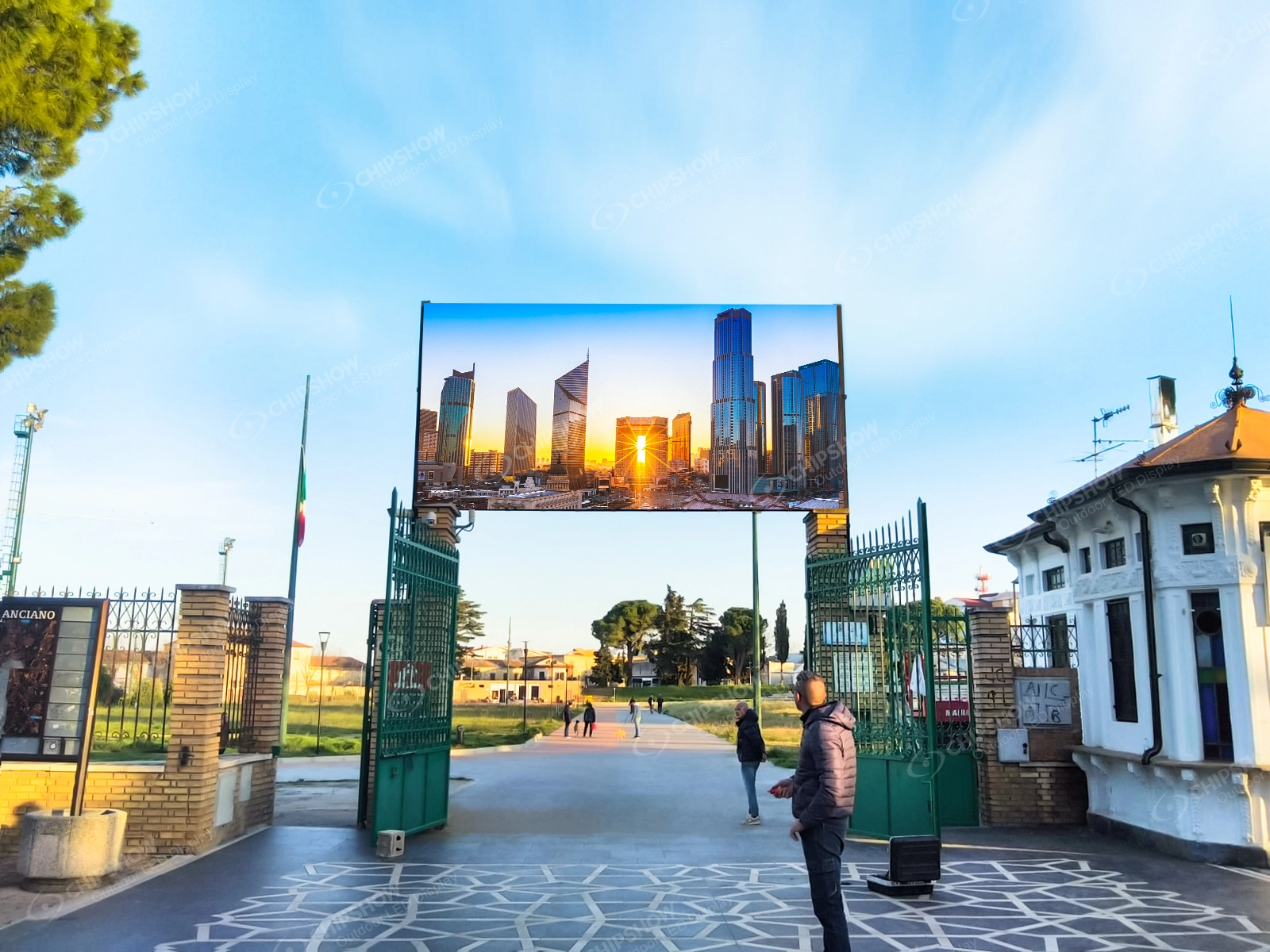
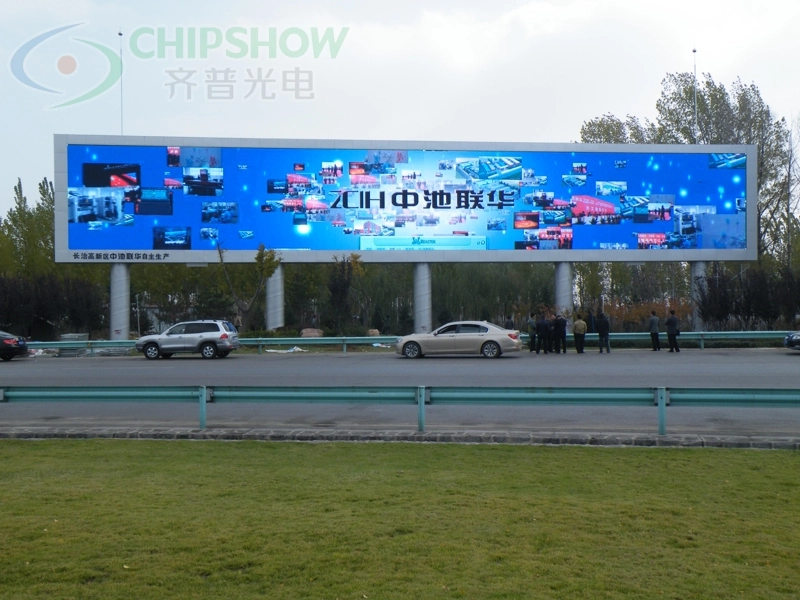
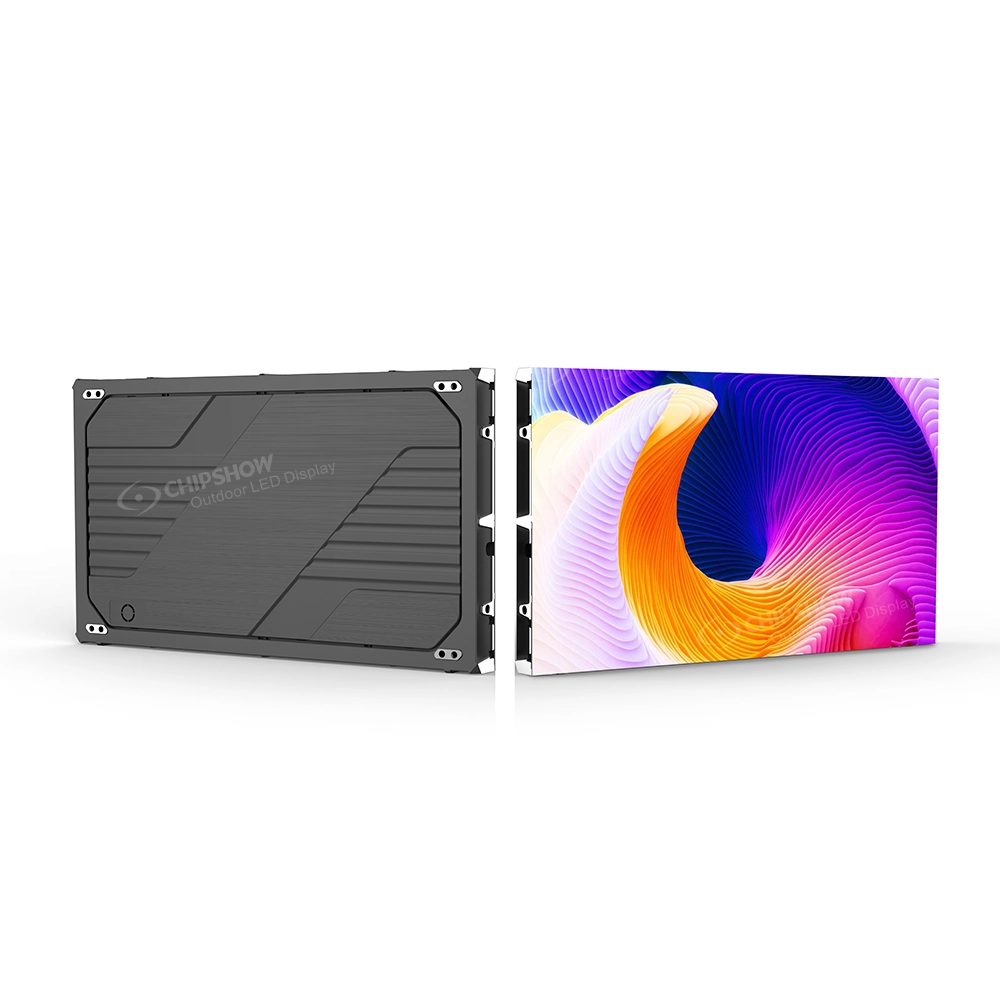
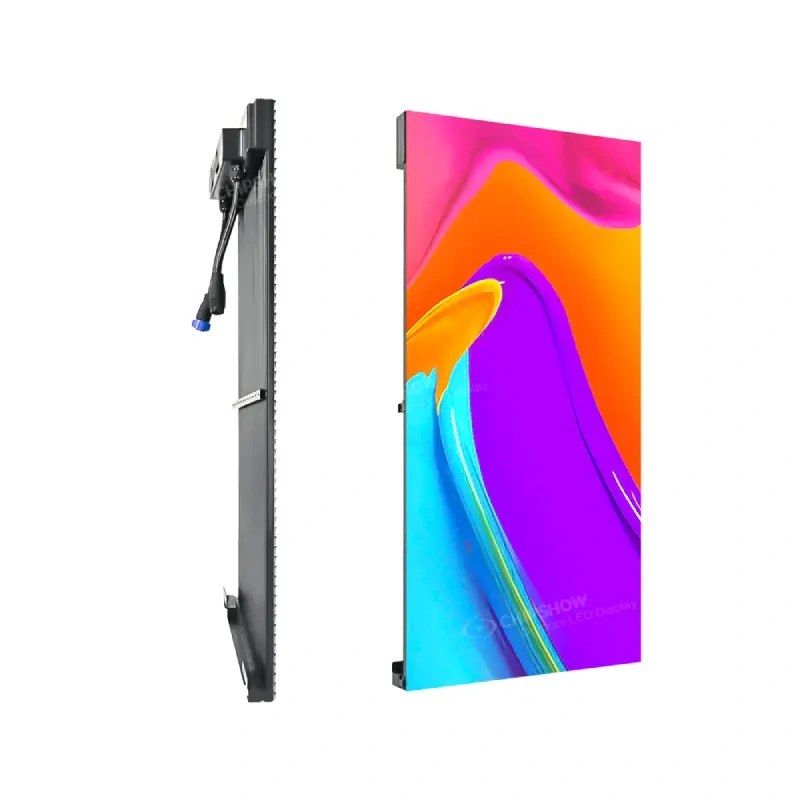
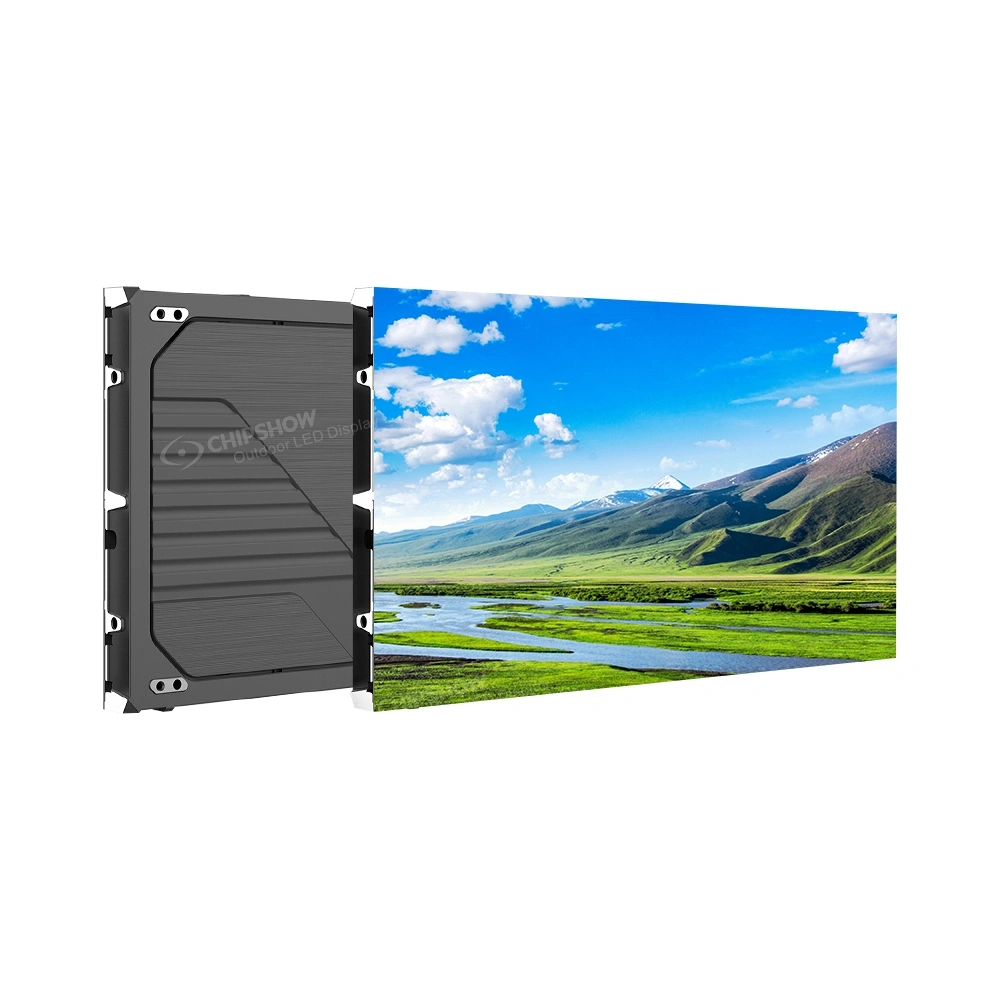
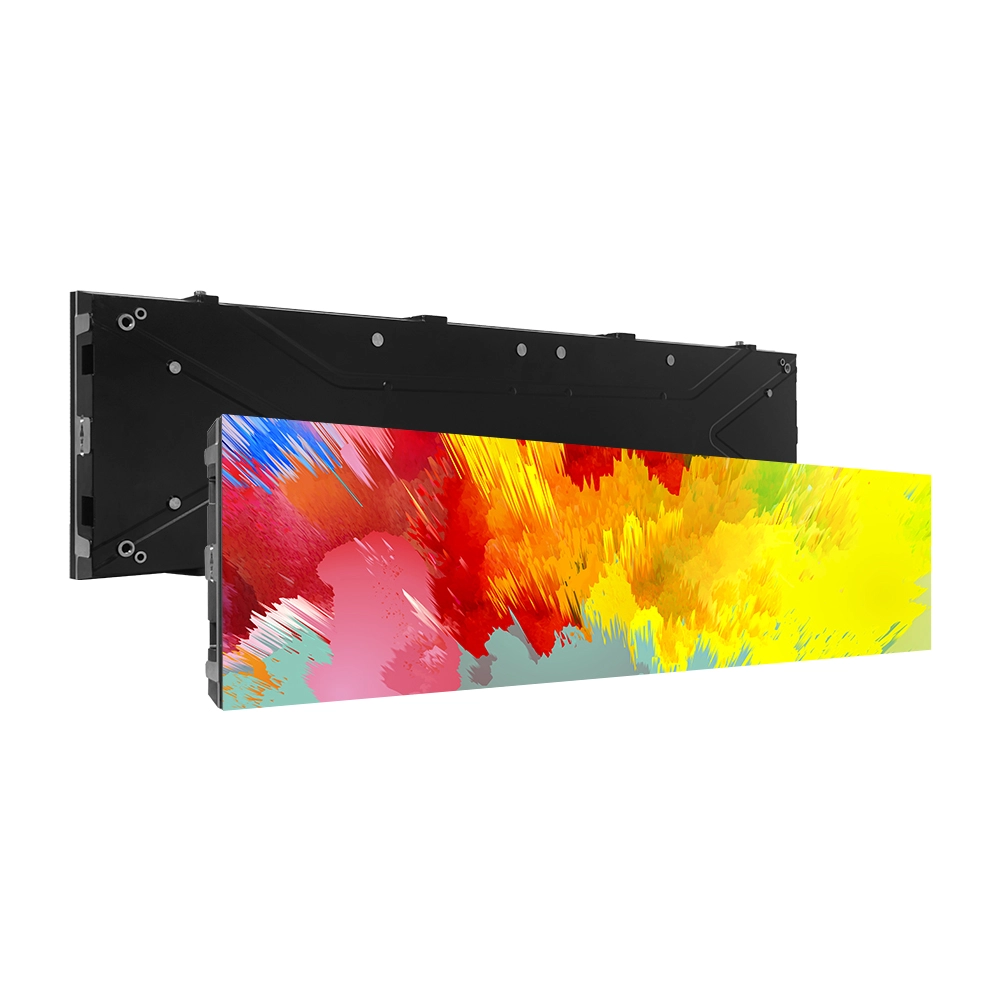
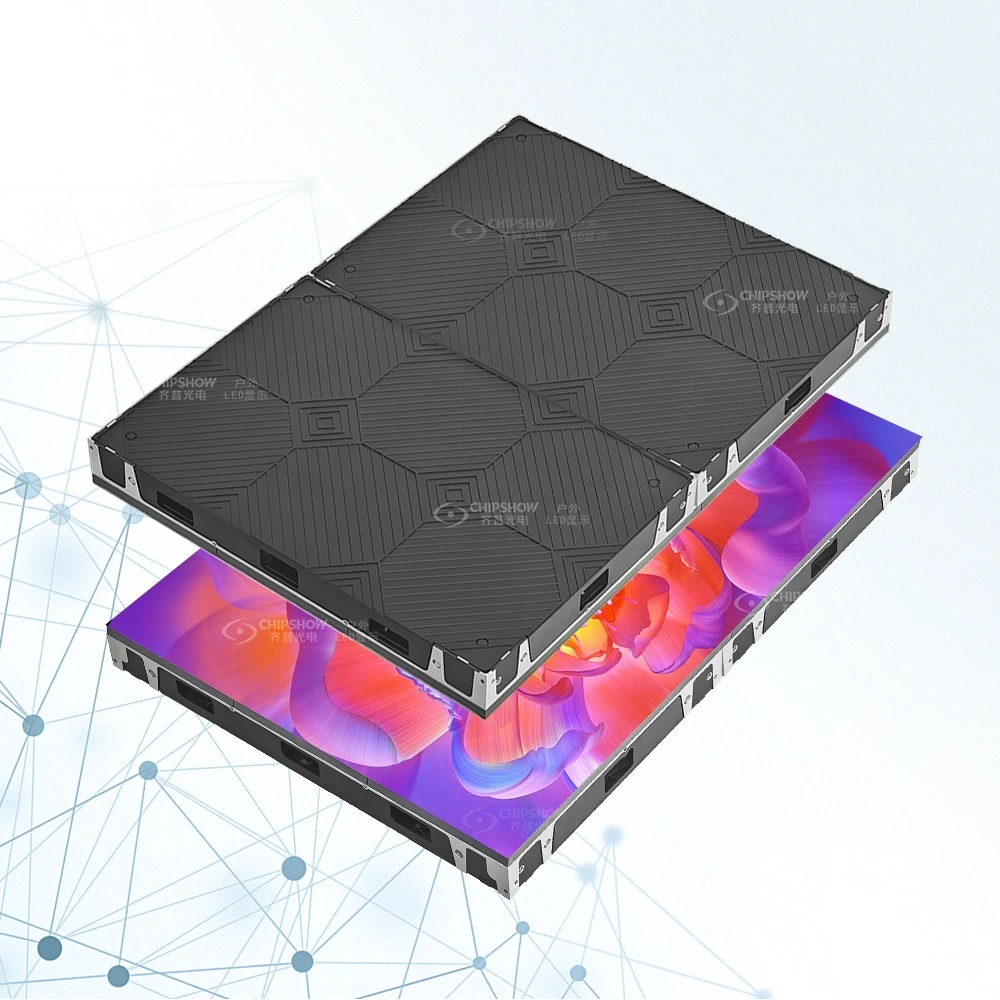
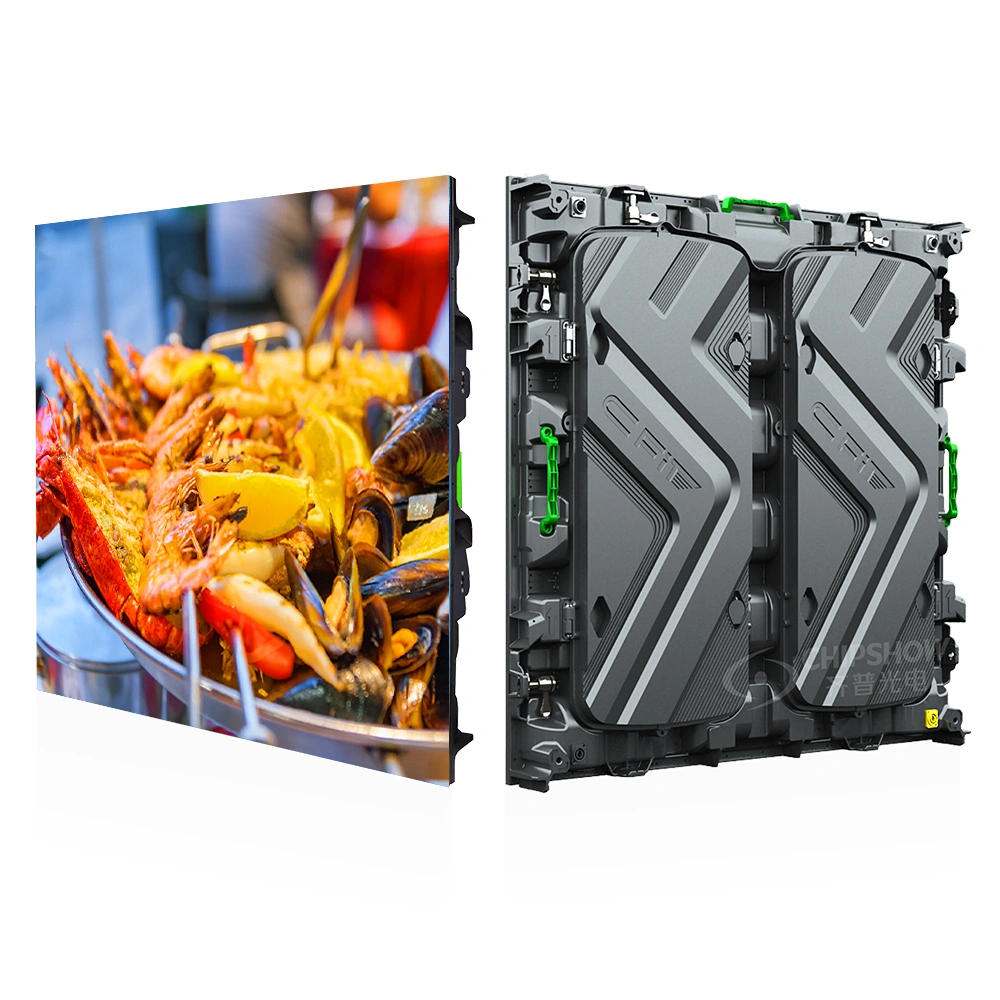
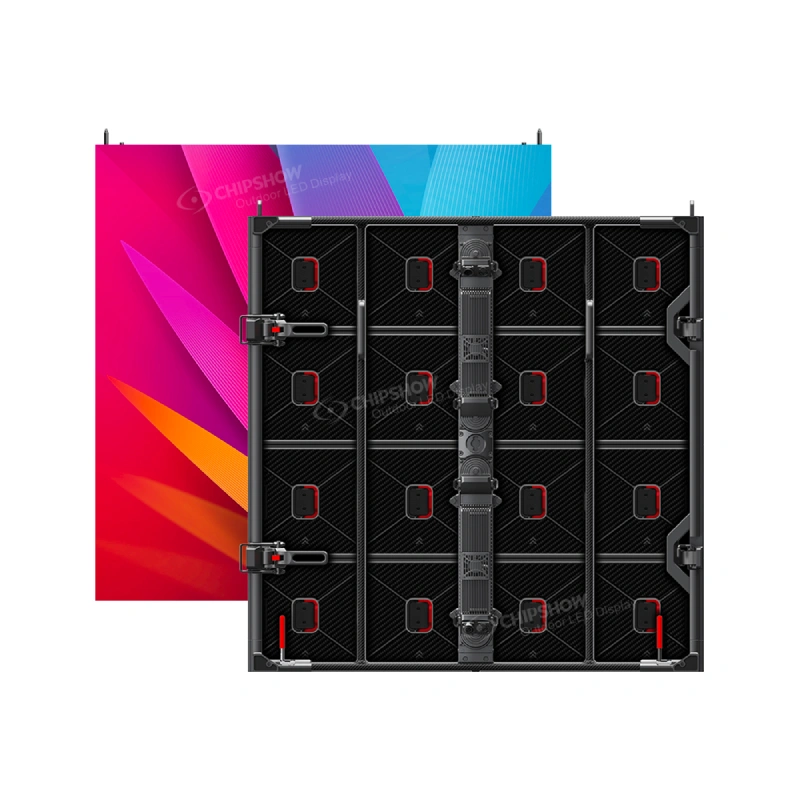
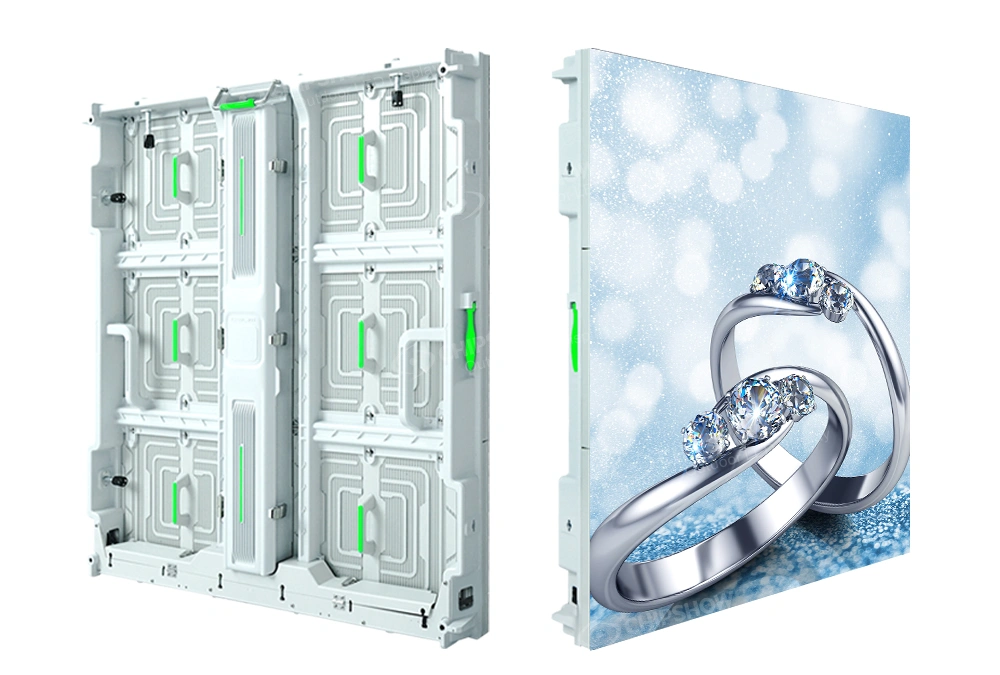
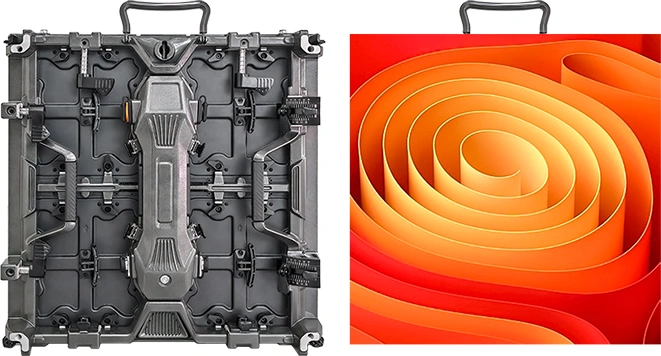
C-Sport P8 is purpose built for stadium perimeter applications where athlete safety, broadcast performance and outdoor visibility have to exist in the same hardware platform. Main outdoor scoreboard and replay applications can instead be evaluated around fixed outdoor platforms such as C-Slim or C-Fit when their pitch, brightness, structure and service architecture fit the venue.
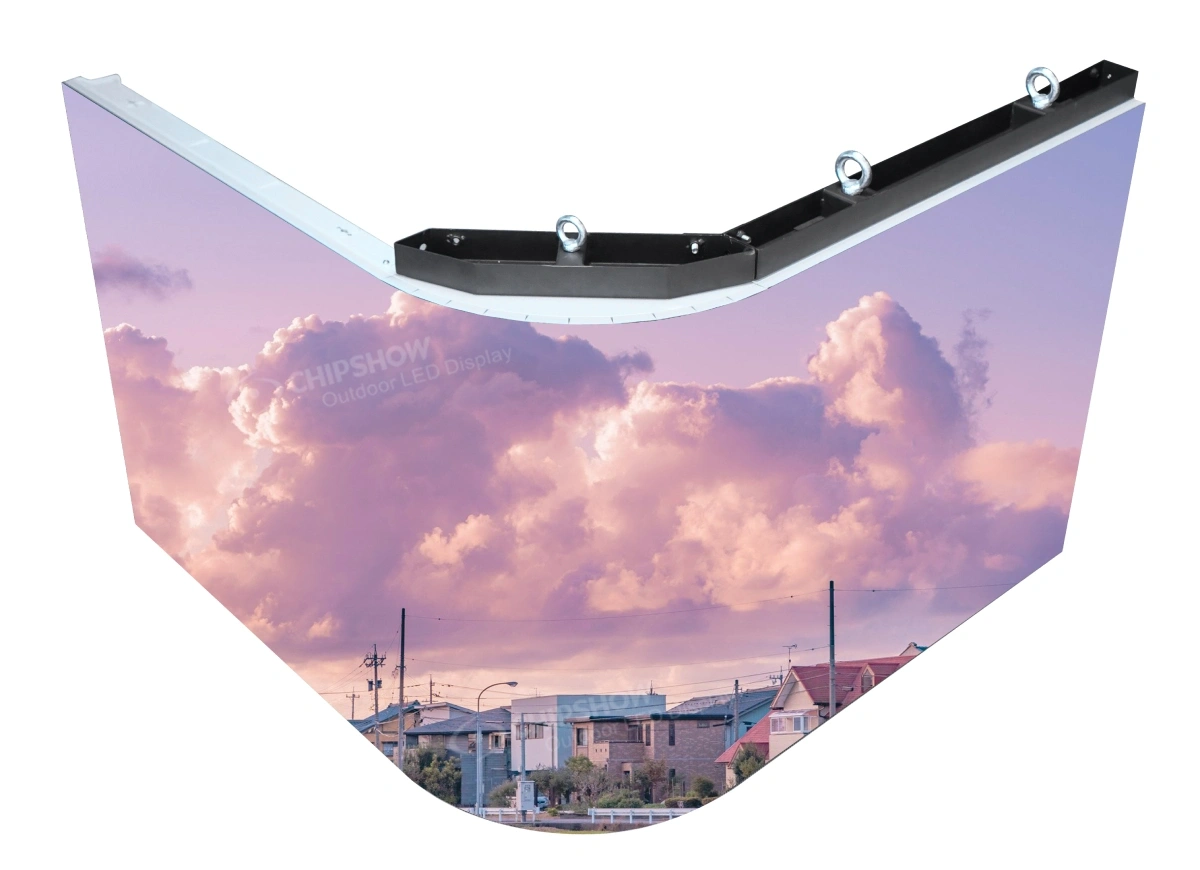
Indoor arena displays, concourse walls, fan zones and secondary sponsor screens should be routed according to their own viewing and operating conditions rather than forced onto the perimeter platform.
The sports system should define the hardware instead of one product defining the entire sports system.
For North American projects, Chipshow supplies the manufacturer side LED hardware, technical information and agreed hardware package. The local sports integrator and qualified project teams retain structural engineering, electrical work, venue data integration, physical installation and the field scopes included in their contracts.
That division gives the venue access to manufacturer backed sports hardware without putting Chipshow in competition with the integrator responsible for delivering the project.
Every Sports Display Has a Different Job
A modern venue can contain several LED systems that spectators casually describe as jumbotrons.
From a procurement perspective, those systems need to be separated before specifications are compared.
| Display Role | Primary Job | Main Engineering Priorities | Chipshow Hardware Direction |
|---|---|---|---|
| Main scoreboard and replay screen | Scores live video replay and major sponsor content | Long viewing distance resolution brightness structure uptime and service access | Fixed outdoor platforms such as C-Slim or C-Fit can be evaluated for outdoor applications while indoor arena screens require project specific architecture |
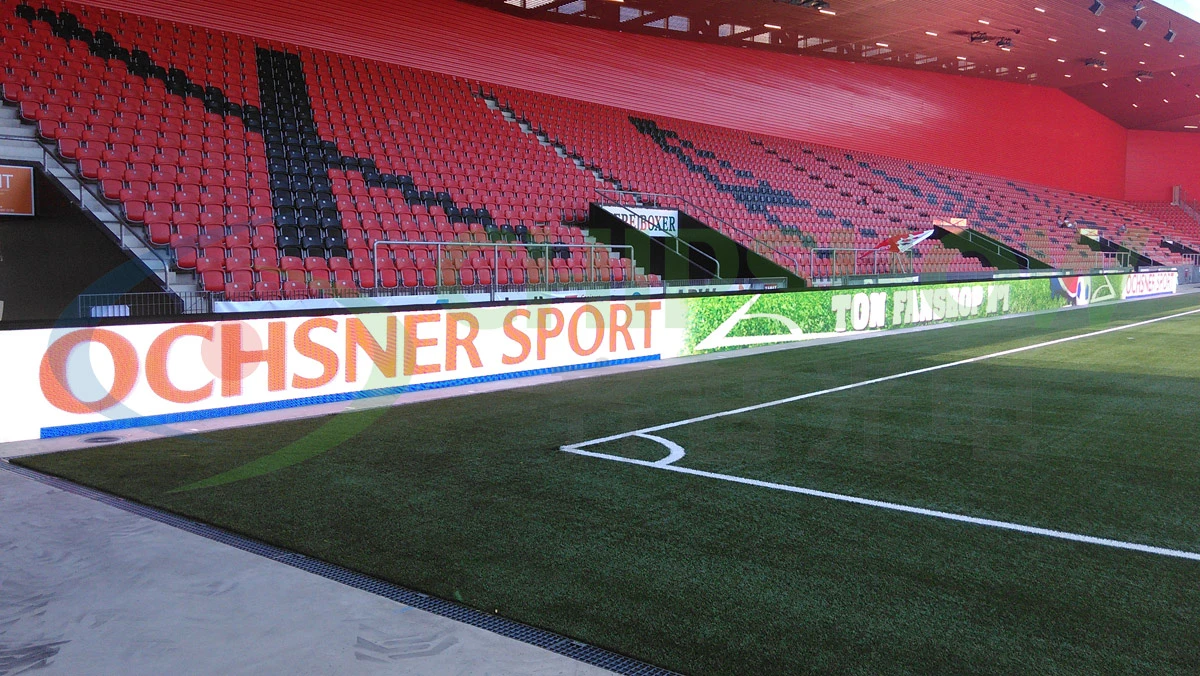
| Perimeter boards | Field level sponsorship and broadcast exposure | Athlete safety high refresh outdoor visibility fast deployment and service | C-Sport P8 |
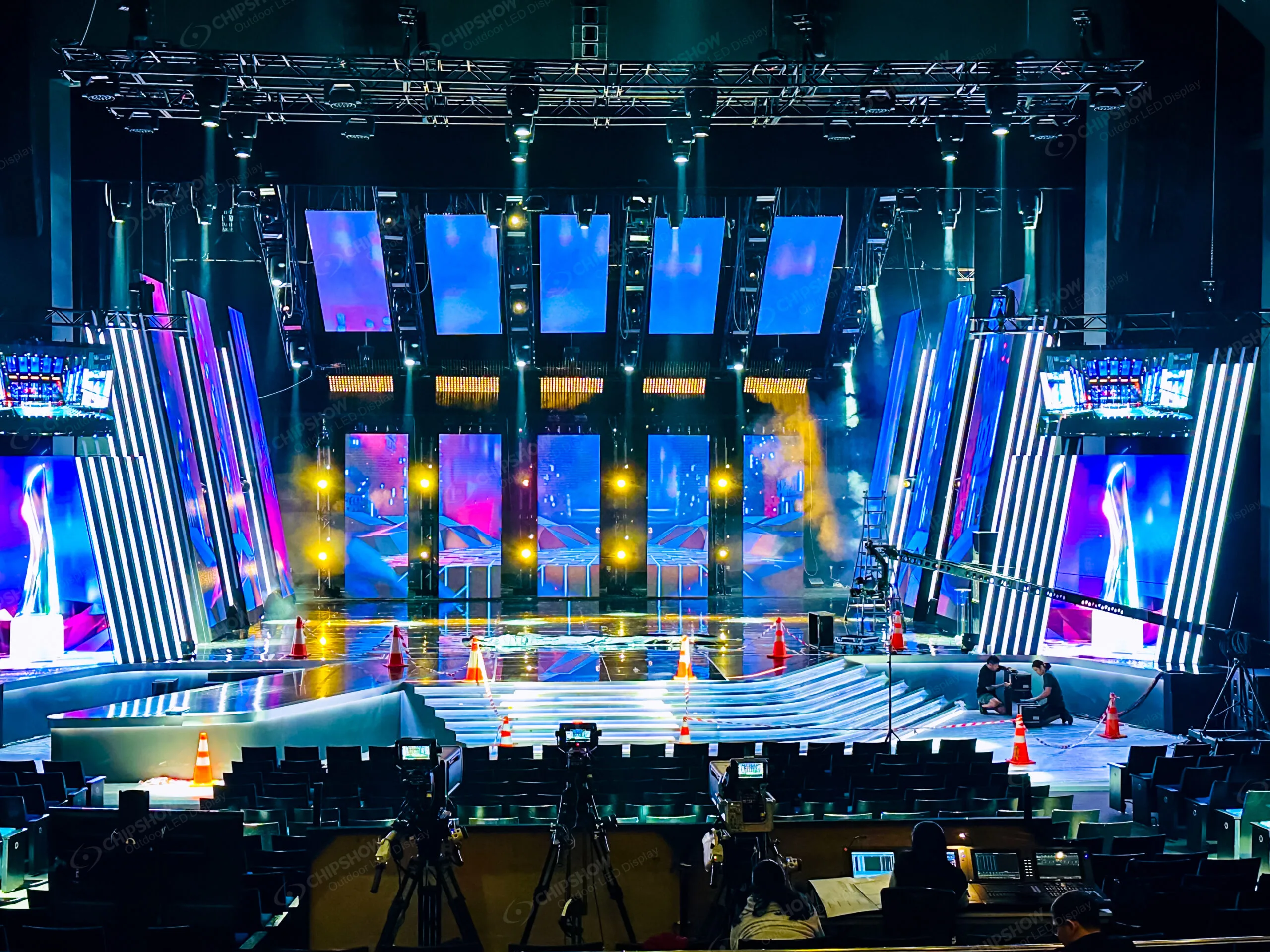
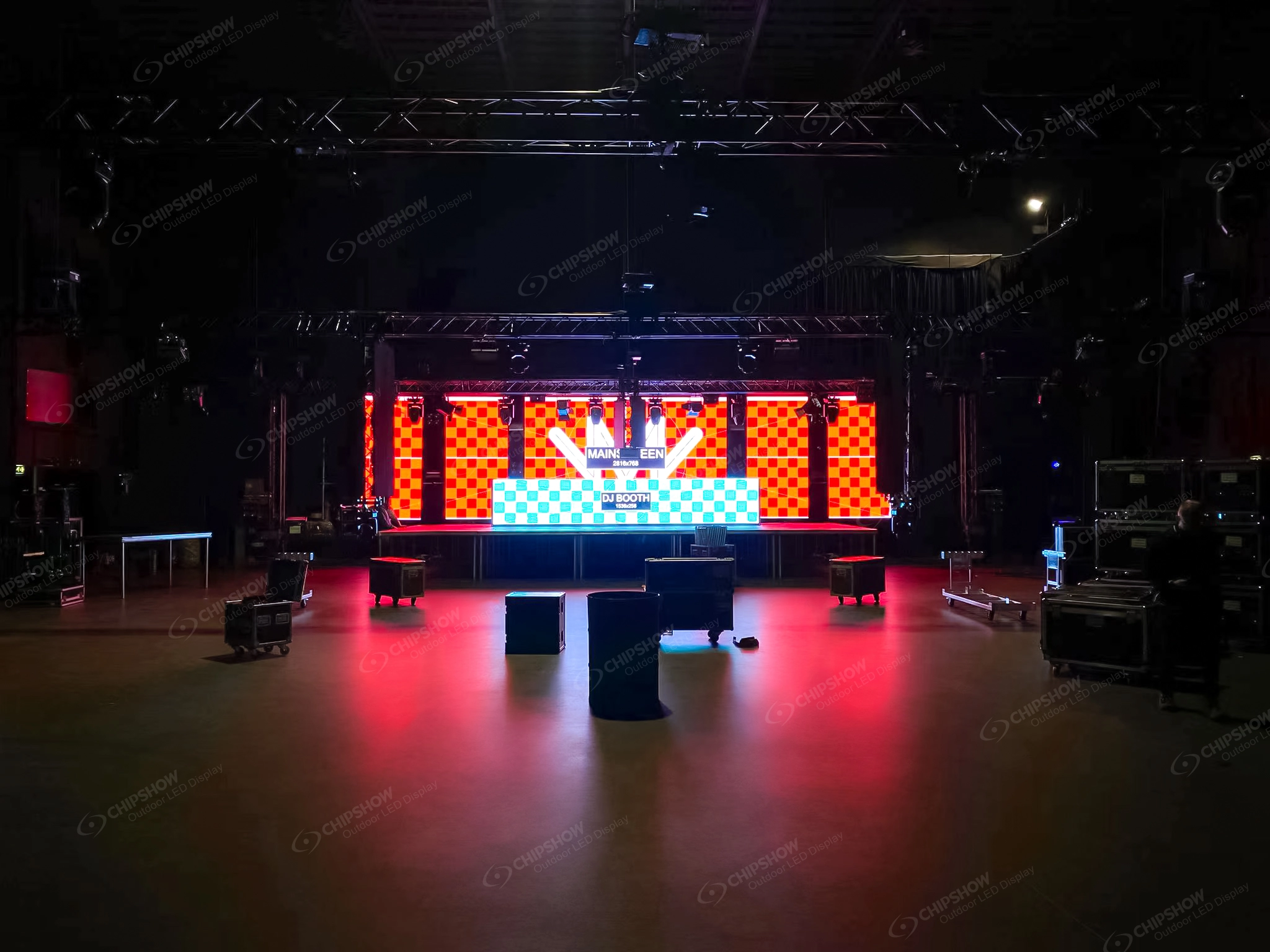
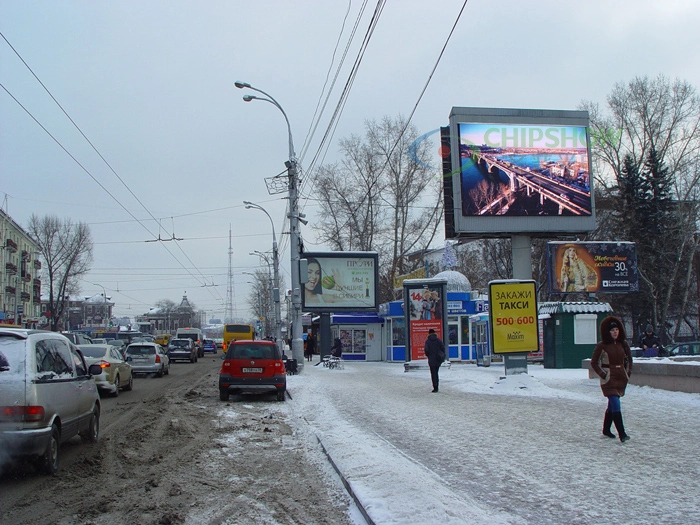
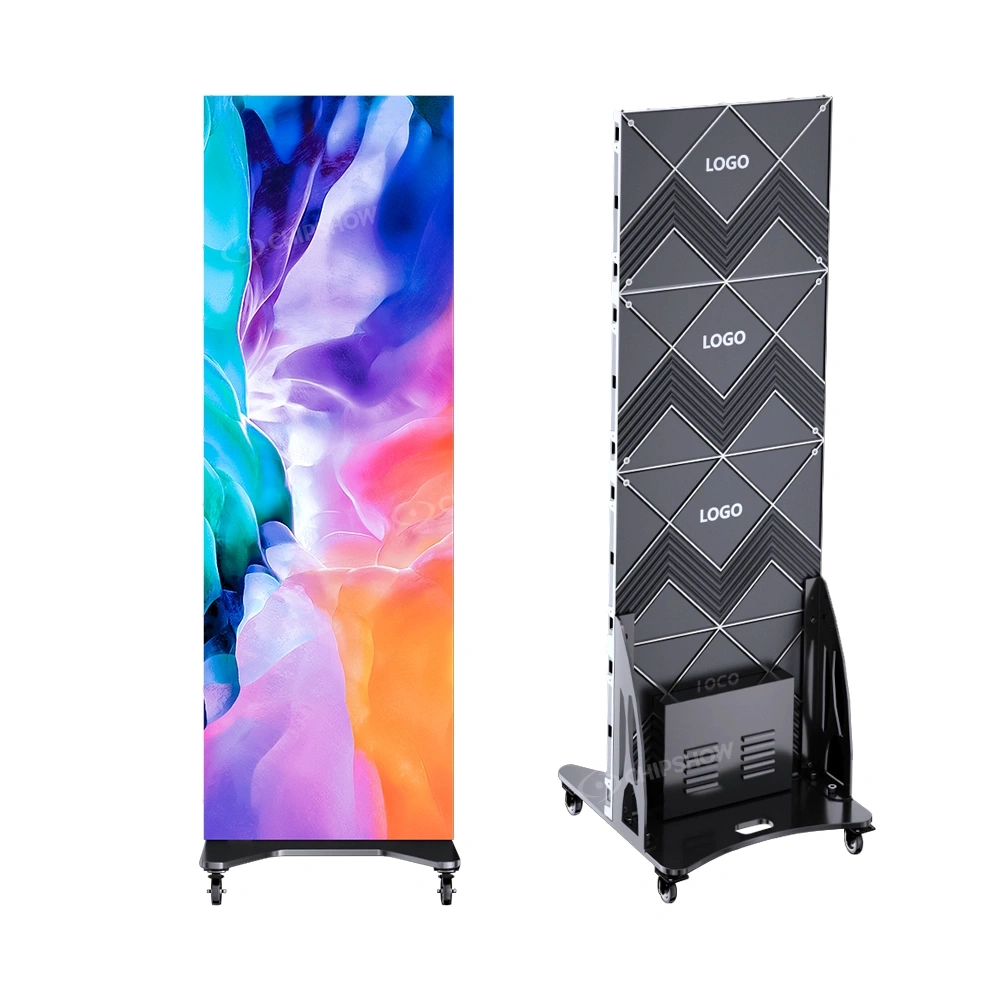
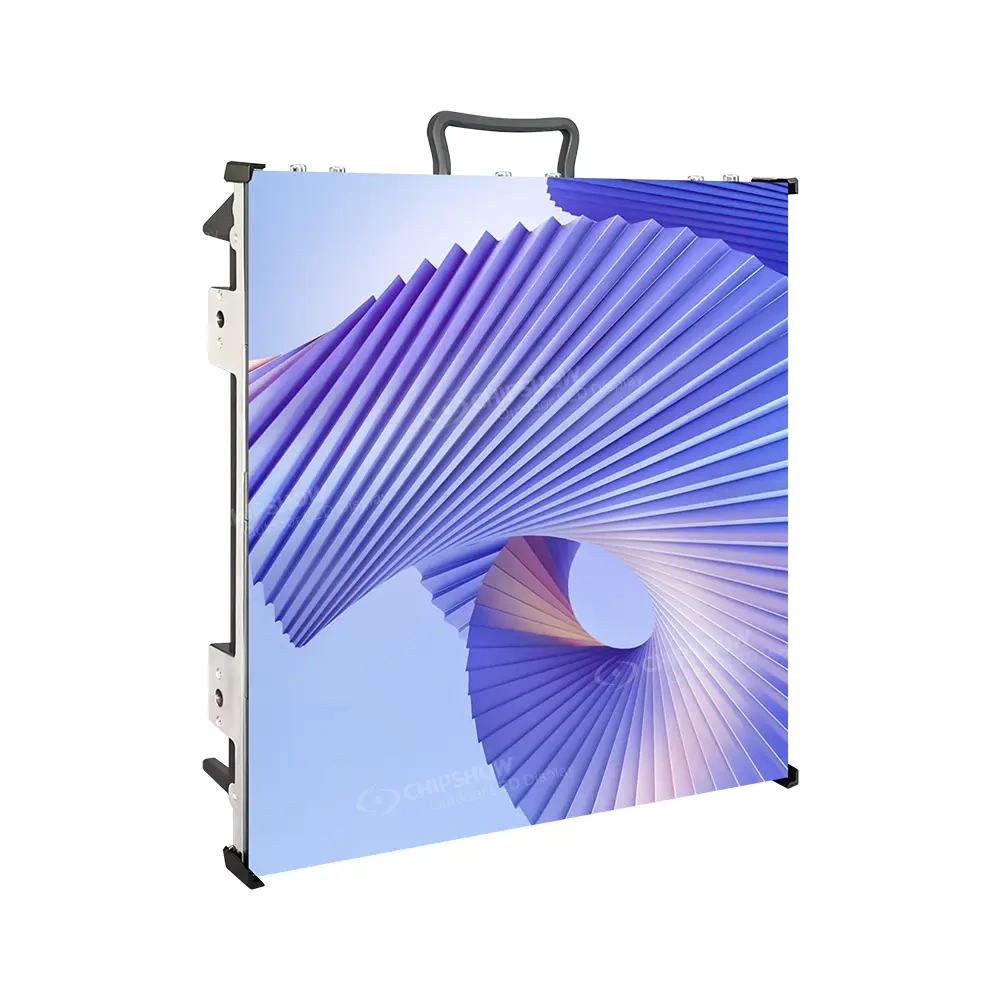
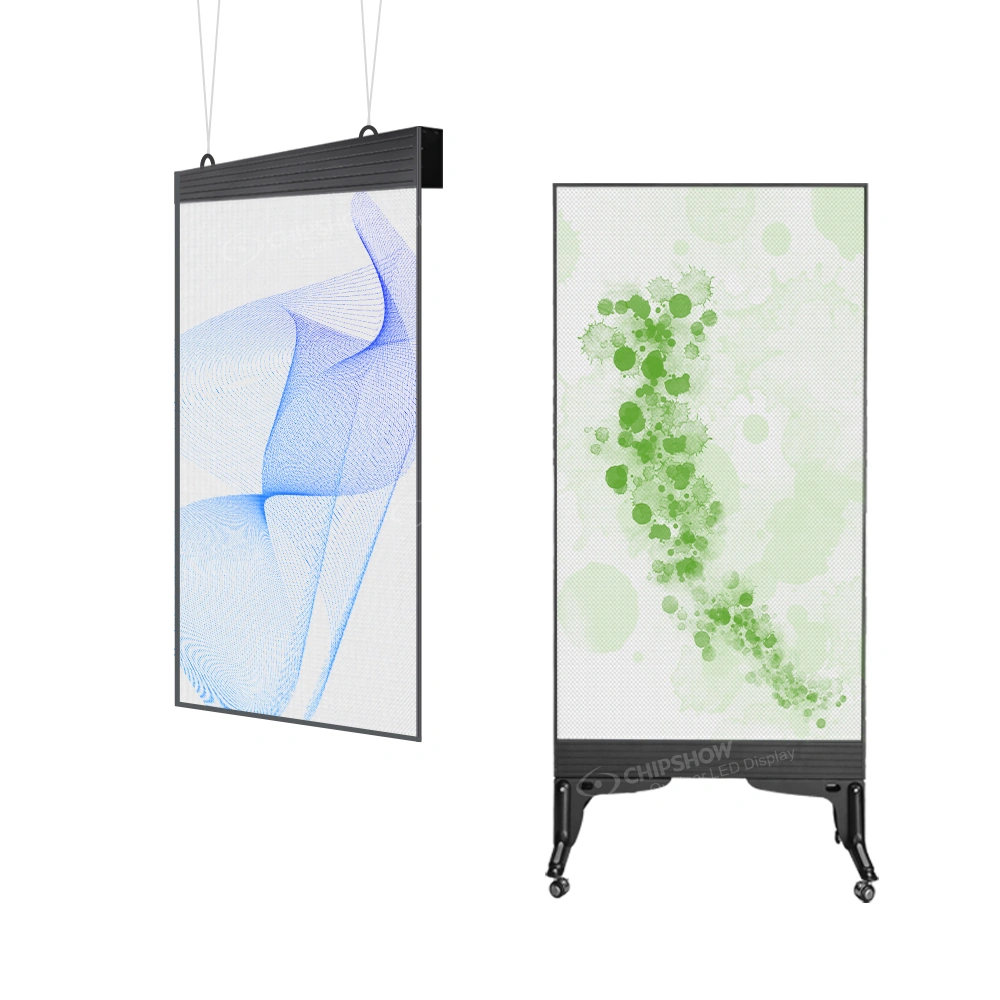
| Fan zone screens | Live program sponsor activation and crowd engagement outside the bowl | Viewing distance daylight camera use permanent or temporary deployment | Select fixed outdoor or event hardware according to the actual deployment |
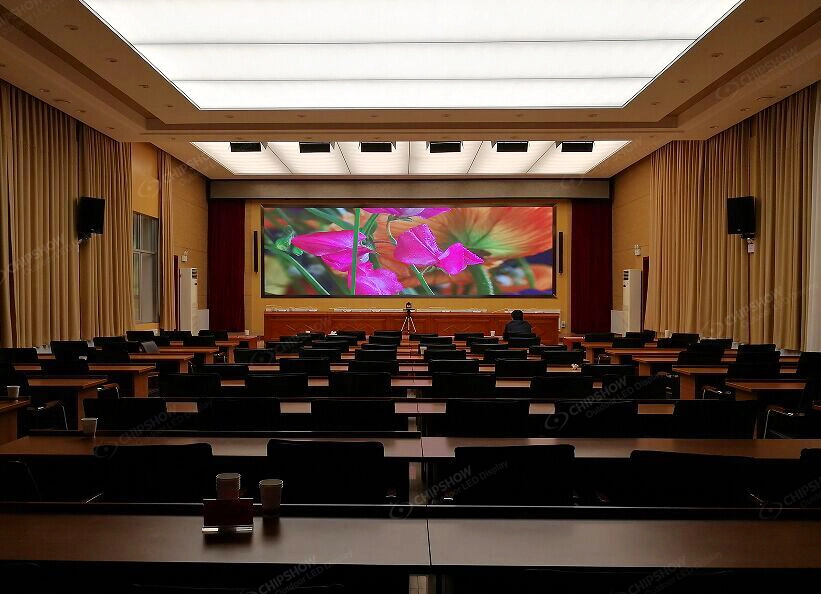
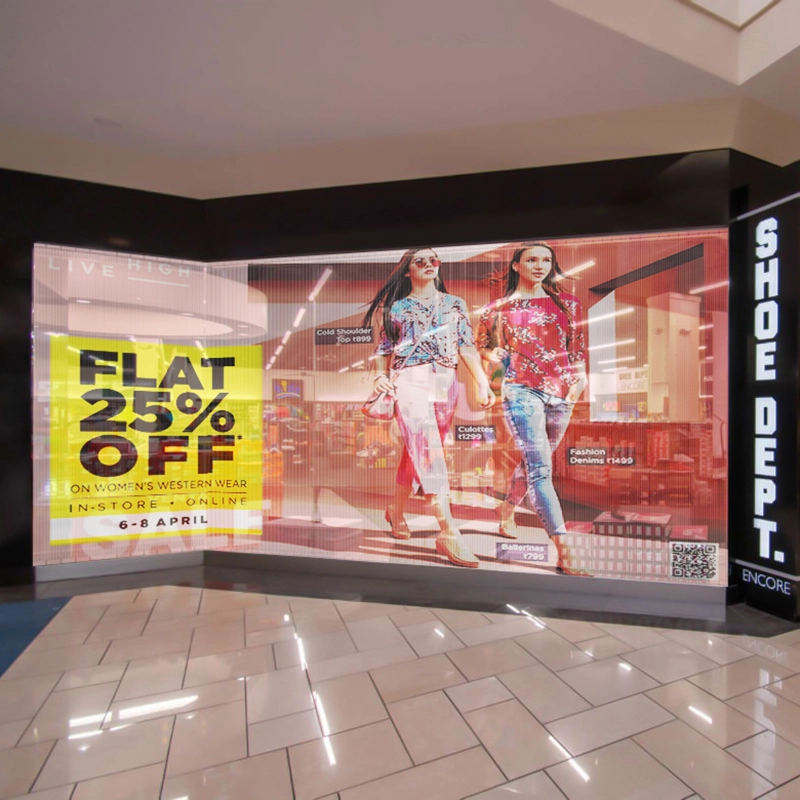
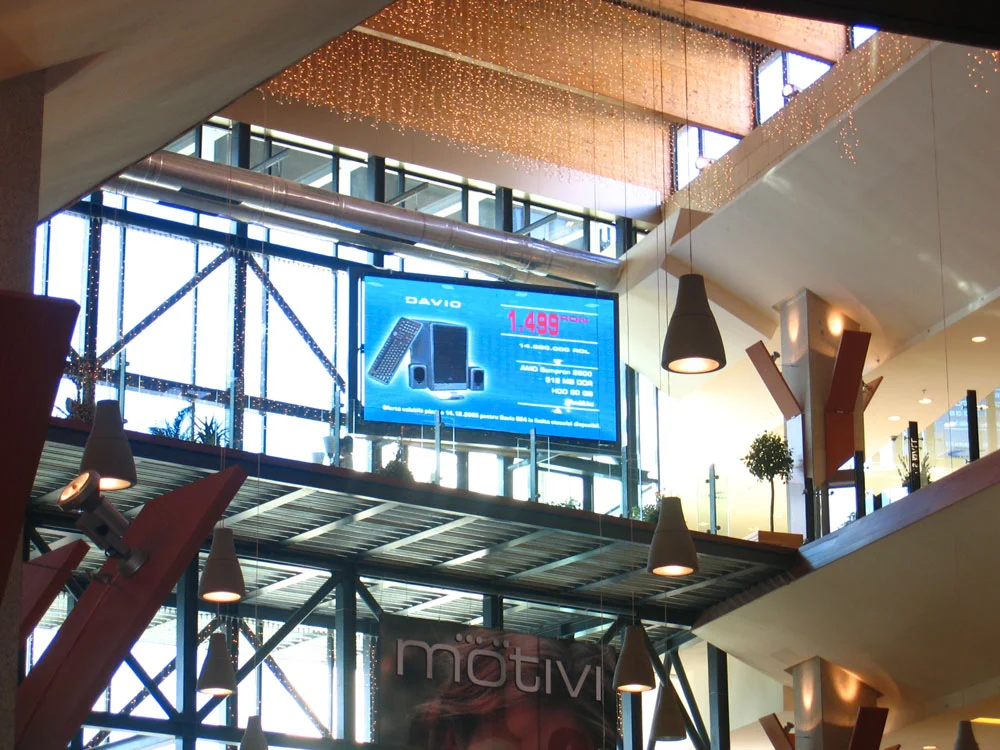
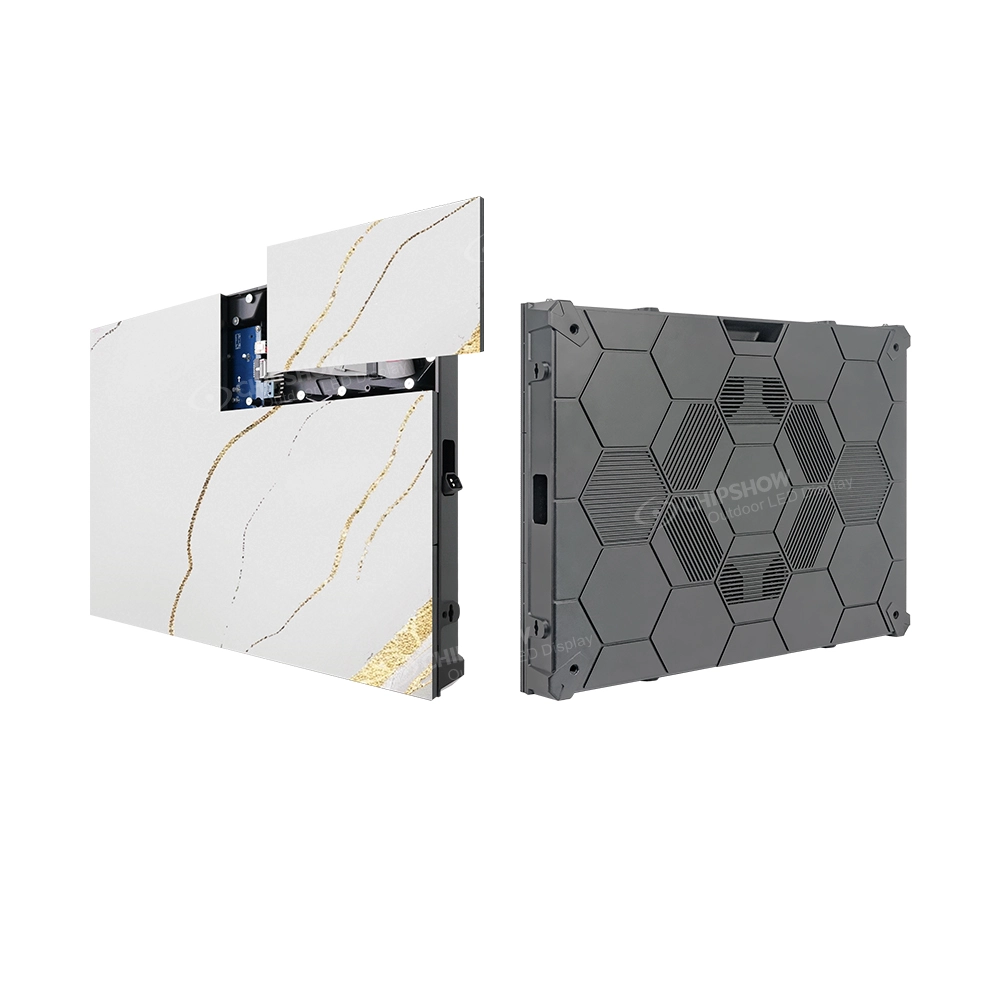
| Concourse and lobby displays | Information sponsor content live feeds and wayfinding | Closer viewing indoor image detail service access and architectural integration | Select indoor fixed hardware around the room and viewing distance |
| Secondary sponsor and ribbon screens | Continuous branding scores statistics and supporting content | Geometry visibility service access content flow and camera exposure | Project specific sports display architecture |
The objective is not to create five separate purchasing processes.
It is to stop one specification from spreading into parts of the venue where it does not belong.
Main Scoreboard and Replay Screens
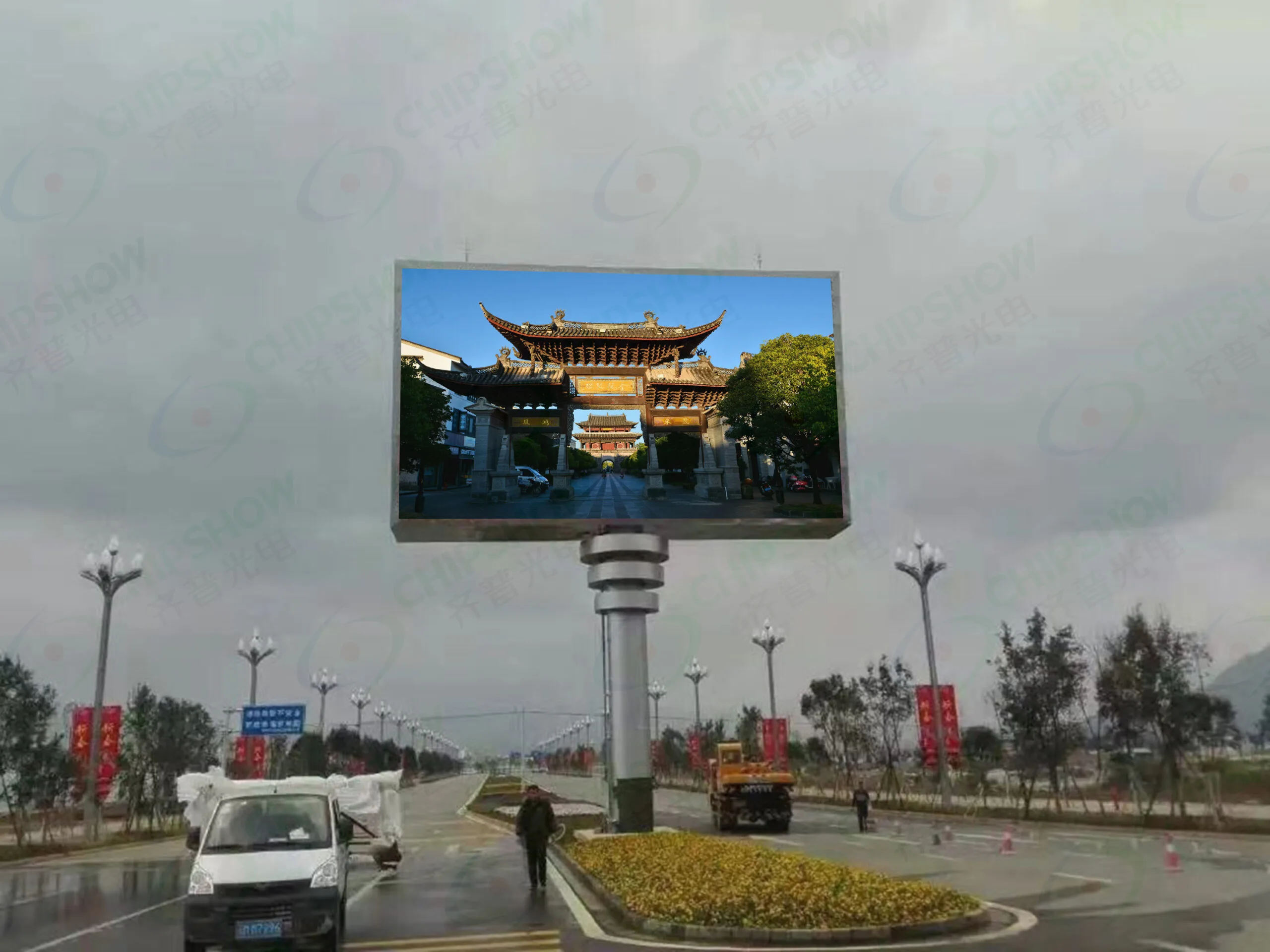
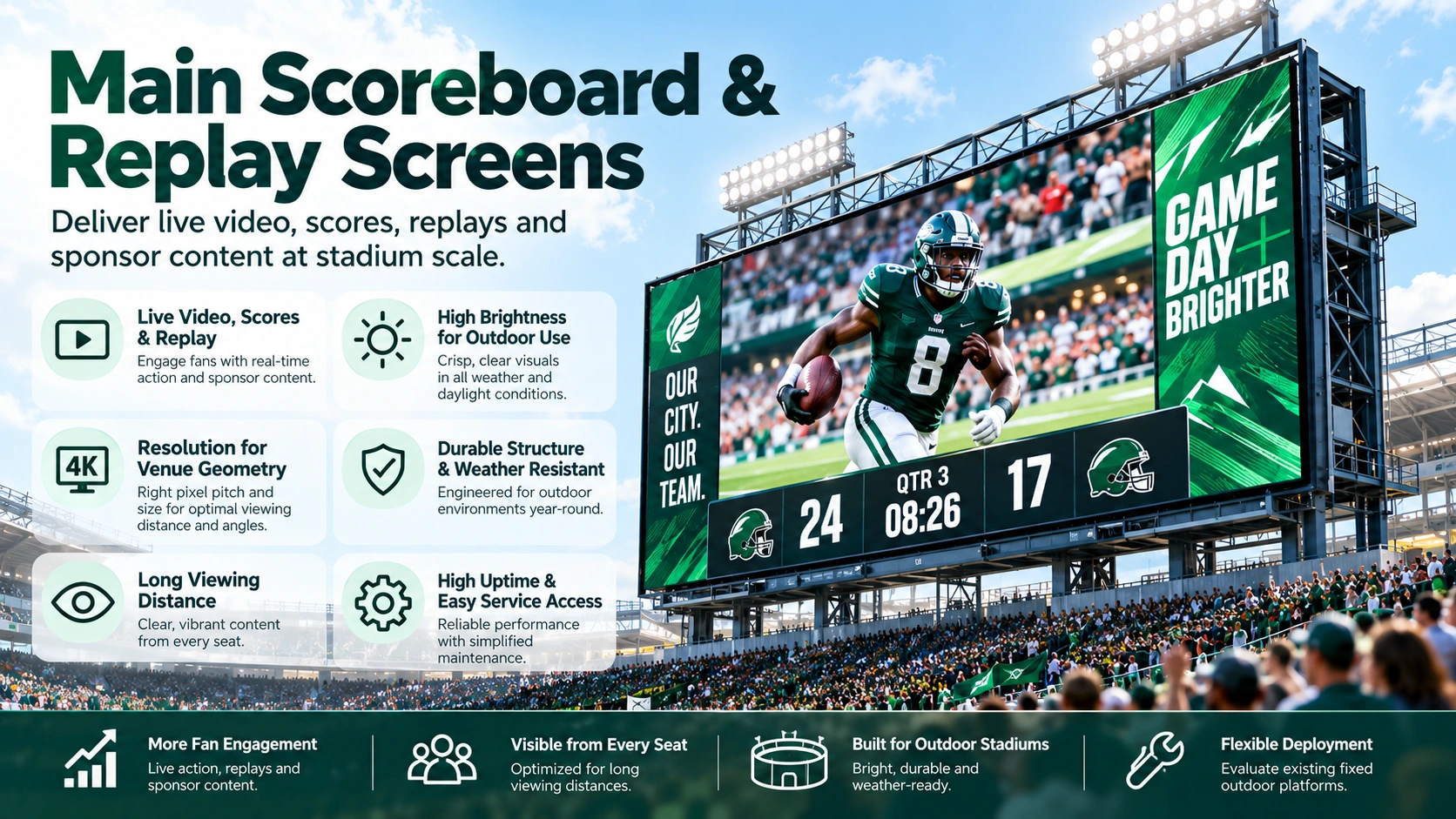
The main display carries the most visible job in the stadium.
Fans expect scores and game information to remain readable from distant seats while replay and live video still feel large enough to anchor the venue experience.
Outdoor stadiums add sunlight, rain, wind and long term structural exposure to that requirement.
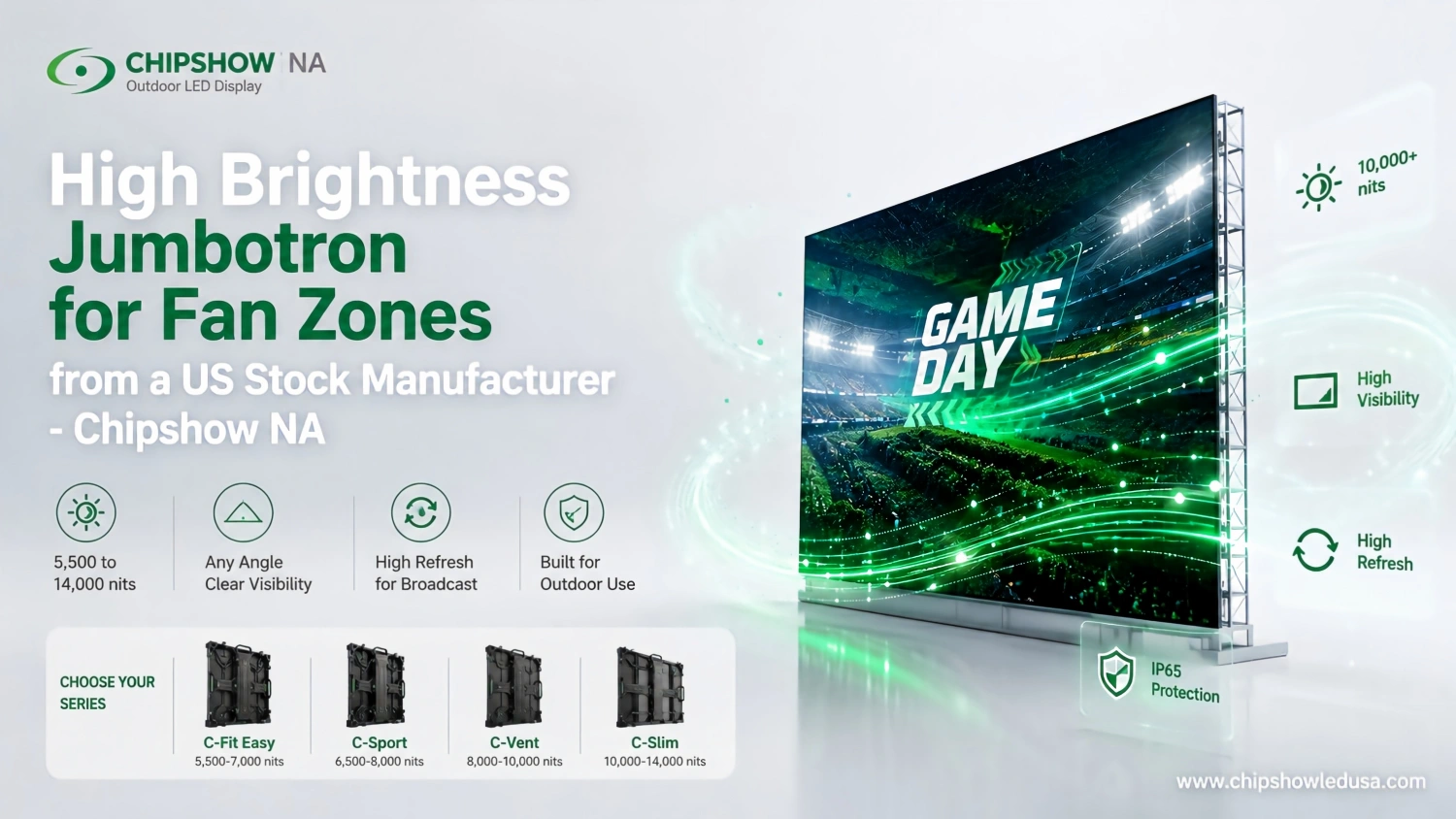
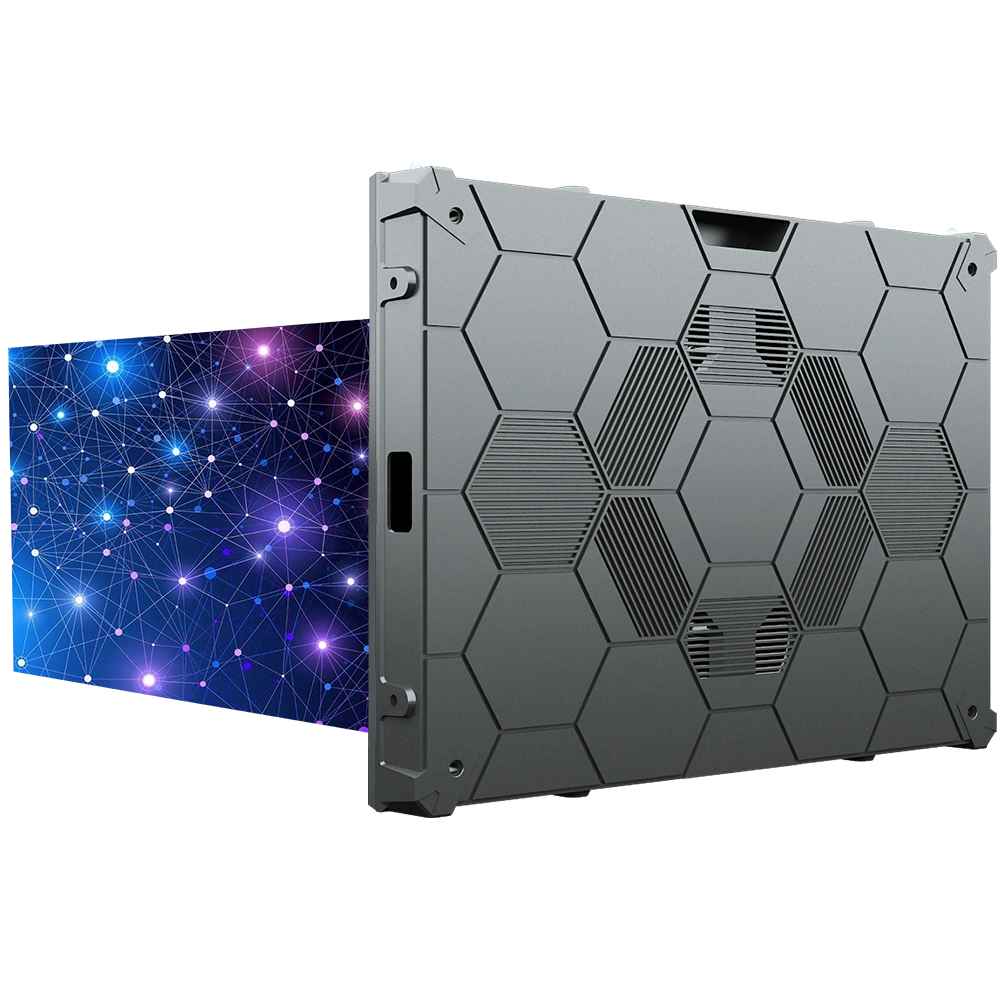
For those applications, a fixed outdoor platform such as C-Slim or C-Fit can be evaluated according to the required pitch, screen size, brightness, cabinet weight and service method.
The final selection depends on the venue.
A football scoreboard viewed from across a large field does not need the same pixel density as a closer arena display.
A large outdoor structure also places more emphasis on cabinet mass, supporting steel and maintenance access than an indoor wall.
C-Sport should not be substituted into this role merely because it carries sports branding.
C-Sport is a perimeter platform.
That distinction keeps the main scoreboard free to use hardware designed around large fixed screen architecture rather than athlete facing field level requirements.
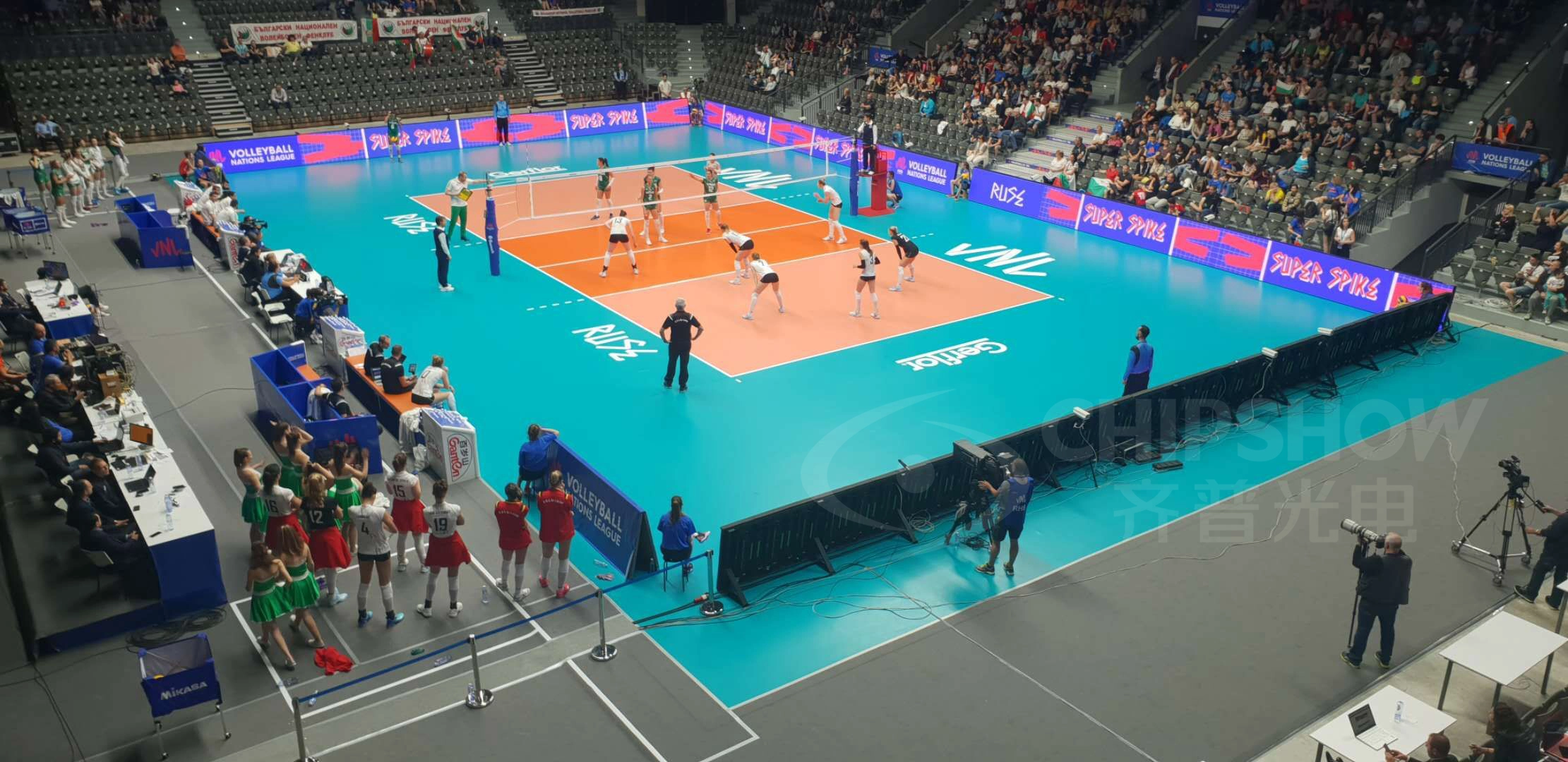
Perimeter Boards
Perimeter LED performs a completely different job.
The display sits much closer to athletes. Sponsor content appears regularly in broadcast camera shots. Crews may need to deploy long runs of cabinets around the playing surface. Outdoor venues can also place different sections of the perimeter in direct sun and shade.
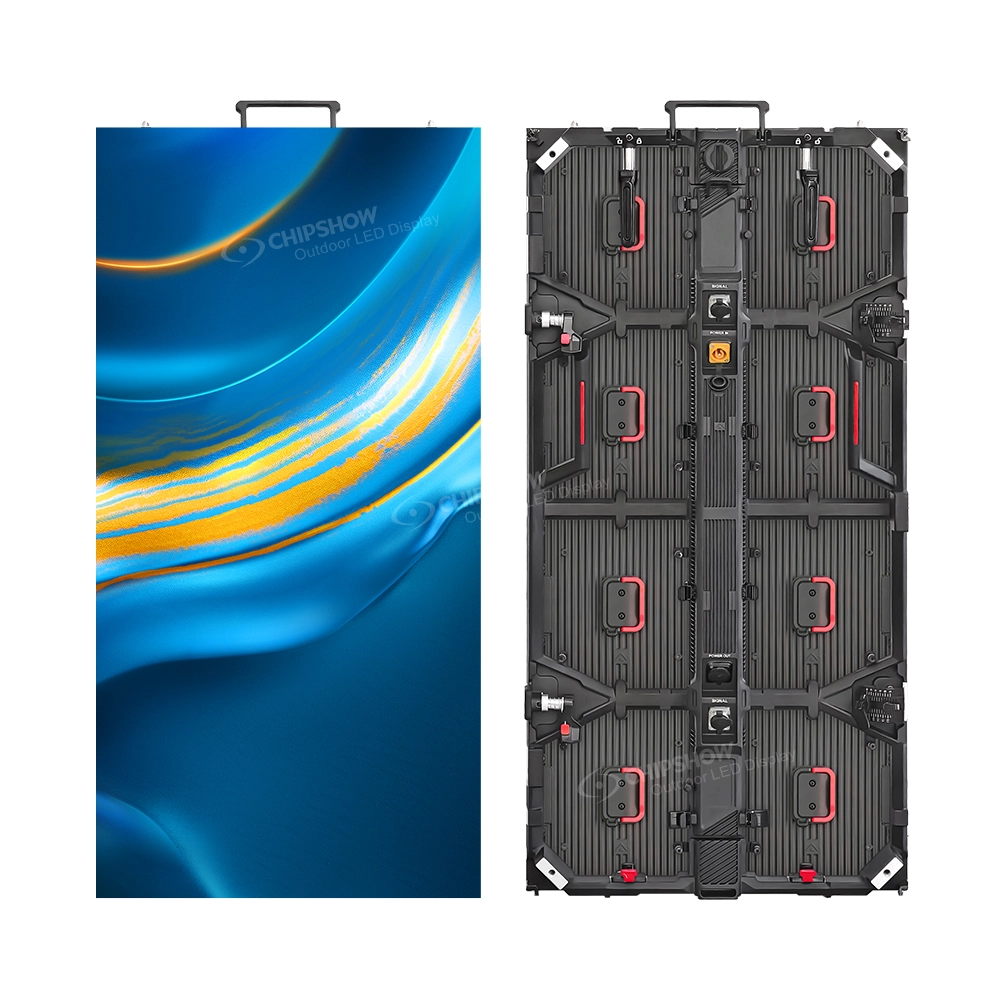
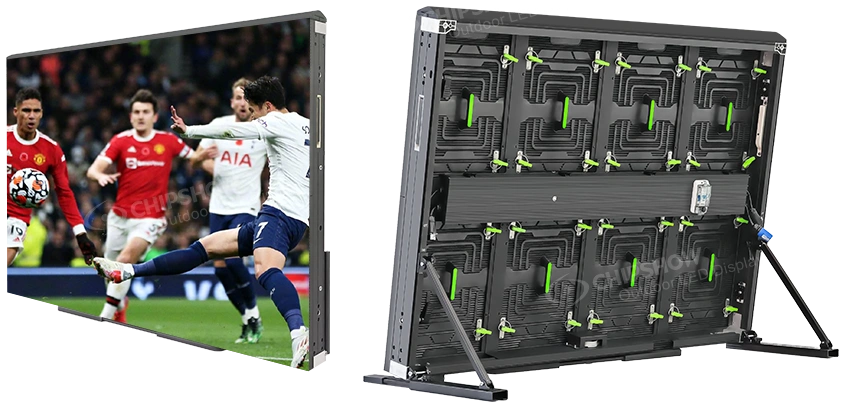
C-Sport P8 is designed for this environment.
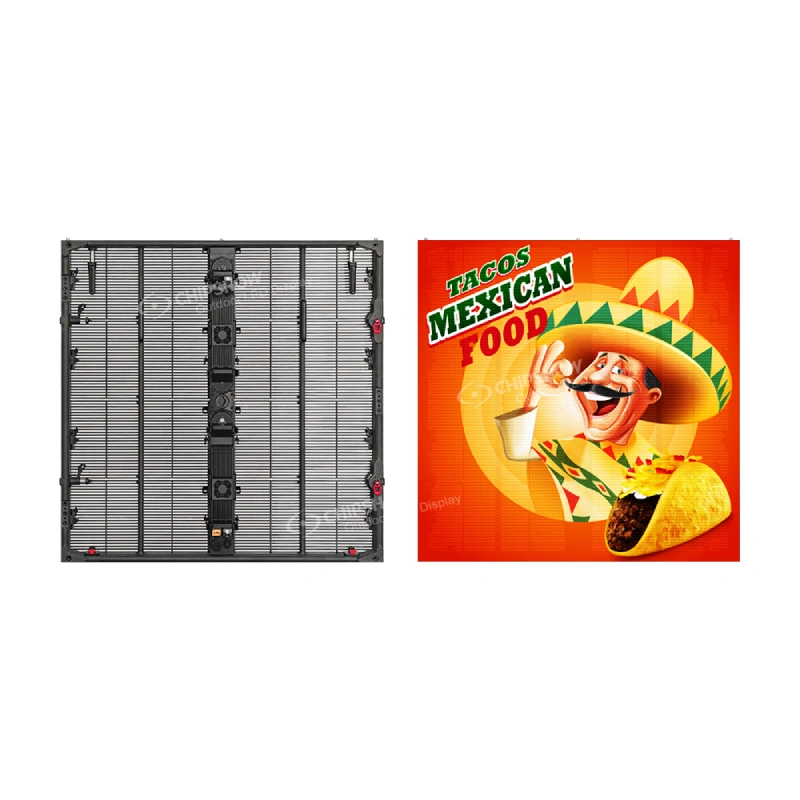
Its current platform uses a 1280 × 900 × 100 mm cabinet with a soft mask and PU top protection intended for athlete facing installations. Published configurations provide at least 3840 Hz refresh performance, while brightness varies by configuration and can reach up to 10000 nits on the high brightness ICE version.
The 1280 mm cabinet width also reduces the number of individual cabinets required across a long perimeter compared with narrower conventional formats.
For the local crew, fewer cabinets can mean fewer mechanical joins and cable connections along the same sideline length.
The advantage is operational.
It is not a reason to use the same cabinet elsewhere in the venue.
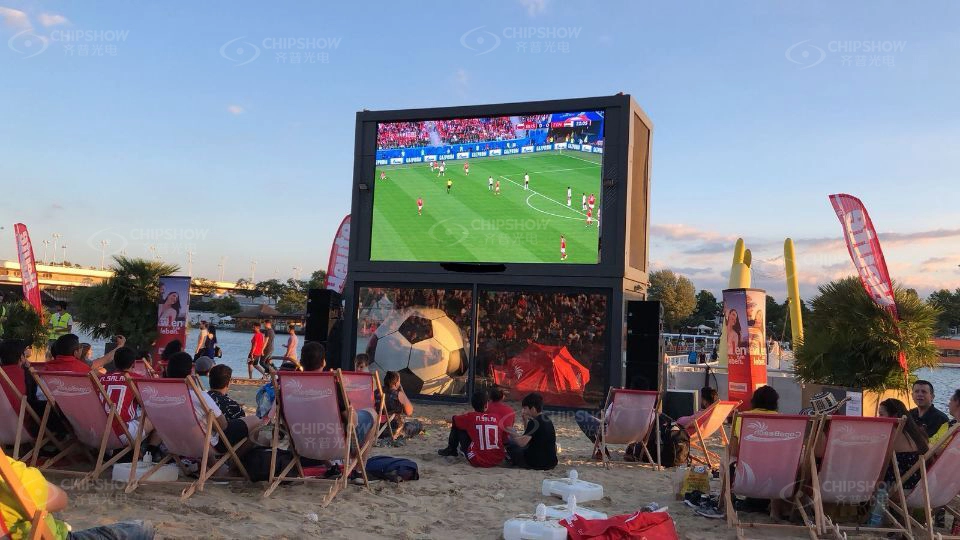
Fan Zone Screens
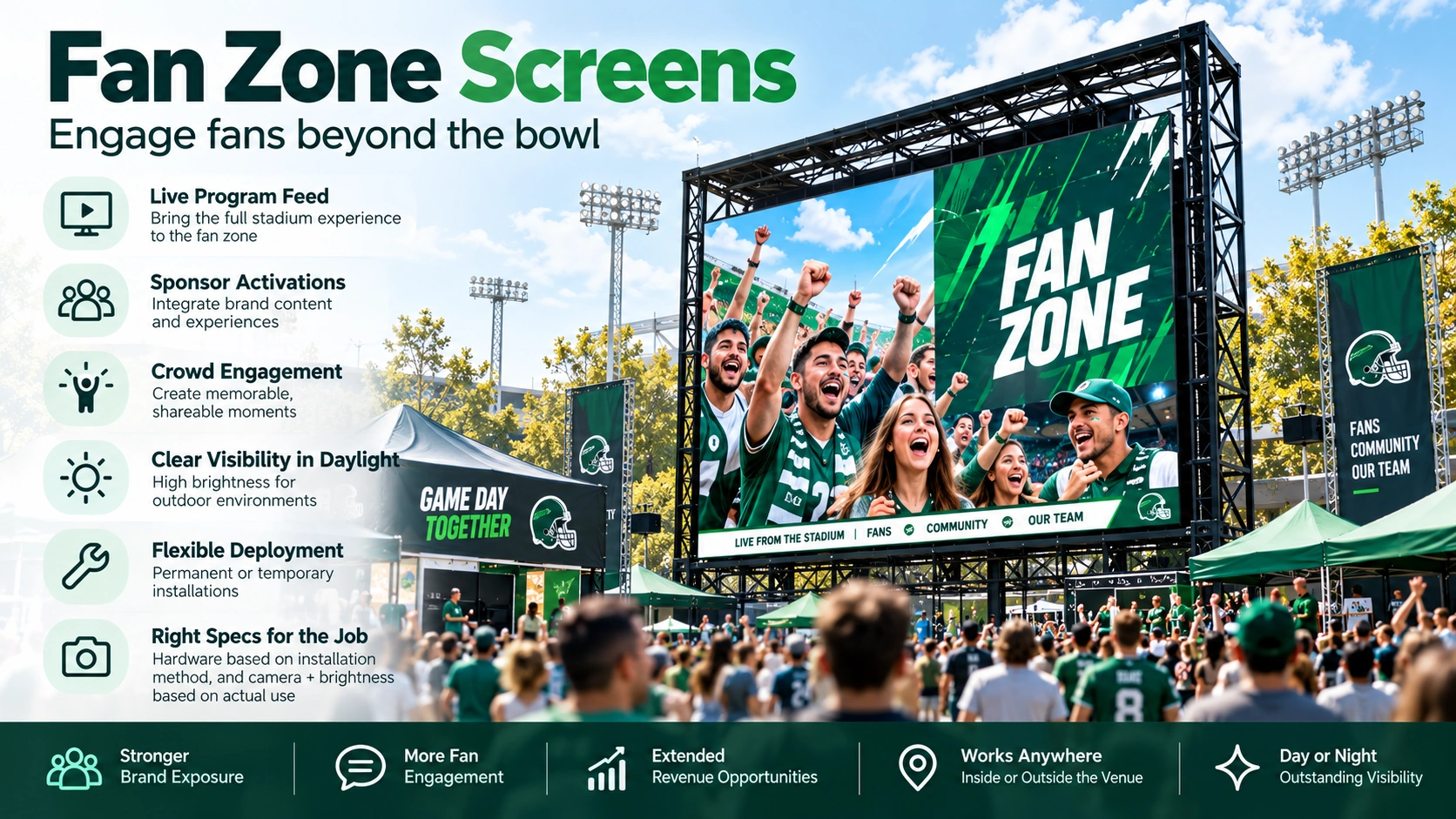
Fan zones sit between sports production and public venue display.
The screen may show live game feeds, sponsor activations, interviews, scores and entertainment content before and after the event.
Some fan zones are permanent.
Others appear only on game days or special events.
That difference changes the hardware architecture.
A permanent exterior fan zone may use fixed outdoor LED when the structure and service plan support it. A temporary activation needs hardware designed around repeated setup, transport and event workflow.
C-Sport should not automatically become the fan zone screen simply because the content is sports related.
The product category follows the installation method first.
Brightness and camera requirements come after that decision.
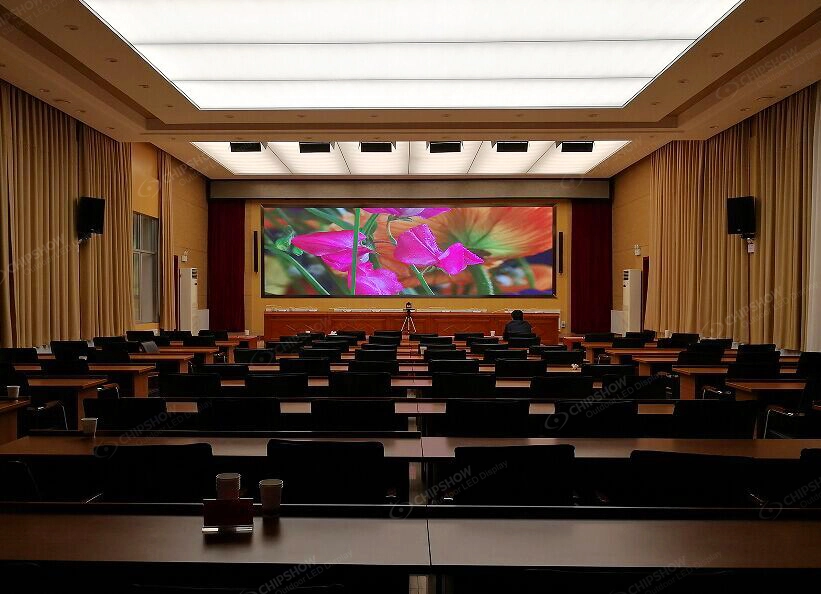
Concourse and Lobby Displays
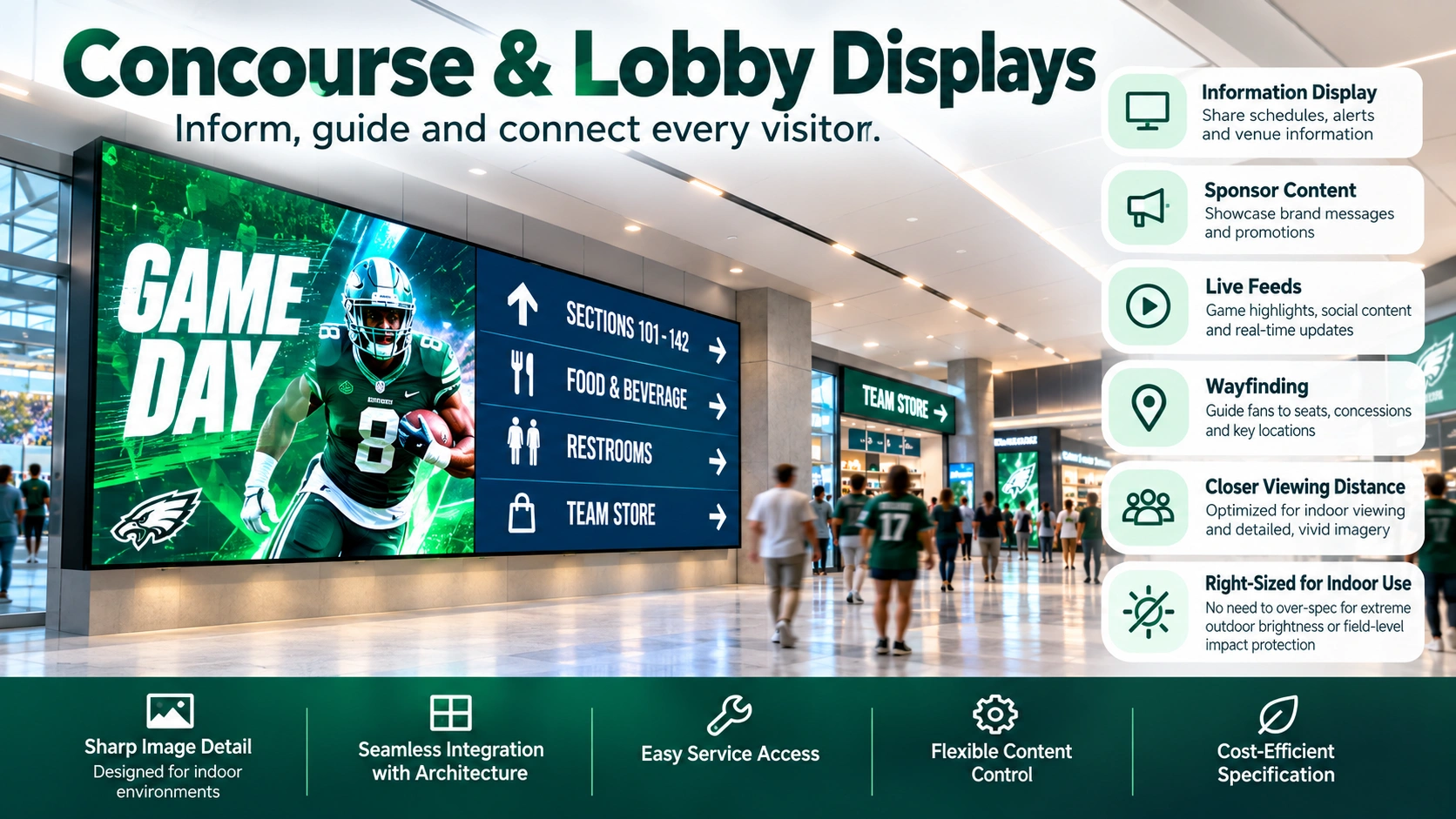
Indoor concourses and arena lobbies create another viewing environment.
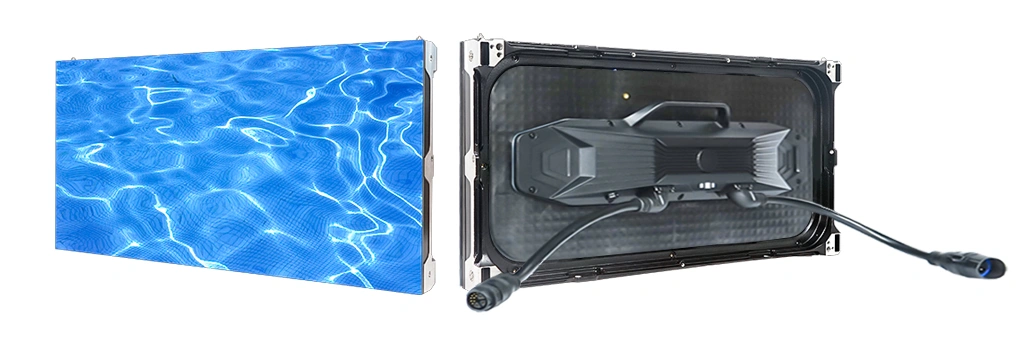
Audiences move closer to the screen. Architectural depth matters more. Direct sunlight may no longer drive the specification, while pixel pitch and indoor image quality become more important.
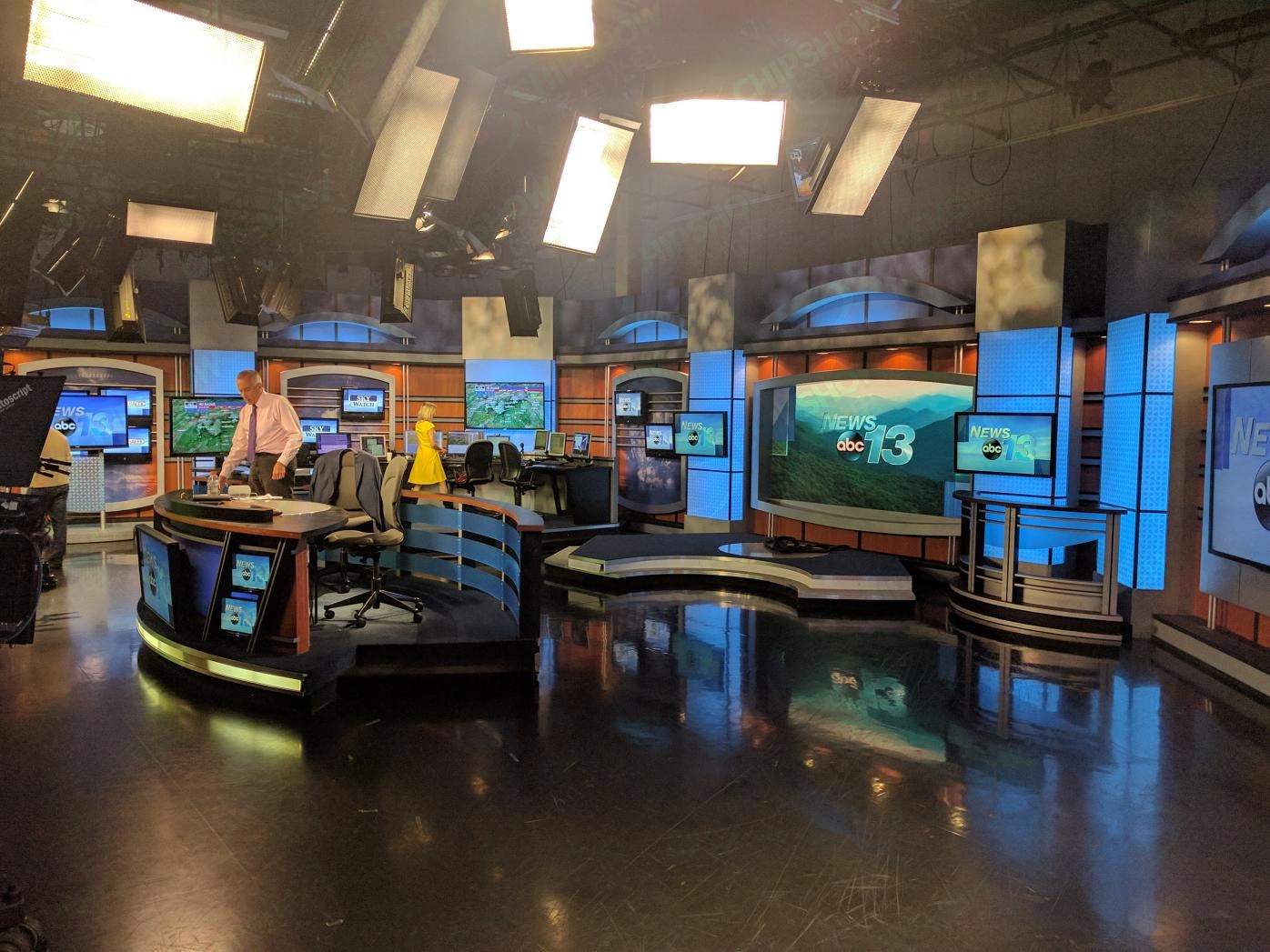
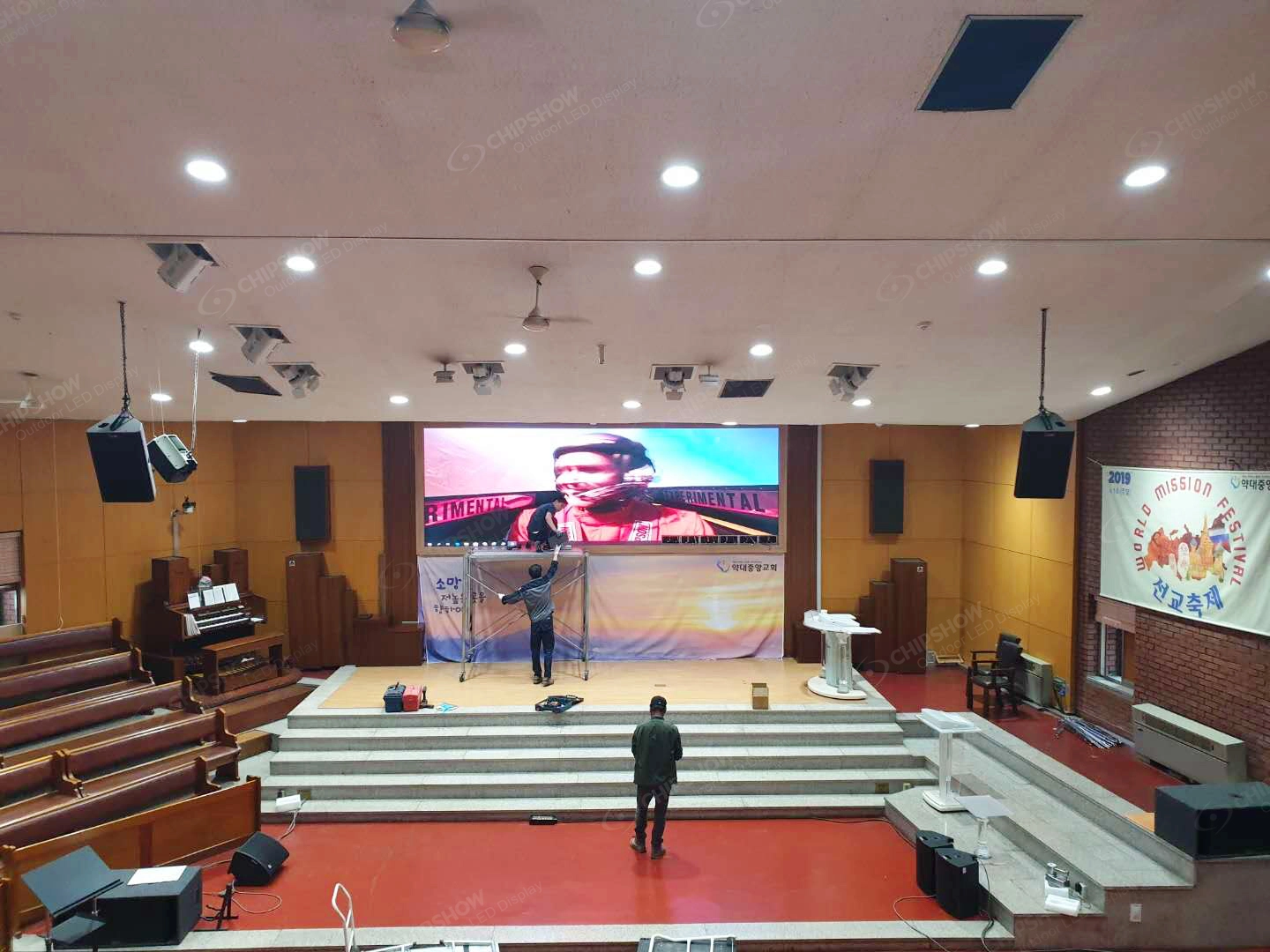
These spaces should therefore be treated as indoor commercial AV within the sports venue rather than miniature stadium scoreboards.
A concourse wall can still show live feeds, sponsor content and scores.
Its physical environment is different.
That distinction prevents the project from paying for weather protection, field level impact features or extreme outdoor brightness that the indoor installation does not need.
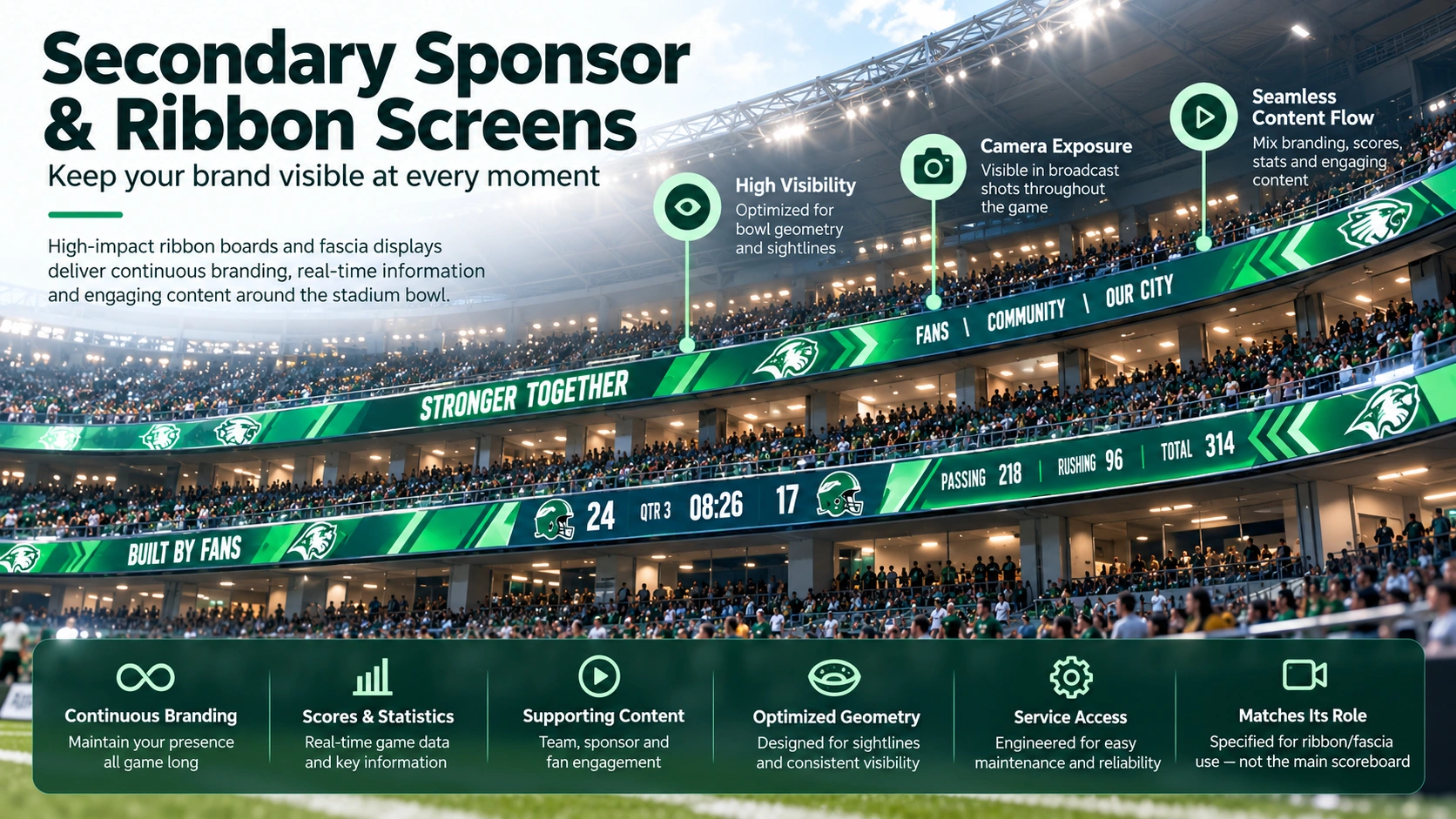
Secondary Sponsor and Ribbon Screens
Sponsor content rarely lives on one screen.
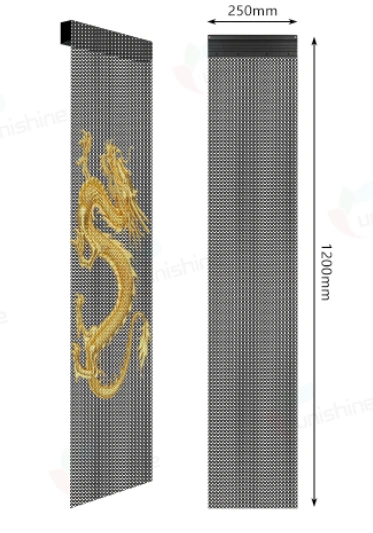
Ribbon boards, fascia displays and secondary LED zones can turn architectural surfaces into additional communication and commercial inventory.
These displays should be planned around sightlines, screen geometry, maintenance access and the type of content they carry.
Some may need strong broadcast performance because cameras regularly include them in wide venue shots.
Others primarily serve spectators inside the bowl.
They should not automatically inherit the main scoreboard specification or perimeter hardware.
A stadium system becomes easier to operate when each LED zone has a clear purpose.
Broadcast Performance for Live Sports
Live sports places a higher reliability burden on LED than ordinary digital signage.
When a screen enters the television frame, visible artifacts affect the broadcast product as well as the in venue experience.
When the same screen carries sponsor content, a failure can also interrupt commercially valuable inventory.
That makes refresh performance, signal design and recovery planning part of procurement.
High Refresh Supports the Camera Workflow
C-Sport P8 currently provides a refresh rate of at least 3840 Hz.
That specification gives sports production teams a suitable starting point for camera facing perimeter LED.
It should not be interpreted as a promise that every camera setting will automatically produce the same result.
Shutter speed, frame rate, scan behavior, viewing angle and camera position still influence what the production system records.
The deeper relationship between refresh rate, shutter timing and moiré belongs in camera engineering rather than in this procurement guide.
At the system level, the important point is simpler.
A stadium display that will appear regularly on television should have camera performance included in the product requirement before the hardware is ordered.
Slow Motion Raises the Requirement
Sports production often uses cameras differently from a corporate livestream.
Replay systems may capture motion at elevated frame rates.
That can expose temporal behavior that is much less obvious to spectators or standard program cameras.
The production team should therefore identify slow motion and replay requirements during technical review.
Do not approve a sports display solely because it looked clean through one camera during a showroom demonstration.
The relevant test is the camera workflow the venue intends to use.
Sponsor Graphics Need Broadcast Consistency
Perimeter advertising has two audiences.
Fans inside the venue see it directly.
Broadcast viewers see it through cameras.
That makes visual consistency commercially important.
A sponsor expects its colors and graphics to remain stable across long sections of perimeter LED instead of visibly changing from cabinet to cabinet.
This is one area where manufacturer scale and controlled project allocation matter.
Chipshow can coordinate the display hardware as a defined project set rather than asking the integrator to assemble a stadium run from unrelated hardware sources.
That gives the project a stronger starting point for calibration and visual consistency.
Redundancy Has to Be Designed
A high refresh rate does not prevent a black screen caused by a lost signal or failed power path.
Live sports should therefore be planned around a zero black screen objective.
That objective has to exist in the actual system architecture.
C-Sport offers an optional dual backup configuration for power and signal on supported configurations. That is a C-Sport specific capability and should not be transferred automatically to a main scoreboard or another Chipshow platform.
For the rest of the venue, redundancy should be defined in the project BOM according to the importance of the display.
A main replay screen may justify a different backup architecture from a secondary sponsor display.
The requirement comes from operational risk.
Brightness Resolution and Viewing Distance
Sports buyers frequently begin with one specification number.
Some ask for the brightest screen available.
Others ask for the finest pixel pitch.
Neither approach describes what spectators will actually see.
Long Distance Stadium Viewing Changes Resolution Needs
A large outdoor scoreboard can be hundreds of feet from parts of the audience.
At that distance, the total screen dimensions and content design matter as much as pixel pitch.
Scores need to remain readable.
Replay content needs enough image detail to communicate action.
Sponsor graphics need to survive long sightlines.
That does not automatically require the finest outdoor pitch available.
Buying pixels that spectators cannot resolve adds cost and processing demand without adding equivalent viewing value.
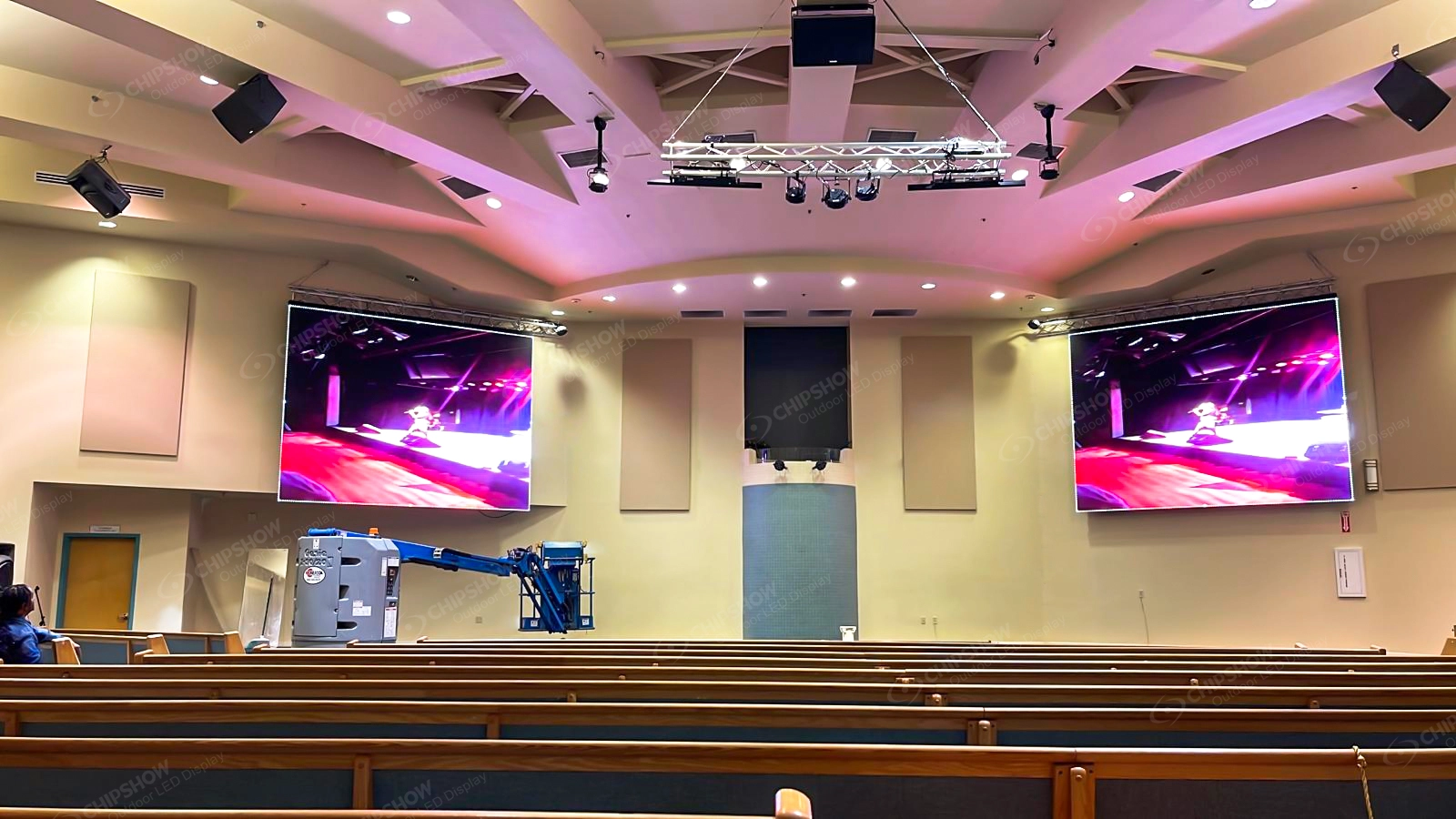
Indoor arenas can create a different condition.
Some seats may sit much closer to center hung or end wall displays, increasing the value of finer pixel density.
The pitch should therefore follow the venue geometry.
Field Level Perimeter Has Its Own Viewing Geometry
Perimeter LED is often viewed from a combination of spectator seats and broadcast cameras.
Its P8 pitch reflects that role.
The cabinet does not need the same fine pitch used in a close viewing indoor lobby because spectators and cameras interact with it at different distances.
The athlete safety construction also matters more than chasing a smaller pitch.
This is an example of why sports procurement cannot rank products by resolution alone.
The correct hardware balances image detail with physical operating conditions.
Brightness Follows the Venue Zone
An open air stadium may expose one side of the field to strong direct sun while another remains shaded.
C-Sport addresses this with different P8 brightness configurations on a shared cabinet platform.
The high brightness ICE configuration can reach up to 10000 nits for demanding sun facing positions, while SMD options support other exposure conditions.
That does not mean every perimeter cabinet should operate at the highest available output.
Matching brightness to the actual venue zone can reduce unnecessary power demand while preserving visibility.
The same principle applies to the main scoreboard.
Outdoor screens need enough daylight output for their orientation and operating hours.
Indoor arena displays do not need to follow the same brightness logic.
Player Safety and Cabinet Architecture
Field level LED sits inside the sports environment rather than outside it.
That changes the hardware requirement.
Perimeter Cabinets Need Athlete Facing Protection
A conventional outdoor advertising cabinet is designed to survive weather and display content.
A stadium perimeter cabinet also has to account for athletes moving at speed near the display.
C-Sport uses a soft mask and PU top protection to create a more forgiving athlete facing surface.
The design serves two purposes.
It reduces hard contact points near the playing area and protects the LED face from impacts that can occur during competition.
This safety architecture belongs specifically to the perimeter environment.
It should not be used as a marketing claim for unrelated outdoor Chipshow products.
Cabinet Width Affects Matchday Labor
A long perimeter can require many meters of LED.
Cabinet width therefore affects the number of units the local crew has to position and connect.
C-Sport uses a 1280 mm wide chassis.
Over a long sideline, a wider cabinet reduces the number of cabinet boundaries compared with narrower conventional units.
For sports integrators working with high local labor costs, that can reduce repetitive assembly tasks during deployment.
The practical value is particularly clear when hardware needs to be installed or repositioned around event schedules.
Fast Hardware Still Needs Safe Field Planning
Quick installation should never bypass venue safety procedures.
Cabinets still need secure mechanical connections, correct electrical distribution and a layout that respects the playing surface and venue rules.
Chipshow supplies the sports LED hardware and corresponding manufacturer side technical information.
The local sports integrator and venue team determine the actual positioning, field interface and installation process.
This keeps product engineering and venue responsibility appropriately separated.
Turn Key Hardware System for Stadiums
Buyers sometimes describe the requirement as a turnkey jumbotron system for stadiums.
For Chipshow, that should mean a coordinated hardware package rather than a promise to take over the local installation contract.
The Hardware Package Starts With the LED Zones
The BOM should identify which LED product belongs in each display role.
Perimeter hardware should be specified as perimeter hardware.
The main scoreboard should be built around its own fixed display requirement.
Fan zones, concourse displays and secondary sponsor surfaces should use the hardware architecture that fits their environment.
This prevents the project from simplifying procurement by making the technical system less appropriate.
Controllers and Signal Hardware Follow the Screen Design
The LED cabinet count determines the native pixel load.
That pixel load affects controller capacity, receiving architecture and signal distribution.
The main replay screen may need a different processing design from the perimeter system.
They may share parts of the venue video workflow without being treated as one electrical or signal load.
Chipshow can coordinate the manufacturer side LED control hardware included in the agreed BOM.
Scoreboard data, timing systems, venue production switching and other facility integrations remain project specific.
The sports integrator and venue production team should define those interfaces.
Spares Belong in the Original BOM
Game day is the wrong time to begin looking for a replacement module.
The project should establish a sensible spare strategy before the hardware ships.
That can include appropriate LED modules and other agreed service parts associated with the supplied system.
Spare planning is especially important for stadiums because a display may need to remain operational across a fixed event calendar.
The objective is not excessive inventory.
It is avoiding unnecessary downtime over a relatively inexpensive component.
Cabling Should Match the Defined Hardware Scope
Long perimeter systems and large scoreboard screens can require substantial signal and power distribution.
The manufacturer side package should identify the cabling and hardware included in the Chipshow BOM so the integrator can coordinate it with the local electrical and signal infrastructure.
This prevents one of the most frustrating installation problems.
The cabinets arrive but the project team discovers that different parties assumed someone else was supplying an essential hardware component.
A defined package makes the handoff clearer.
Documentation Supports the Local Project Team
Sports projects can require product specifications, drawings and compliance information as part of the submittal process.
Chipshow can provide applicable manufacturer side documentation for the quoted hardware.
Any UL, ETL, FCC or other compliance claim must remain tied to the exact product and documentation that covers it.
A certificate from one Chipshow model should not be used to imply the same status for an unrelated stadium configuration.
Local permit and approval requirements also remain subject to the Authority Having Jurisdiction.
Product documentation supports that process.
It does not replace it.
The Integrator Keeps the Field Scope
The boundary is straightforward.
Chipshow builds and supplies the LED hardware package.
The local integrator keeps the installation contract and coordinates the venue specific field work.
Structural engineering, electrical work, mounting, scoreboard data interfaces and local commissioning stay with the qualified project parties responsible for those scopes.
For channel partners, this is an important part of the commercial relationship.
Chipshow helps the integrator deliver a stronger hardware solution without competing for the labor and project margin around it.
Uptime Power and Game Day Service
Sports hardware should be evaluated by what happens during the season, not only on installation day.
A display that performs well during commissioning can still become expensive if service access, spare planning and backup architecture were ignored.
Game Day Downtime Has a Different Cost
A failed commercial sign is inconvenient.
A failed stadium display during a live game affects spectators, sponsors and production at the same time.
The commercial consequence can therefore extend beyond the repair itself.
That is why uptime belongs in procurement.
The venue should identify which screens cannot tolerate a single point of failure and design their hardware and control paths accordingly.
Power Should Follow Real Exposure
Outdoor stadiums rarely expose every screen surface to identical sunlight.
C-Sport’s ability to use different P8 brightness configurations gives the venue a way to match output to different perimeter conditions while retaining a common 1280 mm cabinet platform.
The benefit is not simply higher brightness.
It is avoiding unnecessary output where the venue does not need it.
Over a long sports season, that operating discipline can matter to OPEX.
Service Access Should Match the Event Calendar
A sports display may have only a limited service window between events.
The hardware architecture should therefore support practical access to commonly serviced components.
Perimeter hardware also benefits from modular replacement because crews may need to restore a section quickly without dismantling a long screen run.
The same planning principle applies to the main scoreboard.
A high mounted screen can make even a simple service task expensive if access was ignored during design.
Hardware cost and service cost belong in the same procurement discussion.
Keep Planned Spares Close to the Venue
A spare module stored within the project’s service inventory has more value on game day than a replacement that has to begin an international shipment after a failure.
Selected Chipshow hardware may be supported through North American inventory depending on the model and current stock position, but the stadium’s own planned spare package remains the more dependable first response for project specific service parts.
Current warehouse availability should always be checked by exact model and quantity.
It should not be treated as an unlimited emergency parts promise.
Sports Venue Use Cases
Sports system architecture changes with the level and type of venue.
A professional stadium may have a large outdoor replay board, full field perimeter, ribbons, premium concourse displays and several sponsor zones.
A college venue may need many of the same roles at a different scale.
A school district may focus its capital on one main display and a smaller set of supporting screens.
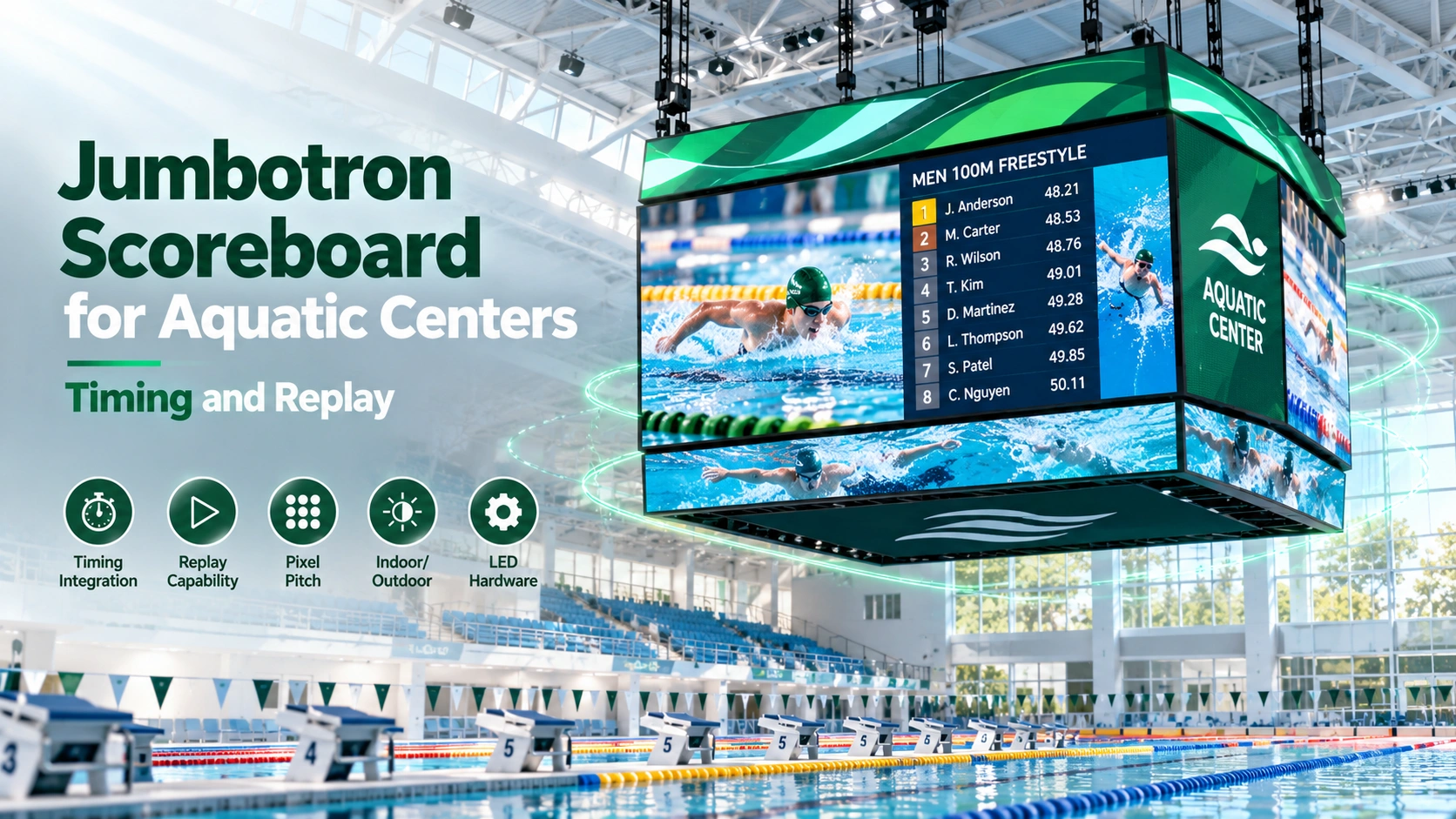
An aquatic venue can create different sightline and environmental conditions again.
The procurement logic remains consistent.
Identify what each screen needs to do before assigning hardware to it.
Chipshow’s documented sports project library includes a Pan American Games project in Lima Peru, demonstrating experience in major sports venue environments. That project history supports Chipshow’s sports application background, but it should not be used as evidence that a specific current C-Sport configuration or quantity is available for another project.
Project history demonstrates experience.
The hardware BOM and current project review determine what belongs in a new venue.
For a high school stadium, the priority may be a reliable main scoreboard, sponsor content and hardware that the local integrator can maintain without excessive complexity.
For a professional or collegiate venue, camera coverage, redundancy, multiple display zones and sponsor inventory can push the project toward a more distributed system.
For an arena, indoor sightlines and center hung loads can change the main screen architecture substantially.
One sports product cannot solve all of those environments.
That is the reason to plan the stadium as a system.
Frequently Asked Questions About Stadium Jumbotrons
What Refresh Rate Should a Sports Jumbotron Use
A camera facing sports display should use a refresh specification suitable for professional broadcast workflows. C-Sport P8 currently provides at least 3840 Hz for its perimeter application. The exact camera result still depends on shutter settings, frame rate and production conditions, so the venue should include real camera requirements during technical review rather than relying on refresh rate alone.
How Bright Should a Stadium Jumbotron Be
Brightness depends on the display location. An outdoor main scoreboard facing direct sun may require substantially more output than a shaded surface or indoor arena display. C-Sport P8 offers configuration dependent brightness for perimeter applications, including a high brightness ICE version reaching up to 10000 nits. That value belongs to the applicable C-Sport configuration and should not be generalized to every stadium display.
Is a Perimeter LED Board the Same as the Main Scoreboard Screen
No. A perimeter board sits at field level and has different physical and safety requirements. C-Sport uses athlete facing soft protection and a wide cabinet designed for perimeter deployment. A main scoreboard or replay screen is a large fixed display and should be evaluated around its own viewing distance, structure, brightness, service and redundancy requirements.
What Is Included in a Turn Key Stadium Jumbotron Hardware System
The exact BOM depends on the venue, but the manufacturer side package can include the selected LED hardware, agreed control hardware, project spares, applicable cabling and manufacturer documentation. Local structural engineering, electrical work, mounting, scoreboard data integration, installation and other site specific scopes remain with the qualified local project teams responsible for them.
How Should Redundancy Be Planned for Live Sports
Start by identifying the displays whose failure would materially disrupt the event, broadcast or sponsor commitments. Then define backup power and signal paths according to that operational risk. C-Sport offers optional dual power and signal backup on supported perimeter configurations. Other display zones need redundancy designed into their own project architecture rather than inheriting the C-Sport feature automatically.
Next Step
A stadium hardware plan should begin with venue drawings rather than a product list.
Send Chipshow the main screen dimensions, perimeter length, fan zone requirements, indoor display locations, primary viewing distances, camera and replay requirements, outdoor orientations, target project schedule and any redundancy requirements already defined by the venue.
Chipshow can use that information to separate the display zones, identify the appropriate LED hardware routes and build the manufacturer side hardware BOM around the actual sports architecture.
C-Sport P8 can be evaluated where the venue needs athlete safe broadcast grade perimeter LED.
Outdoor main scoreboard and replay screens can be evaluated through the appropriate fixed outdoor platform when the required pitch, brightness and structure are known.
Fan zones, concourses and secondary sponsor displays can then follow their own permanent indoor, permanent outdoor or temporary event requirements instead of being forced onto the same cabinet.
Request a Stadium Jumbotron Hardware Plan when the venue knows its display zones but still needs the hardware architecture defined.
Send Venue Drawings when the project team is ready to turn screen locations and operational requirements into a coordinated Chipshow hardware package.