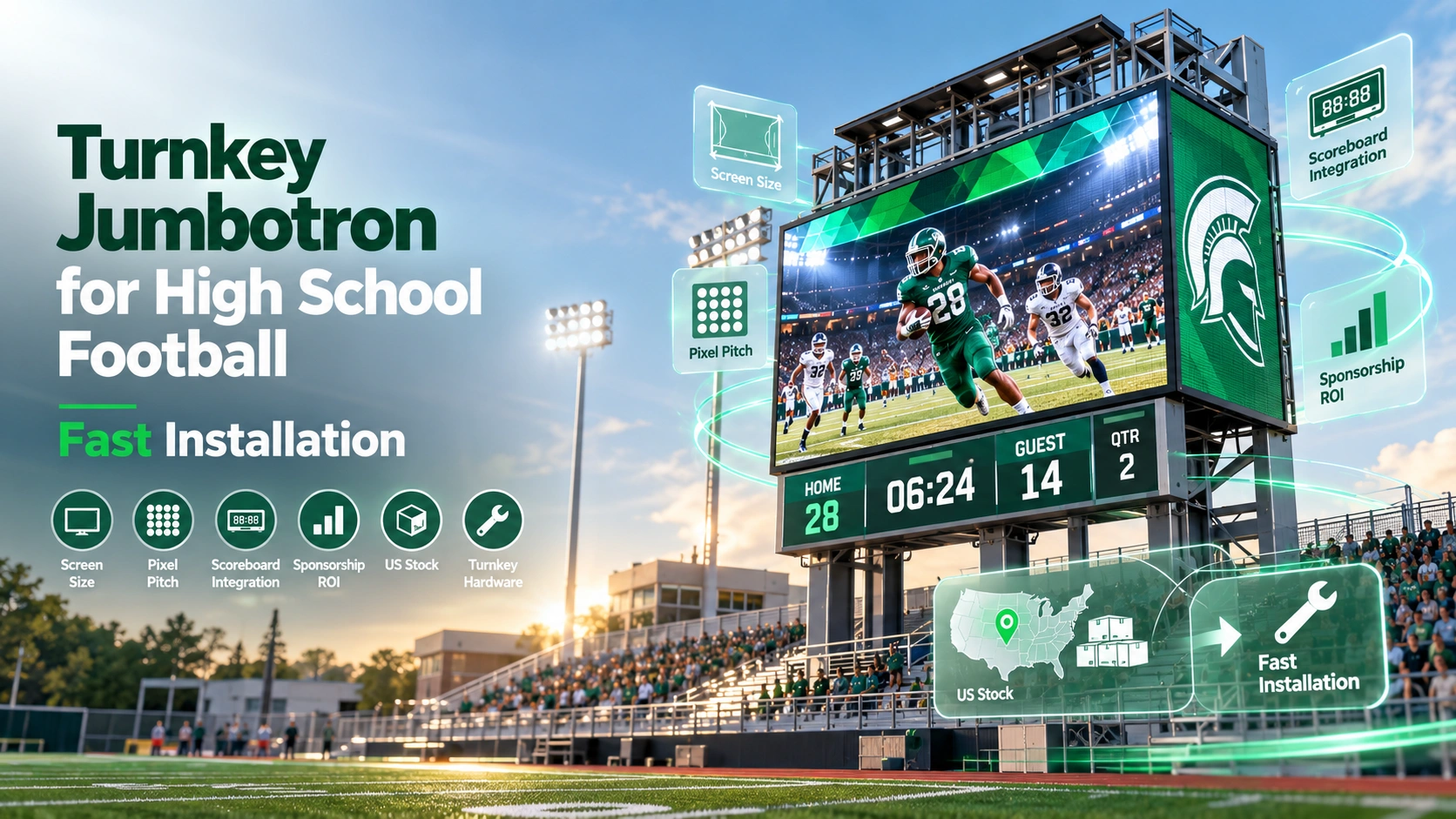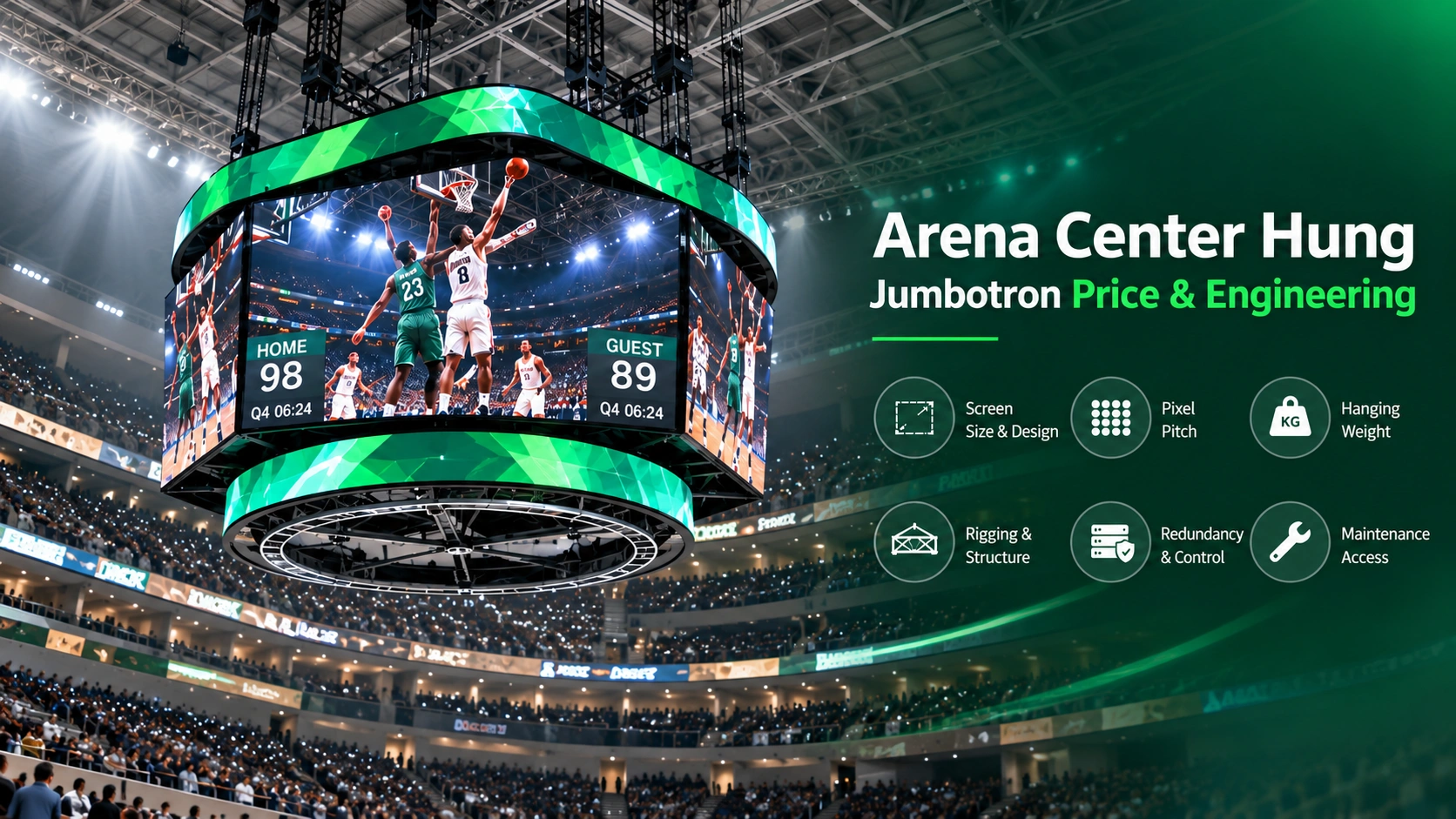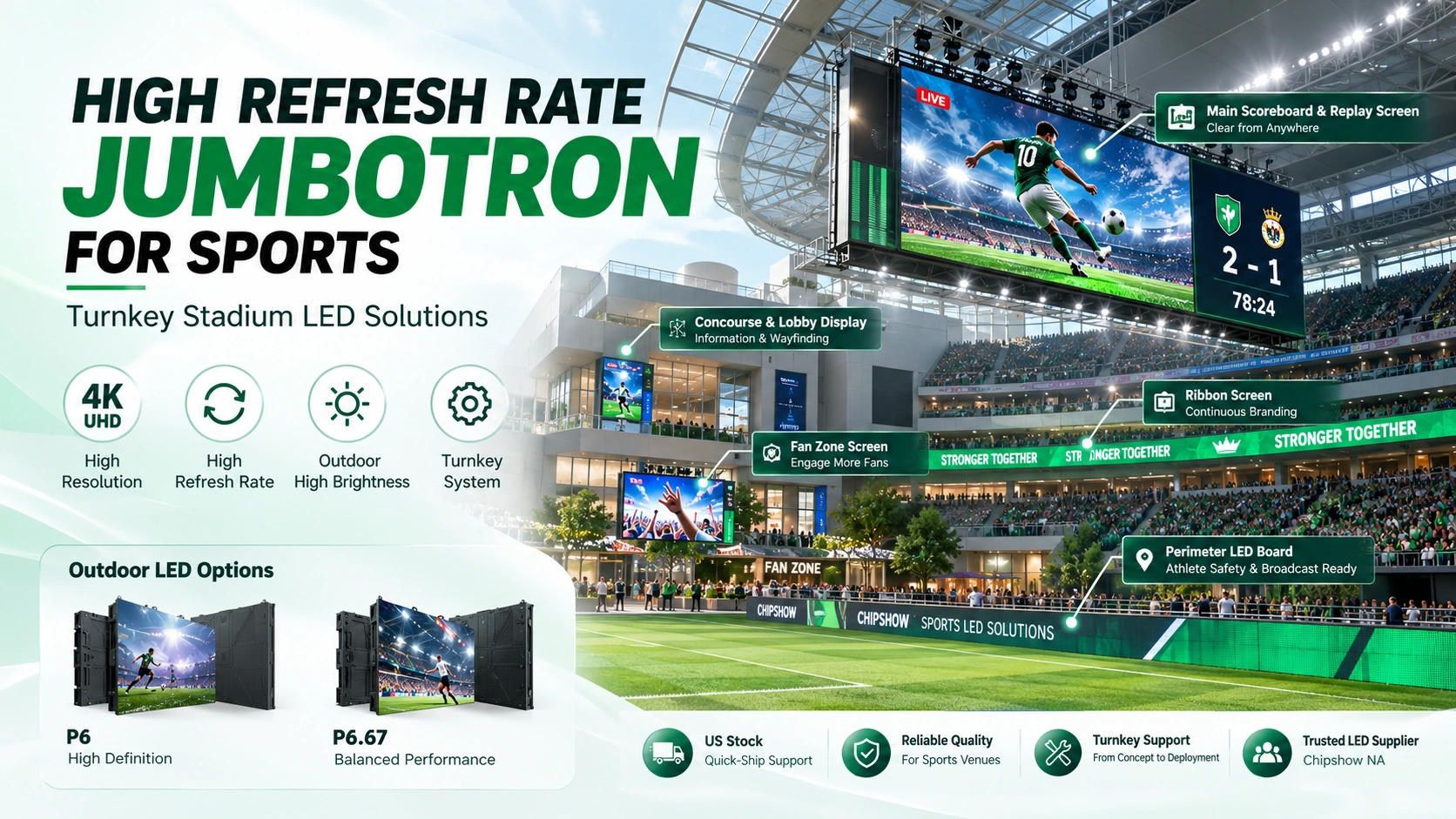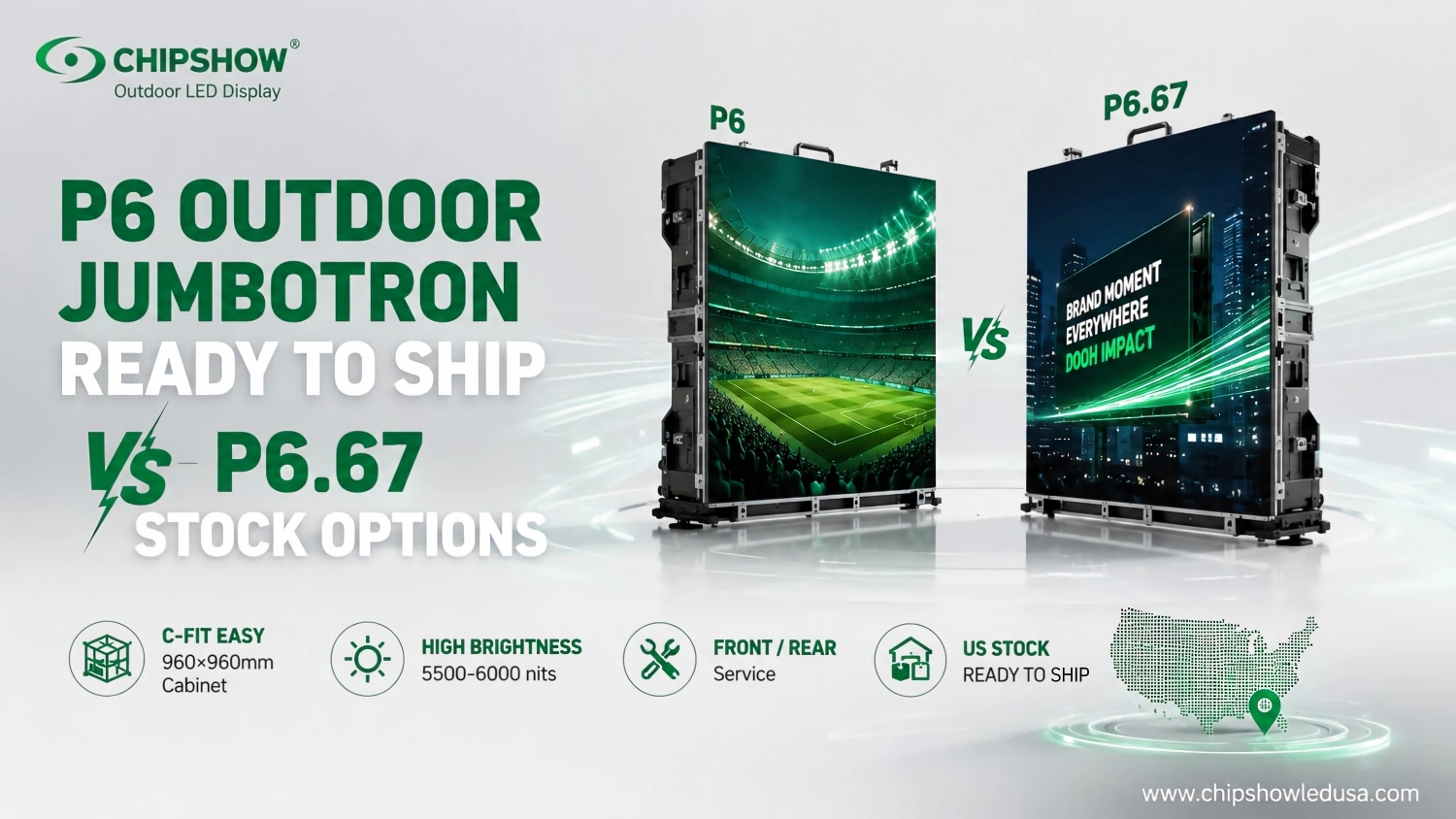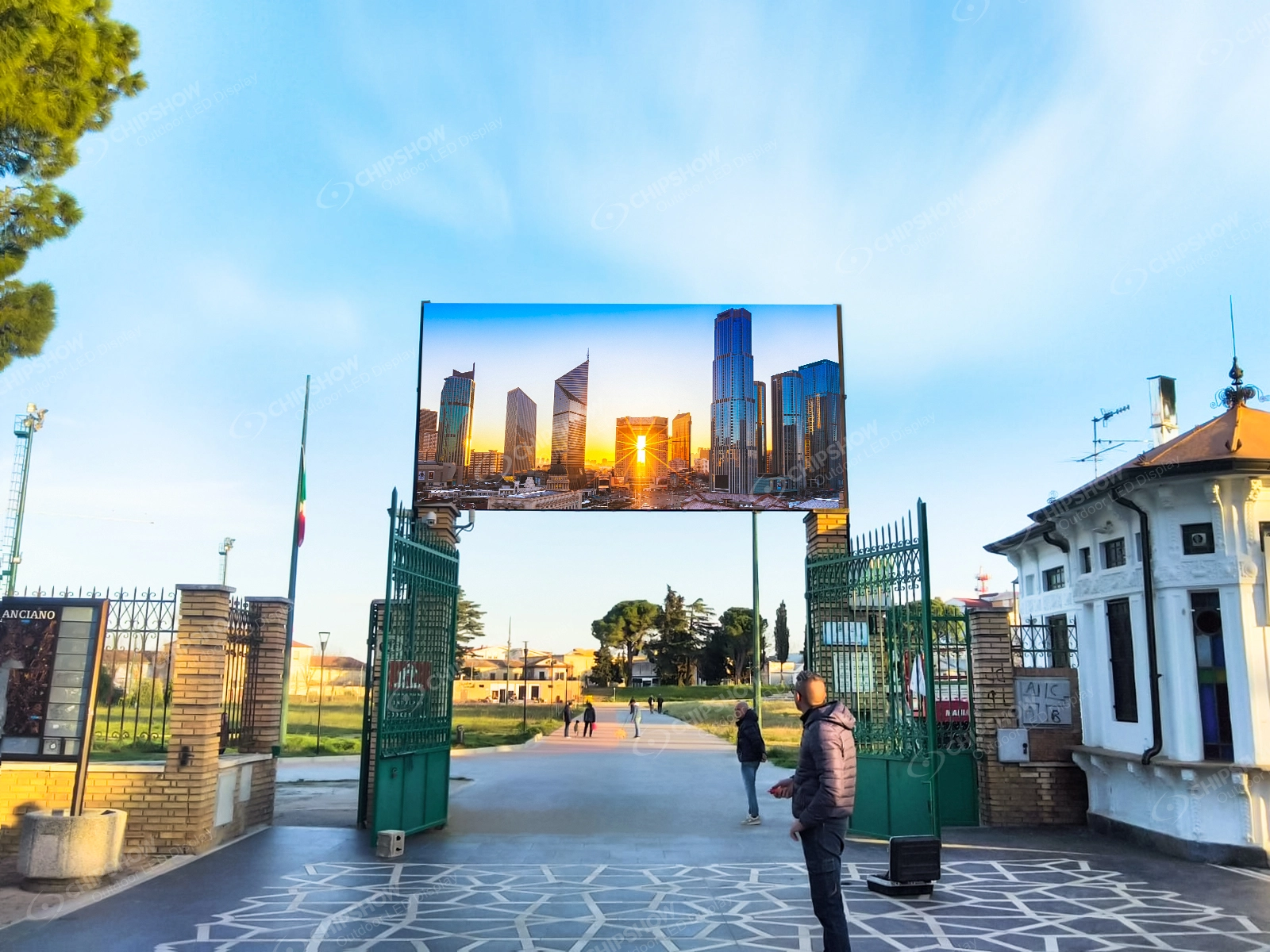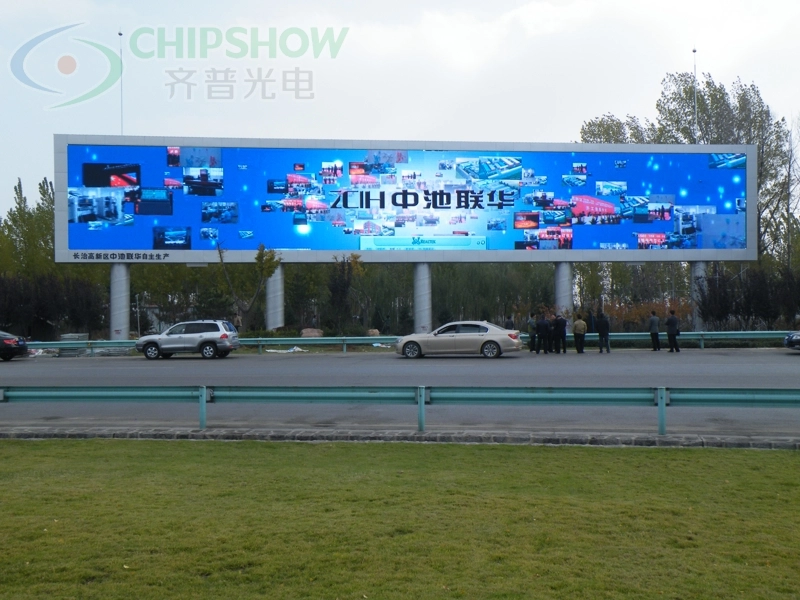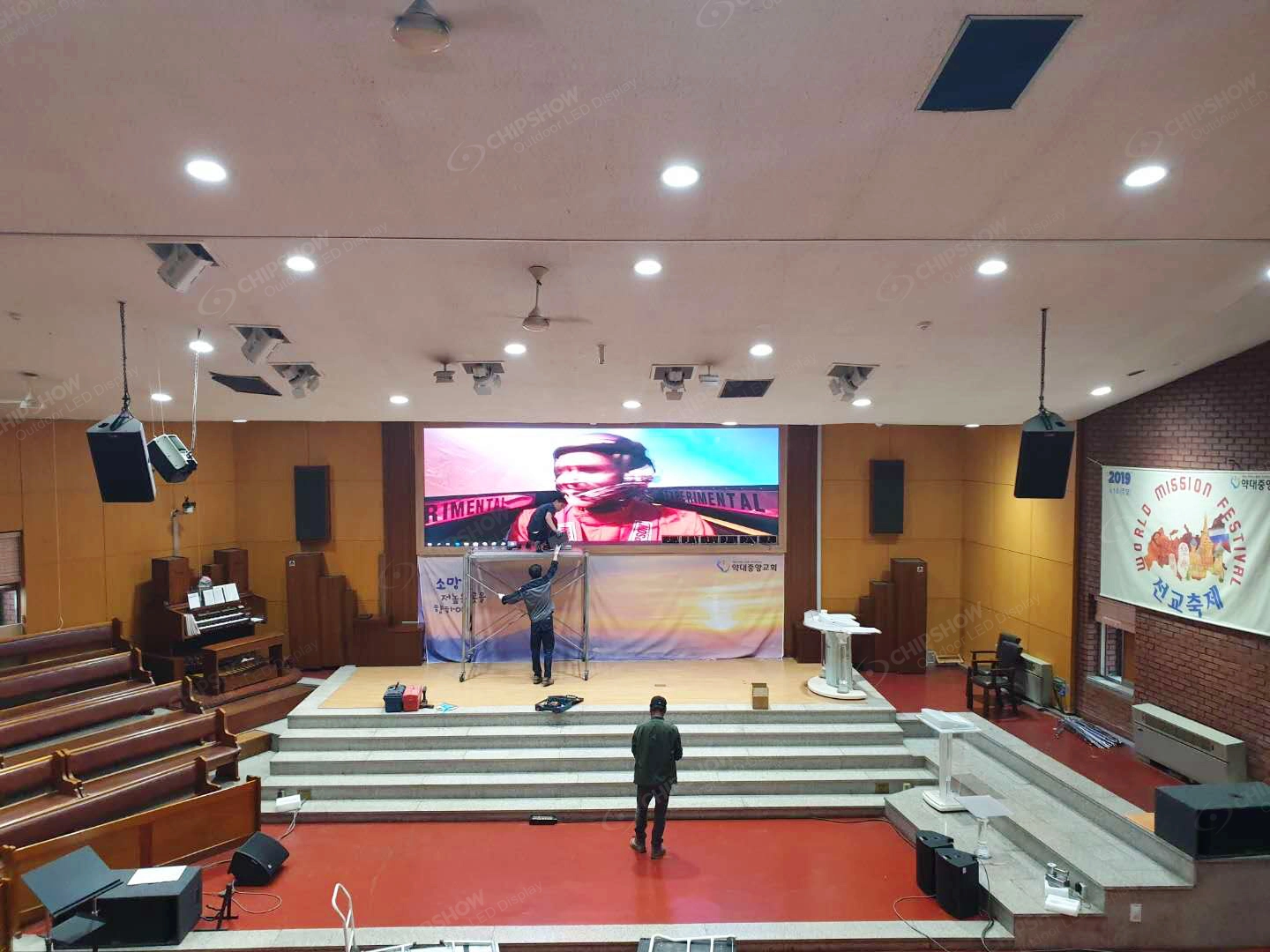
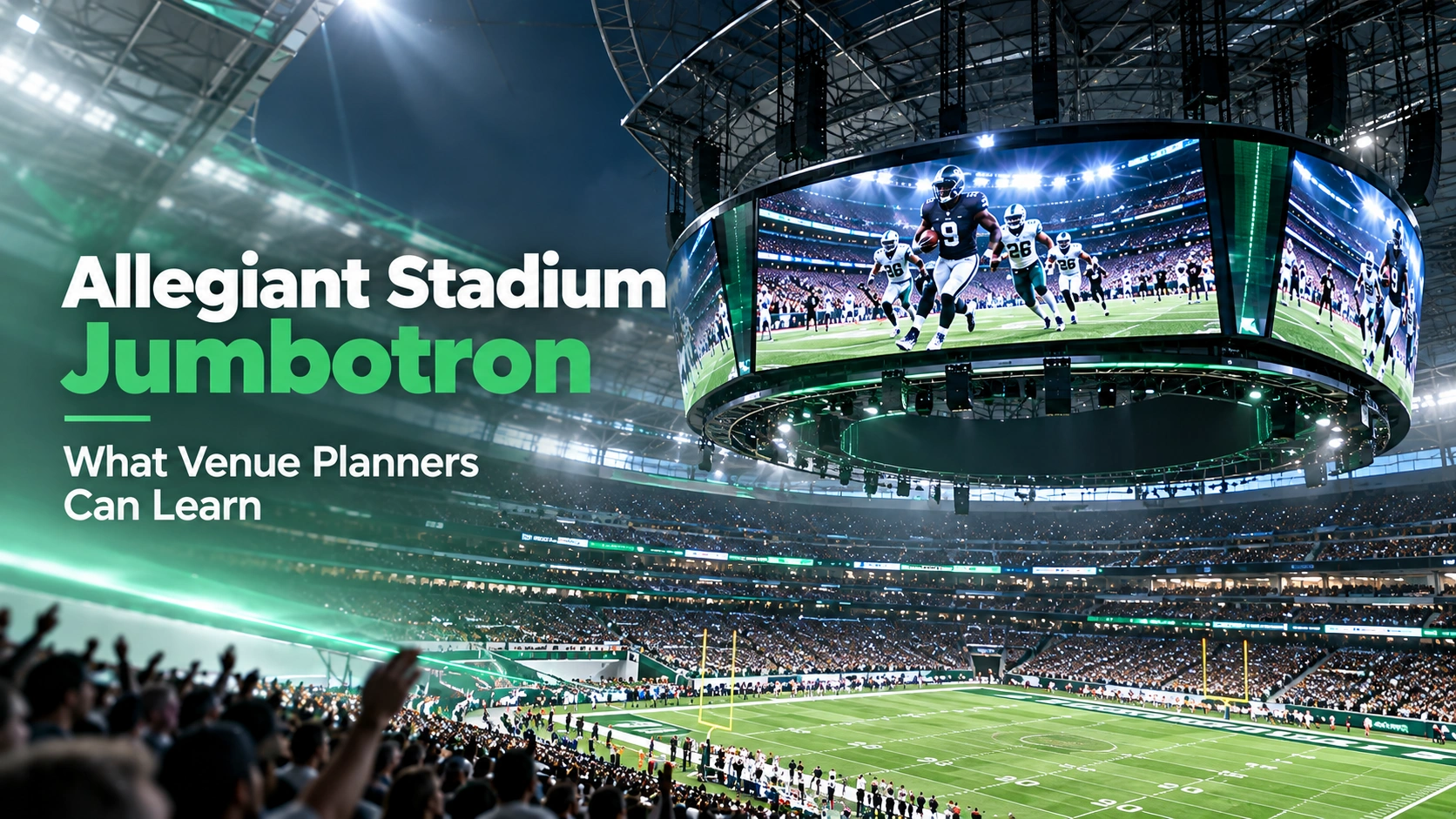
People searching for the Allegiant Stadium jumbotron often want a simple answer about an enormous screen. For stadium planners, however, a more useful question follows: how should the display experience of a prominent NFL venue inform the design of another stadium without turning a famous installation into an unsupported equipment specification? The distinction matters. A photograph reveals where a screen appears, but rarely establishes its cabinet design, electrical architecture, exact performance, maintenance access, or supplier responsibilities.
This article uses Allegiant Stadium as a recognizable point of discussion, while keeping all project-specific technical claims within the evidence published by Chipshow USA. Chipshow’s publicly reviewed materials do not establish the dimensions, equipment inventory, manufacturer identity, or full contractor list for the Allegiant Stadium installation. Accordingly, no figures or competing supplier claims are presented as established venue facts. This is an independent design discussion, not a Chipshow installation case study.
The practical value lies in applying questions raised by a high-profile venue to a real stadium project: how spectators see screens, how different content zones communicate, how architecture constrains LED hardware, and how integrators select equipment that fits the work they are contracted to perform. Those questions are relevant whether the venue is a professional stadium, a college ground, or a smaller multipurpose facility.
What Can Be Established About the Allegiant Stadium Jumbotron
Separate public recognition from documented technical evidence
The phrase allegiant stadium jumbotron refers to a highly recognizable venue display topic, but it does not identify a single, universally defined hardware package. A stadium may contain main replay displays, field-level advertising, architectural signage, and supporting screens in circulation areas. These categories can be discussed as planning concepts without pretending to know the exact equipment installed in a particular building.
For this article, the evidence boundary is deliberate. Chipshow publishes detailed information about its own LED products and general sports display design. It does not provide a verified, project-specific Allegiant Stadium hardware schedule in the materials reviewed. We therefore do not repeat widely circulated screen dimensions, display counts, prices, pixel specifications, or claims about an external manufacturer’s role. Those claims would need suitable permission and an authoritative source that satisfies the publication policy before inclusion.
What the supplier and manufacturer searches can responsibly answer
Searches for allegiant stadium jumbotron supplier or allegiant stadium jumbotron manufacturers indicate an understandable interest in who delivered the hardware. Yet a manufacturer’s identity, a hardware supplier, an integration contractor, and a structural installation team describe different responsibilities. A company can supply cabinets without delivering the finished audiovisual system; another firm can manage signal integration without manufacturing the LED panels.
Chipshow does not identify itself as an Allegiant Stadium project participant in the reviewed official website materials. Equally, those materials do not provide a verified list of other participating suppliers. It would be misleading to present a definitive manufacturer attribution on that basis. Readers seeking a complete project contractor history should request the venue’s approved documentation rather than infer it from this manufacturer-authored article.
For other stadiums, this is an actionable distinction. Ask manufacturers to define their supplied hardware and product documentation. Ask integrators to define processing, switching, cabling interfaces, commissioning, and controls. Ask qualified local professionals to establish the structural and electrical installation scope. Clear boundaries produce better project coordination than a broad claim that one company provided a complete jumbotron.
How Screen Placement Influences Stadium Viewing
Begin with spectators rather than the display catalog
A stadium bowl rarely presents one uniform viewpoint. Seats differ in elevation, direction, and distance from the field. A viewer may have a good view of the action but an awkward view of a board behind another seating section. For this reason, a display-location review should begin with actual seating geometry and the audience information that the proposed screen must convey.
The Allegiant Stadium jumbotron is a useful prompt to ask these questions, not proof of a particular engineering answer. Which spectator groups should see the main display? Where could structural elements interrupt that view? Does the screen remain readable from high-level seating? Should more than one display surface carry essential game information? These decisions need venue drawings and visual assessment, not a borrowed photograph or a generic screen-size recommendation.
The content itself changes the answer. Moving video can remain meaningful when displayed at considerable distance, while a small line of statistics can become unusable. A designer evaluating screen positions should therefore inspect sample score layouts, sponsor graphics, replay imagery, and any emergency or operational messages expected to appear on that surface. A screen that looks enormous on a rendering may still struggle to present small details to its most distant viewers.
Consider the visual relationship with the field
The playing area and the LED board compete for attention at different moments. Spectators naturally follow the field during live action; at stoppages they may look toward the largest screen for replays and supporting information. If the screen requires an uncomfortable turn or sits behind a frequent obstruction, increasing the resolution alone cannot solve the viewing problem.
Venue planners should also distinguish visual access to the screen from visibility of the playing field. These are related but separate matters. An architect may have already optimized seating for action on the field while the proposed display sits outside the most comfortable viewing arc. At that point, an alternative mounting position, a supporting screen, or a different content assignment could work better than merely selecting a larger cabinet format.
Screens also have an architectural presence when switched off. They occupy walls, support frames, and major sightlines through the building. The LED installation should therefore be reviewed alongside the design intent of the venue rather than treated as an isolated piece of equipment. Early coordination can make room for maintenance, cable routing, and physical mounting without undermining the architectural result.
Use legibility as the real benchmark
The best evidence of a successful display position is whether the intended audience can understand the message. For game information, that may mean recognizing scores, game state, or timing at a glance. For a replay, it means following the action. For a sponsorship message, it means seeing the main visual identity without relying on tiny copy.
This does not imply that every venue needs the same pixel pitch or brightness. The right choices depend on the actual viewing environment, the physical display size, and what the content designer places on the screen. Chipshow’s existing LED Jumbotron Screen Specifications article addresses the component-level terminology in more depth. Here the focus is on the placement decision that comes before that specification discussion.
A practical design review should use representative content and actual audience positions. If a proposed location cannot serve a critical seating zone, the issue belongs in the layout conversation before the equipment is ordered. The lesson from considering the Allegiant Stadium jumbotron as a benchmark is to judge the viewing relationship first, then refine the hardware around it.
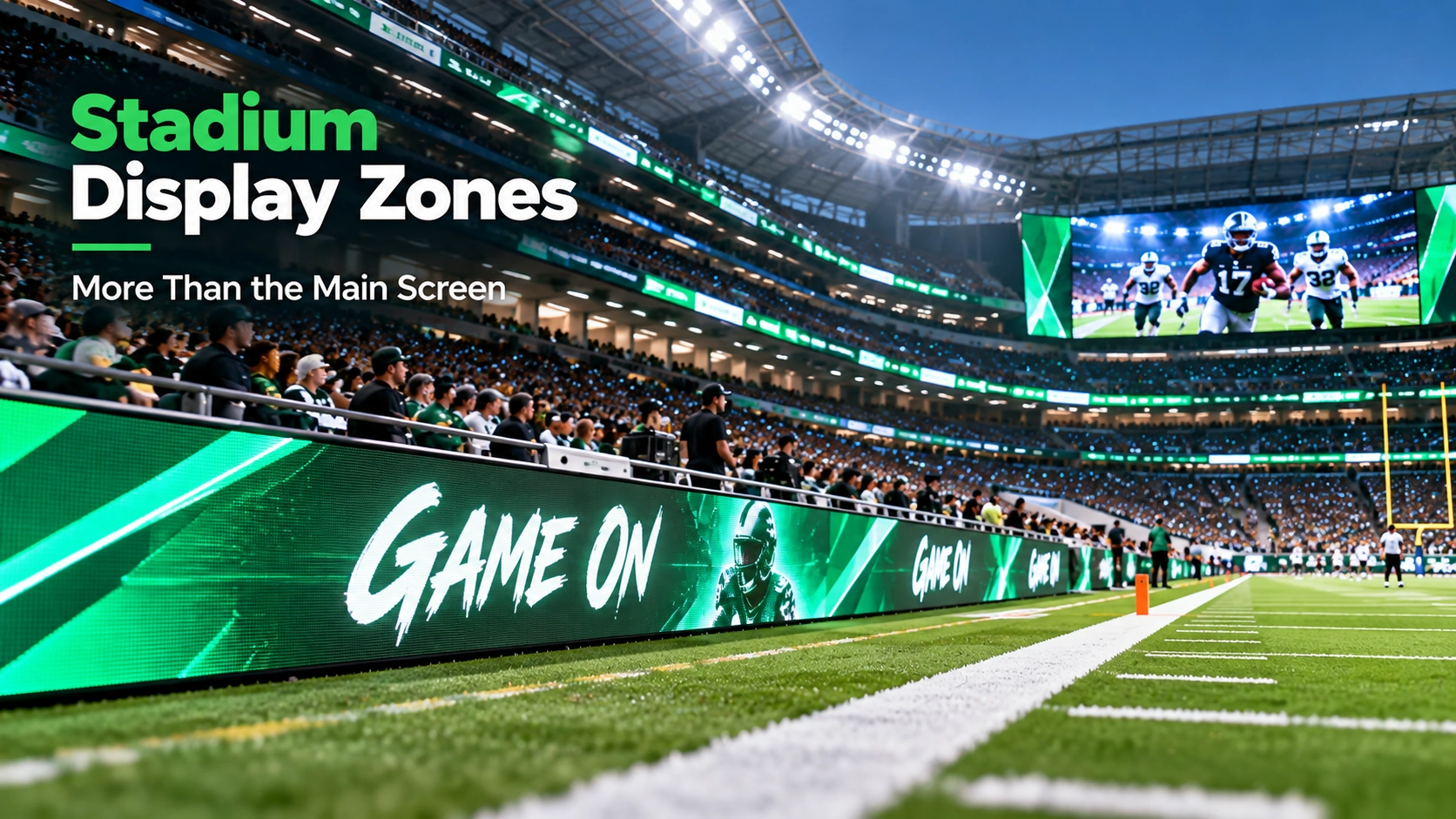
Give Different Display Zones Different Jobs
Main boards should prioritize shared event information
The main stadium board is typically the place where a large audience expects replays, event graphics, scores, and major announcements. That function calls for a content hierarchy that favors clarity across varied seating locations. It is a different job from providing a close-range interactive menu in a concourse or a continuous sponsor strip at field level.
For a new project, the content team and the venue operator should establish which information is essential and which content can be distributed to supporting displays. Putting everything on the largest screen can create a crowded composition. Conversely, an attractive cinematic replay can fail to communicate a score when the necessary text is too small or has been moved to a hard-to-find location.
The Allegiant Stadium jumbotron search topic often collapses every stadium screen into one label. That shorthand is not helpful for a hardware brief. A project should name each proposed visual zone according to the role it performs. Once the role is clear, the selected physical display can be evaluated for the viewing environment it actually serves.
Ribbons and perimeter surfaces are not interchangeable
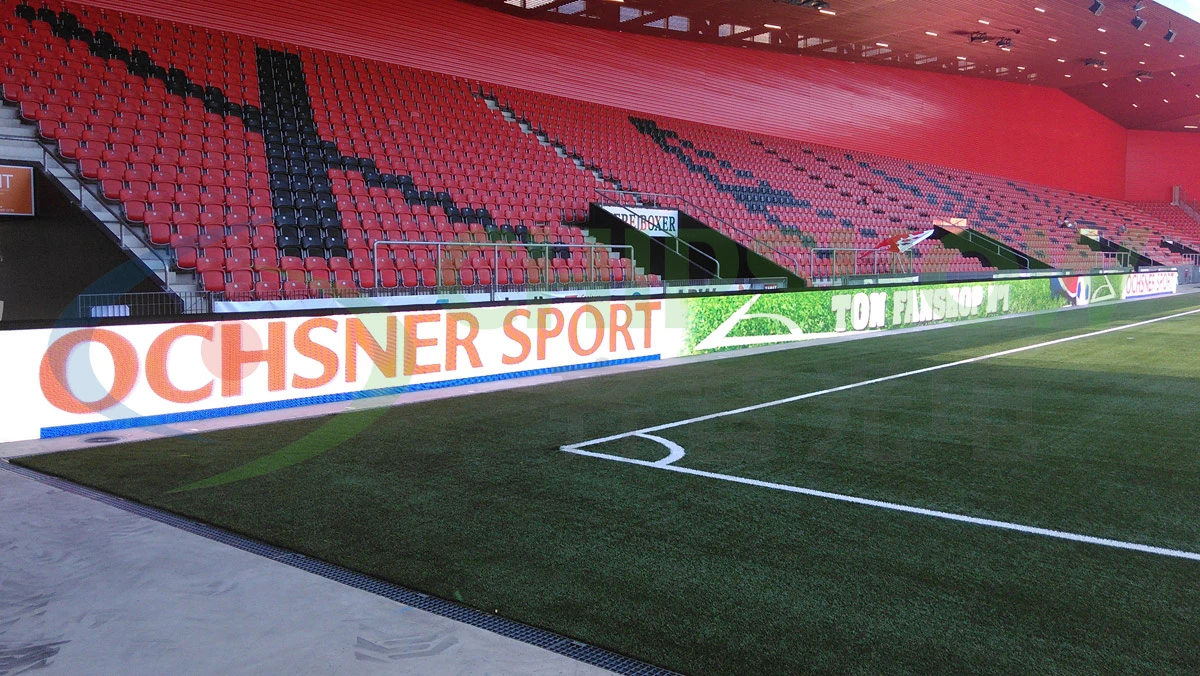
Long, narrow LED formats may carry sponsorship, event identity, or supporting graphics. Field-level perimeter displays introduce additional physical considerations because they operate near players and the playing surface. A product designed for that application cannot be assumed to fit a main end-zone board just because both use LED pixels.
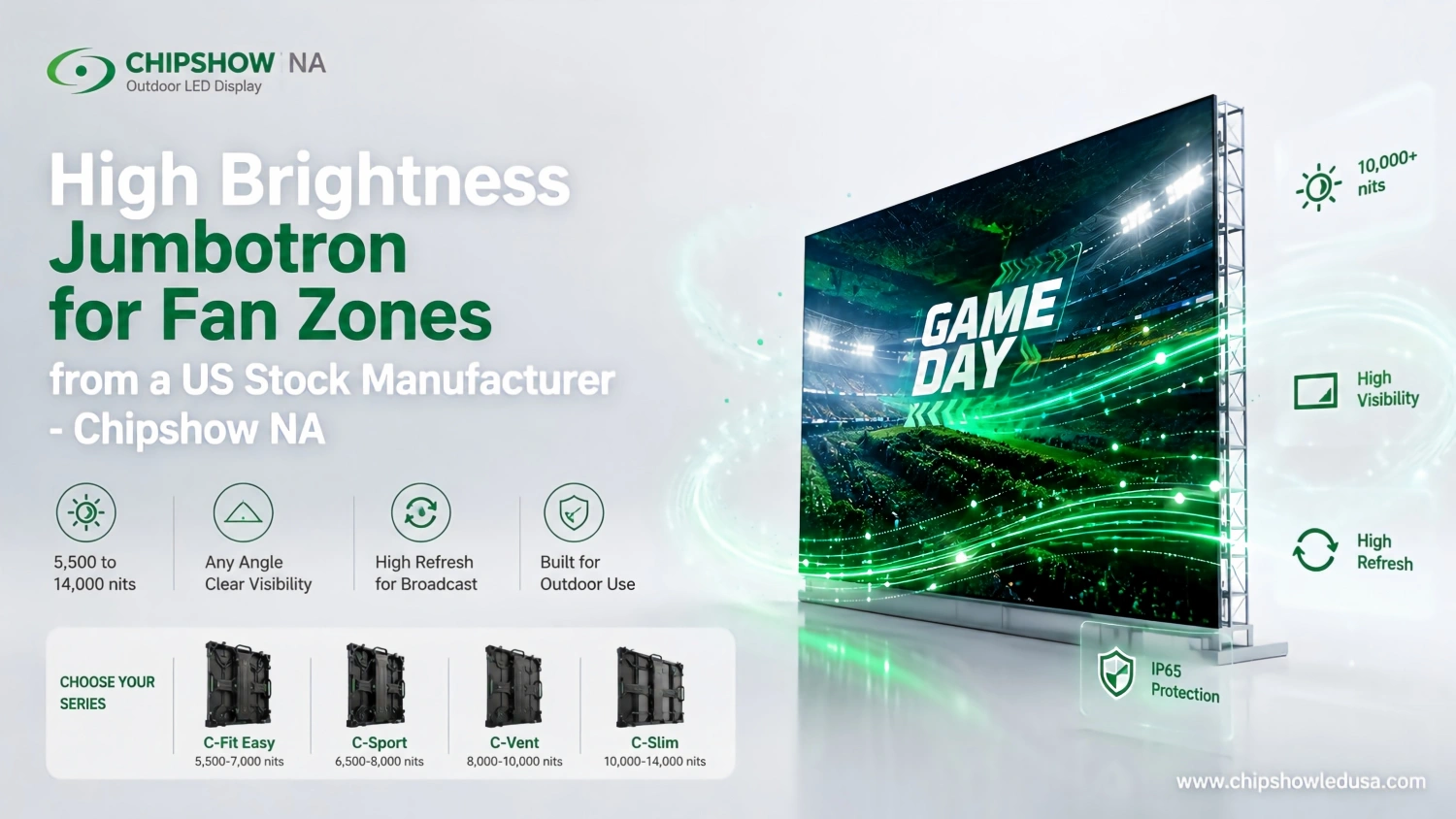
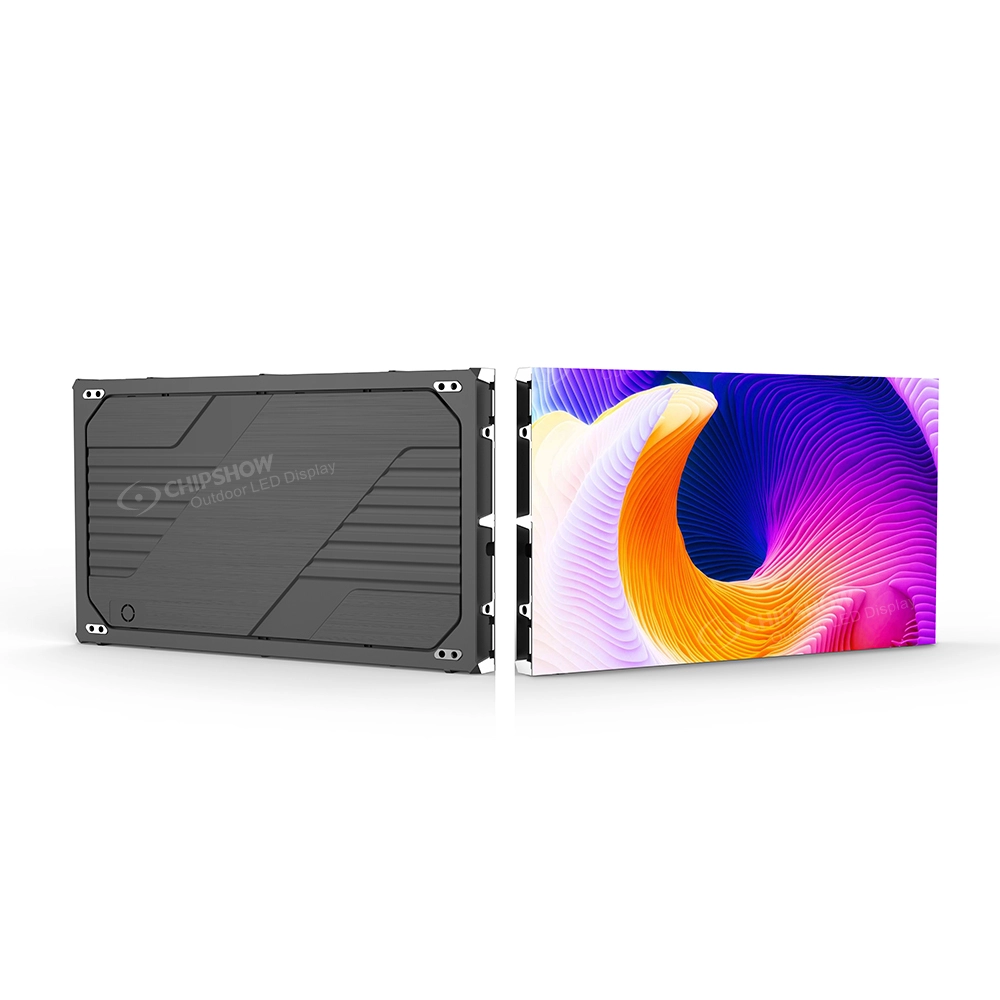
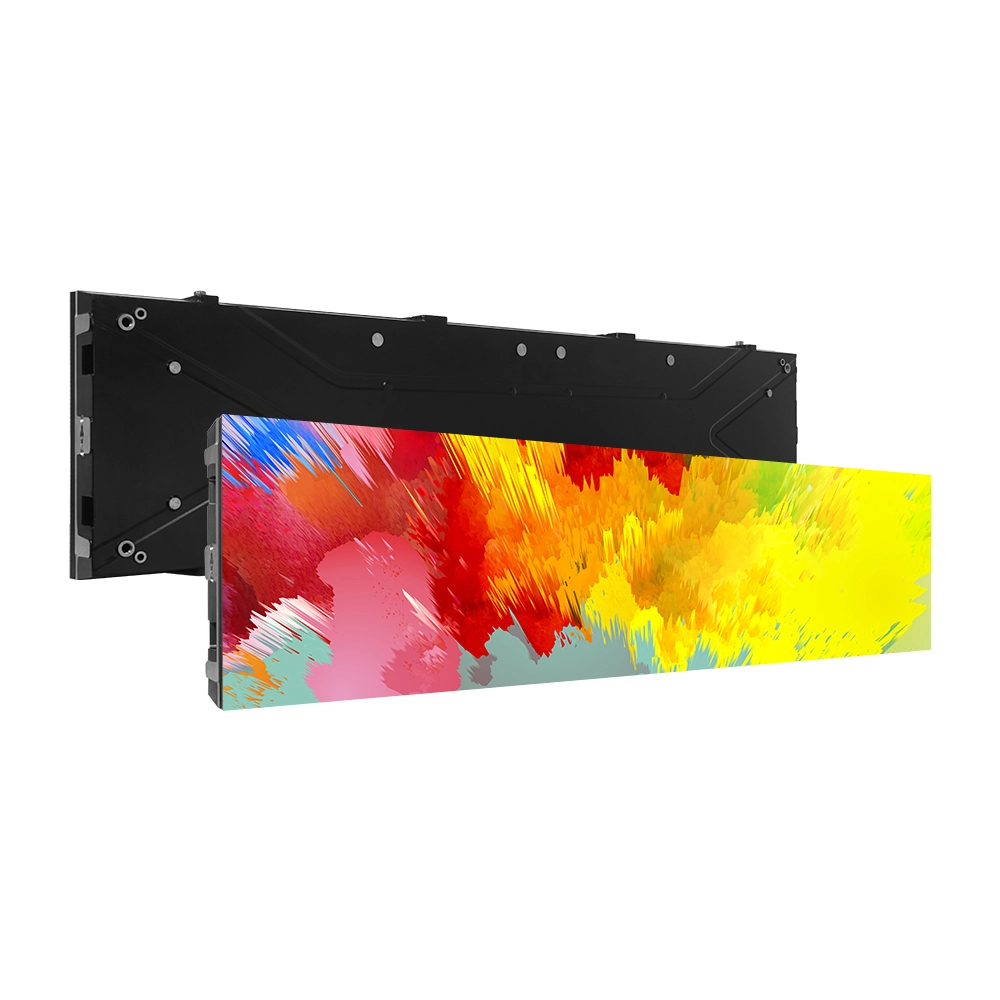
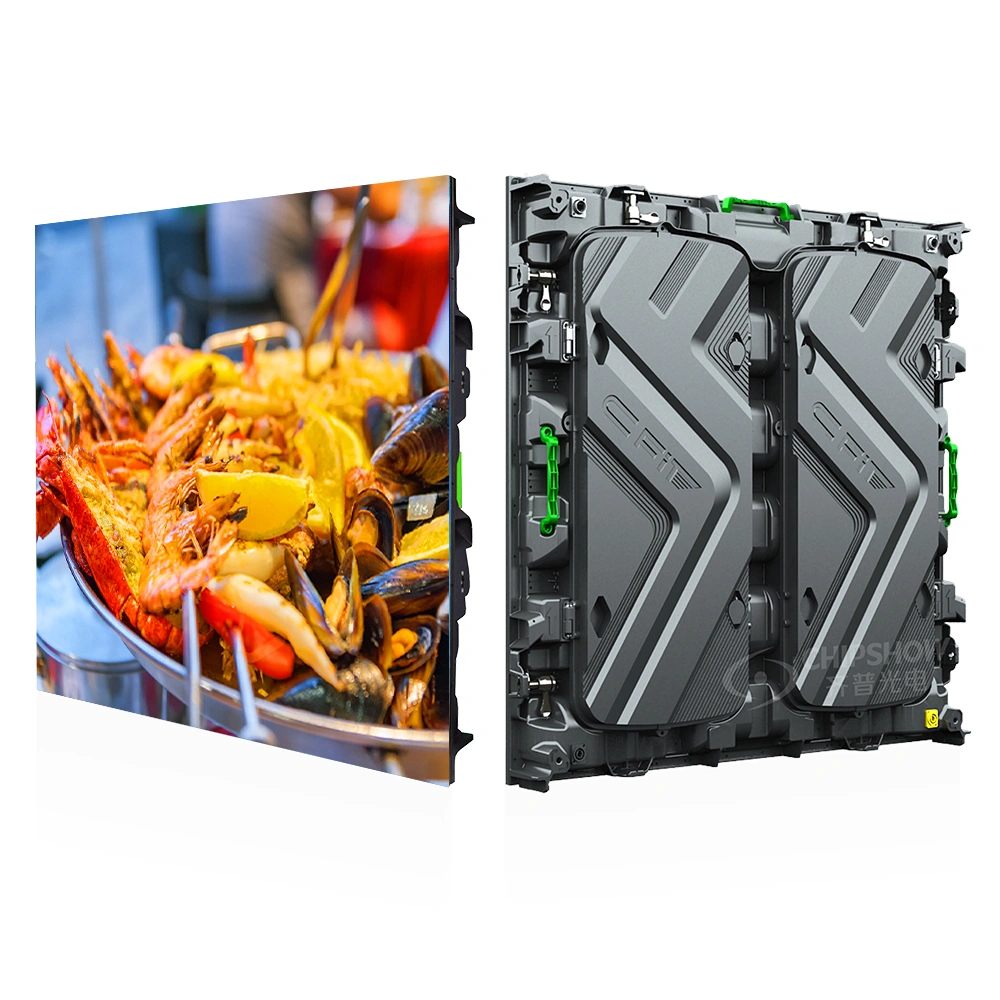
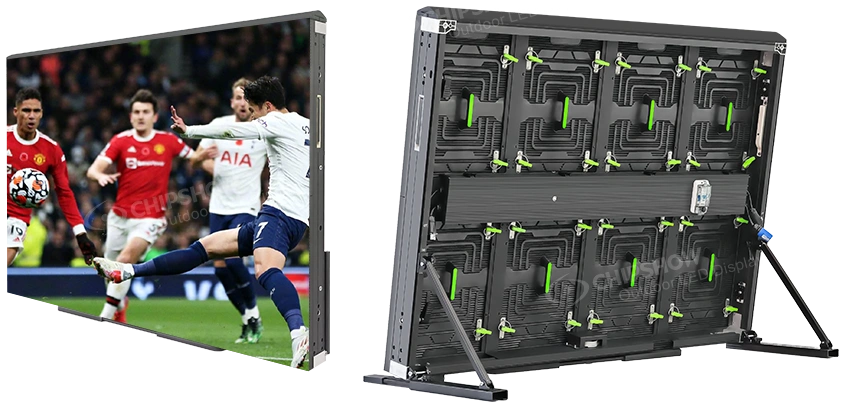
Chipshow’s official C-Sport P8 product page makes this distinction tangible. C-Sport is specified as a stadium perimeter LED display with a protective soft mask and polyurethane top padding. Its P8 configuration, wide 1280 by 900 millimeter cabinet format, and supported high-refresh variants address the needs of a particular sports display position. These are Chipshow product facts, not Allegiant Stadium equipment facts.
The value of this example is functional: the product is engineered around what happens near a field boundary. A main video board is typically evaluated around its own support structure, distant sightlines, and maintenance access. Using field-level protective features as a reason to select a major replay board would be a category error. The venue should not allow a familiar word such as jumbotron to erase such differences.
Circulation areas need their own communication style
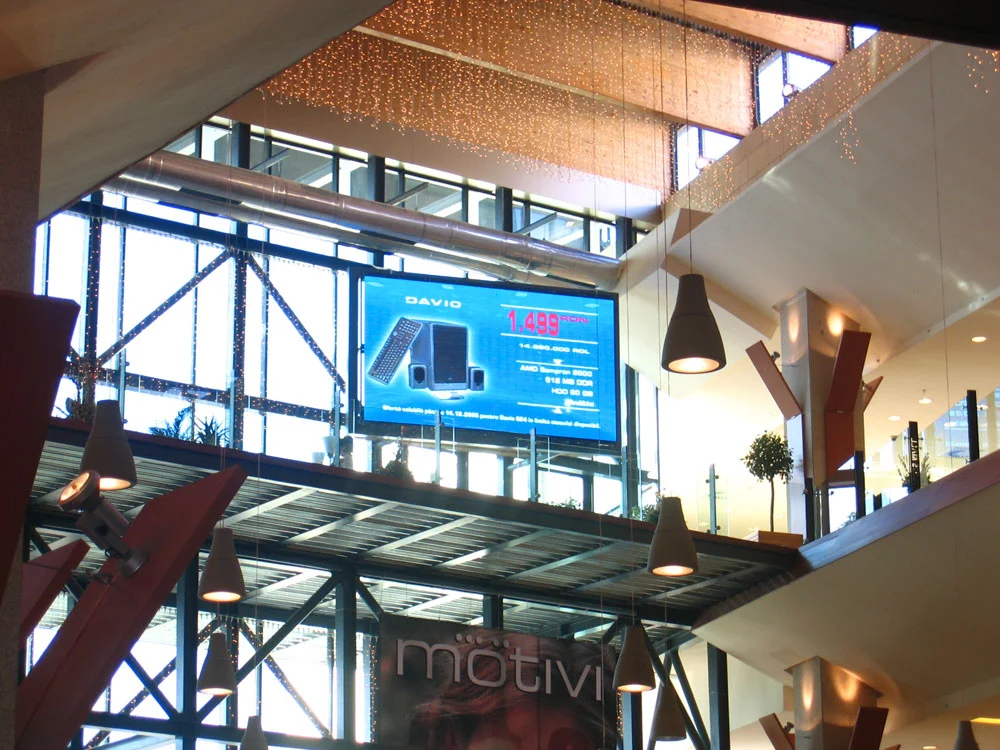
Concourse and hospitality displays are often viewed briefly and at relatively close range. Their information may concern wayfinding, event status, hospitality services, or venue branding rather than extended replay footage. A visitor moving through a busy passage may only have a few seconds to understand the message.
This places emphasis on concise content and appropriate physical placement. A screen mounted too high, hidden by a column, or surrounded by competing signage may communicate poorly regardless of its image resolution. Indoor service access and architectural integration can also be more important than outdoor peak brightness. Each setting needs its own assessment.
The design principle is not to copy the display inventory of another stadium. It is to create a coherent information environment. An important message should appear where the audience can realistically use it, and different surfaces should complement rather than compete with one another.
Architectural LED and the Public Facing Venue
An exterior screen serves a different audience
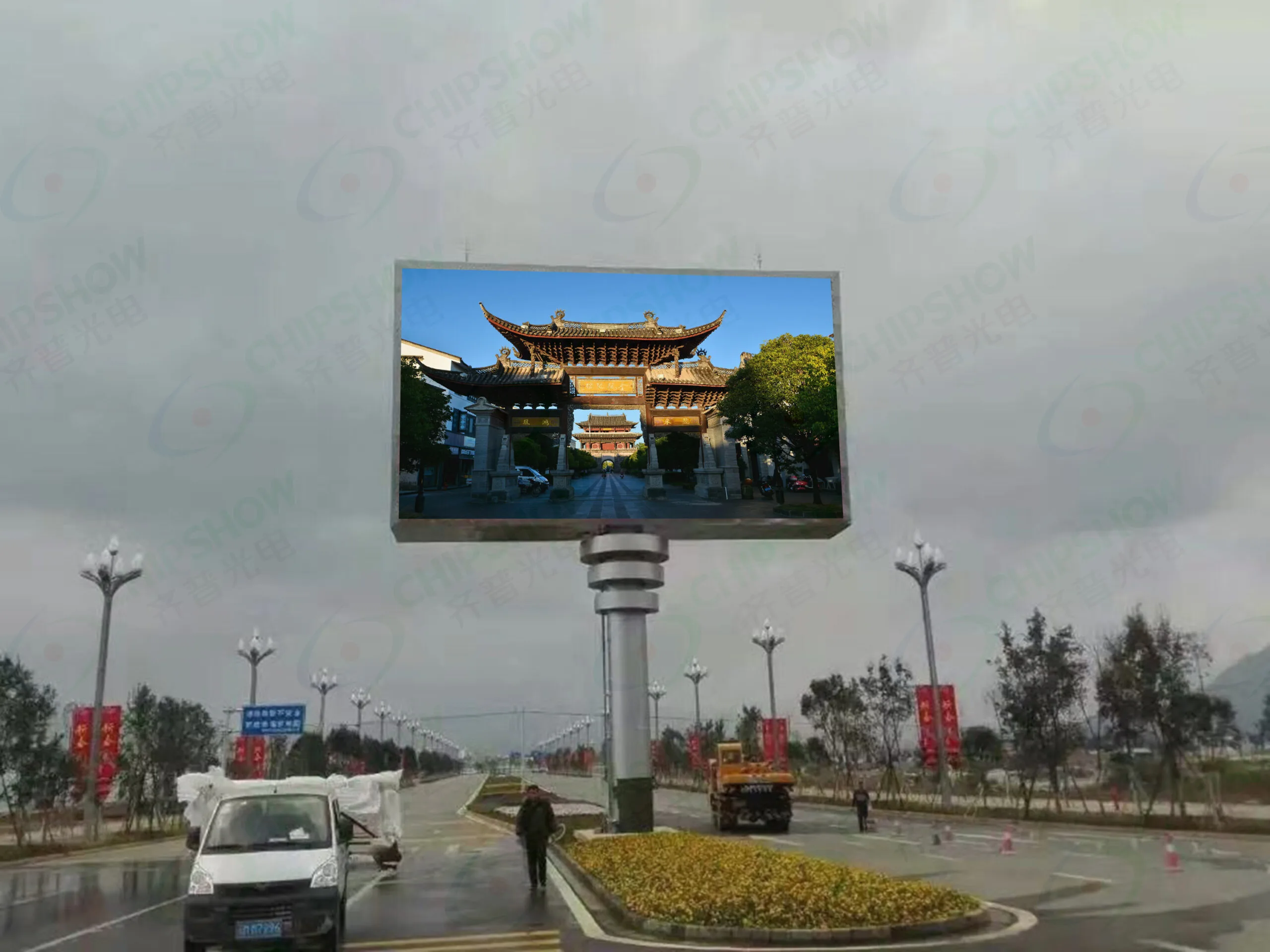
That audience changes content priorities. A passerby may only see the display briefly, perhaps from an oblique angle or through strong ambient light. A concise event identity may work better than detailed graphics designed for seated spectators. The building facade, surrounding context, and local signage rules also shape what is appropriate.
Nothing in Chipshow’s reviewed official website materials establishes the detailed construction of Allegiant Stadium’s exterior display. We do not attribute a transparency ratio, wind-load value, weight, or structural arrangement to that specific venue. Instead, Chipshow’s published outdoor and architectural hardware categories provide a grounded basis for explaining the kinds of decisions that such an installation raises.
Match open architectures to actual site conditions
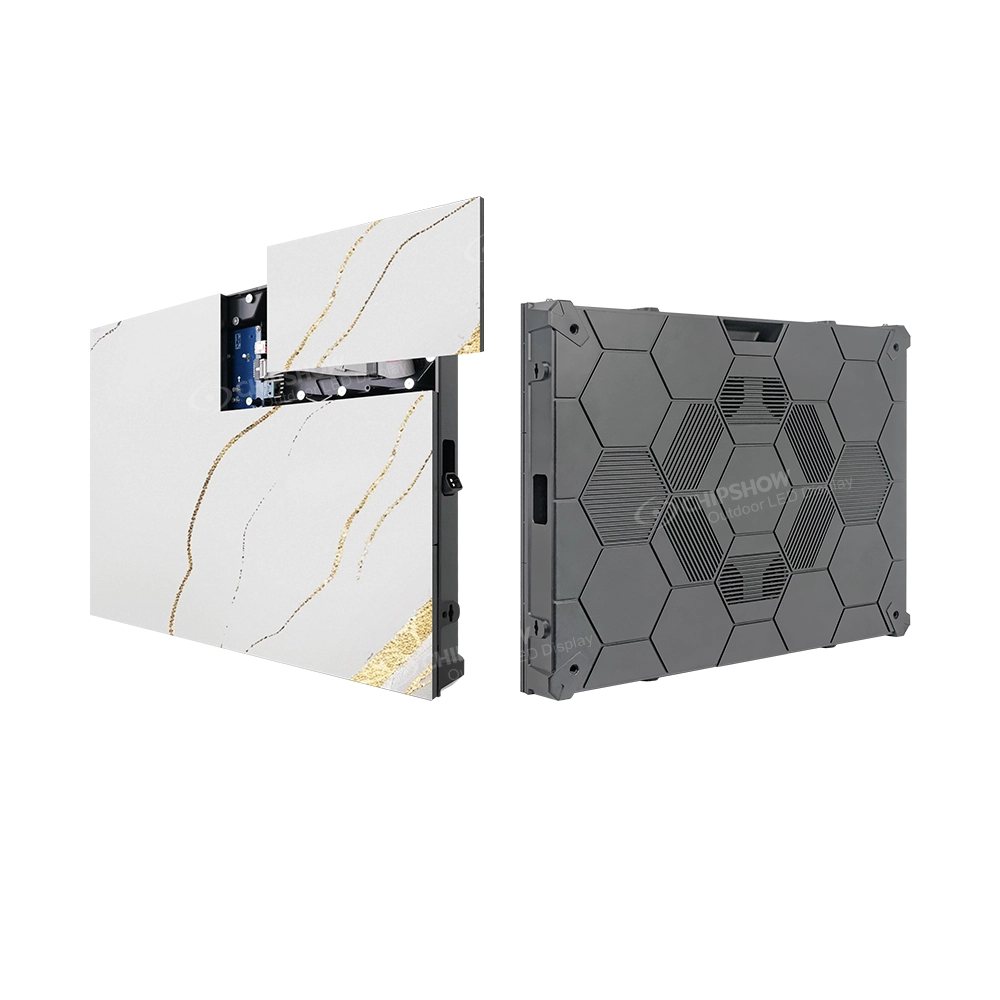
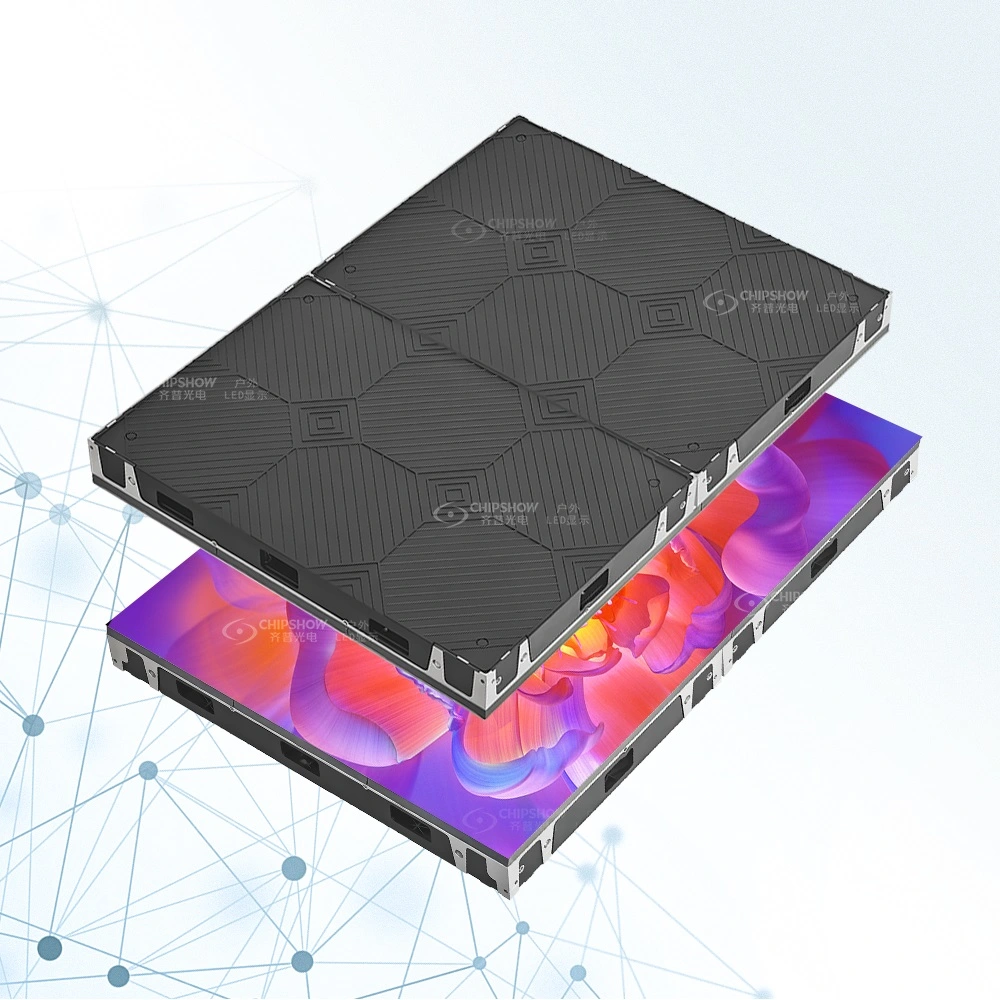
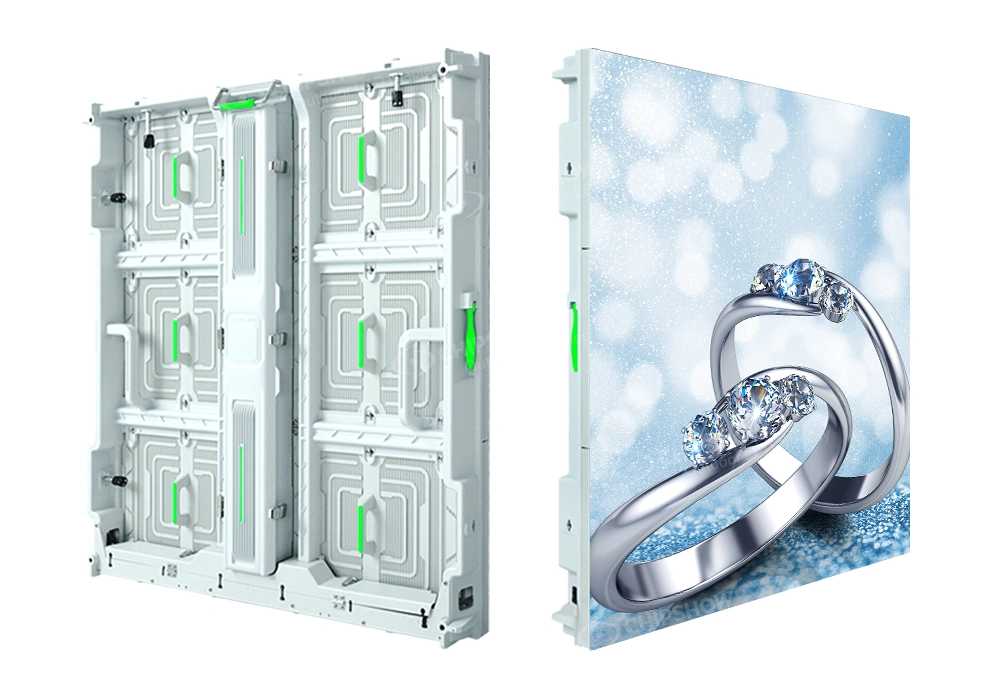
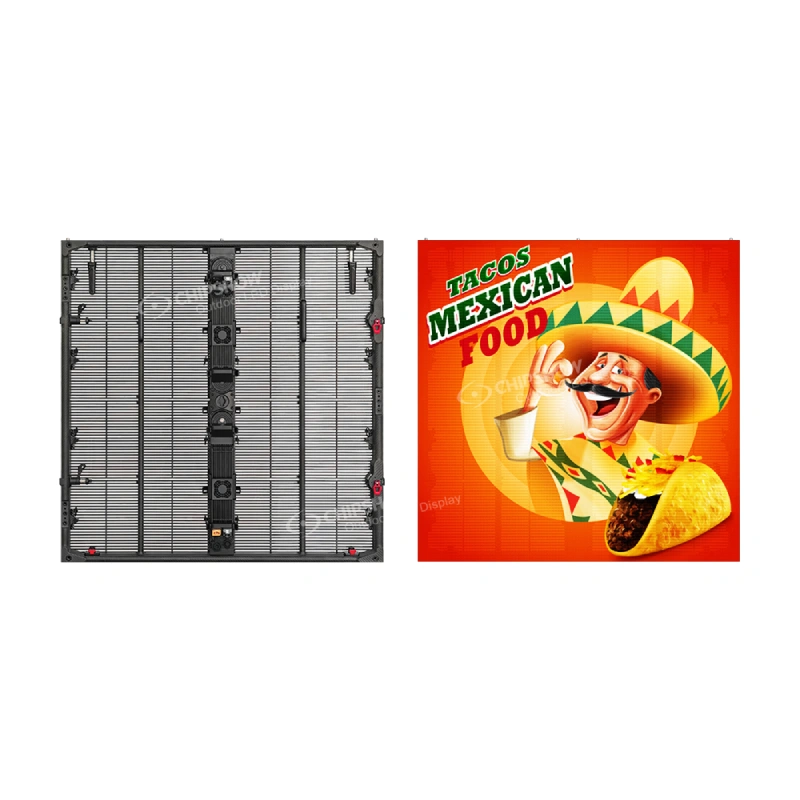
Chipshow’s C-Vent line is positioned for ventilated outdoor billboard and architectural applications. Its open design approach is relevant when considering the relationship among display construction, airflow, support, and maintenance. A project engineer still has to evaluate the actual assembly, mounting arrangement, local exposure, and manufacturer documents for the chosen configuration.
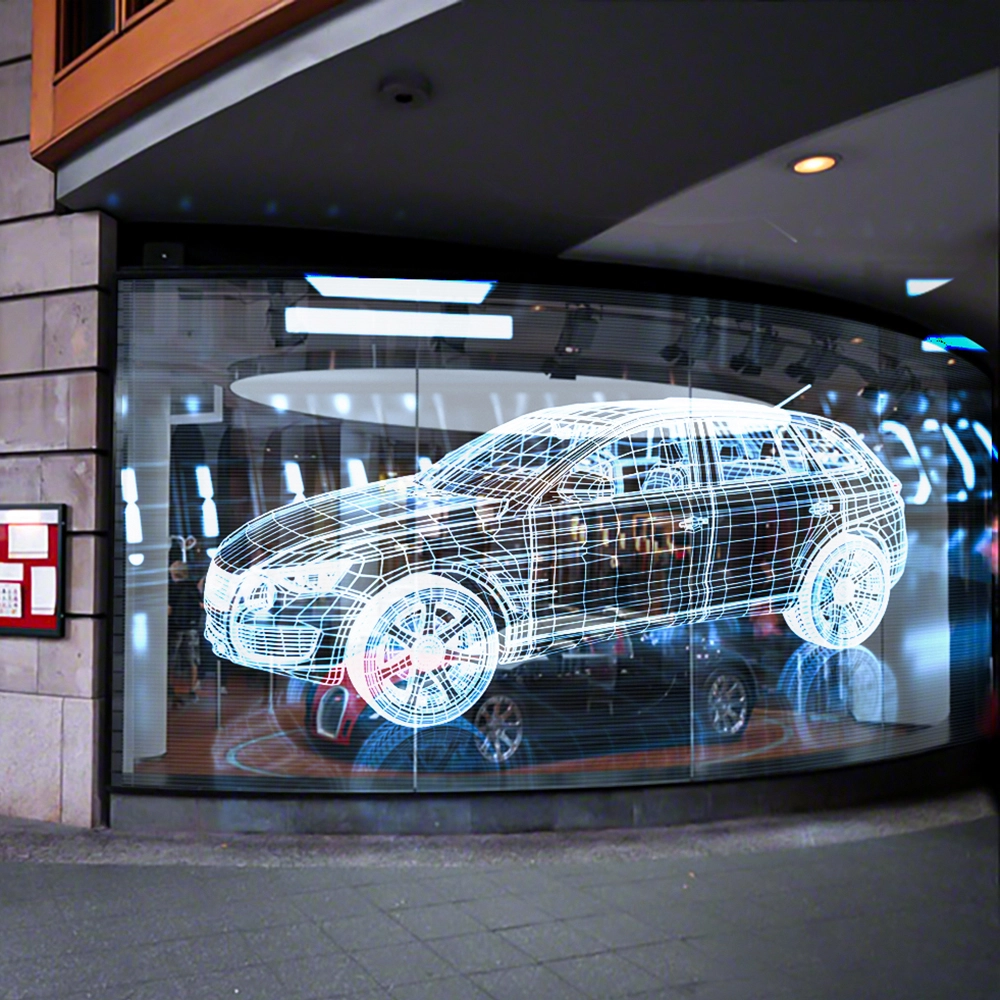
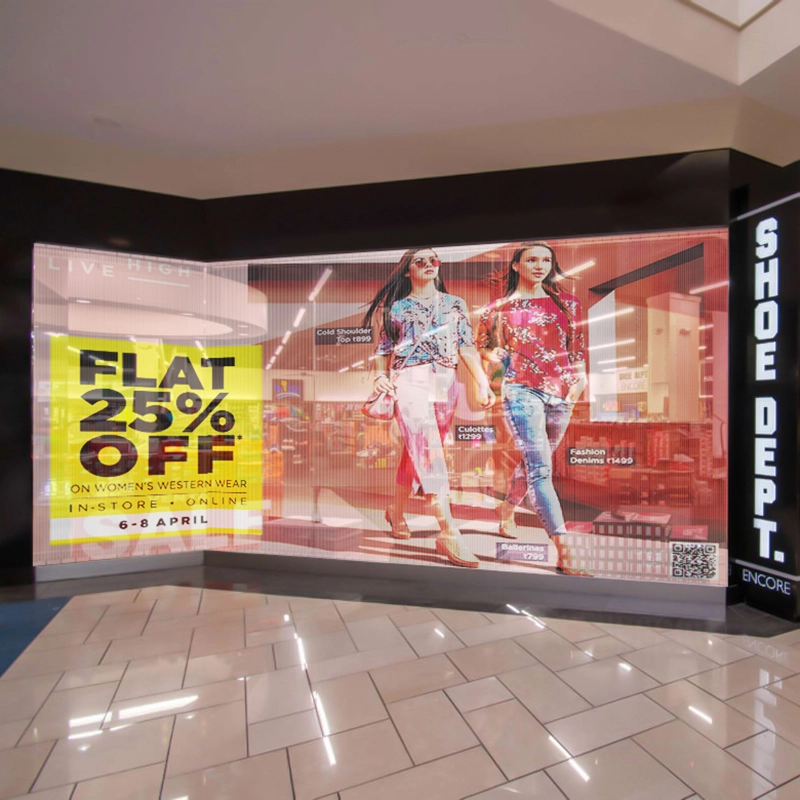
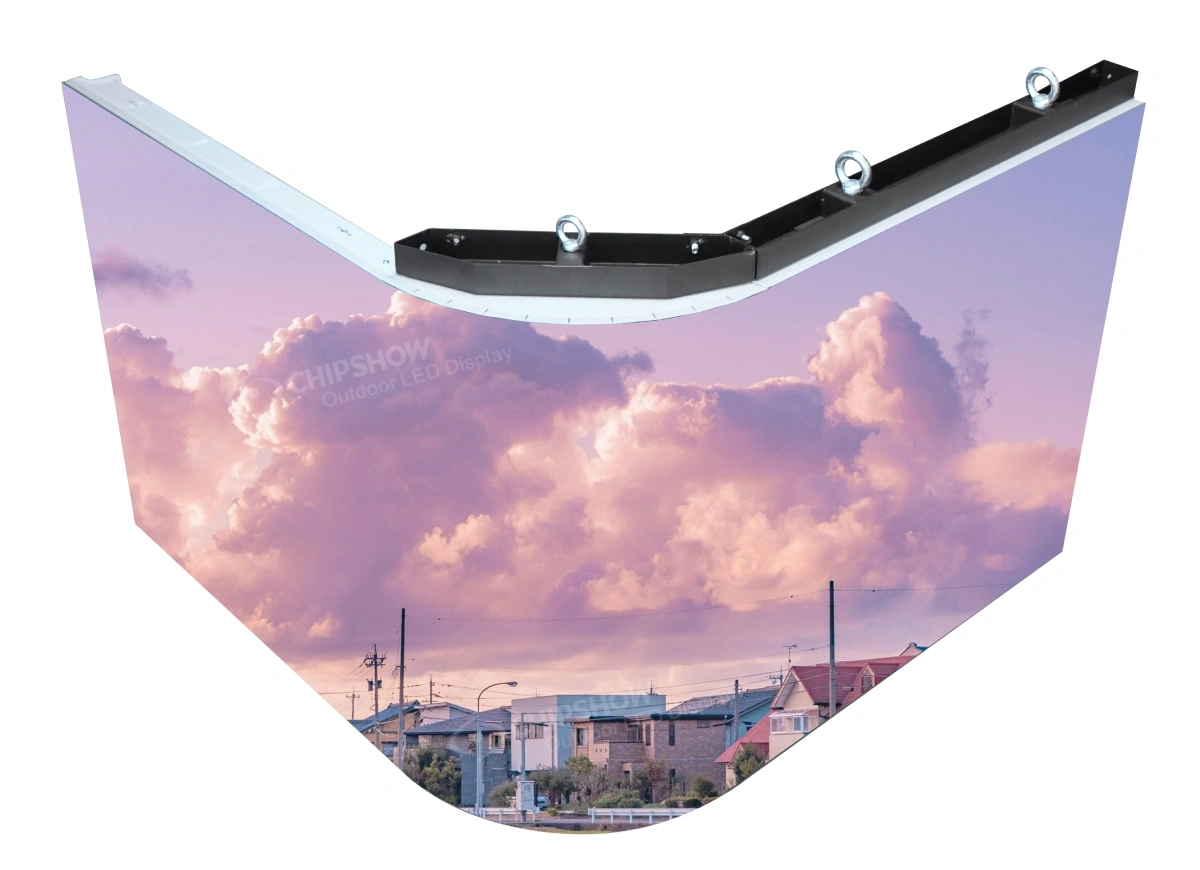
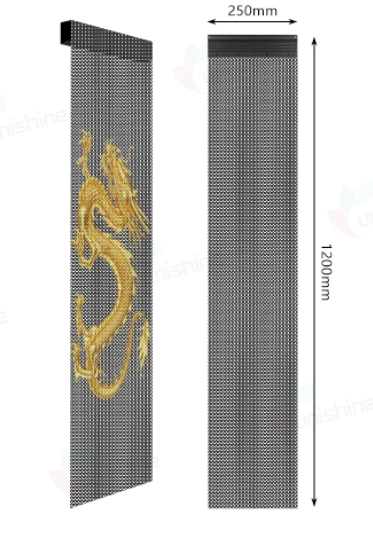
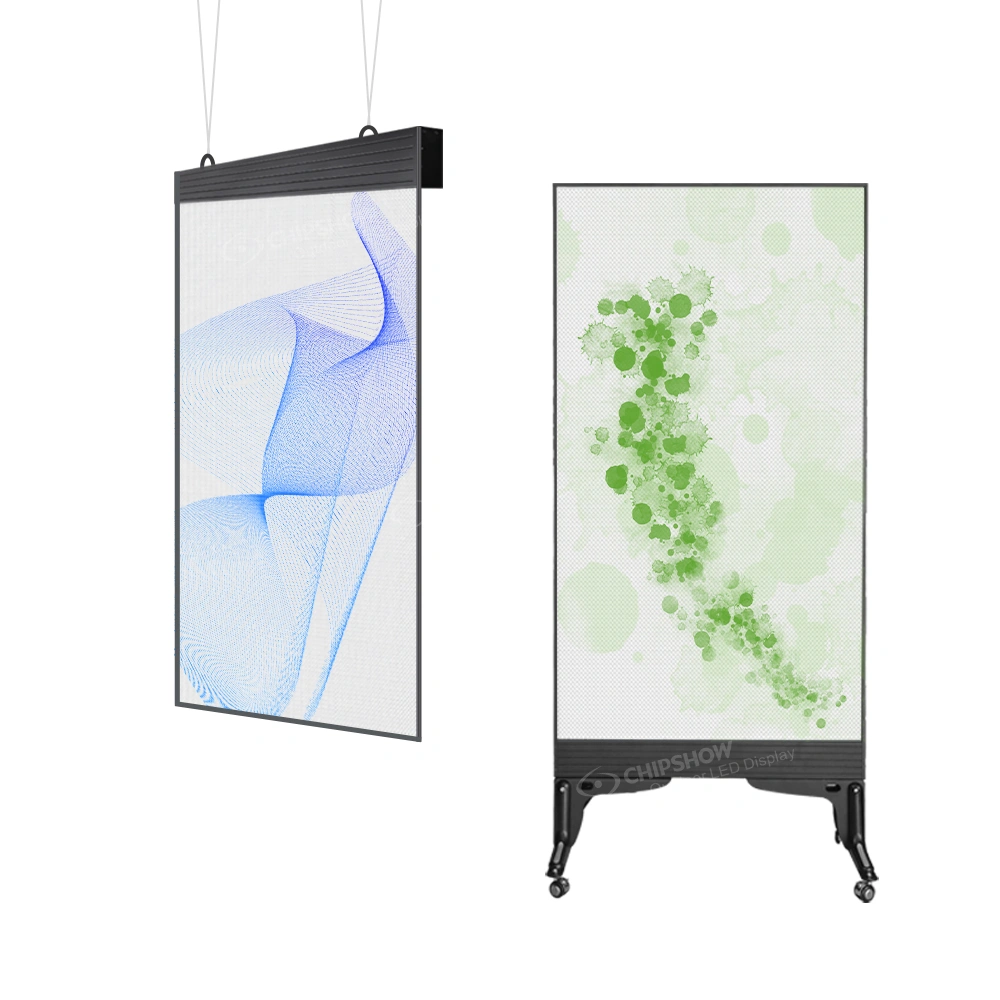
Another relevant category is transparent media-wall hardware such as the C-Mesh G family shown in Chipshow’s product catalog. Transparency can be helpful for some architectural installations, but a transparent media wall and a ventilated billboard are not automatically equivalent products. Their physical mounting interfaces, pixel arrangements, and operational constraints may differ significantly.
Think beyond the first event on the calendar
A public-facing LED surface is an architectural feature as well as a communication channel. Its content may change with the venue program, but its support structure and maintenance routes remain in place. The display should therefore be considered within the building’s longer operating life.
Will service crews reach modules without disrupting surrounding access? Can the venue change content while maintaining a consistent public identity? Are the control and power interfaces coordinated with the intended building systems? These questions are more durable than copying the dimensions of a famous facade display.
This topic also has a natural content boundary. Advertising revenue projections and detailed DOOH financial models belong elsewhere. The point here is to understand the different audiences and physical conditions associated with exterior venue communication.
Multiuse Operations Change the Display Brief
A venue display system has more than one operating mode
Modern stadiums may switch between sporting events, entertainment, presentations, and community uses. A fixed LED installation must work within those different production contexts. What changes most often is the content and signal workflow, not the mounting position of every display.
A visual layout optimized only for one game-day format could become restrictive when an event requires a different arrangement of graphics or video. The project should establish which content areas need independent control, which information must remain consistent, and who in the venue organization has operational responsibility for each system.
This is a general venue-planning lesson, not a claim about Allegiant Stadium’s undisclosed software or processing topology. Without documentation from a relevant source approved for this article, the exact control hardware or redundancy configuration at that venue should remain unstated.
Camera-facing content deserves an operational test
Some stadium displays enter live camera shots while others mainly serve people inside the venue. The display’s role affects how its image behavior should be validated. A screen used in broadcast coverage may require careful coordination among LED refresh behavior, video processing, camera exposure, and content presentation.
Chipshow publishes camera-relevant specifications for supported C-Sport configurations, including a refresh rate of at least 3840 Hz. That figure identifies a product capability but is not a guarantee that every camera, shutter setting, or replay workflow will be free of artifacts. It should never be attributed to the Allegiant Stadium equipment on the strength of a Chipshow product page.
The detailed relationship between frame rate, scan behavior, and slow-motion capture belongs in Chipshow’s dedicated 4K Jumbotron Live Broadcasting article. For this benchmark discussion, the operational lesson is simpler: include representative cameras and content in the project acceptance process when broadcast performance matters.
Service access should fit the event schedule
A display that is easy to operate can still be difficult to maintain. Some venues have limited work windows between events, restricted equipment access, or installations located high above circulation areas. Mechanical service planning is therefore part of the original display concept.
The technical review should distinguish accessible modules from replaceable power assemblies, receiving hardware, or connection points. A front-service feature on one product does not mean that every component can be replaced from the same location. Similarly, a rear-service arrangement might work well where the building has a suitable maintenance corridor.
Planned spare parts and configuration documentation can support more predictable service. But a manufacturer’s general stock statement should not be treated as a promise that every exact part will be immediately available. Product variants, batches, and agreed spare allocations must be identified for the actual project.
Apply the Allegiant Stadium Benchmark Without Copying It
Translate the reference into venue-specific questions
The most valuable use of an Allegiant Stadium jumbotron comparison is not to produce a lookalike equipment schedule. It is to give the planning team a structured way to challenge its assumptions. What do spectators need to see? Which displays serve operational information rather than entertainment? How will the screens fit within the building? Who will maintain them after opening?
A high-profile stadium creates expectations of scale, but a smaller facility has different audience distribution and operating resources. It may place its highest priority on one well-positioned main board rather than an extensive display network. An arena may require a different orientation. A municipal venue may use its displays for a wider range of community functions.
The design should follow those circumstances. The value of the benchmark is that it encourages a conversation about display roles and venue experience before the team commits to a product family or screen outline.
Keep technical selection connected to the intended location
After the display locations are defined, technical requirements can be developed against the actual environment. Outdoor positions raise questions about daylight visibility and environmental exposure. Field-level boards raise questions about protective construction and camera use. Indoor public spaces raise different expectations for image detail and access.
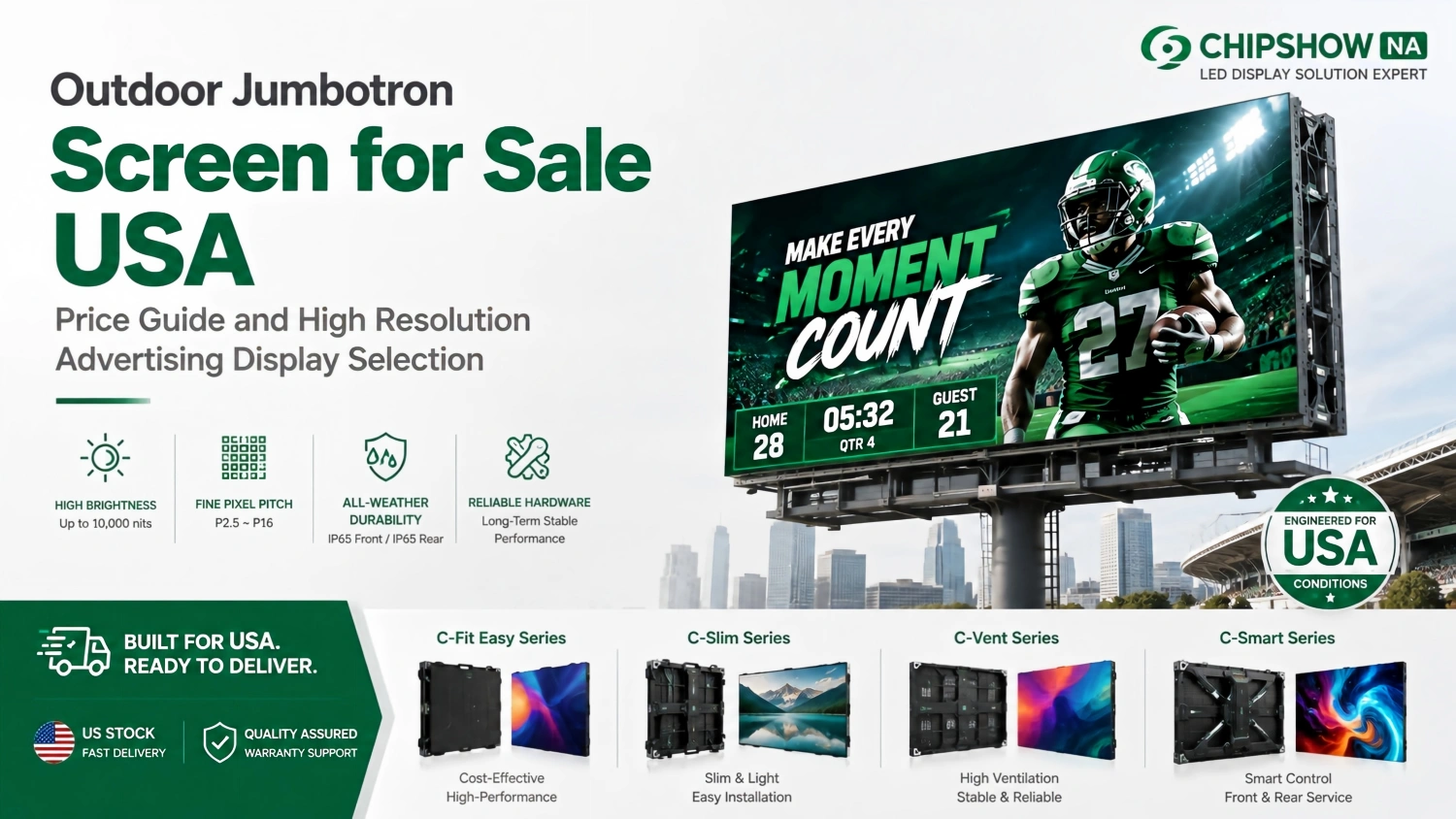
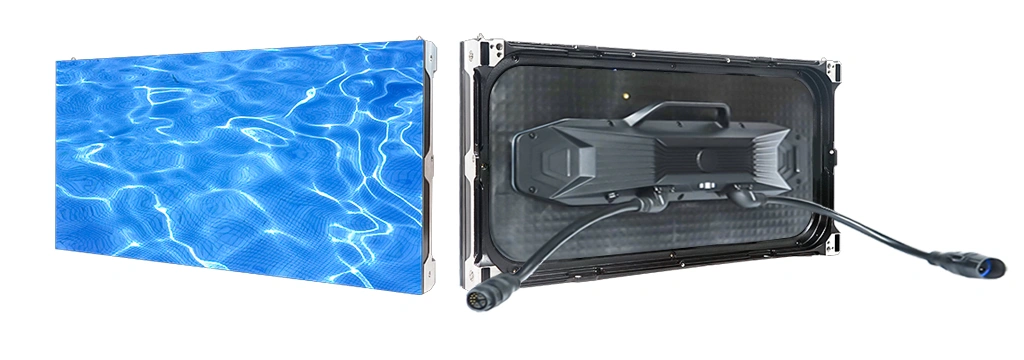
Chipshow’s product catalog illustrates these distinctions. C-Sport serves specific perimeter applications; C-Slim provides fixed outdoor configurations; and C-Vent supports relevant ventilated architectural display applications. Their published capabilities give the project team starting points for discussion, not proof that one cabinet can meet every role.
A serious selection process also distinguishes manufacturer data from design approval. Product specifications can inform the integrator, but the project requires its own architectural, structural, electrical, and operational review. No statement about a product category replaces that work.
Make the boundary between hardware and installation explicit
Chipshow’s North American positioning emphasizes manufacturer-side LED hardware and documentation for channel partners. The local AV integrator and qualified project team retain the site-specific responsibilities assigned under their contracts. That includes structural coordination, electrical work, mounting, signal integration, and local commissioning where applicable.
This separation is especially useful when a venue has multiple types of displays. The project can discuss hardware possibilities without assuming the manufacturer will perform every field activity. It also protects the scope of integrators who are accountable for the final installation.
For procurement researchers, the important distinction is between evaluating a manufacturer’s relevant product capabilities and confirming a historical supplier for a named stadium. Chipshow can support the former for its published products. Its reviewed website materials do not establish the latter for Allegiant Stadium.
Chipshow Hardware Relevant to Sports and Outdoor Applications
Comparing documented product roles
Chipshow’s official catalog supports a small but useful comparison across distinct display functions. The figures below concern Chipshow product families and their documented configurations only. They are not Allegiant Stadium installation data, and specifications should be confirmed for the exact variant quoted to a project.
| Chipshow product | Published product role | Documented configuration examples |
|---|---|---|
| C-Sport P8 | Stadium perimeter LED display | P8 pitch, 1280 × 900 mm cabinet, protective soft mask and PU top padding, supported refresh at or above 3840 Hz |
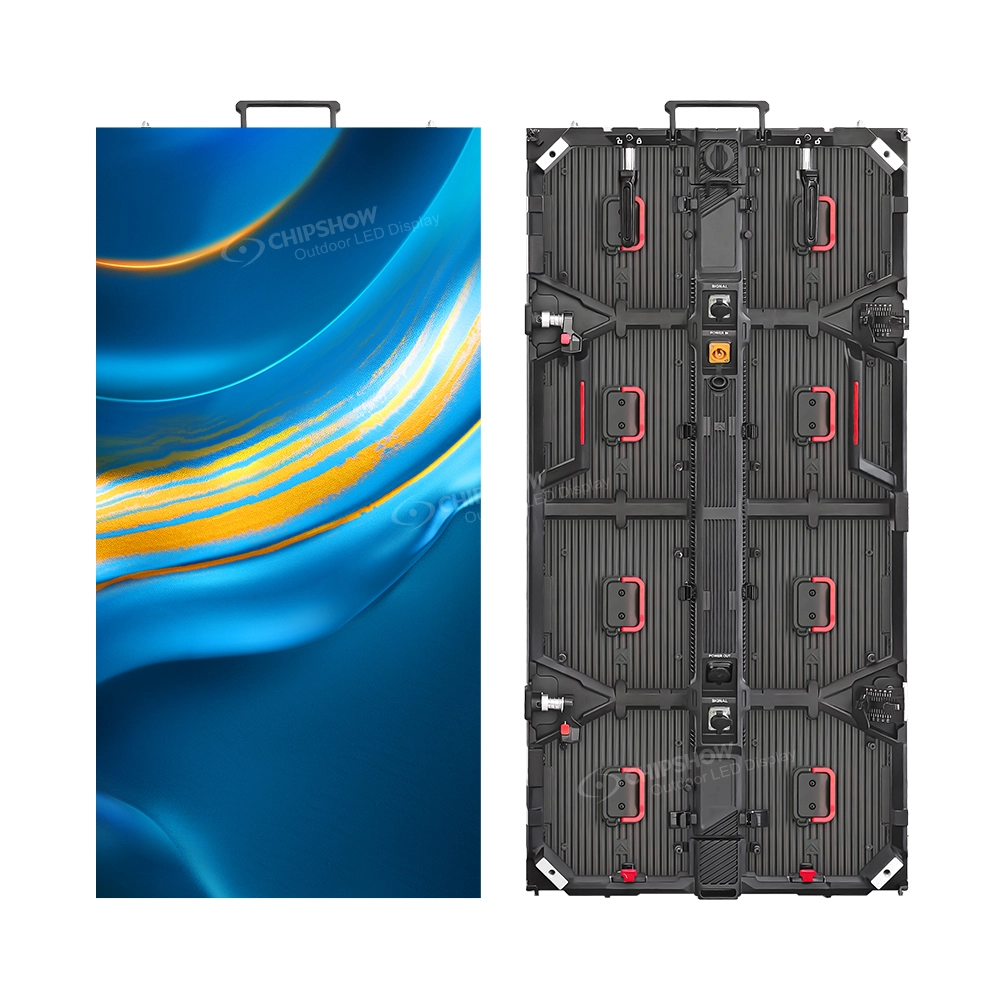
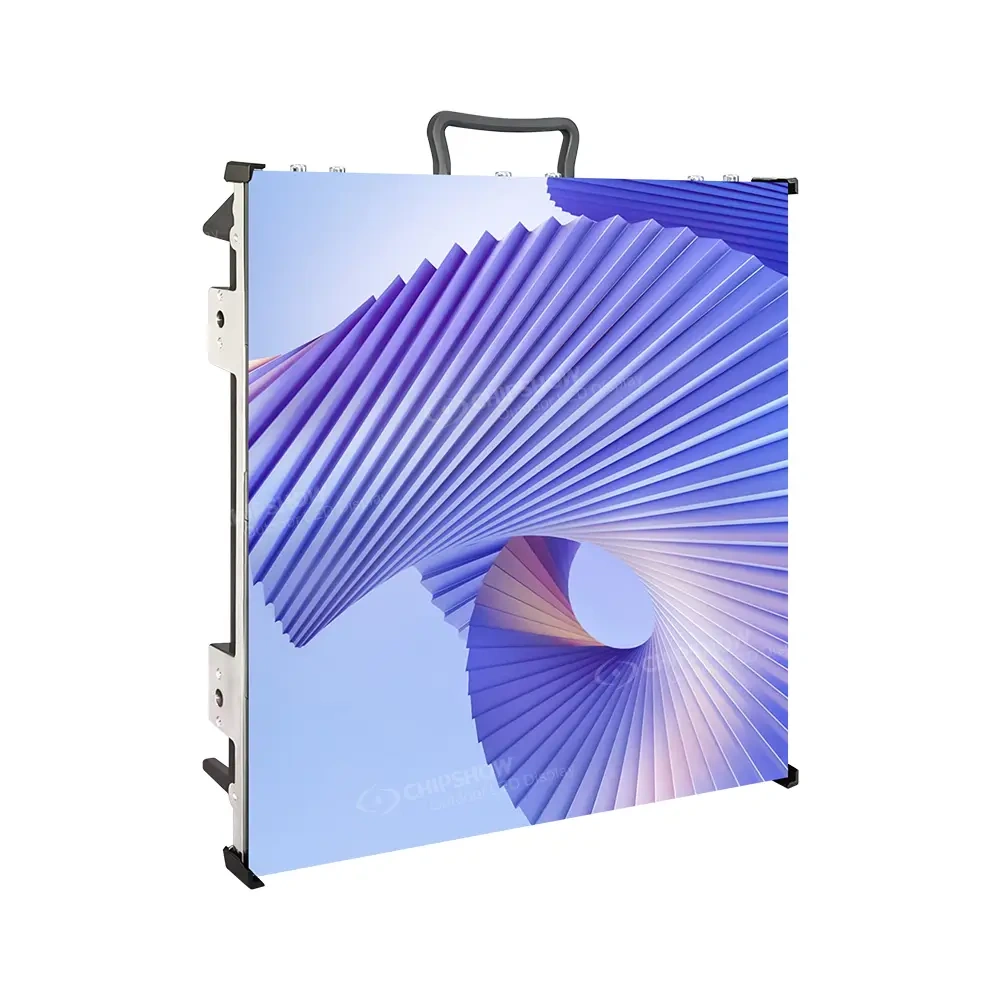
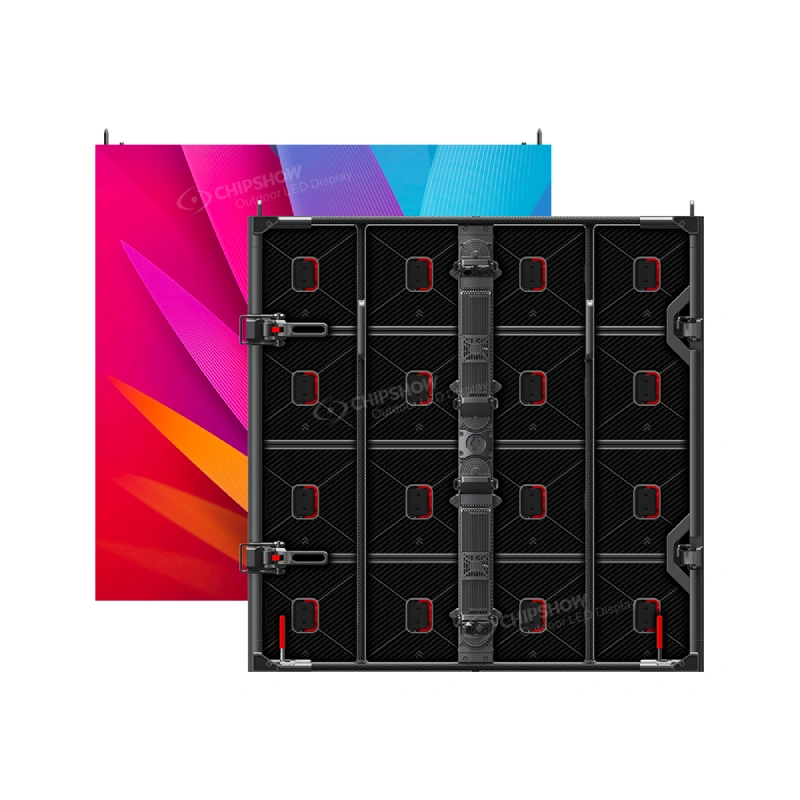
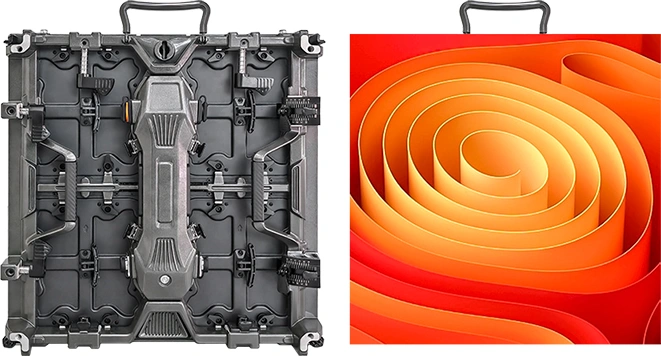
| C-Slim | Fixed outdoor LED display | P4–P16 family options, 960 × 960 mm cabinet, selected ICE configurations up to 14,000 nits |
| C-Vent | Architectural and billboard LED | Ventilated outdoor display construction; exact configuration varies by application |
The comparison has a narrow purpose: it shows why a sports perimeter display, a fixed outdoor display, and an architectural ventilated product should not be merged into one generic jumbotron specification. Each responds to a different set of physical and operating requirements.
Product documentation has more value than a borrowed case study
A project team interested in Chipshow hardware can review the relevant product catalog, the C-Sport perimeter platform, and the C-Vent architectural range. Manufacturer documentation gives the team a way to identify the actual cabinet, compatible options, and maintenance provisions under consideration.
A named stadium can provide design inspiration, but it cannot replace the product-specific information needed for engineering review. Likewise, a manufacturer’s certification on one model should not be generalized to every product family or taken as approval of a completed site installation. Exact documentation and the applicable local authority requirements remain relevant.
For readers comparing Allegiant Stadium jumbotron manufacturers as a search topic, this is the practical difference between historical attribution and current hardware evaluation. This article makes no claim to identify every historical project contractor, and it does not use an unverified venue relationship to promote our products.
Frequently Asked Questions About the Allegiant Stadium Jumbotron
Does Chipshow claim to have supplied the Allegiant Stadium jumbotron?
No. The Chipshow USA materials reviewed for this article do not identify the venue as a Chipshow project. Our sports and outdoor products are discussed as examples of hardware available for other applications, not as equipment proven to have been installed at Allegiant Stadium.
Can this article confirm the Allegiant Stadium jumbotron supplier?
Not under its Chipshow-only project-data policy. The reviewed Chipshow sources do not provide a verified manufacturer or contractor record for that installation. A definitive historical attribution requires an appropriate project-specific primary source; it should not be inferred from Chipshow product descriptions.
What is the first thing a stadium planner should borrow from a major-venue benchmark?
Borrow the question of how the audience will use each display, not a screen dimension. A seating-bowl sightline study and representative content review will reveal whether the proposed location communicates effectively before the project team settles on a cabinet configuration.
Is a stadium perimeter LED board suitable as a main replay screen?
A perimeter product is designed around field-level demands, including its protective construction and viewing context. A main replay display needs a separate engineering review. C-Sport is a documented Chipshow perimeter platform, not an automatically interchangeable end-zone scoreboard package.
How should a smaller venue use the Allegiant Stadium jumbotron as inspiration?
Identify the functions that matter locally and keep only the display zones the venue can justify and operate. A smaller stadium can pursue clear replay visibility, effective fan communication, and practical service access without reproducing the physical scale or presumed equipment list of a famous NFL building.
Explore LED Display Hardware for Your Venue
The Allegiant Stadium jumbotron is a useful conversation starter, but your venue needs its own display decisions. A well-positioned screen, a clear content role, and a realistic maintenance approach will matter more than copying an unverified technical description of another building.
Chipshow supports integrators and commercial buyers with manufacturer-side LED hardware for relevant sports perimeter, fixed outdoor, and architectural display applications. Explore our LED display products or the Download Center for available documentation. Share your venue’s display locations, viewing conditions, environmental requirements, and intended use to request configuration-specific product information. The qualified local project team can then evaluate the hardware within the actual design and installation scope.